Tralee is a city with few redeeming qualities except for its proximity to Dingle. We had a very nice room in Tralee with kind hosts, but the rest of town had all of the drawbacks of a poorly-planned crossroads town. There was no pedestrian zone as there was in Galway, and the traffic though the central city was relentless. The narrow sidewalks (called walkways here) were overrun with winos, bums, and bratty kids.
One annoyance that has been common so far was particularly acute in Tralee: It’s hard to get your hands on a local street map. When you do, it’s largely useless because the streets are so poorly marked that it’s hard to figure out where you are even if you have a map.
Most walkways are so narrow that two people can’t walk side-by-side, even though they must handle two to three times the traffic of their American counterparts. Crosswalks as we know them are quite rare, so crossing the busy streets can be a risky proposition.
And we have yet to see a village or a city that is laid out in the rectangular grid familiar in American cities… nearly every city street and country lane meanders in random directions. While this enhances the aesthetics of the area, it makes it easy to get lost.
But we’re not here to explore Tralee. This is our base for a day trip to Dingle. The tip of the Dingle Peninsula is the western-most point in Europe. The town of Dingle is about 20 miles short of that point, or about an hour and a quarter from Tralee by bus. The Saturday bus schedules allowed us to spend about four hours in Dingle.
Historically, Dingle is a fishing town on a large natural harbor. We asked a couple of the fishermen what they fish for, and the answer was pretty much “whatever falls into the net, whatever’s sale-able.”
Most people come to Dingle to see Funghi, a dolphin who inhabits the entrance to the bay. The way the guide books talked about him, we practically expected to see Flipper dancing around on the water greeting the tourists along the waterfront. Reality is quite different.
There are two ways to see Funghi. You can spend 7 punts to ride a “dolphin watching” boat, or you can take a hike to the cliffs overlooking the entrance to the bay and watch for him from there. Being that we were blessed with another perfect day, we opted to take the hike.
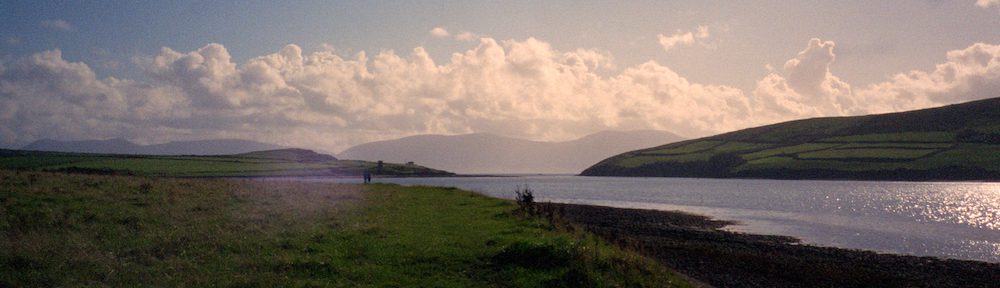
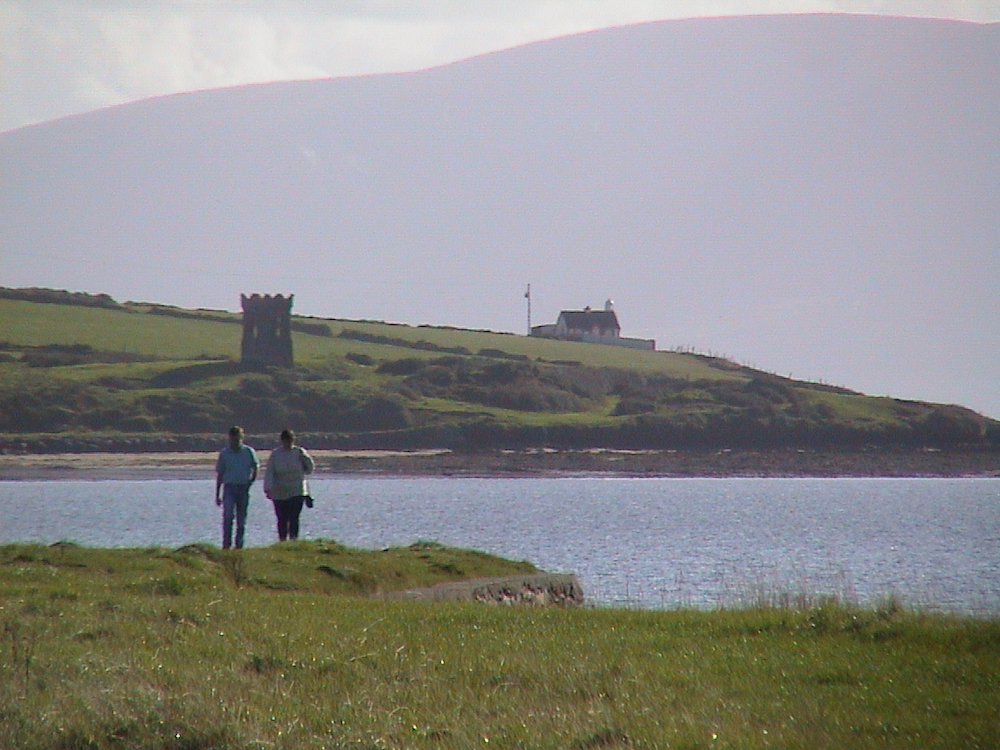
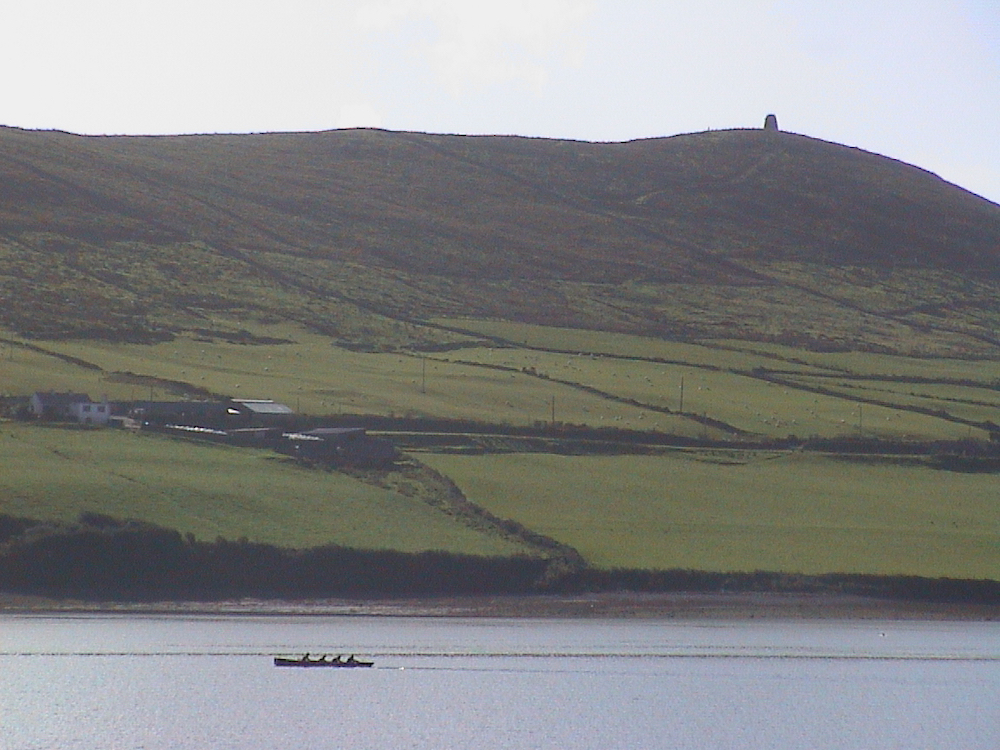
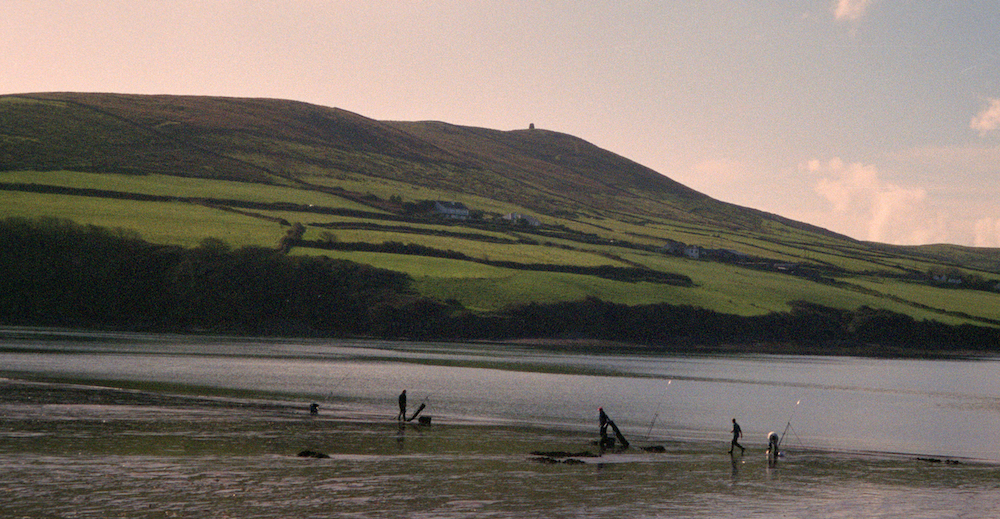
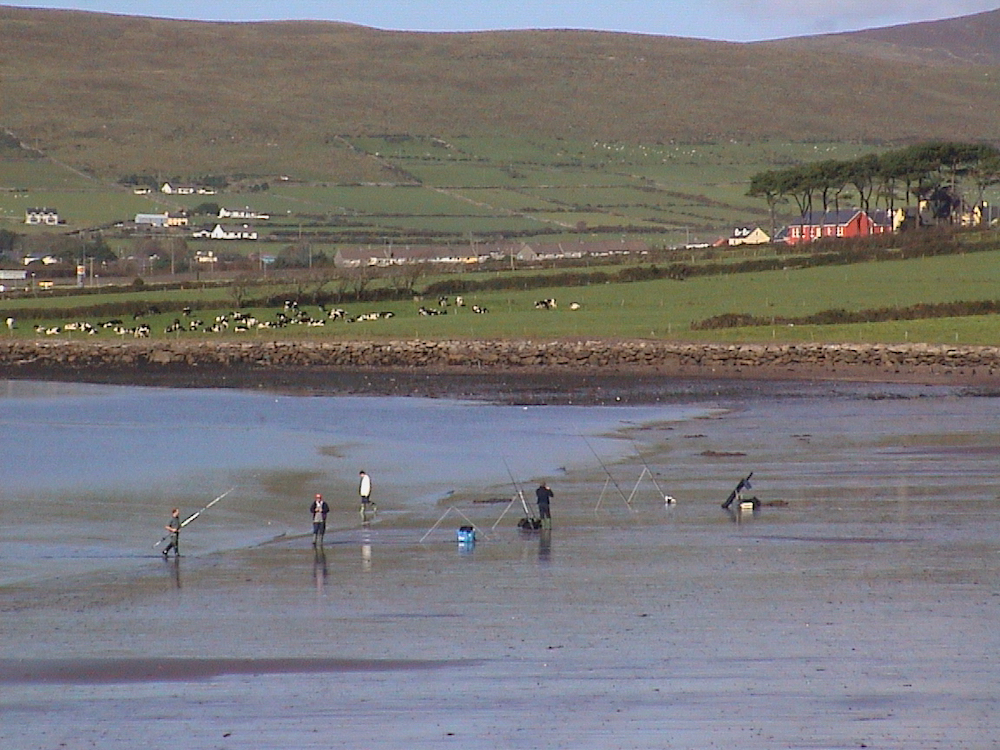
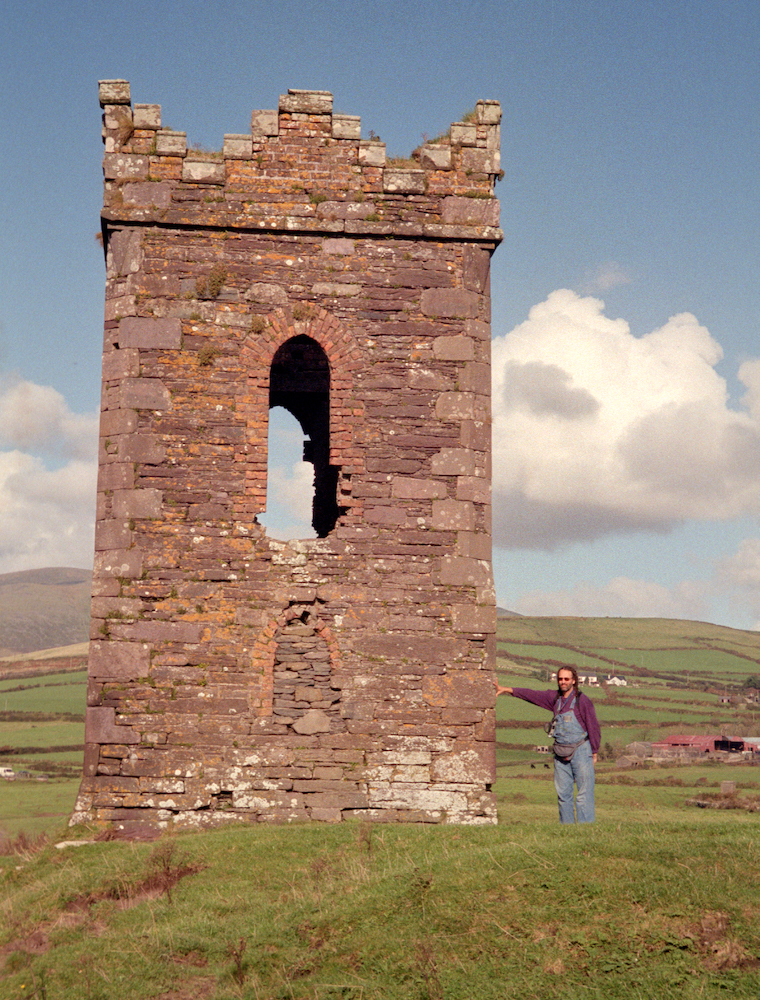
We hiked to an old stone watchtower about a mile from town, where we sat down for our picnic lunch. Along the shoreline, anglers were lined up to see what they could catch. We watched a team of rowers go from town to the bay entrance and back. We listened to the waves crash against the shore below us after passing through the gap in the cliffs.
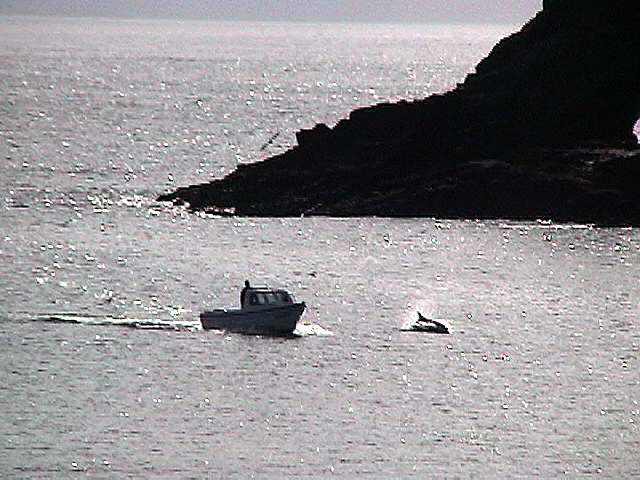
Through that gap, an occasional fishing boat would make its way back into the harbor, and alongside one of those boats we saw a dolphin come up for air … Funghi! Knowing where to look, we kept our eyes fixed on that area of the bay, and from time to time we’d see Funghi come up.
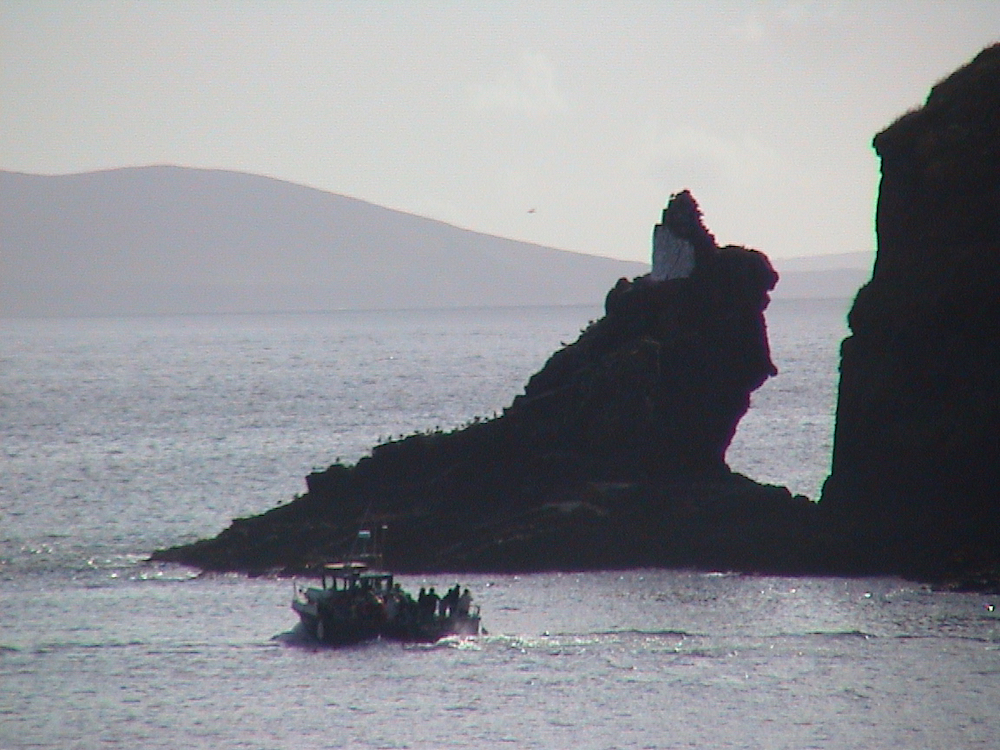
Meanwhile, the tour boats roared in and out of the harbor, searching for the elusive dolphin. By the time we started back toward town, there were two of them, teaming up to herd Funghi into the lenses of their passengers’ cameras. That’s when we knew we had made the right choice… we were glad not to have subsidized the harassment of this legendary creature.
-
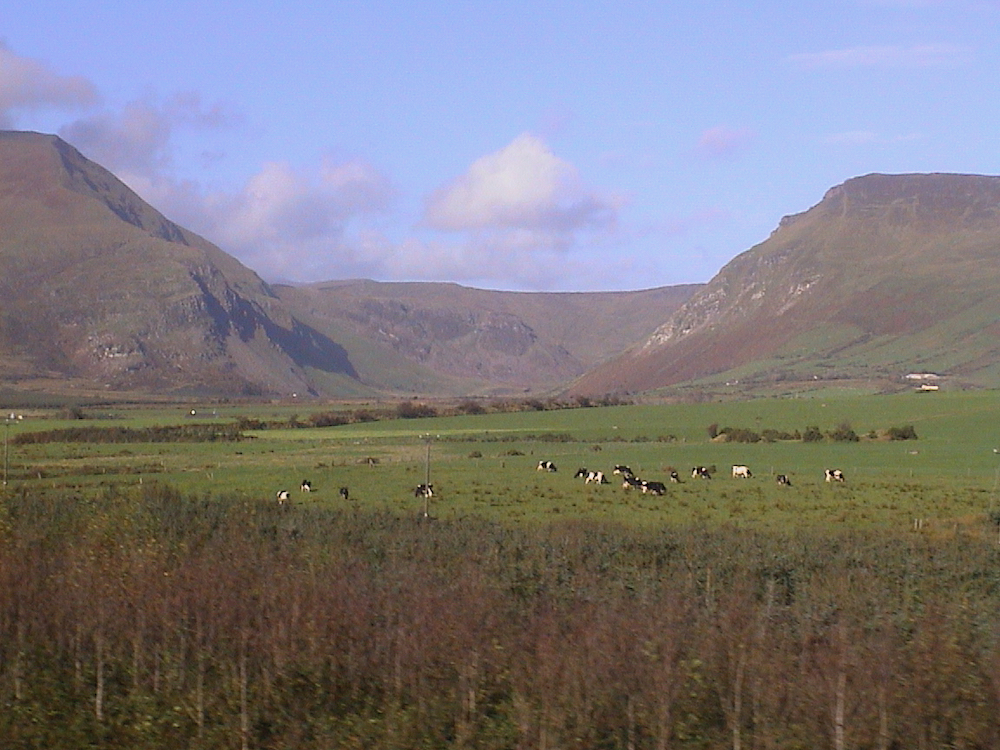
- The morning sun bathes the mountains and the cows on the Dingle Peninsula
-
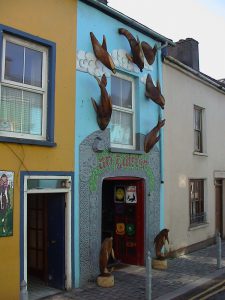
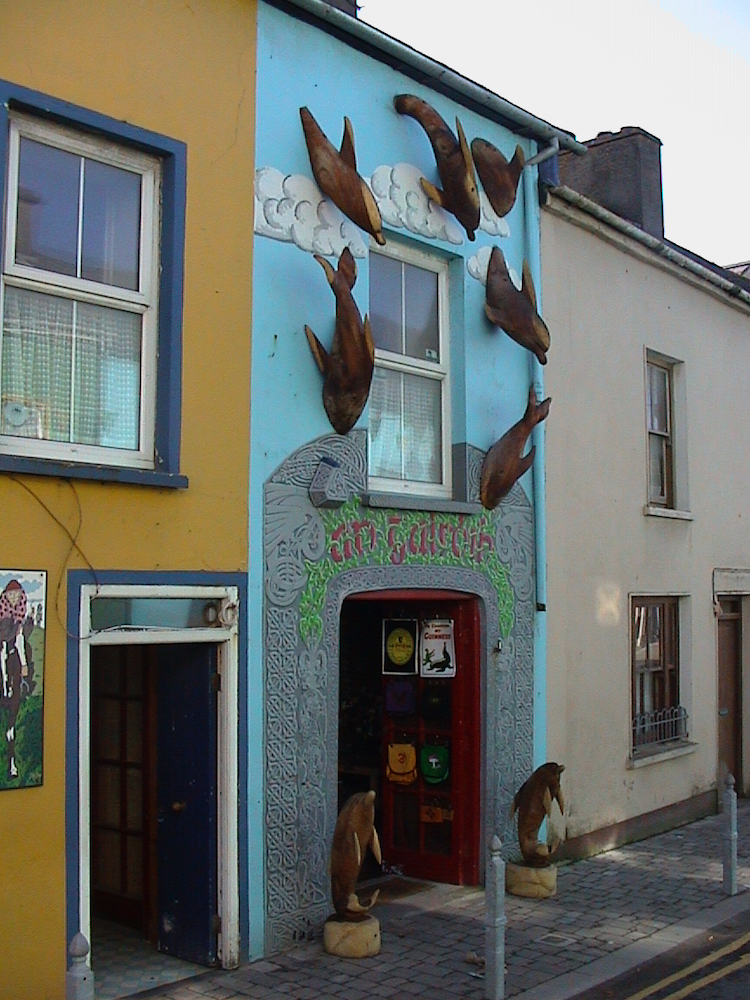
- A dolphin-themed storefront in central Dingle.
-
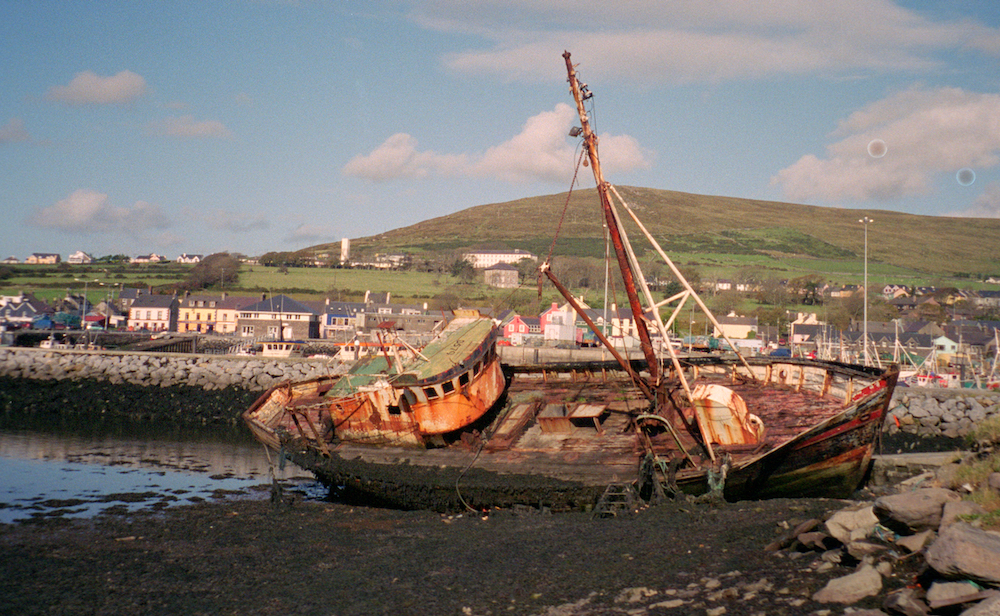
- A derelict fishing boat resides at the entrance to Dingle’s boat harbour.
-
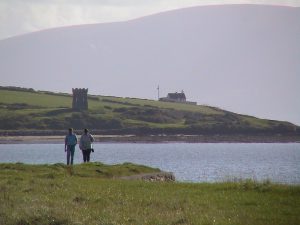
- Walking along the path toward the harbour entrance.
-
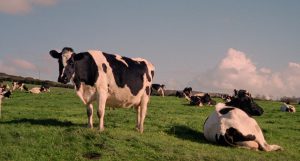
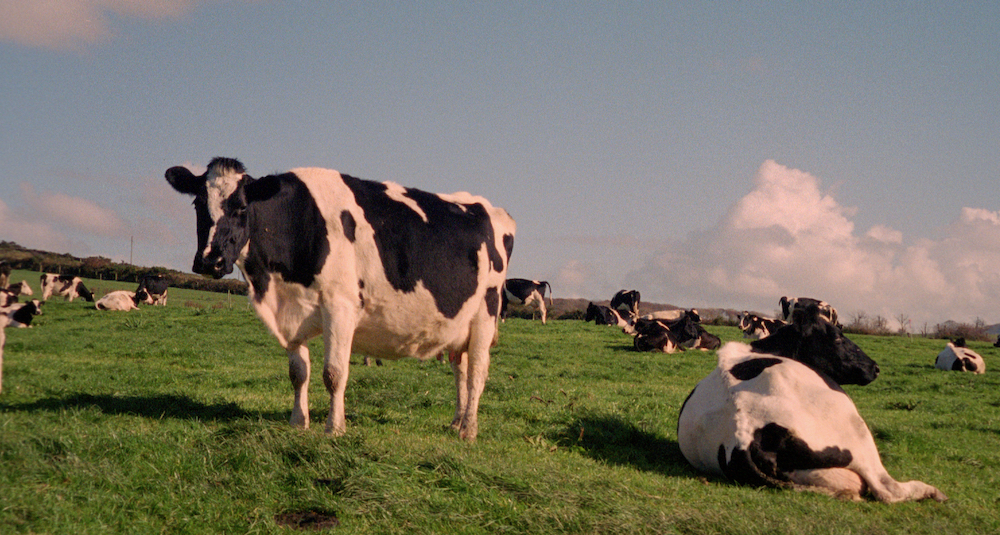
- We came to Ireland from Wisconsin to see… cows?
-
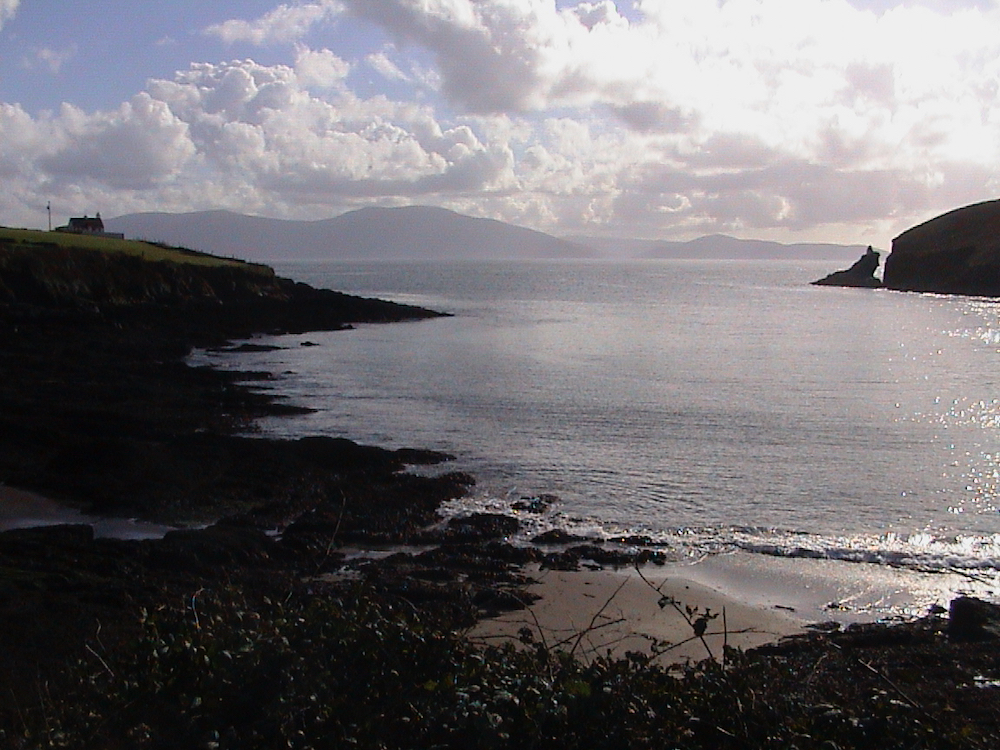
- The entrance to Dingle Harbour
-
- A team of rowers get their morning work-out on Dingle Harbour.
-
- This stretch of the Dingle Harbour shoreline is a popular fishing spot.
-
- Fishers go fishing at low tide.
-
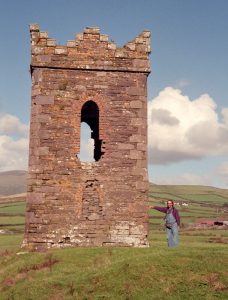
- Obbie inspects the watchtower overlooking the entrance to Dingle Harbour.
-
- A tour boat trolls the harbour entrance in search of Funghi the dolphin…
-
- …but Funghi was more comfortable hanging out around a solitary fisherman.
-
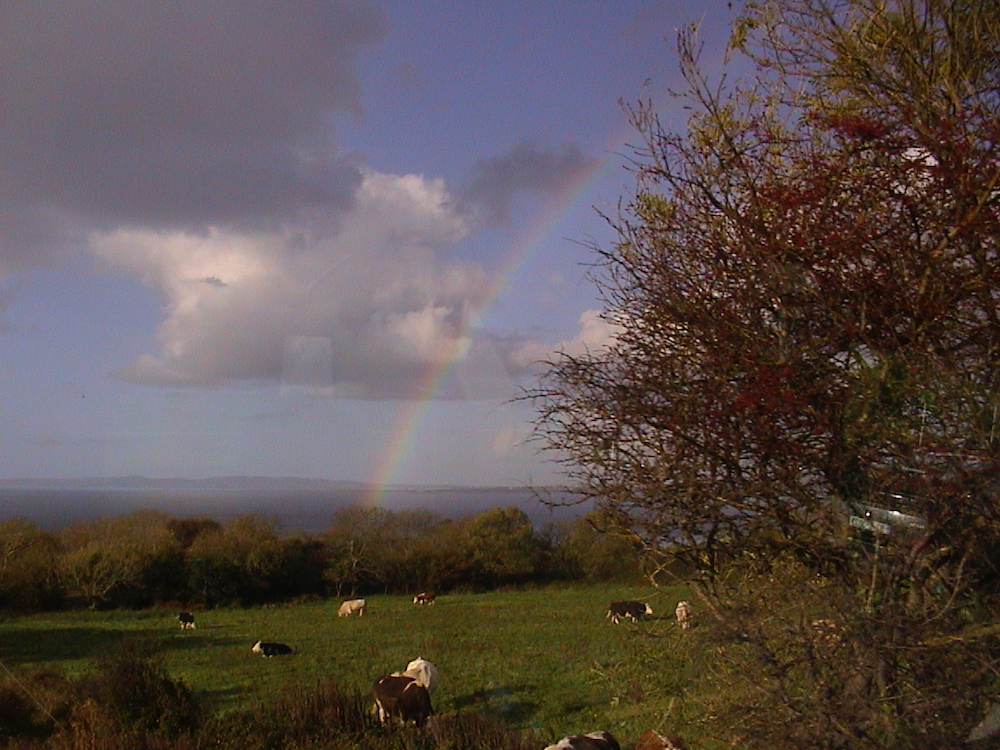
- On the return trip to Tralee, a mix of sun and rain brought rainbows.
-
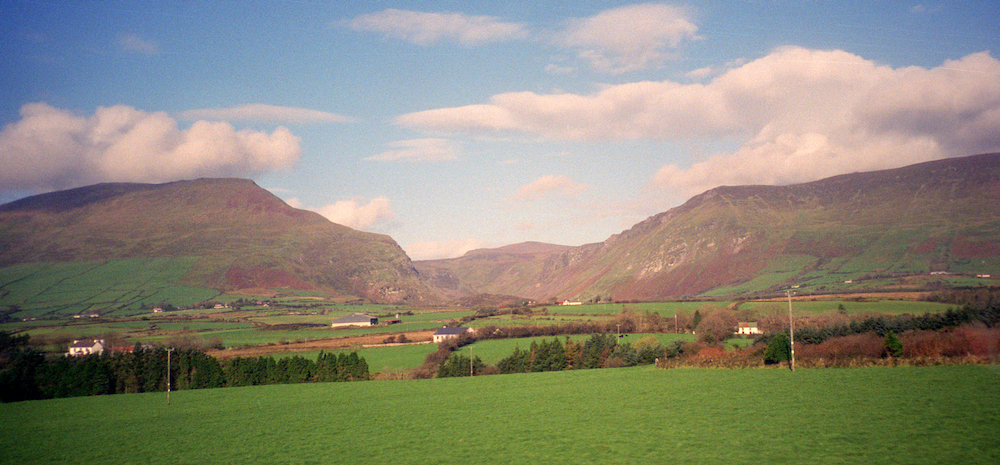
- Sun bathes the mountains and green fields of the Dingle Peninsula.
Just as we Americans don’t have a monopoly on ugly suburbs, we also don’t have a monopoly on trashy litterbugs. On every walking trail, we found a never-ending supply of empty plastic water bottles, food wrappers, and assorted McRubbish.
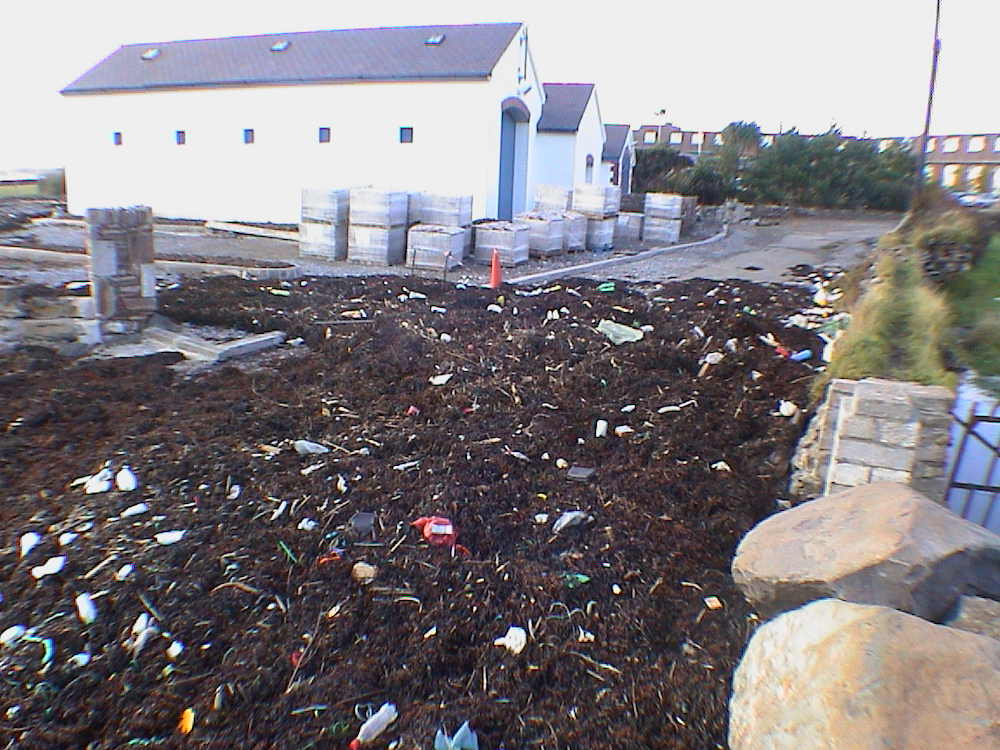
Every crisp packet, every plastic bottle, every gum wrapper, every cigarette butt thrown into the ocean (or onto the streets of coastal towns) becomes part of a smelly pile like this.
Our bus back to Tralee passed through some brief but intense rain showers. Ireland had been quite generous in showing us rainbows, but they were always quite elusive to our cameras. We only saw rainbows through train or bus windows, and by the time we’d have the camera armed and ready they would disappear behind roadside trees. But the Dingle Peninsula rainbows were kind enough to pose for pictures.
We got back to Tralee to find the streets had been drenched. While Dingle town was bathed in sunshine, Tralee was enduring a soaking rain. Talk about being in the right place at the right time!
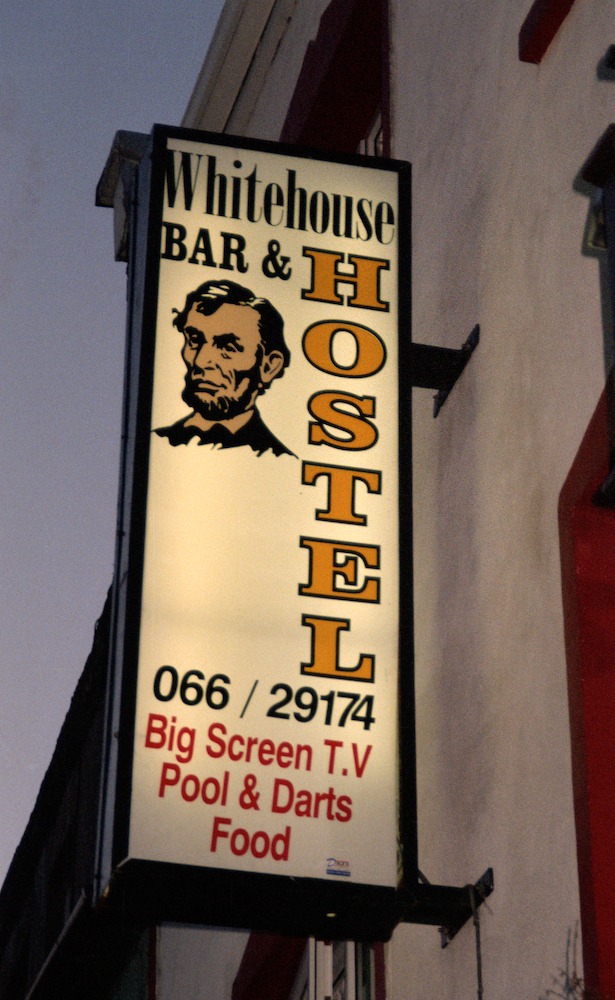
We couldn’t resist a drink at a local pub festooned with the image of Rozie’s sixth-cousin.
So we slugged down our pint while poorly-focused images of Irish MTV played on the big screen. A two-year-old – who’s parents were either staff or regulars in this establishment – toddled about the place while we wondered what becomes of kids who grow up in pubs.
We retired to our room early after picking up some very good Chinese take-away from a place across the street called “Ho Kee”.