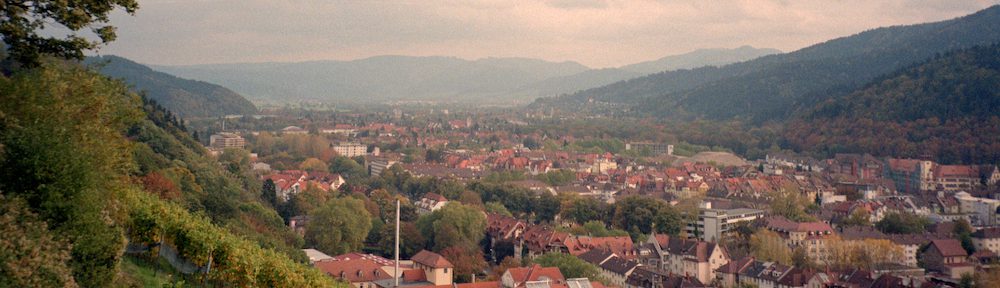
Our visit to Freiburg came at roughly the half-way point of our oddyzee, and it was good to be in the company of familiar friends. Bobber and Elena were gracious enough to give us a few days to catch our breath before continuing our exploration.
Friday they took us on a walking tour of central Freiburg. This city is roughly the size of Madison (about a quarter million people), but it feels like a smaller but lively college town.
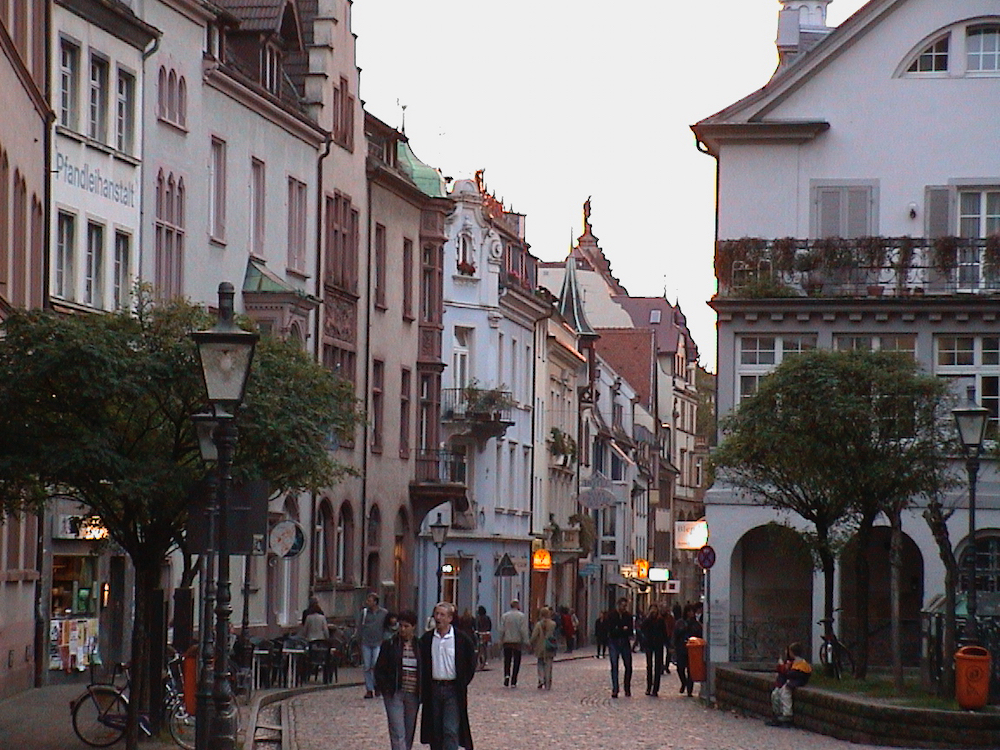
Much of the central core of Freiburg remains as it has for hundreds of years. The wide area of pedestrianized streets retains its cobble stone pavement. Part of the river through the city is diverted into a network of canals and gullies that follow the streets and keep the city “flushed out.” This is how Freiburg survived the Plague hundreds of years ago.
-
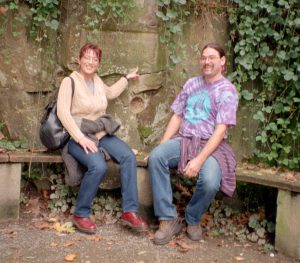
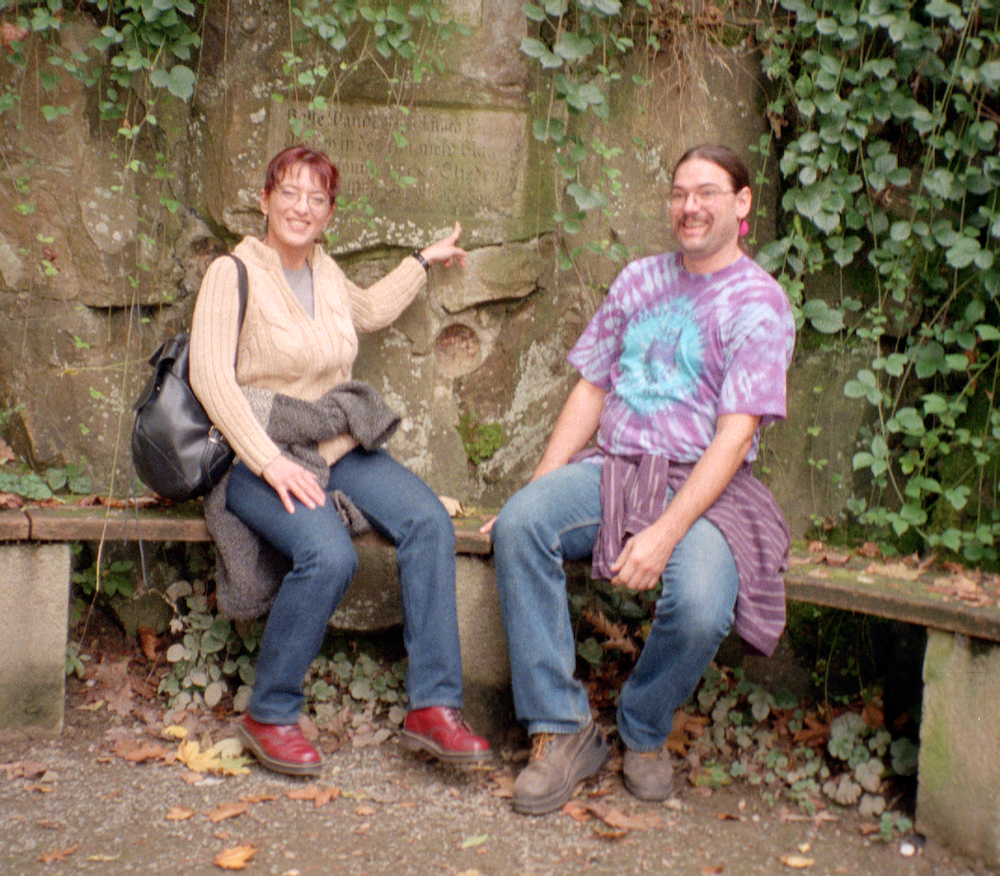
- Elena and Bobber, our hosts during our time in Freiburg.
-
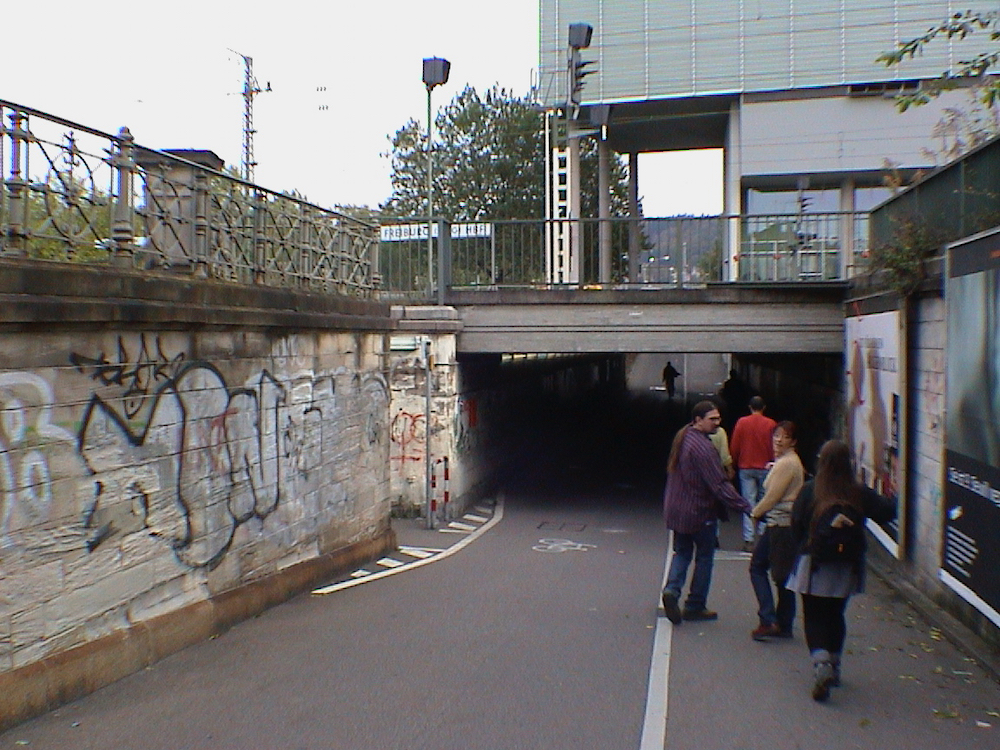
- Crossing the busy rail tracks via a pedestrian underpass.
-
- A pedestrianized street in central Freiburg.
-
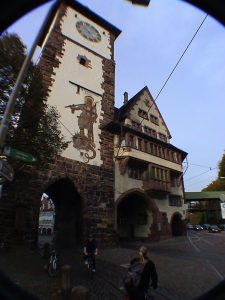
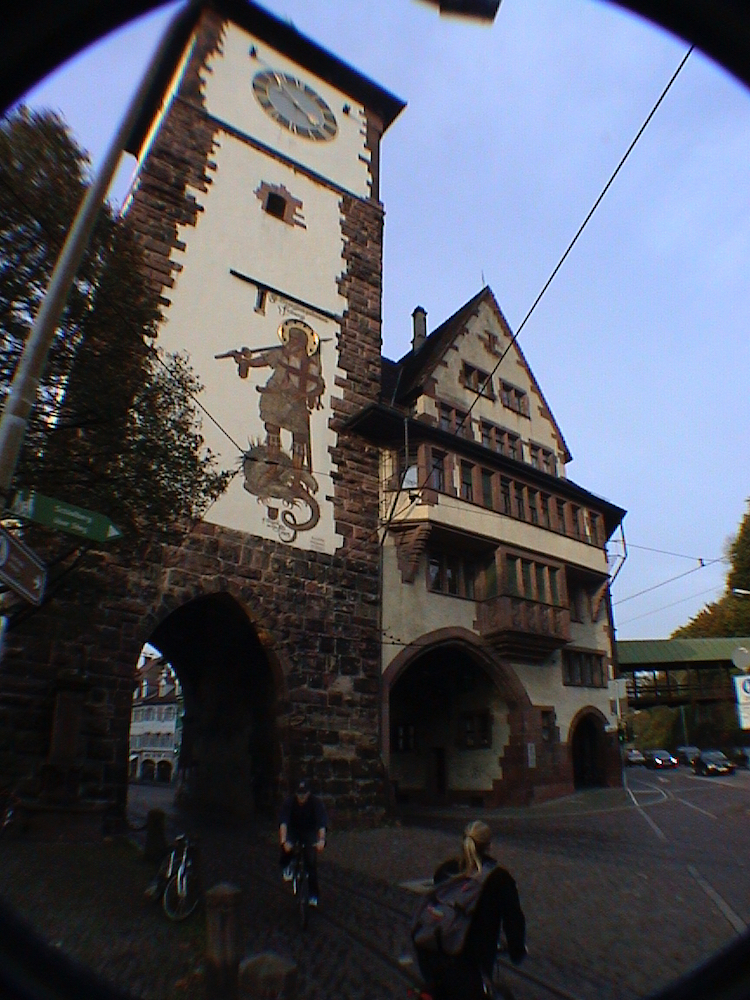
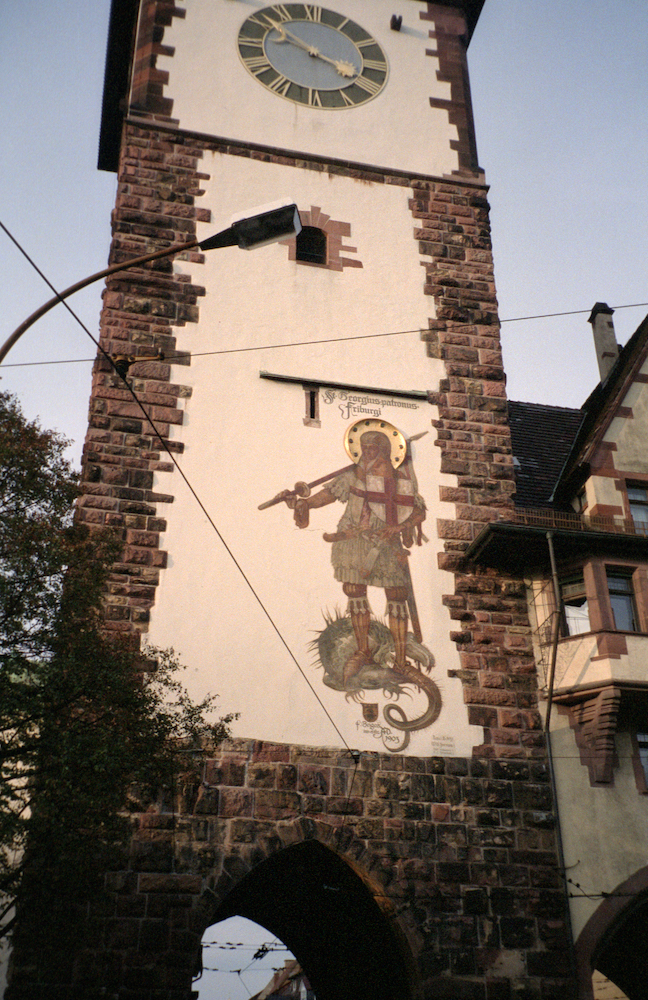
- Schwabentor Gate is an old landmark in central Freiburg.
-
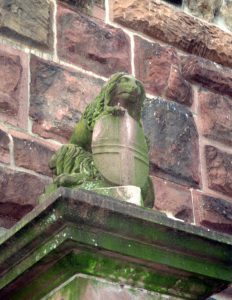
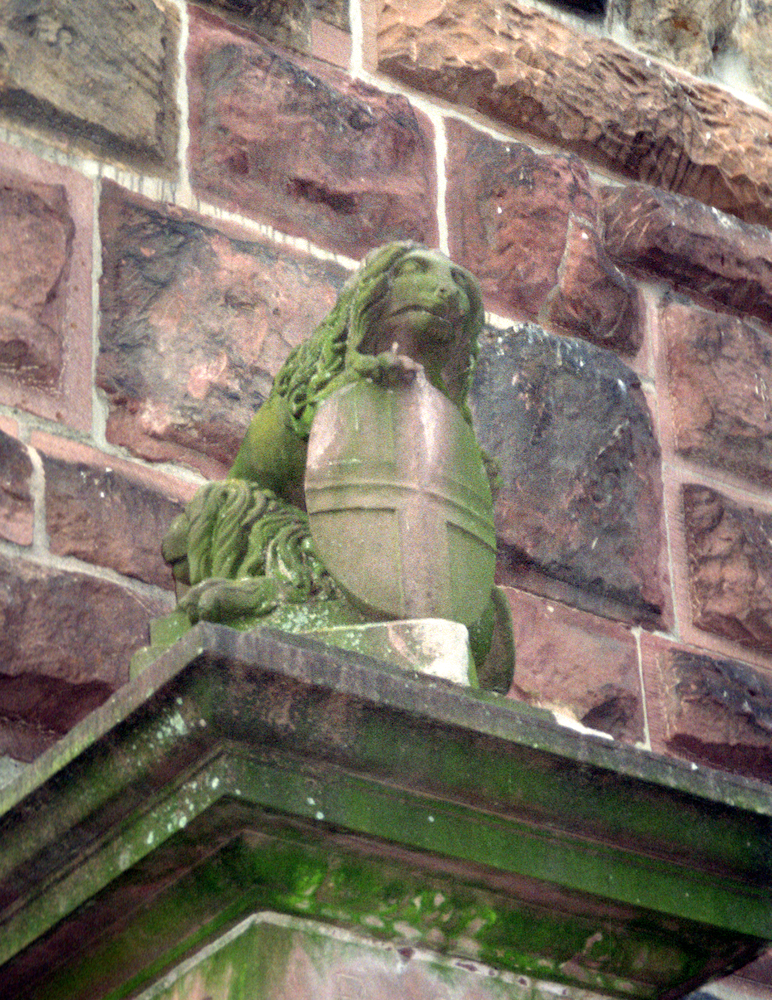
- An ornamental lion watches over Schwabentor Gate.
-
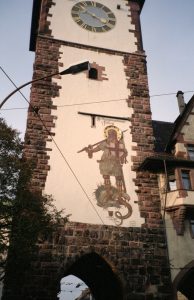
- A closer look at the clock tower at Schwabentor Gate.
-
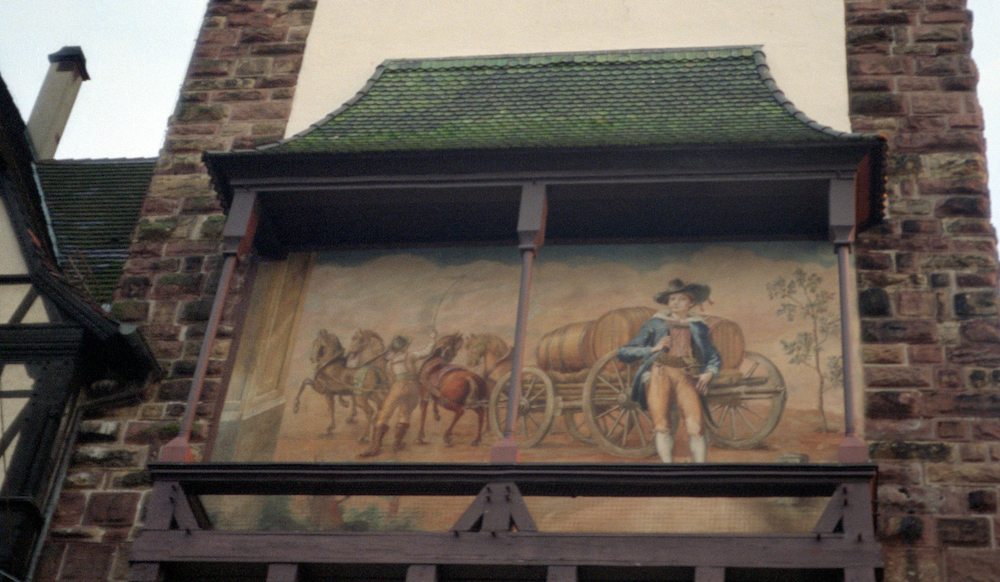
- This mural is on the other side of Schwabentor Gate.
-
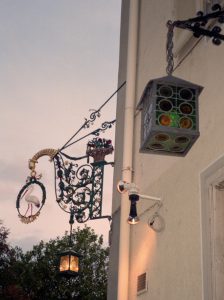
- Some of the fixtures and decorations found near Schwabentor Gate.
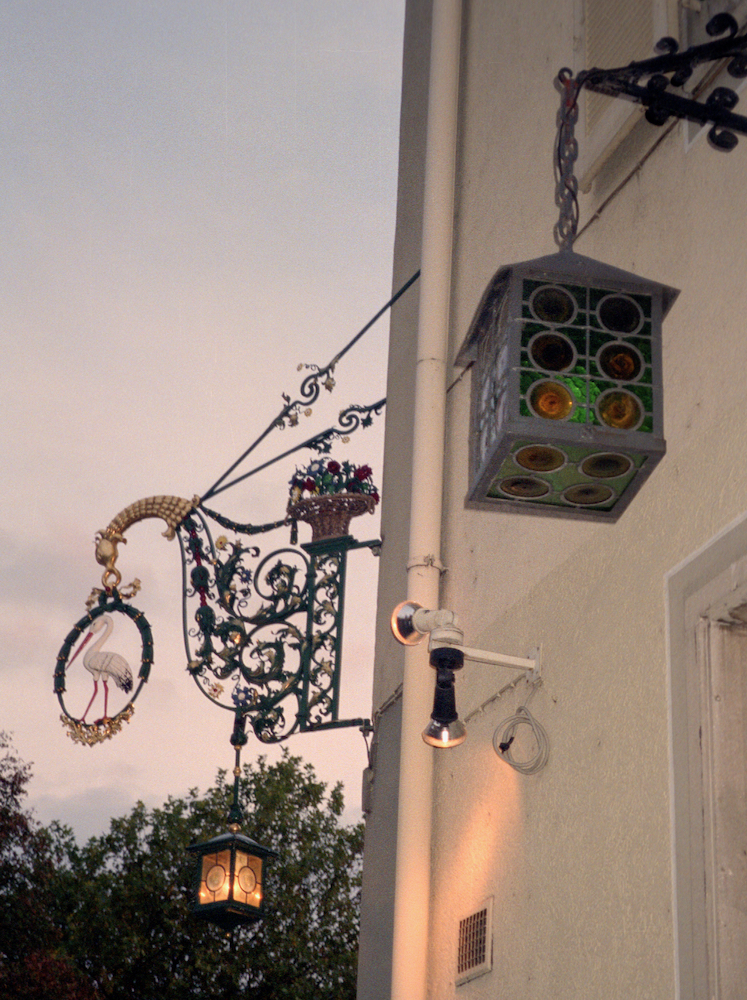
Nothing of quality is allowed to deteriorate, so the city’s old buildings have a new look to them. Gentrification in Freiburg involves rehabilitation every generation or two, rather than the cycle of demolition and rebuilding that plagues other cities (such as ours).
We found many urban innovations that make central Freiburg the thriving place that downtown La Crosse wishes it could become. A network of street cars serves as the backbone of an extensive local transit system. A central train station with 8 platforms brings in commuters who are not served by the local transit system (trains to and from most destinations run at least hourly).
Hundreds (thousands?) of bicycles are parked in racks near the station (including a sizable indoor garage with space for several hundred bikes), kept there by commuters and travelers to easily get to where they’re going in Freiburg upon arrival. Seemingly every major street has a well-marked bike lane, and bicycles far outnumber cars in both driving and parking areas.
-
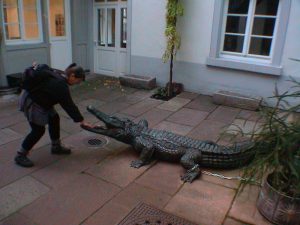
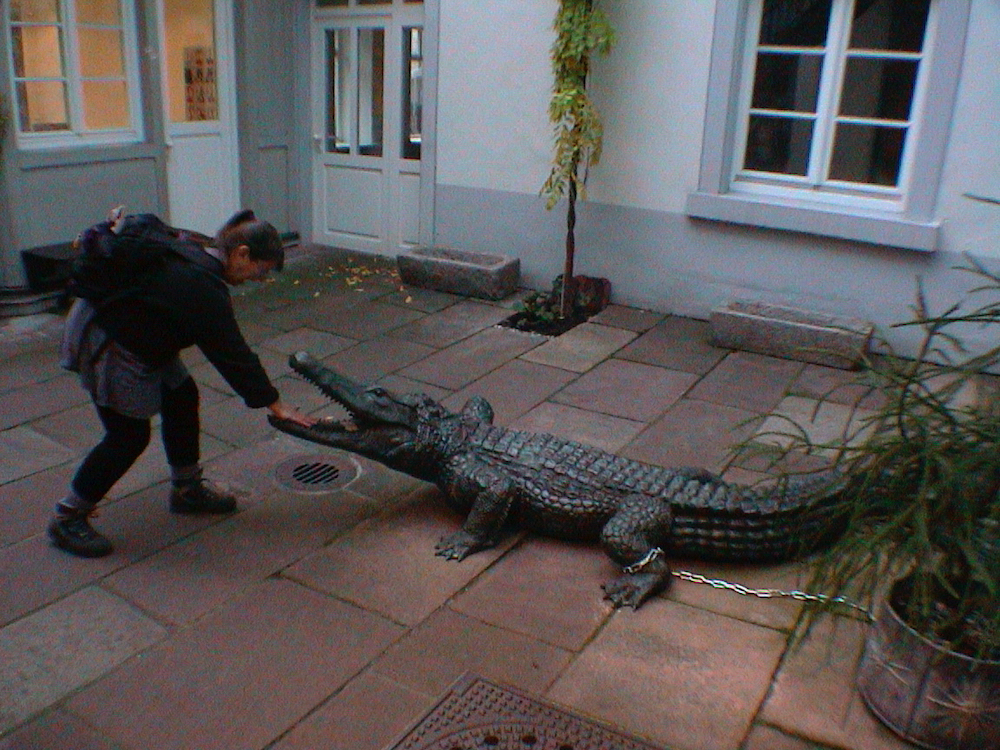
- Rozie taunts an aligator sculpture in central Freiburg…
-
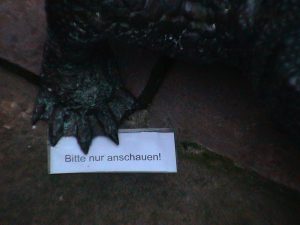
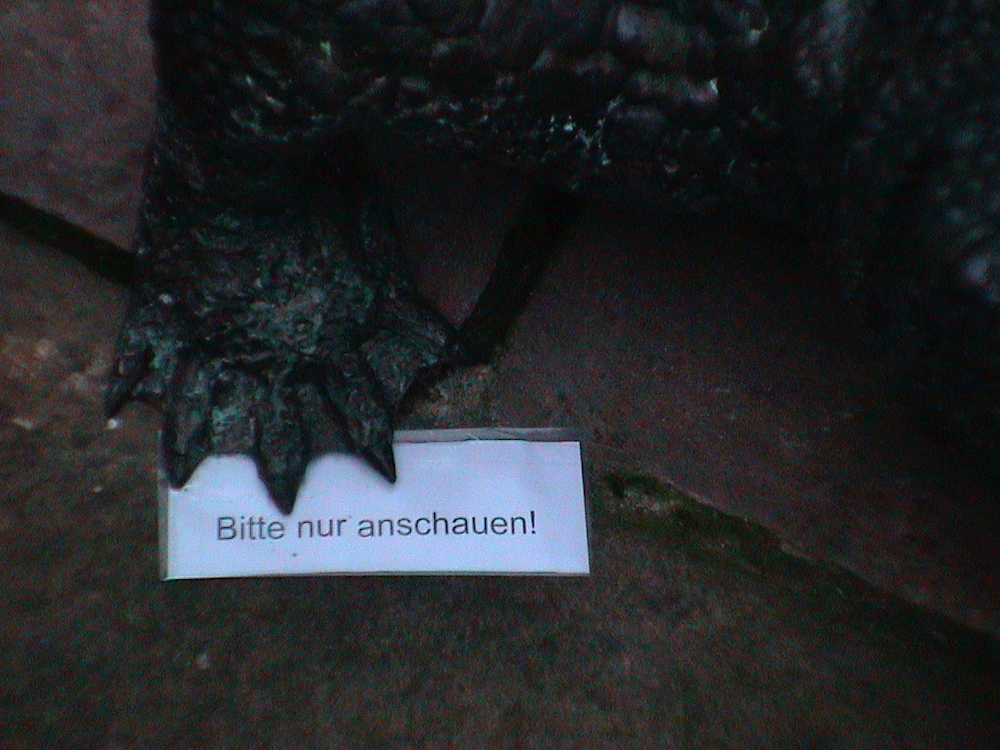
- …but she hadn’t seen the note that said “Please only look!”
-
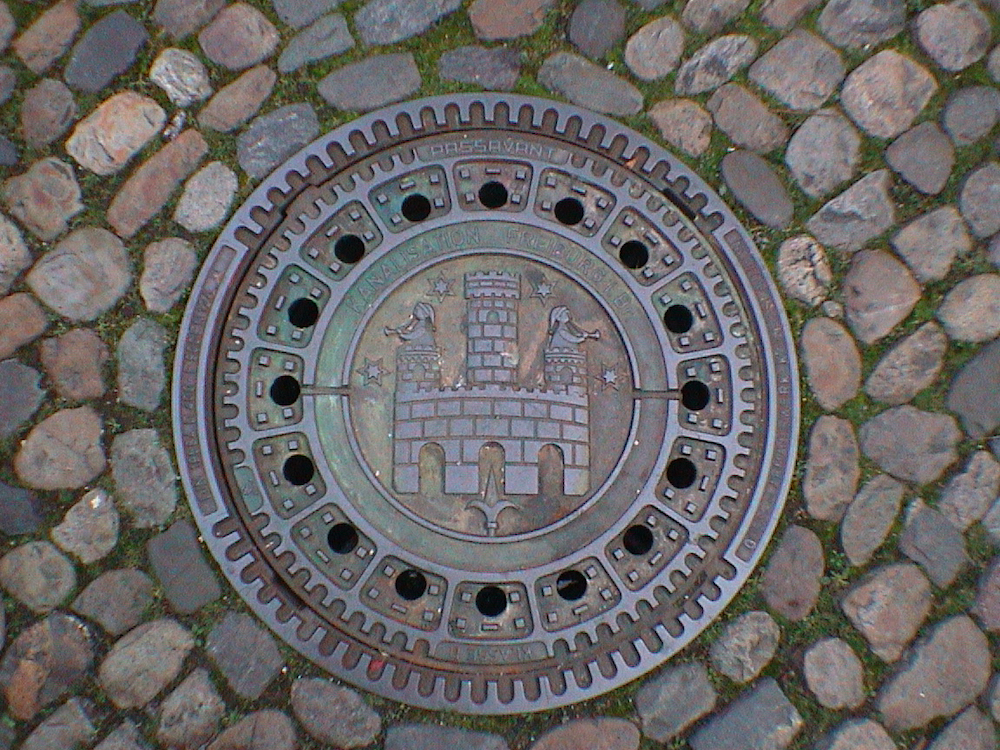
- We were impressed by the effort invested in attractive manhole covers.
-
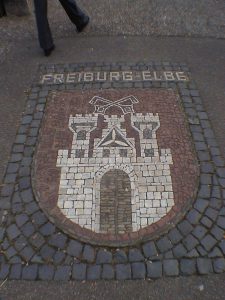
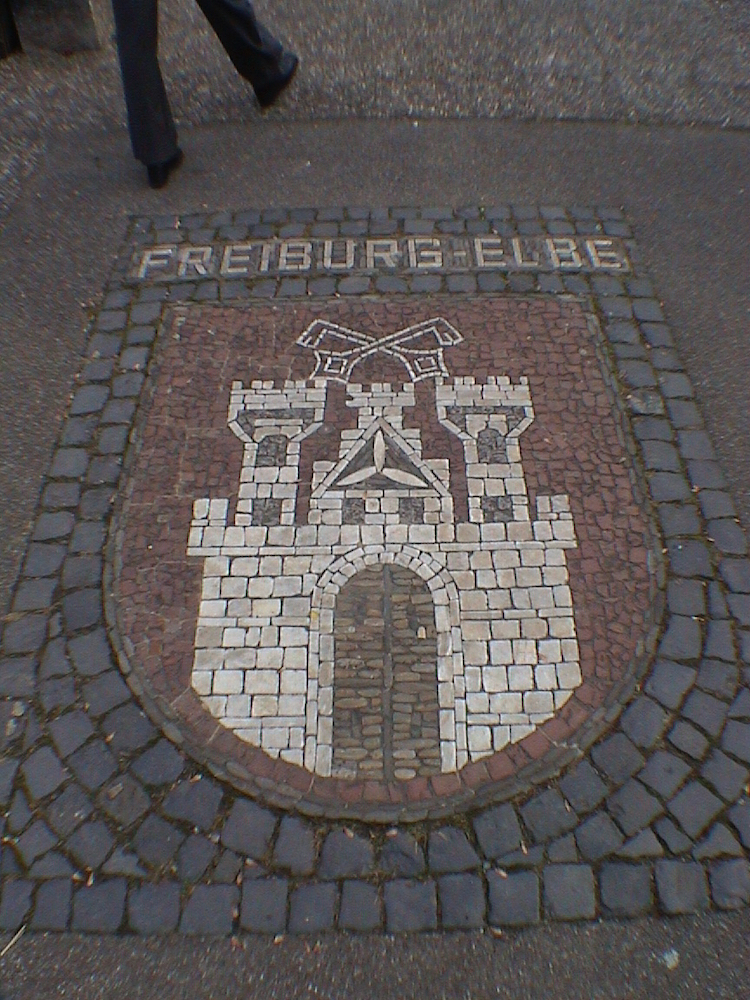
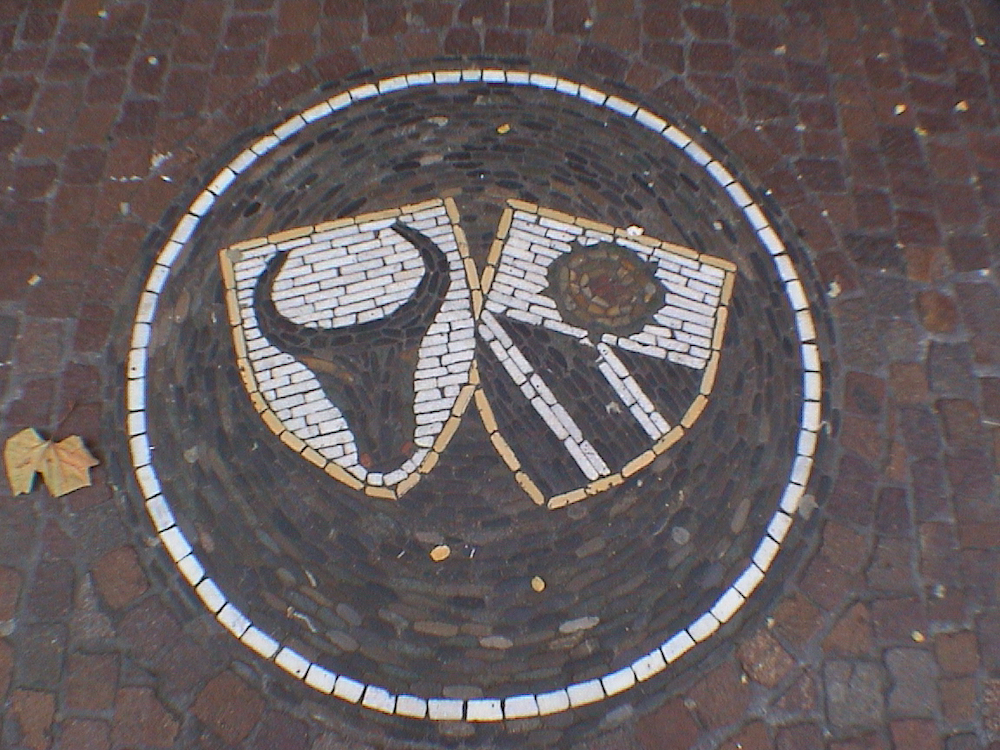
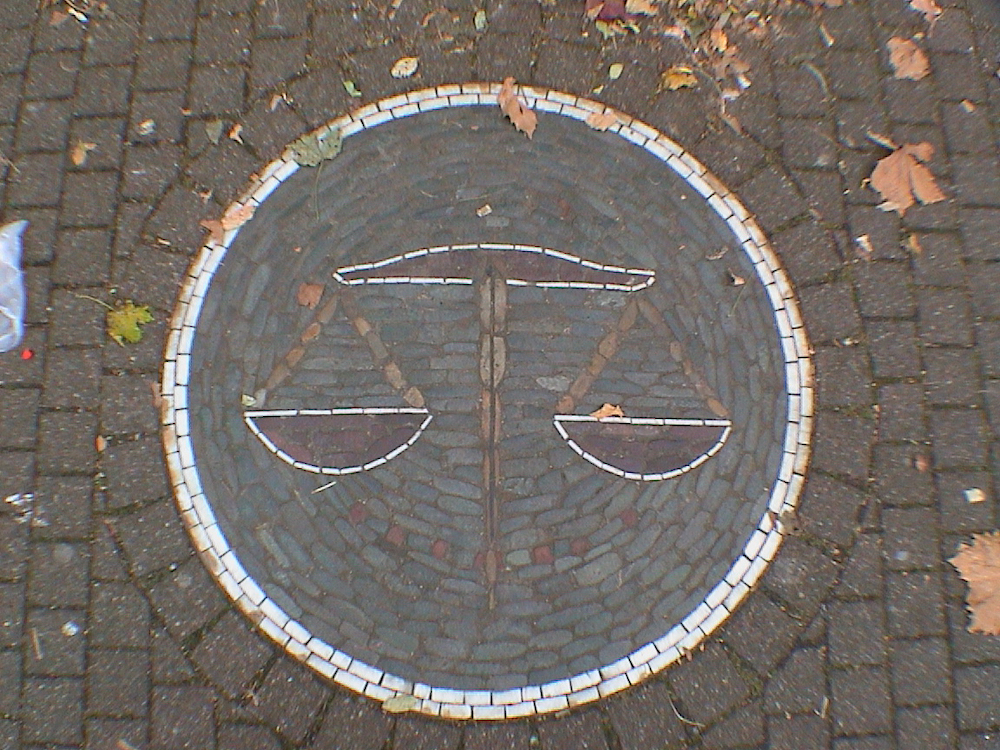
- There was a good deal of artwork in the cobblestones.
-
- Stone art for a theatre..
-
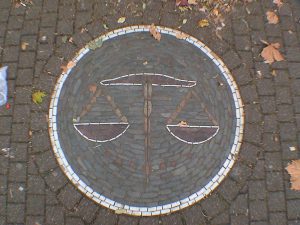
- Stone art that could represent a legal office.
-
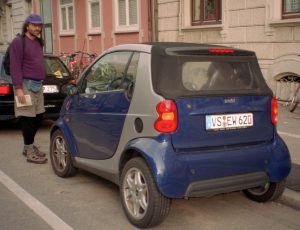
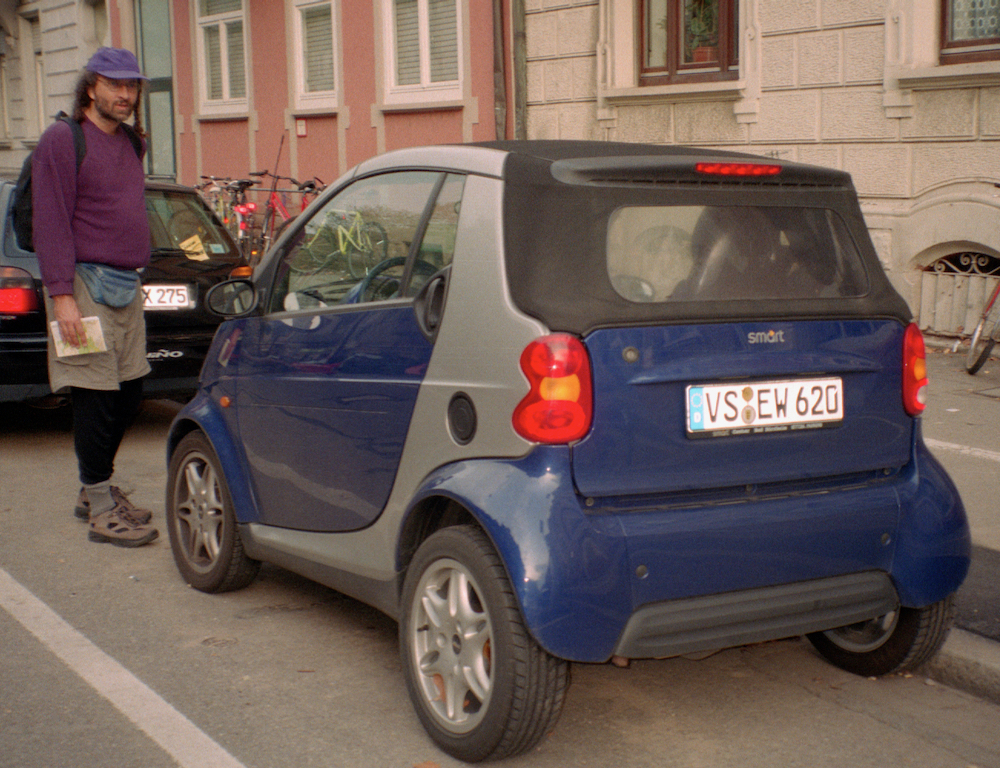
- Cars this small are not popular where we live…
-
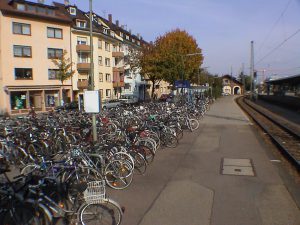
- But the city is set up in a way that bicycling is much more practical and popular.
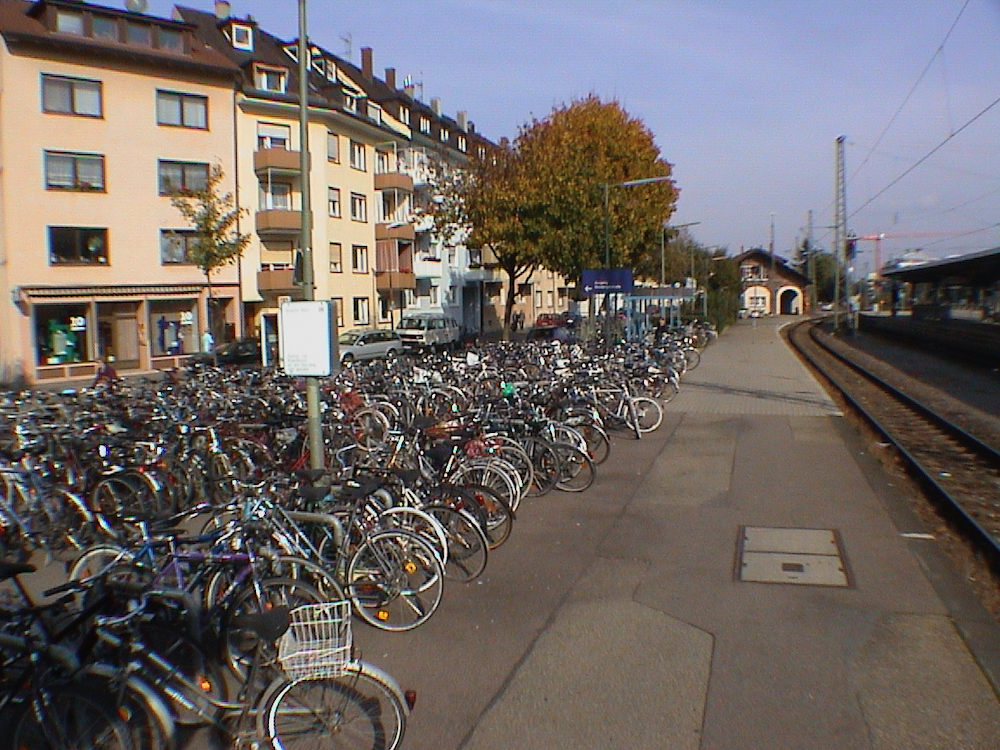
Those who insist on driving cars into Freiburg are shunted to parking areas scattered around the perimeter of the central city, so that the hordes of workers and shoppers walking the cobblestone streets can do so without being hindered or put at risk by traffic. Computerized signs on the approaching highways inform drivers which parking areas have the most available space. The biggest hazard to pedestrians in Freiburg are the bicycles, especially at night.
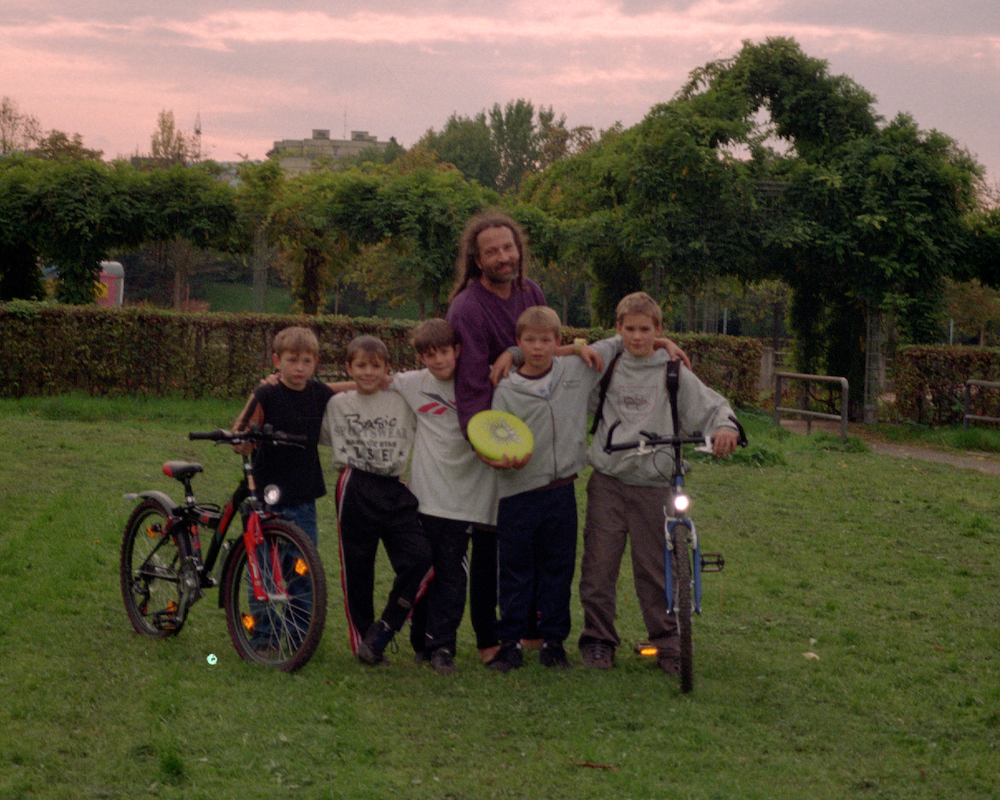
On Saturday we caught up on sleep, laid low, and took a late afternoon walk to the park, frisbee in hand. After we had been throwing for a while we were approached by a 10-year-old local boy who asked us where we were from. As the conversation developed, four more boys showed up. We exchanged names and ages, and Obbie tried to tell the story of having two German grandfathers.
Their English was sketchy, but it was a lot better than our German, and we wondered how many American kids their age (other than Hispanics) are this bi-lingual. We got the kids to fan out across the lawn to participate in our frisbee throwing/chasing exercise, at which they displayed a surprising level of experience and competence.
As we walked back toward Bobber’s house, we thought of Tobias, Andreas, Marko, Steven, Sacha, and how they were probably excitedly telling their parents about the American couple they’d played frisbee with in the park. In most of America local kids (or at least their parents) and passing travelers are too afraid of each other for this kind of interaction to have happened.
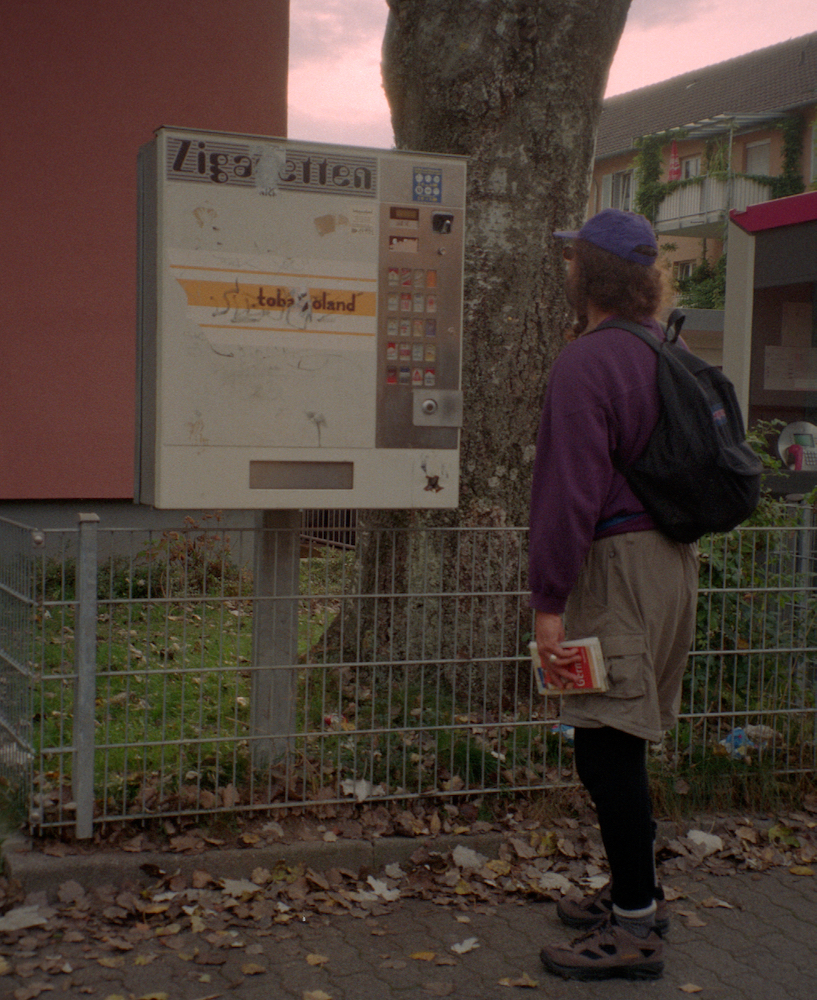
We worry about how these kids are going to avoid the demon tobacco. Outdoor cigarette machines are all over the place. They may say that the coin slots are too high for kids to reach, but anyone who’s ever been a kid wanting smokes knows that they will find a way up there.
-
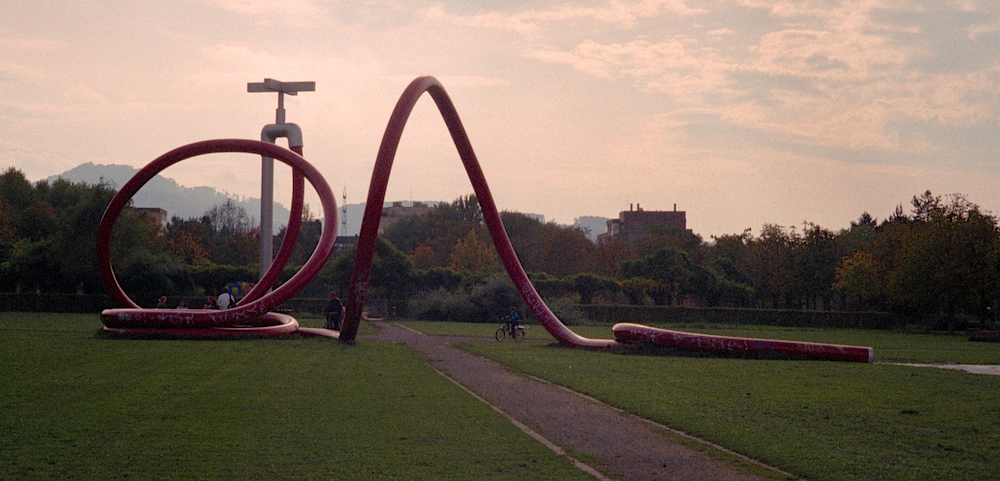
- We went to chase frisbees at a park featuring an overgrown garden hose.
-
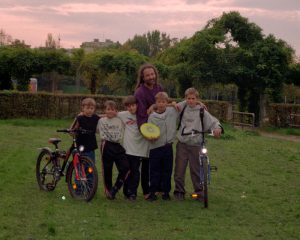
- Some of the neighborhood kids who joined us throwing and chasing frisbees.
-
- We worry that it will be hard for these kids to avoid tobacco when it’s so readily available.
We’ve been told that long cigarette ads are among the half hour of commercials one must sit through before seeing a film in a German theatre. Among the things advertised are dude ranches in Wyoming where the brand is emblazoned on everything – including the name of the ranch – and where Europeans are encouraged to go on vacation.
Long “recruitment” ads ask students to apply to work at these ranches. Of course only 30-50 kids are lucky enough to get the jobs… the tens of thousands that don’t make the cut get targeted with marketing materials. The tobacco marketing practices in America stink badly enough, here they border on pure evil.
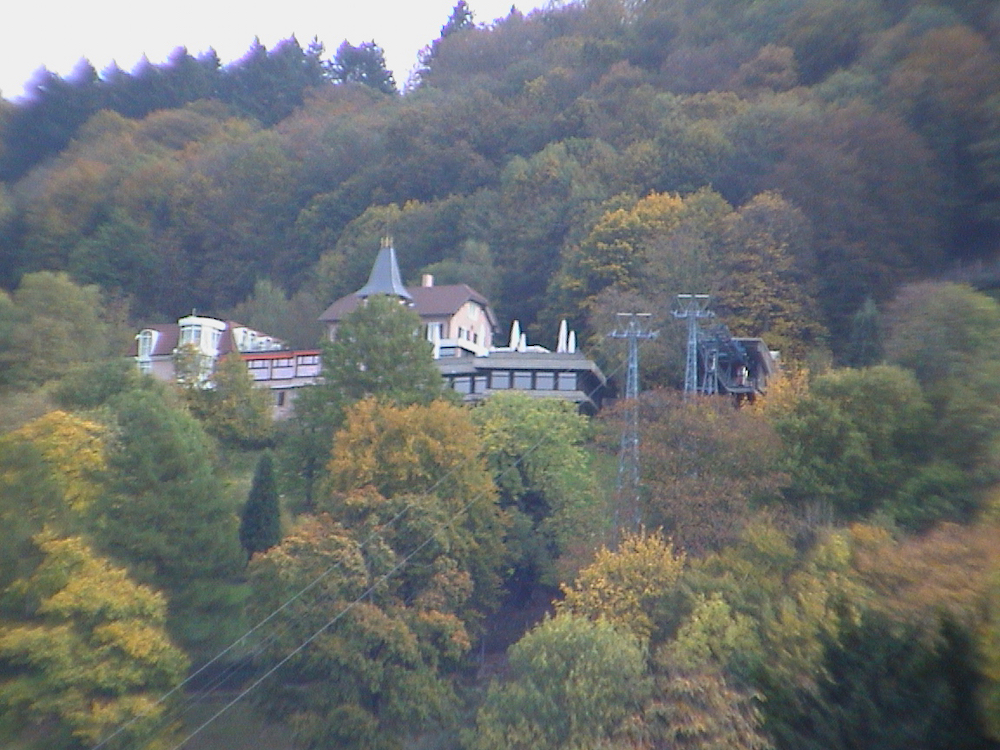
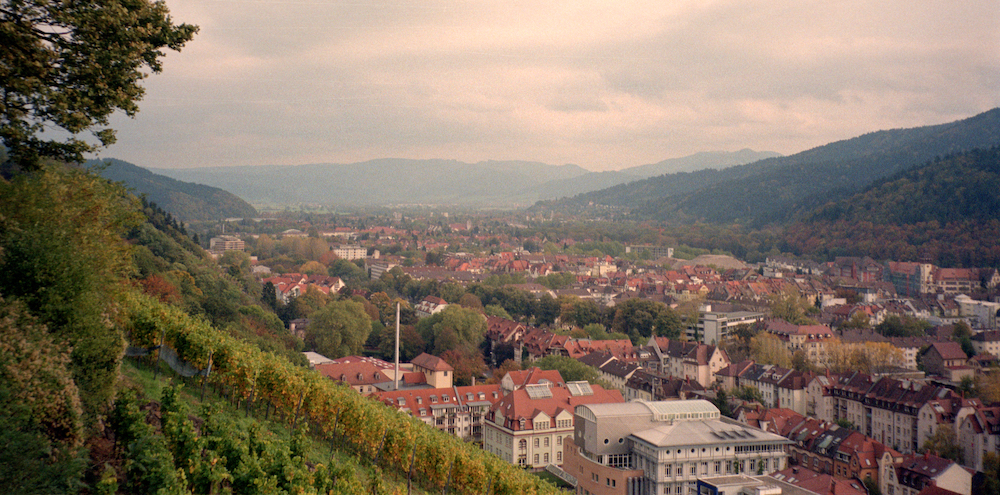
Sunday was a day for walkies. Freiburg sits at the edge of the Rhine Valley, next to the bluffs that mark the beginning of the Black Forest (Bobber says he’s had a hard time describing ‘bluffs’ to German-speaking people). We passed the gondola car that can take “cheaters” to a building made to look like a castle about halfway up the hill, where those with deep pockets can dine in a foo-foo restaurant with a panoramic view of the Freiburg rooftops.
We took the footpath to a place with a better view of the rooftops, and took note of the many other people doing the same thing. We were told that this is German custom … rather than retire to the tv room, families will typically walk together for hours after supper. No wonder most of the Germans are so healthy and strong.
-
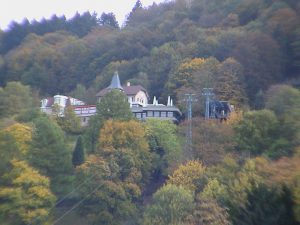
- A gondola brings deep-pocketed diners to this overpriced hillside restaurant.
-
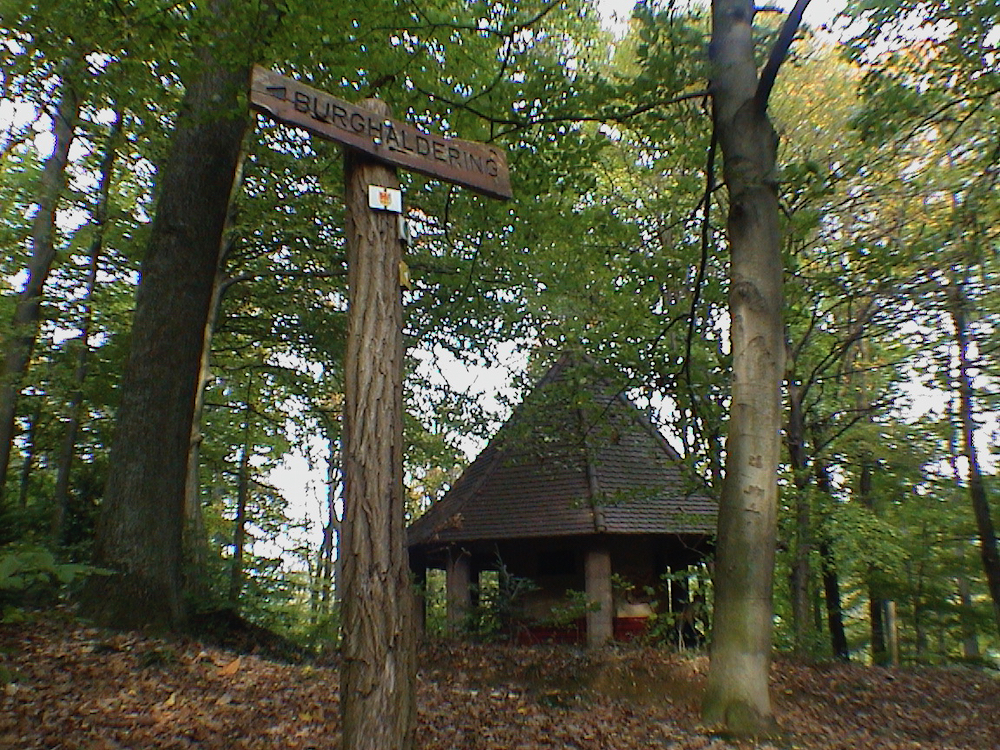
- A gazebo on the forest walk overlooking Freiburg.
-
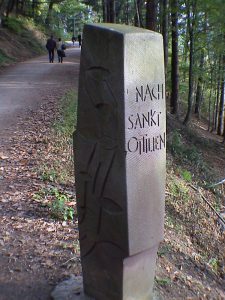
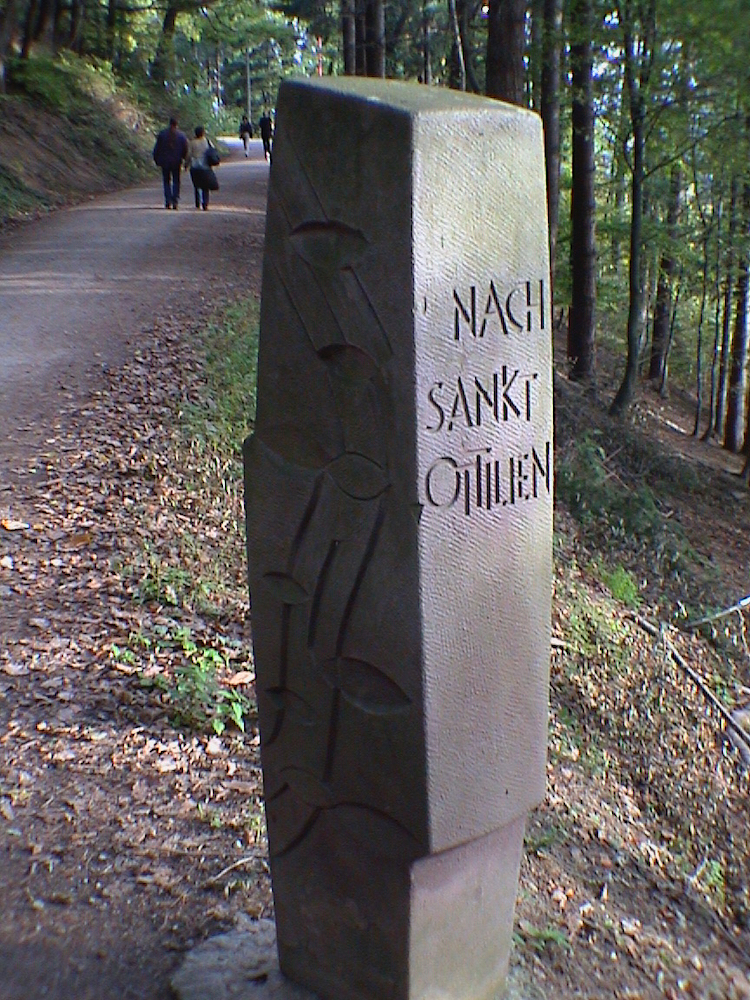
- Guiding the way to St. Ottilien.
-
- A view of part of Freiburg from the hills over the city.
-
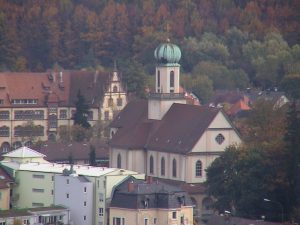
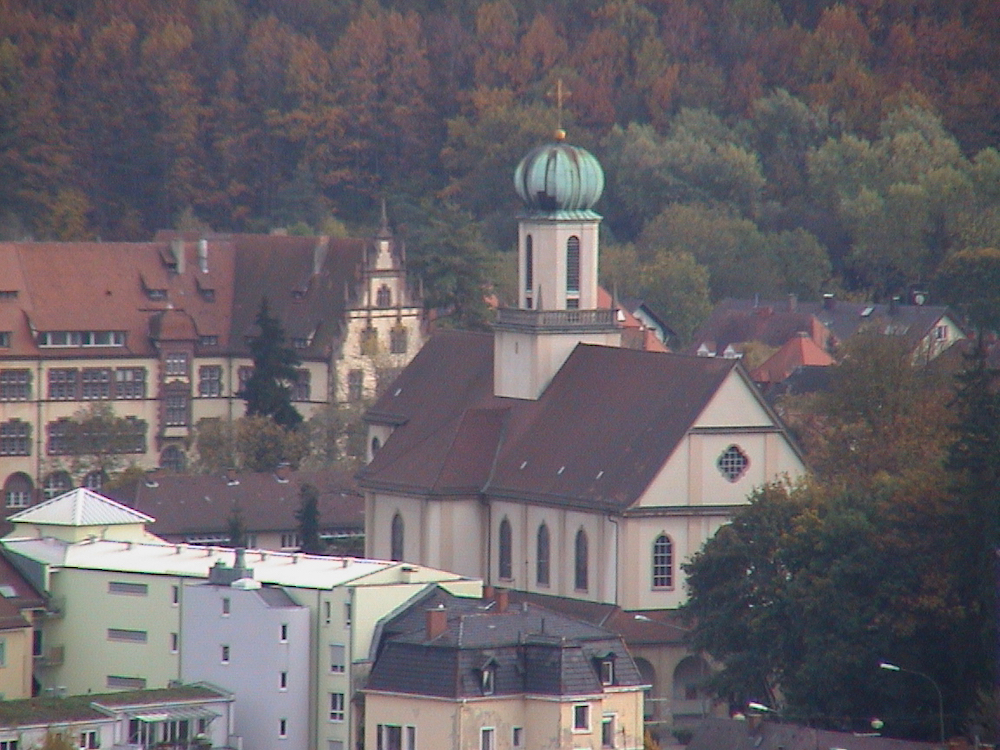
- We noticed this unusual steeple, where the top is shaped like an onion.
-
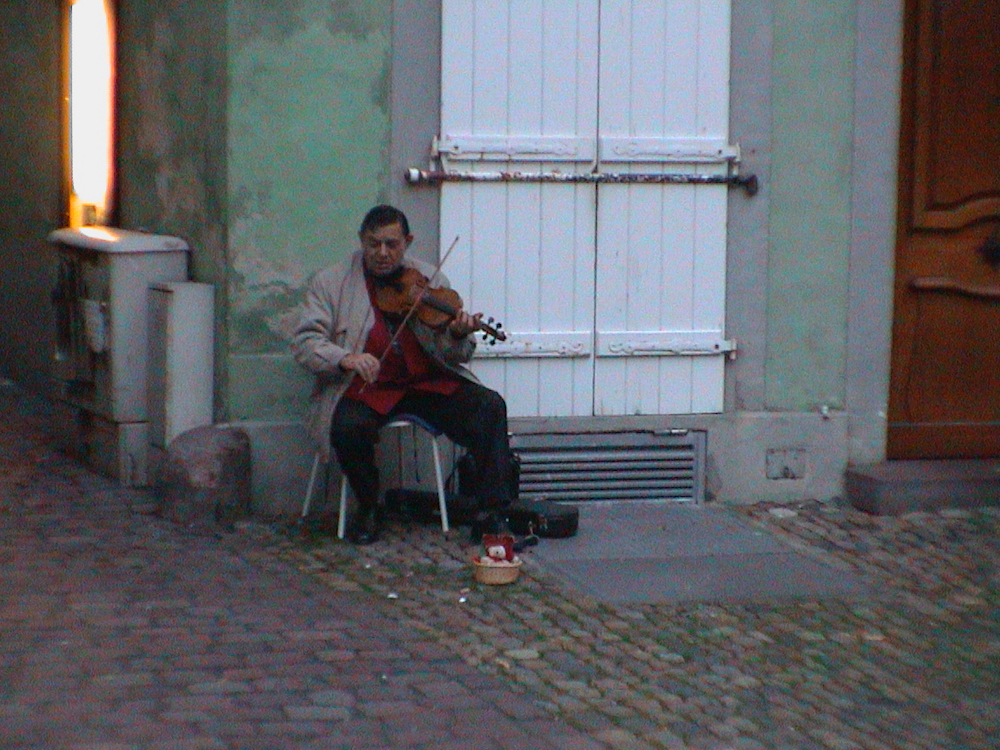
- A busker in one of the city plazas late in the day.
We’ve learned the meaning of “continental breakfast.” Ever since we’ve come to the continent, breakfast has consisted of juice, coffee and bread with jam and/or cheese, depending on the locality.
We’ve also learned that the German language is much easier to understand than it is to read or speak. We’ve actually been able to understand announcements on the train platforms, which we’re told is something that even locals have a hard time with.
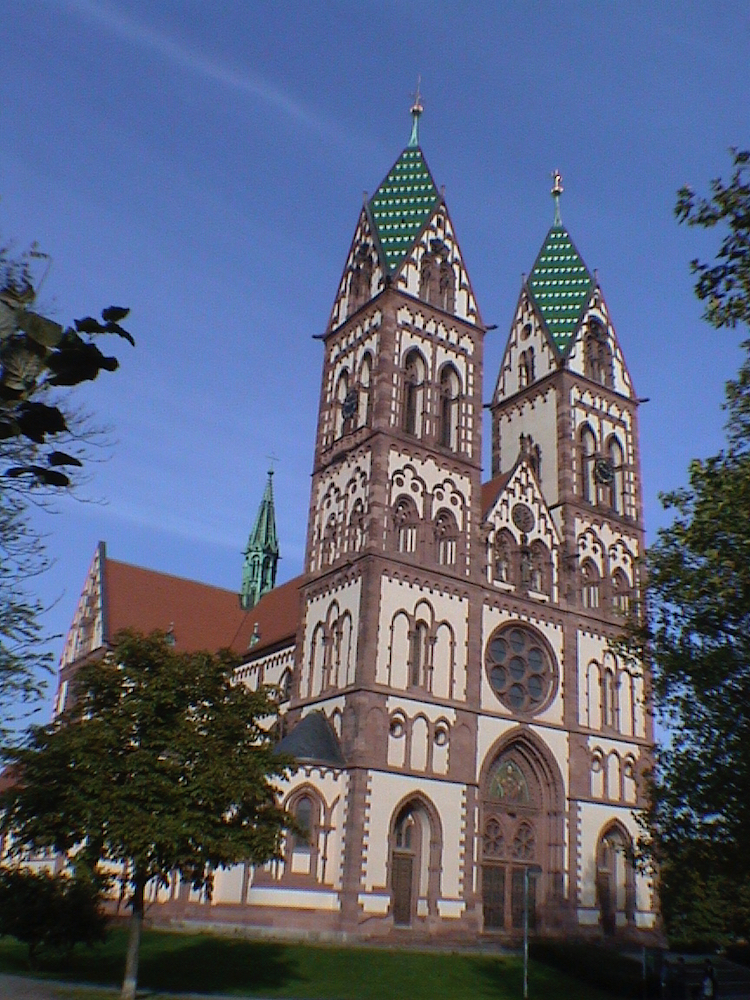
The Herz Jesu Kirche (Sacred Heart Church) in Freiburg.
If you ride your bike to a nearby store for a six-pack, you are on a bierfahrt. Sorry, but that’s how ‘beer run’ translates to German.
The word “Rathaus” is a permanent addition to our vocabulary… it’s German for “city hall.”