Our plan for Sunday is to get from Buchloe to the resort town of Prien am Chiemsee, which we are told is a beautiful place on a big lake in the Bavarian Alps.
We make a connection in Munich. Our plan is to spend maybe an hour getting on the Internet to send communication home, then take a quick look around town before getting on the next train to move on.
The computer gods had other plans.
We’re still dealing with our biggest frustration: The stuff we want to send home to our friends is in our computer. There are lots of cyber-cafes popping up, but they only allow use of their computers. That’s not helpful.
Attached to the Bahnhof is the four-star InterCity Hotel, and they allowed us to connect to one of their phone lines to make a dial-up connection to our web host (Earthlink). Pictures got uploaded, web pages got updated, and incoming mail was collected.
But outgoing mail was rejected. Obbie discovered that the Internet settings were still configured to work from Bobber’s office, rather than through an Earthlink dial-up connection. So he tweaked the settings, forgetting that he was still dialed in to Earthlink.
This is when all computer hell broke loose. The system froze up, and it wouldn’t restart without freezing up again. Repeated efforts to revive the system were unsuccessful, and early afternoon was becoming late afternoon with no solution in sight. Surrendering for the time being, we booked a room at the hostel down the street.
Our dinner was overpriced Chinese food in a very smokey place. We spent the rest of the evening in the lobby just outside the bar on the ground floor of the hostel, tinkering with the laptop while sipping on beers. It was much more relaxing than the lobby of the InterCity Hotel.
Through a tedious process of trial-and-error familiar to every Mac support technician, we finally isolated a bad extension. To replace it requires a boot CD, and we didn’t bring one along.
First thing Monday morning we’ll go to the nearest Mac dealer and beg to borrow a system CD.
The Next Morning…
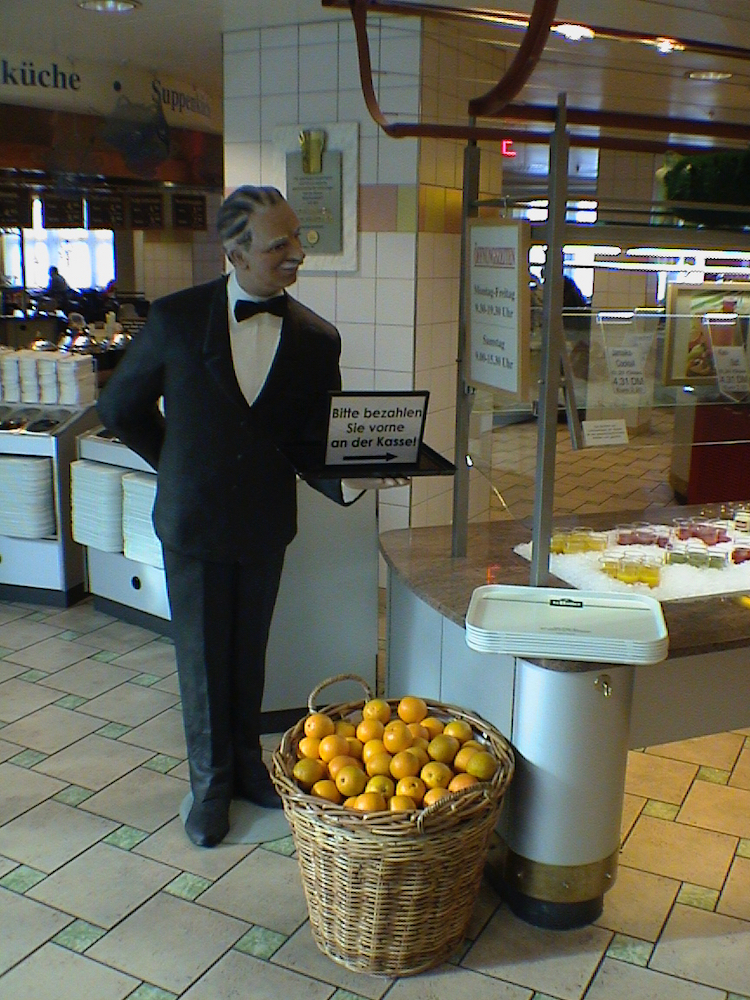
An “attendant” at Herties’ buffet directs customers to please pay at checkout.
Hertie’s also is a Mac dealer, but they were unable to help with our problem. We tried another department store (Karstadt AG Oberpollinger on Neuhauser Strasse). The techie there was very helpful and loaned us the CDs that we needed. Two CDs and three tries later, and HOORAY!! it was fixed.
-
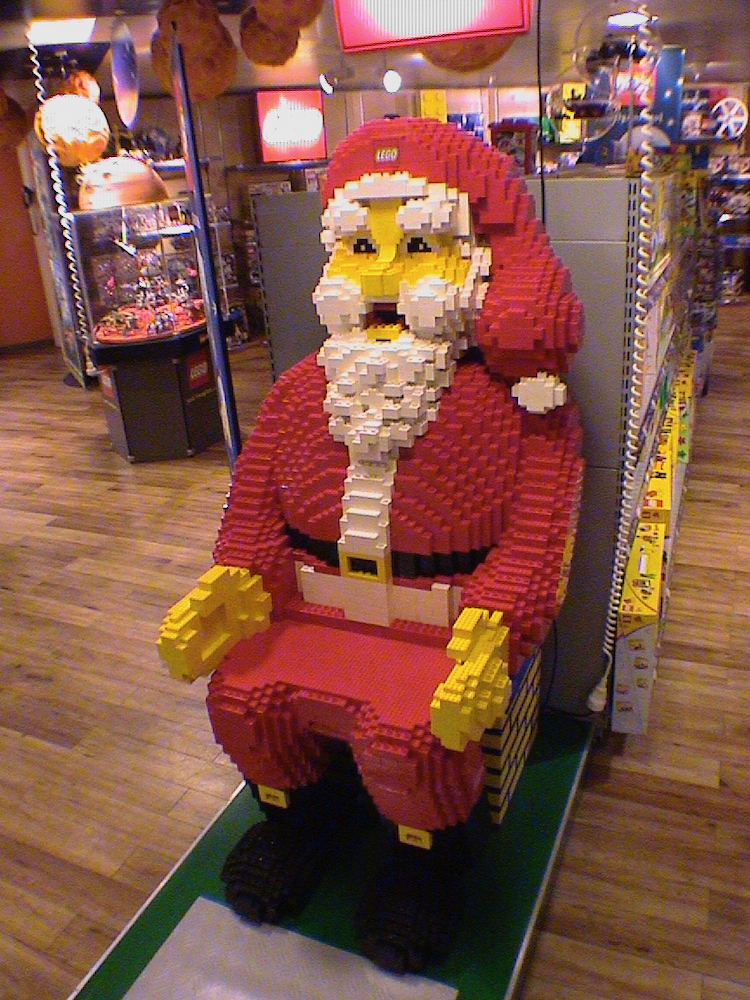
- Herties had a Santa greeting us at the top of every escalator. We called this one “Lego Santa”.
-
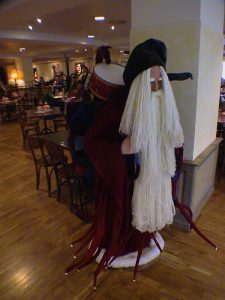
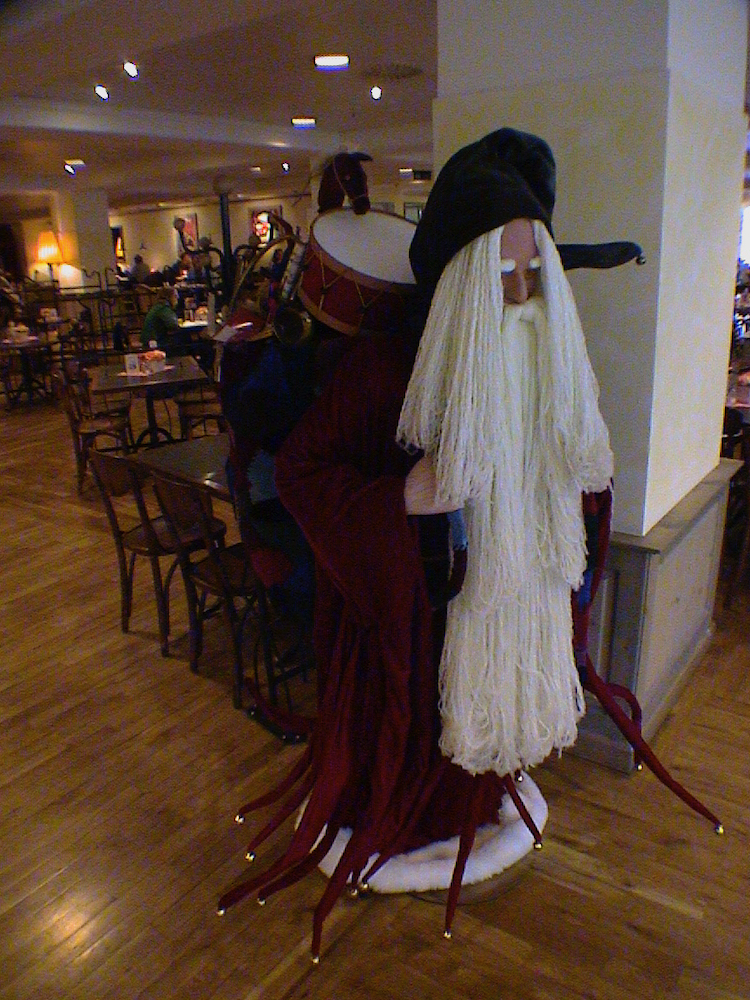
- On another floor we met “Rasta Santa.”
-
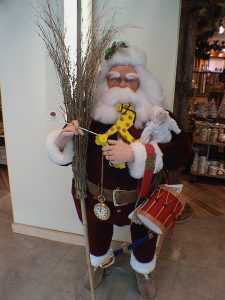
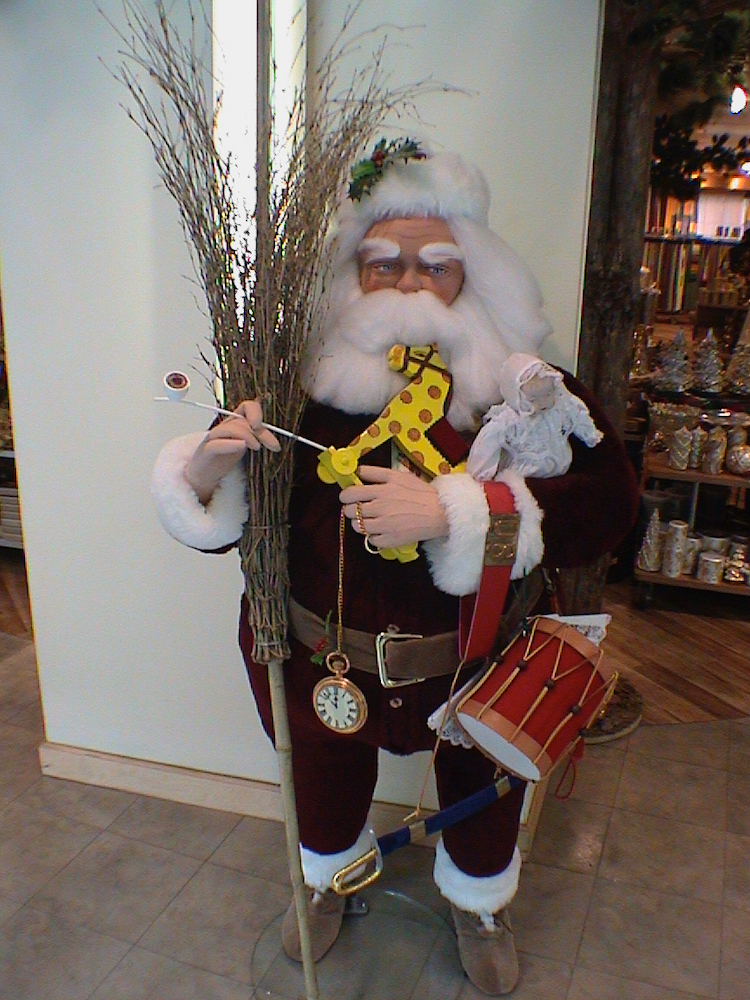
- This was the closest one we could find to a “normal” American-style Santa.
-
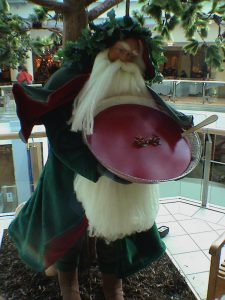
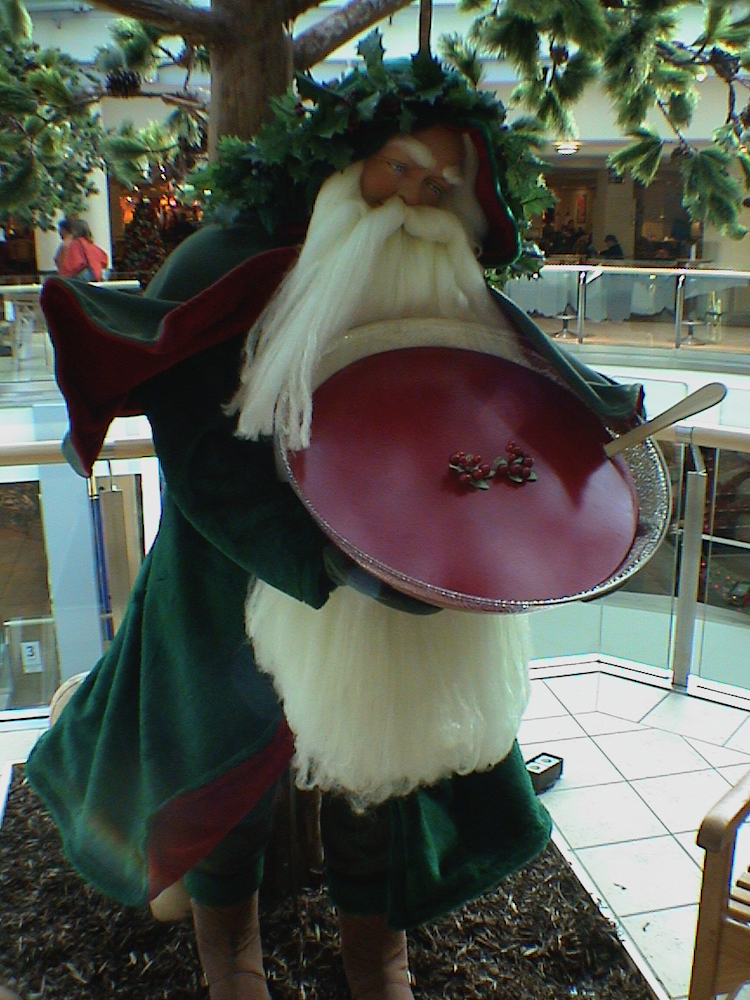
- “Pudding Santa” appears to deliver a tasty treat.
In the midst of all of this, we found a couple of hours to explore central Munich.
The first thing we noticed coming out of the Bahnhof was the Strassebahn (tram) shuttling people about, and the bike lanes that occupied their own exclusive space between the street and the sidewalk.
The Bahnhof and the Rathaus are connected by a wide pedestrian zone nearly a mile long and branching out in several directions. Late Sunday afternoon, the stores were locked but their entrances were occupied by buskers. It was a festival of all sorts of buskers. We saw a woman playing wine glasses, a traditional Tibetan group, and a group playing the local oom-pah music.
The travel writer Rick Steves described Munich as having a “bombed out” feeling, and we could see what he meant. About 80% of the buildings in central Munich looked like they’d been built since the second World War, but a lot of the stuff that got missed by allied bombs (or repaired since) was spectacular.
-
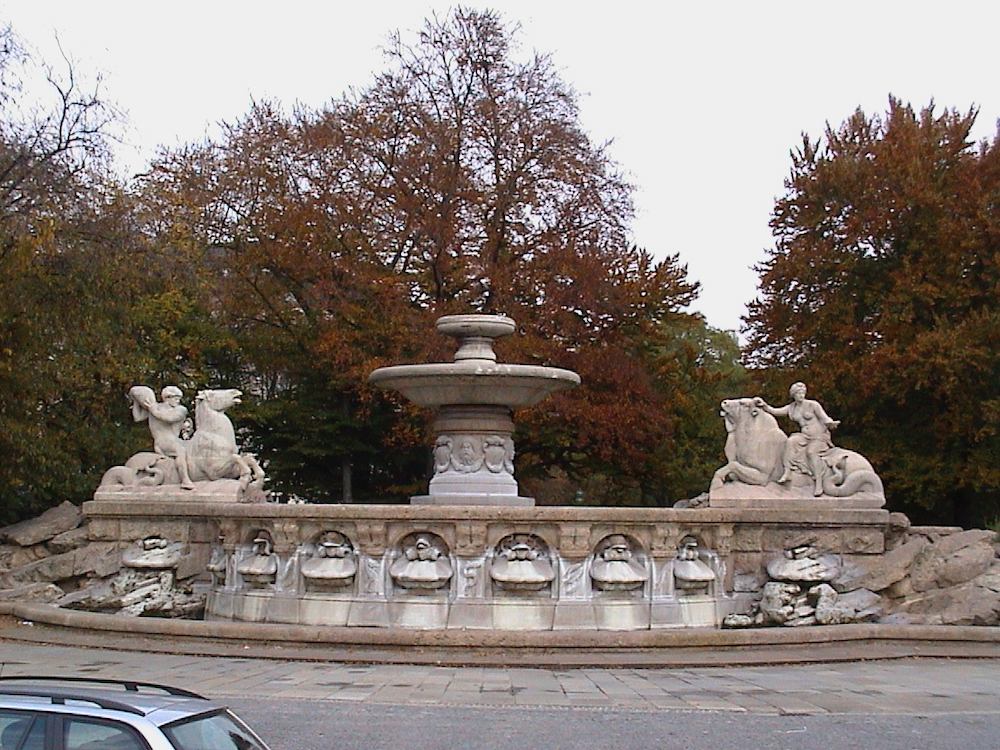
- The Wittelsbacherbrunnen was not running at this time of year.
-
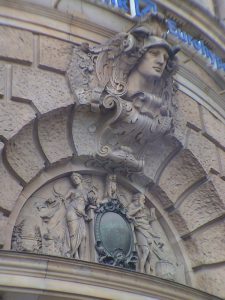
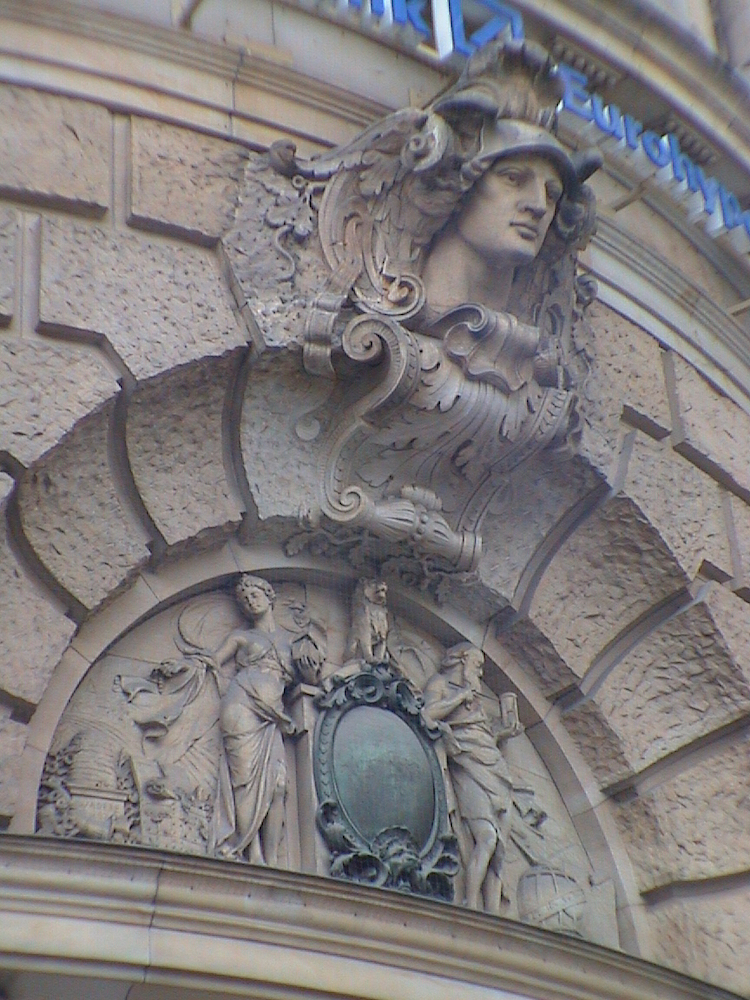
- This artwork adorns the entrance to the Munich Stock Exchange.
-
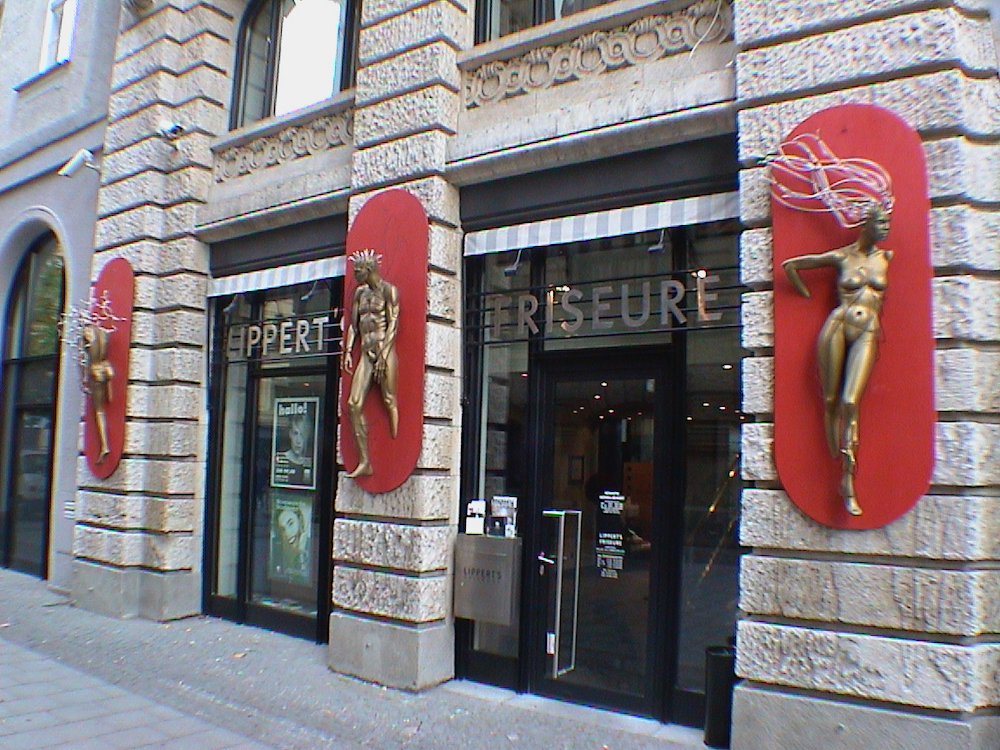
- A few steps from the buttoned-up stock exchange, a hair stylist displays some more provocative sculptures.
-
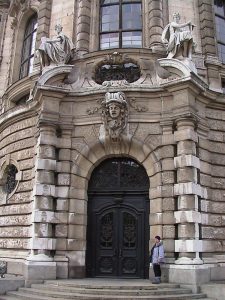
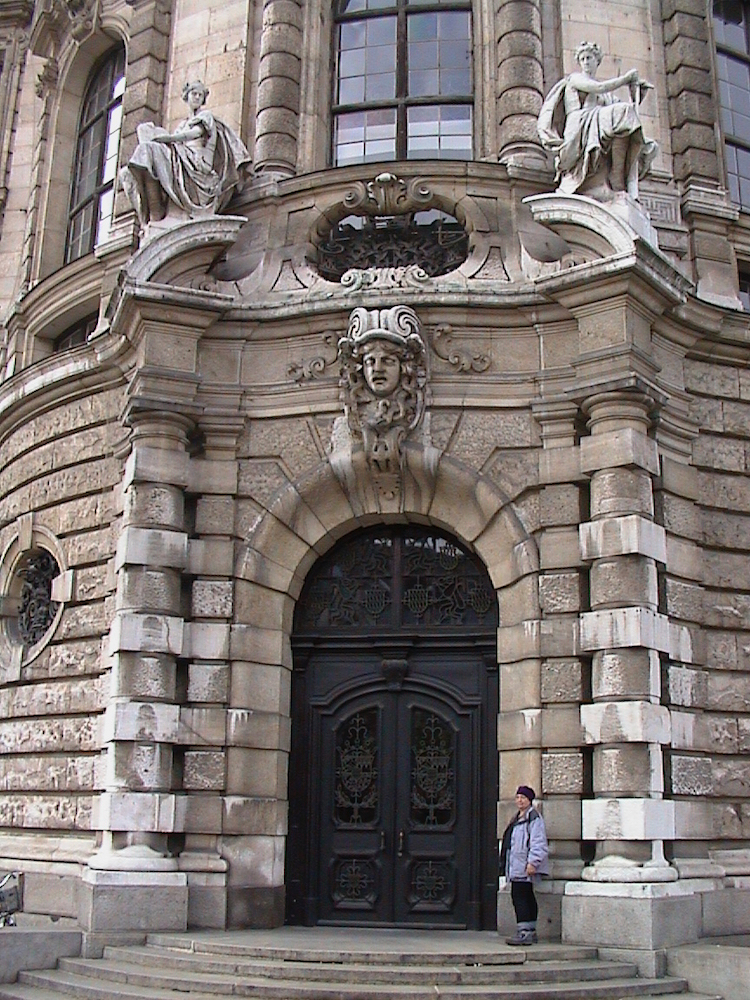
- Rozie stands in the doorway to Justizpalast (Palace of Justice… the courthouse).
-
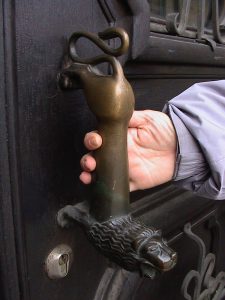
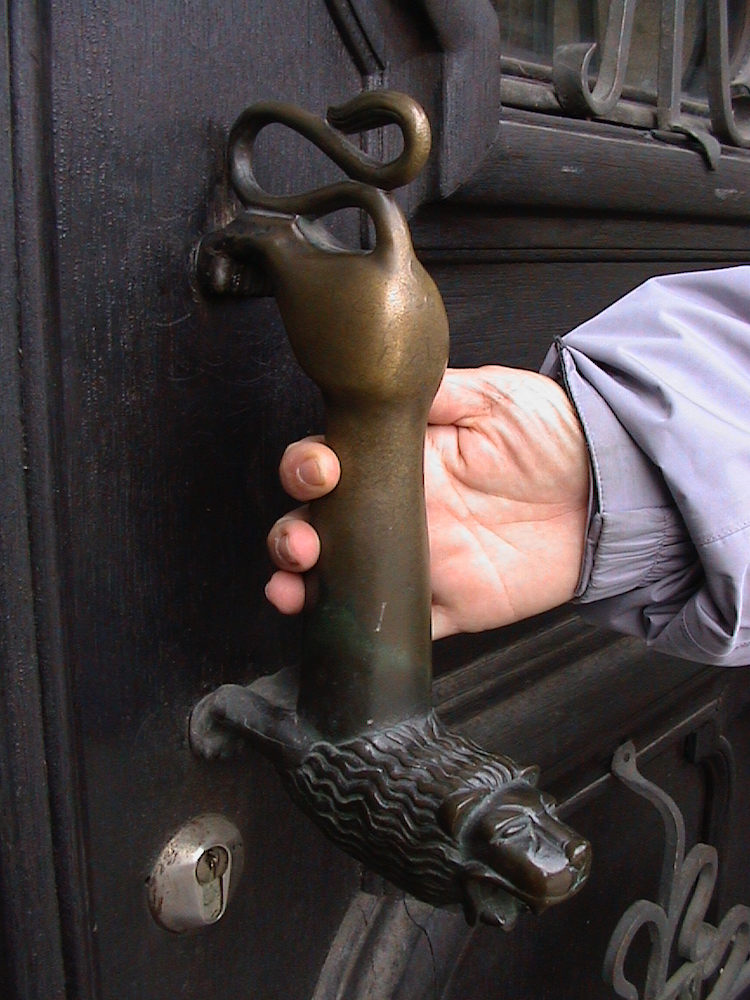
- Justizpalast has its own unique door handles.
-
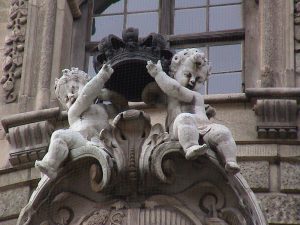
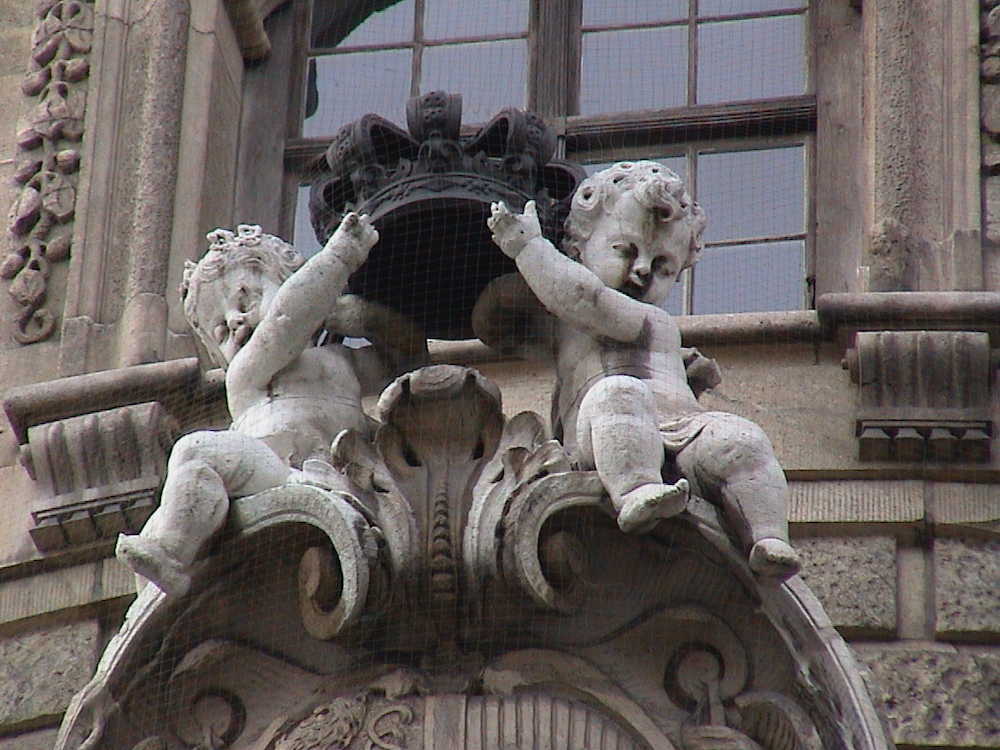
- This pair of cherubs hold a crown high above the entrance to Jusizpalast.
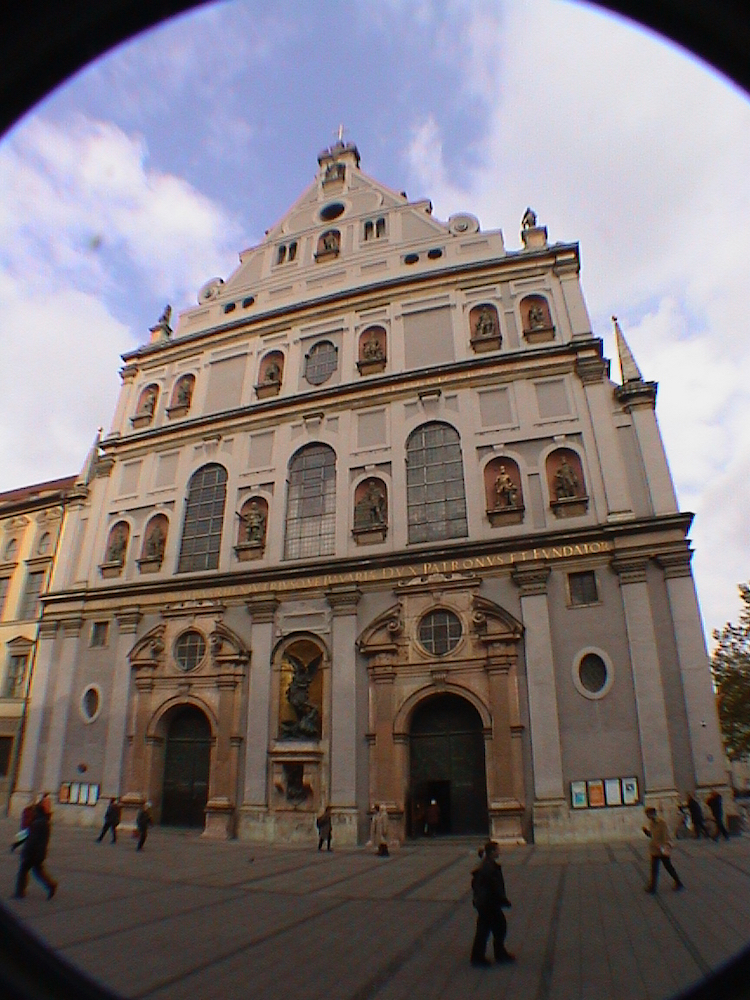
As in the rest of Europe, religious people will find no shortage of incredible places to pray while secular folks admire the artwork. Two churches in central Munich stand out. St. Michael’s was adorned by ornate sculptures inside and out, and its outward appearance was deceptively compact given its cavernous interior.
-
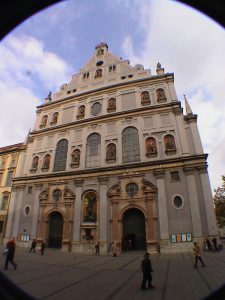
- The front of St. Michael’s Church in Munich.
-
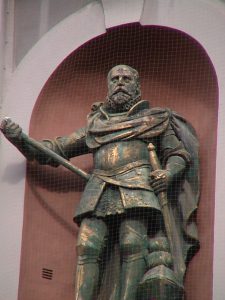
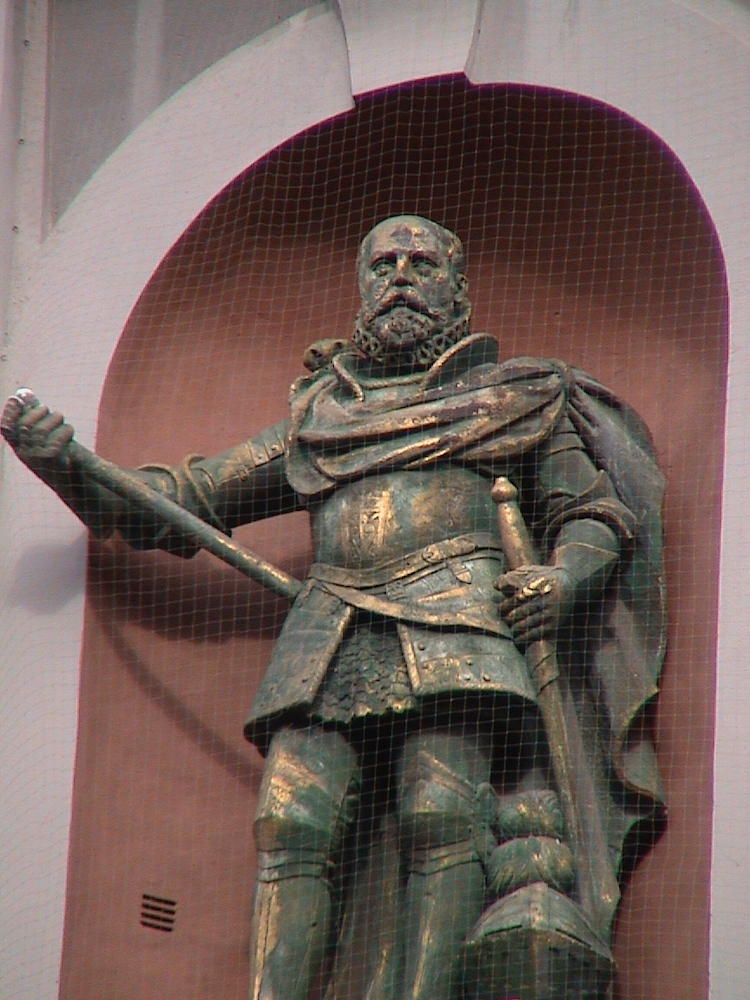
- One of the many sculptures looking out from the front of St. Michael’s.
-
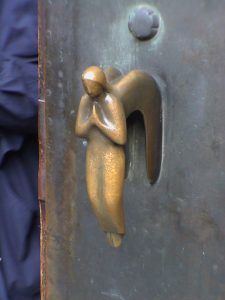
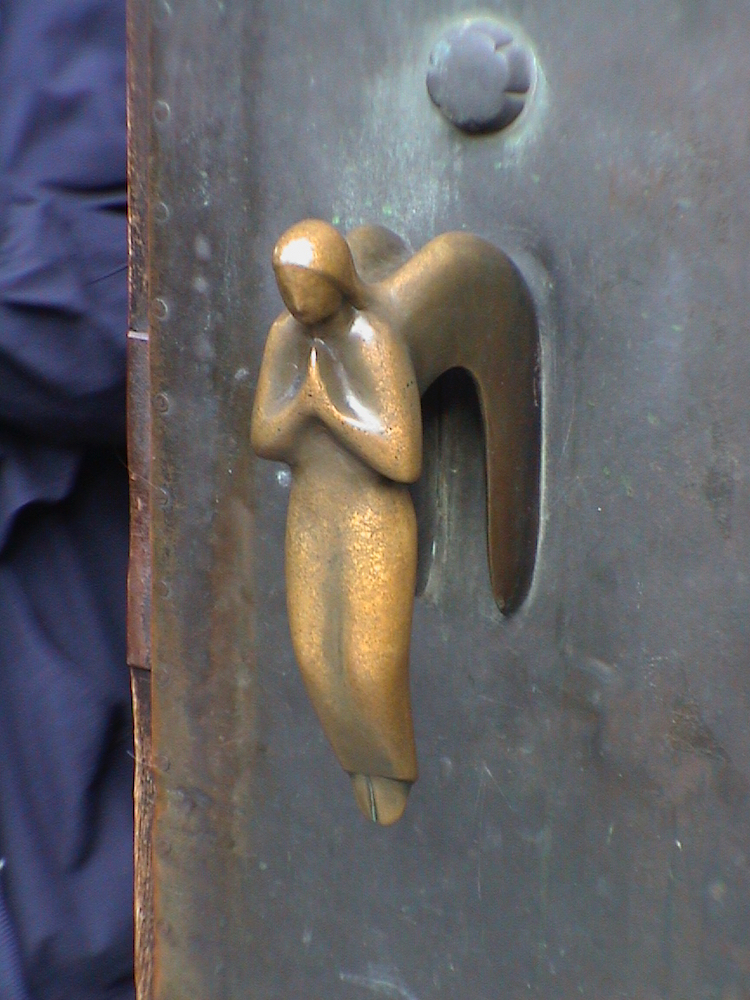
- The door handle to St. Michael’s Church.
-
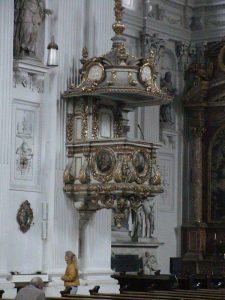
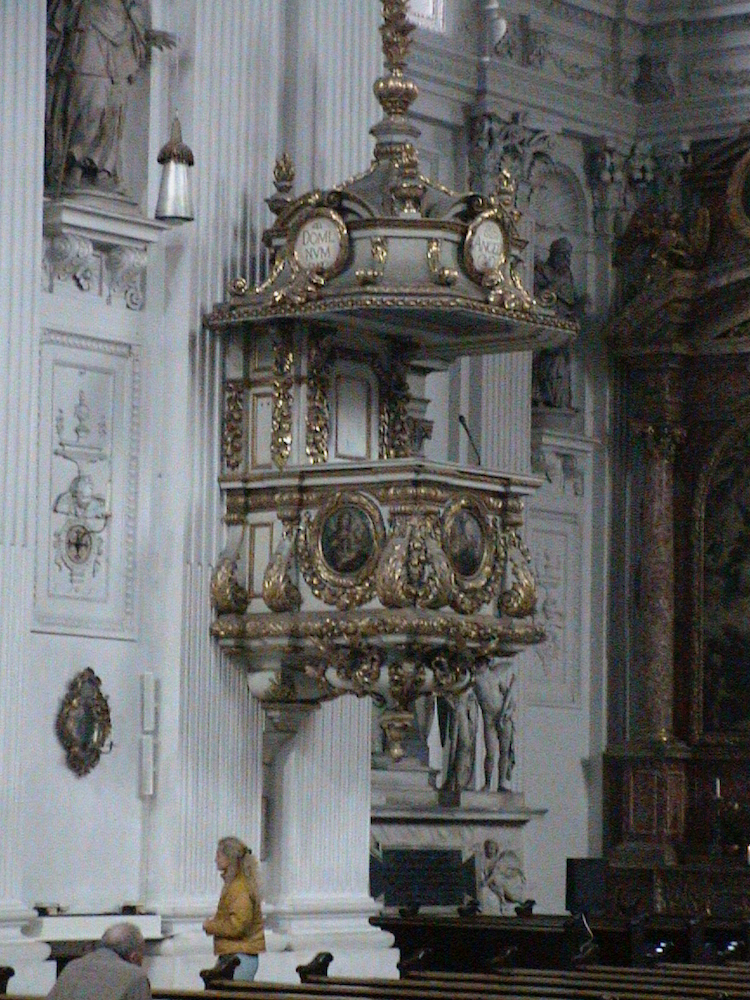
- From this seat, a priest or bishop could look down on his congregation.
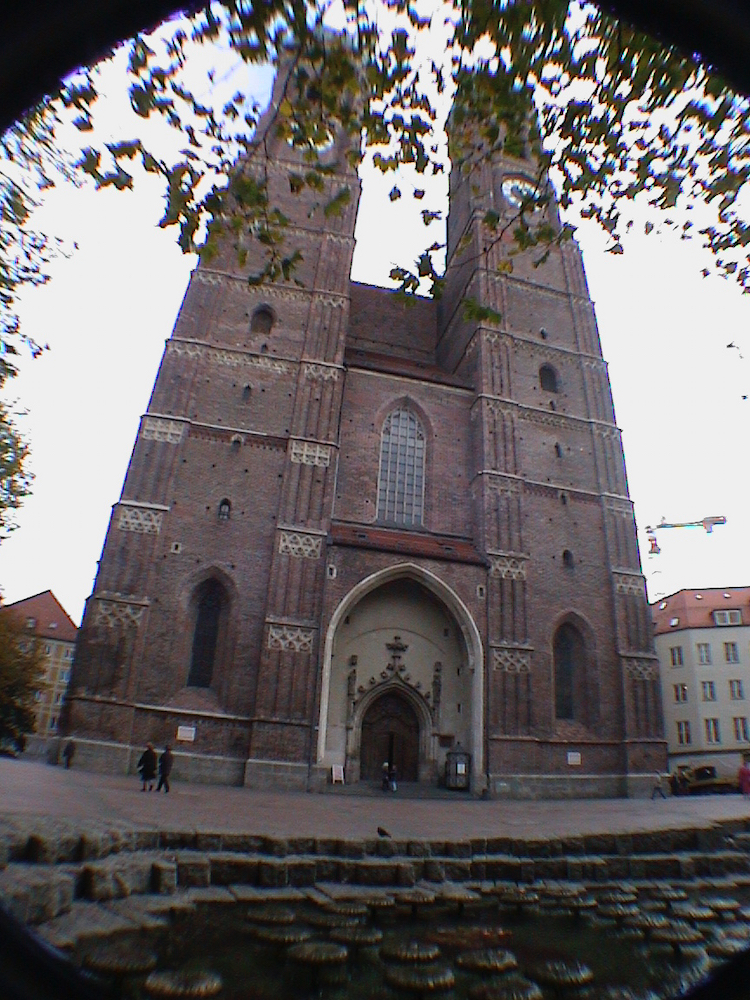
Prominent on the Munich skyline are the twin “onion-topped” steeples of Dom. This church is made of standard red brick, and evidence of post-war repair work can be seen from the outside. The inside was beautifully ornate.
-
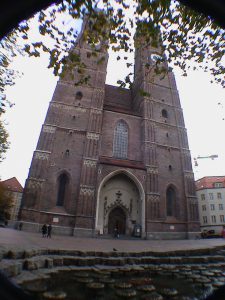
- This massive church with twin steeples topped by “onion” domes is a landmark of central Munich.
-
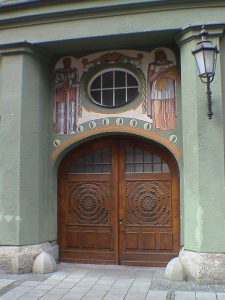
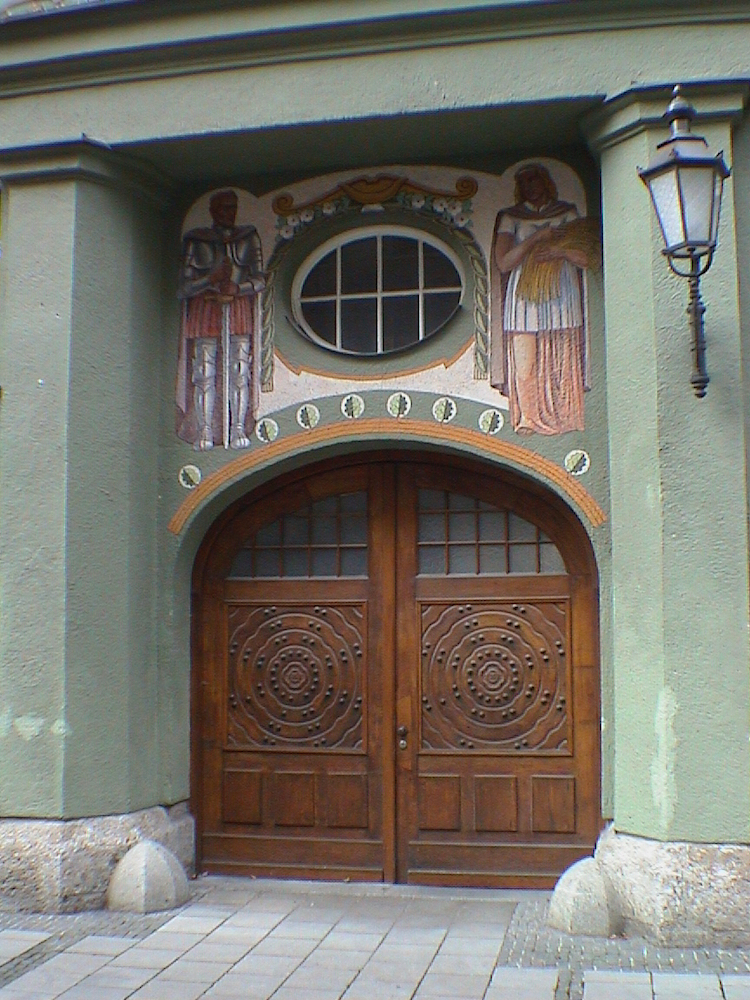
- One of the doorways on the opposite side of the small plaza.
-
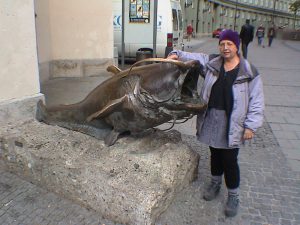
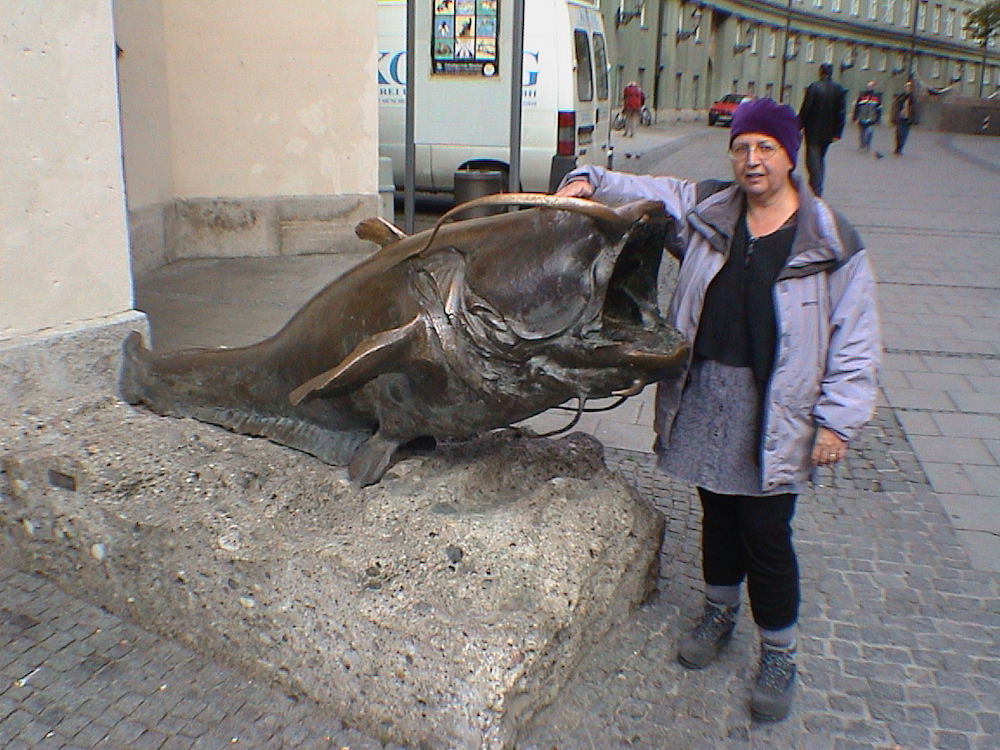
- Rozie visits with a catfish sculpture in front of the fishing museum.
-
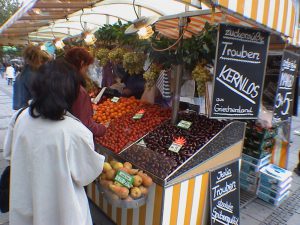
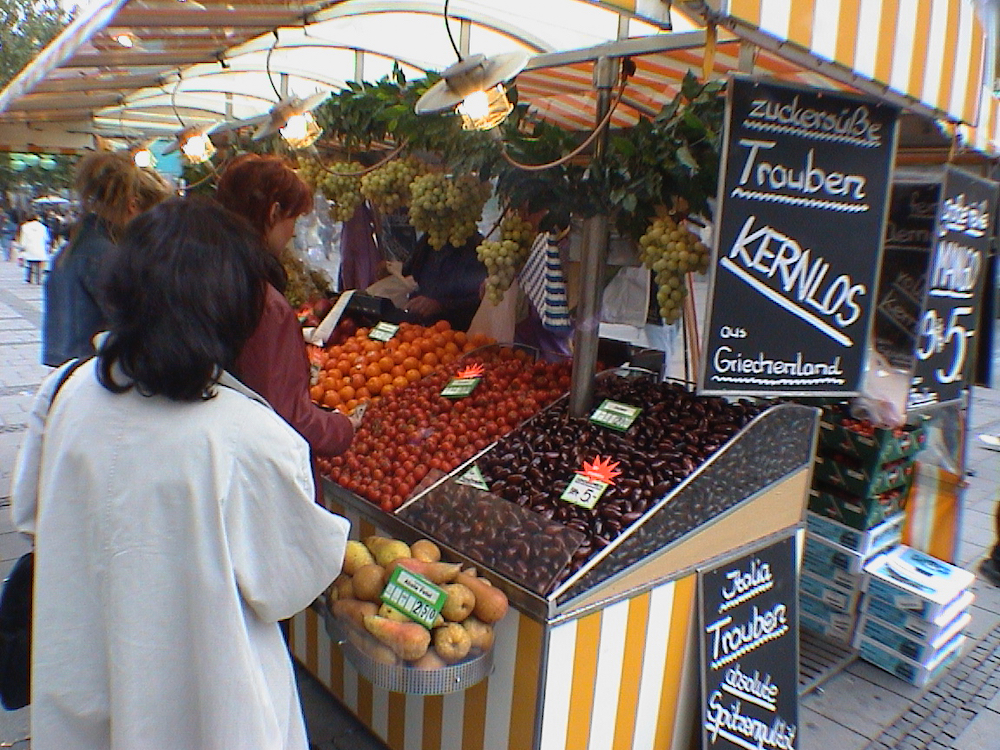
- A fruit stand in the pedestrianized area of central Munich.
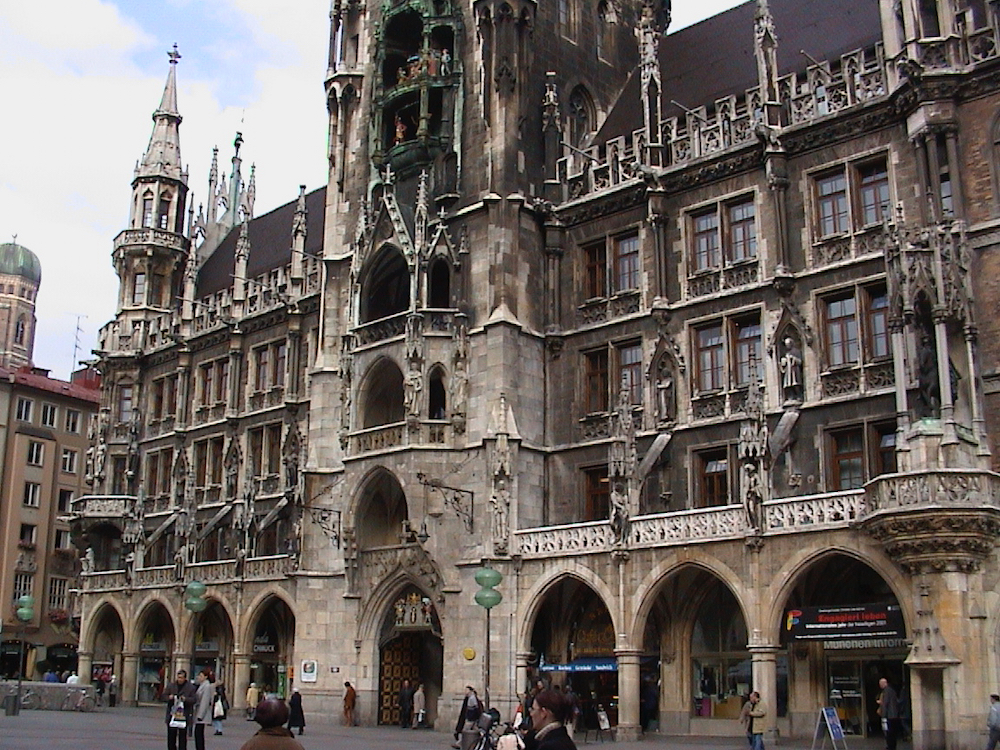
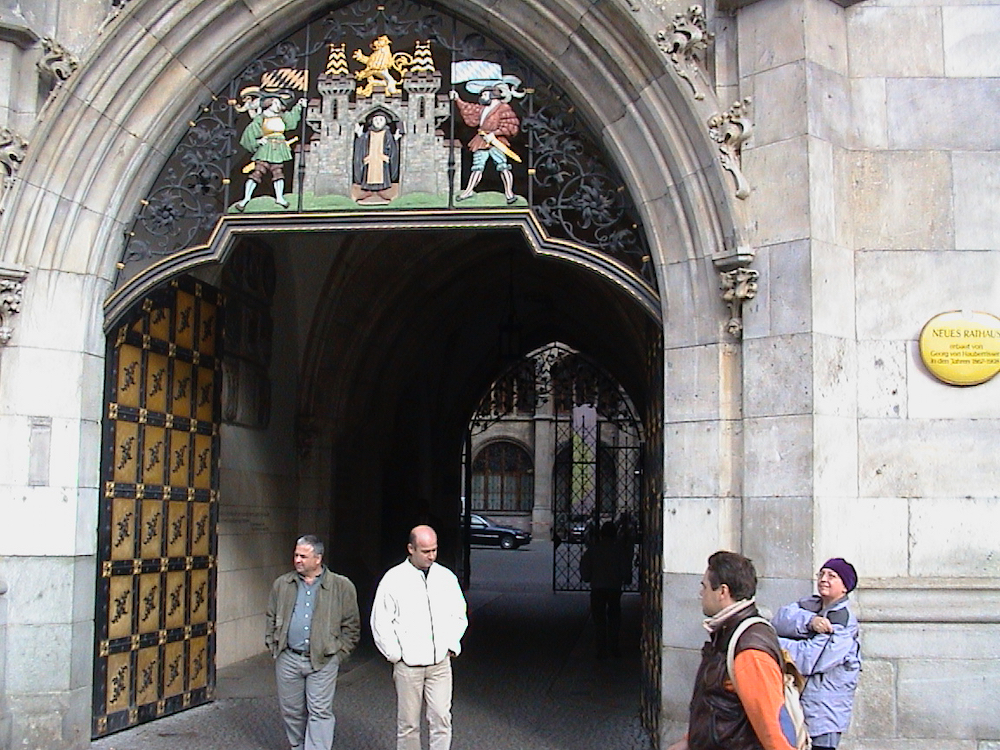
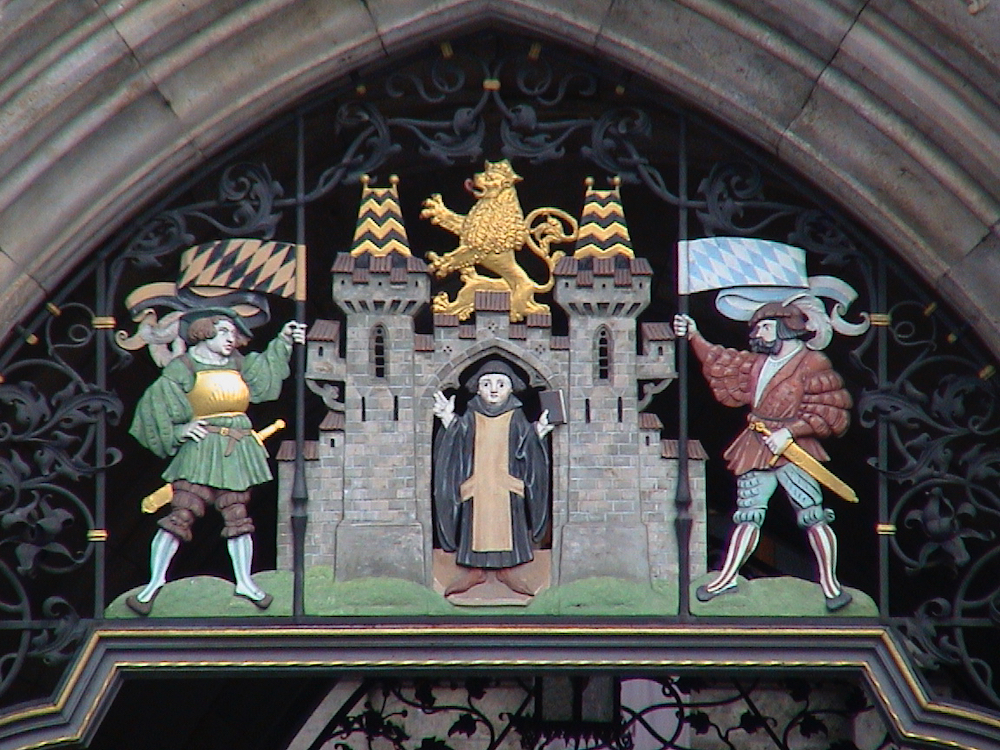
The highlight of our visit to central Munich was the Rathaus, which may have displaced the one in Philadelphia as our favorite city hall in the world. Every square inch of the exterior seemed to be decorated with some sort of artwork (mostly sculpture), and the passageway to the central courtyard conformed to the theme.
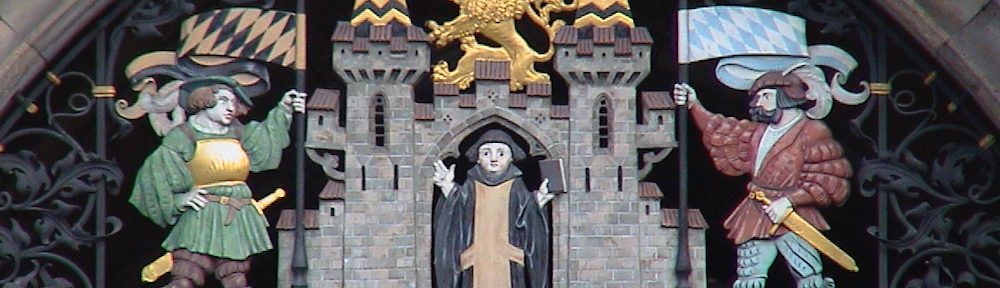
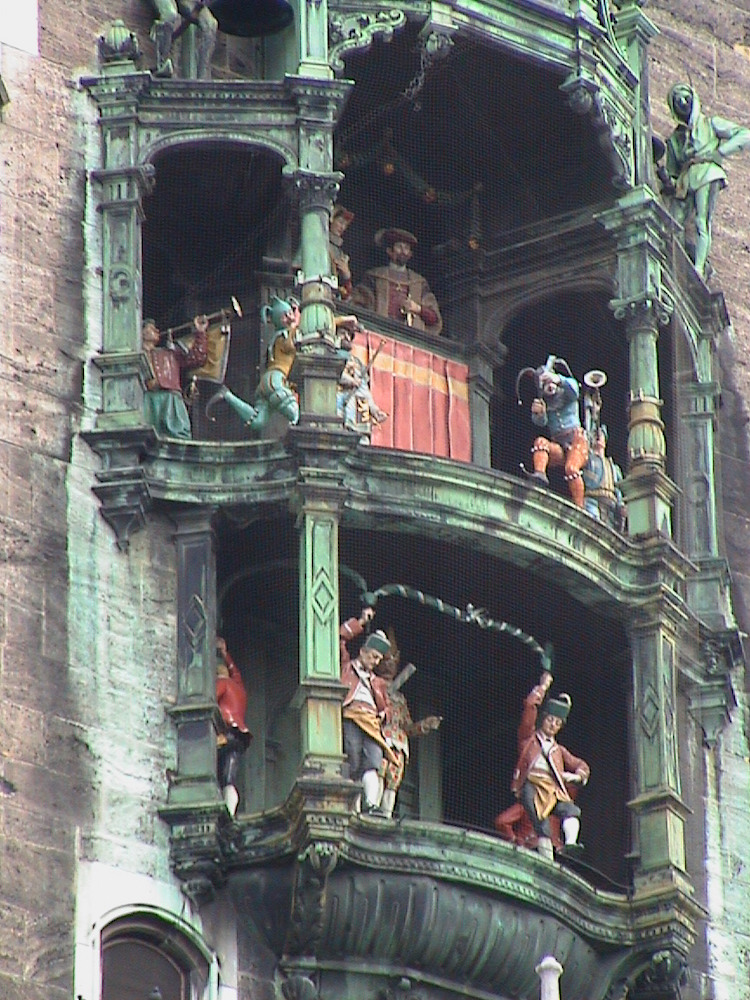
The crowning jewel of the Munich Rathaus is the Glockenspiel on the tower. These are painted figures that start dancing around at appointed times, sort of like 18th- or 19th-century animatronics.
-
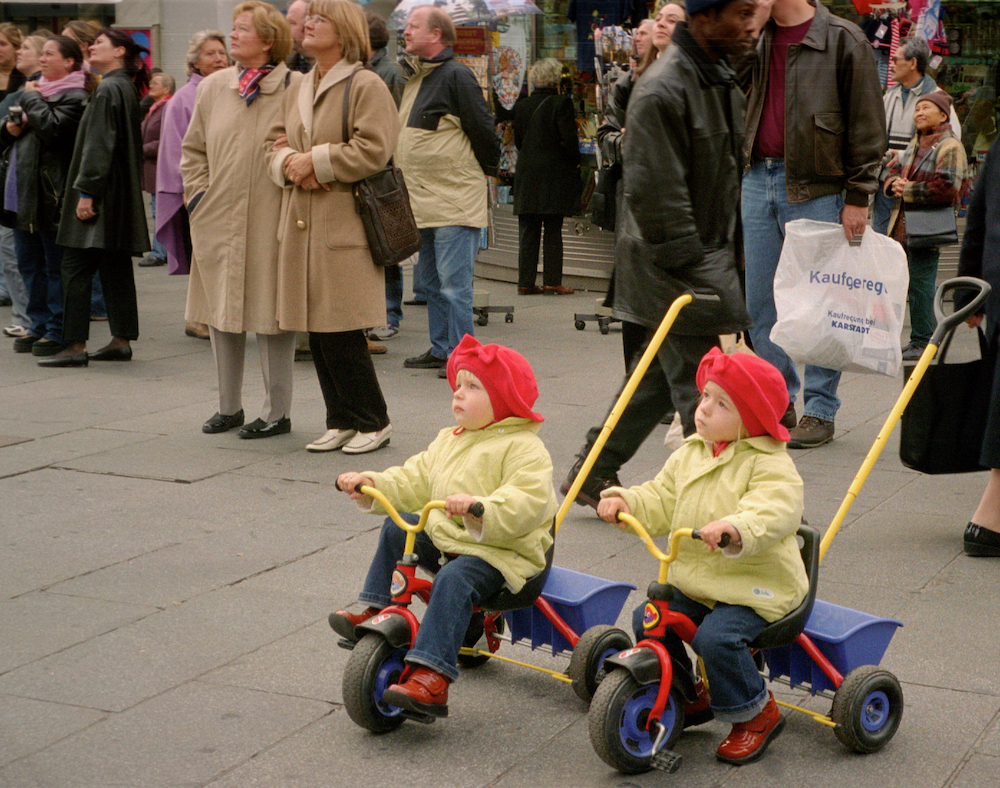
- On Marienplatz in central Munich, a pair of twins appear captivated by a spectacle.
-
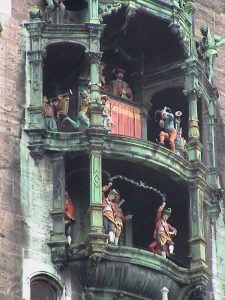
- They were watching the Rathaus Glockenspiel.
-
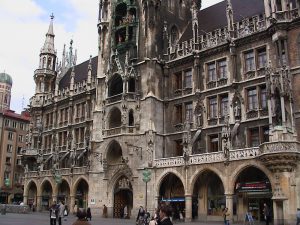
- Rathaus is the German word for “city hall”, and we’ve adopted it into our American lexicon.
-
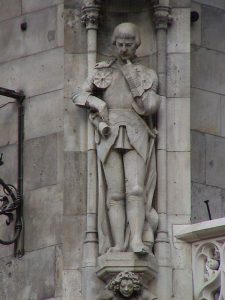
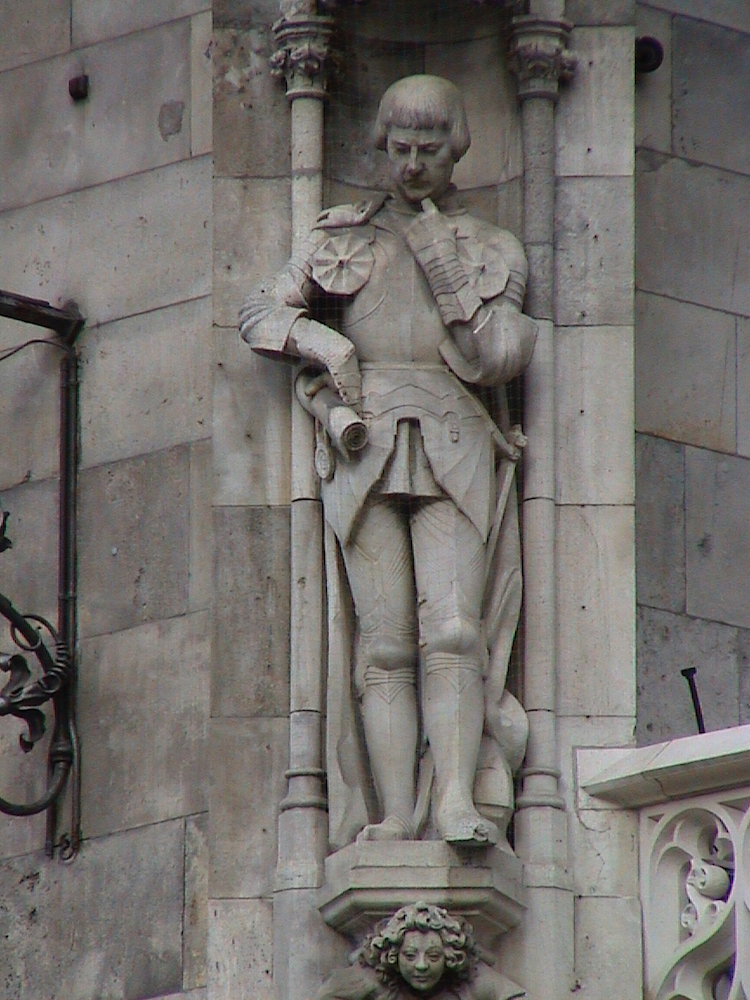
- A sculpture guards the front of the Rathaus..
-

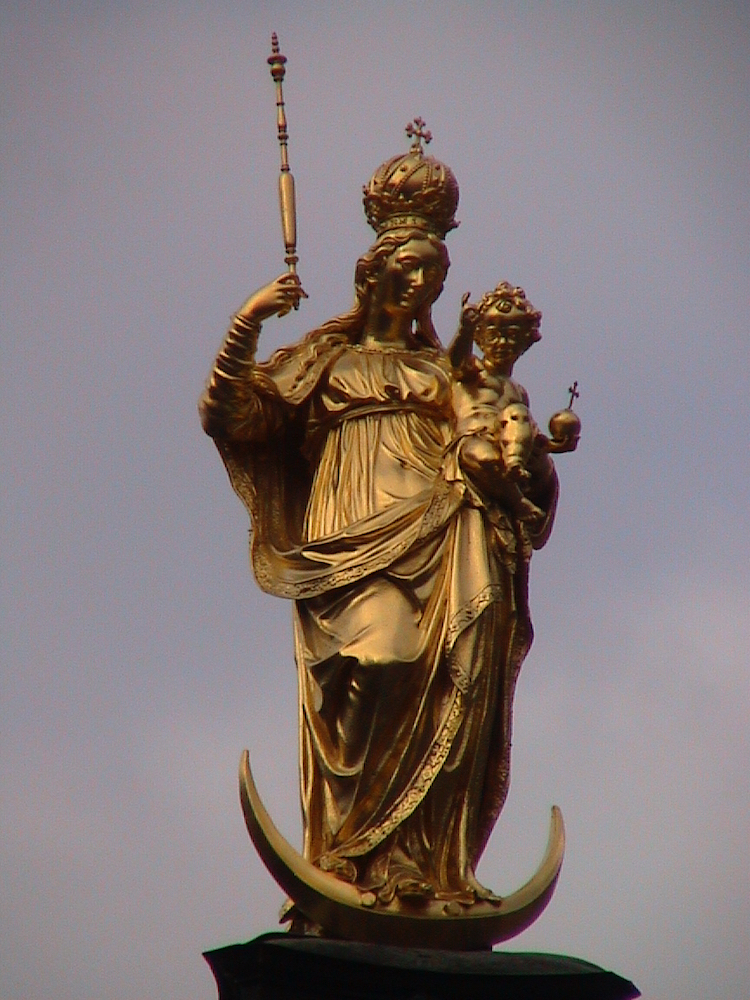
- …while Mother Mary watches over Marienplatz.
-
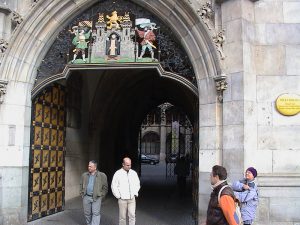
- The entrance to the inner plaza of the Rathaus.
-
- Artwork above the main entrance to the Munich Rathaus.
-
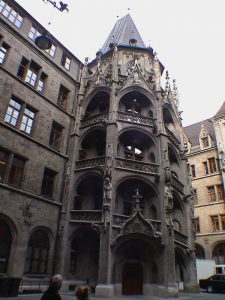
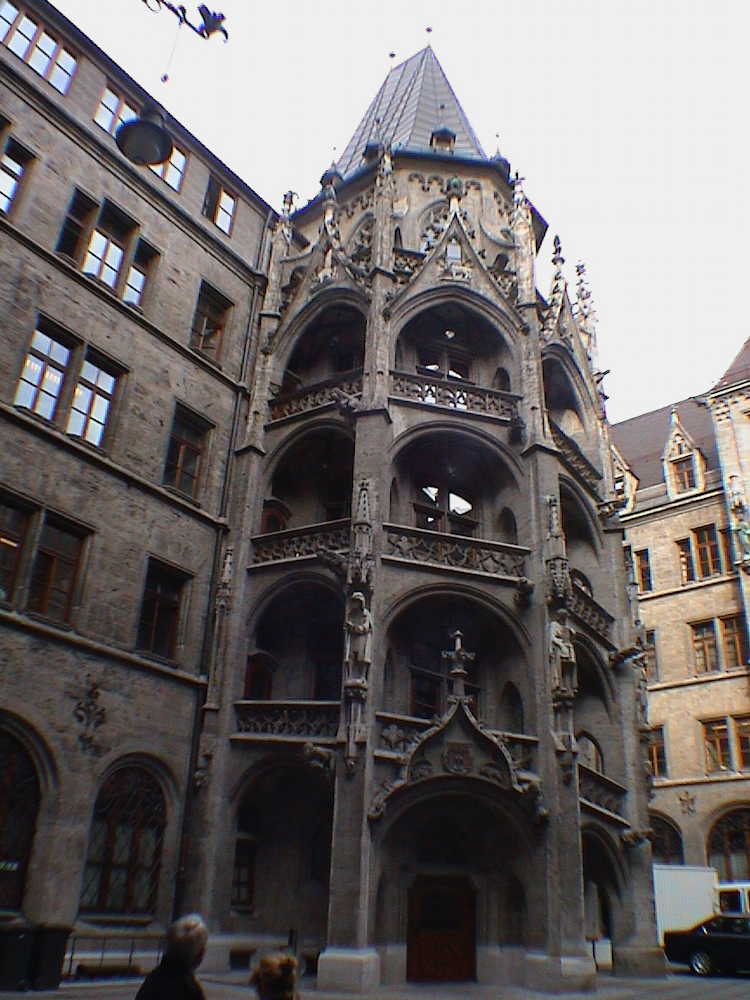
- A spiral walkway makes the upper floors accessible.
-
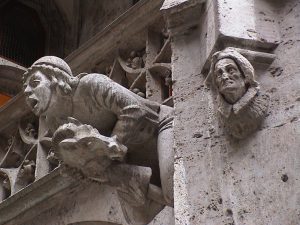
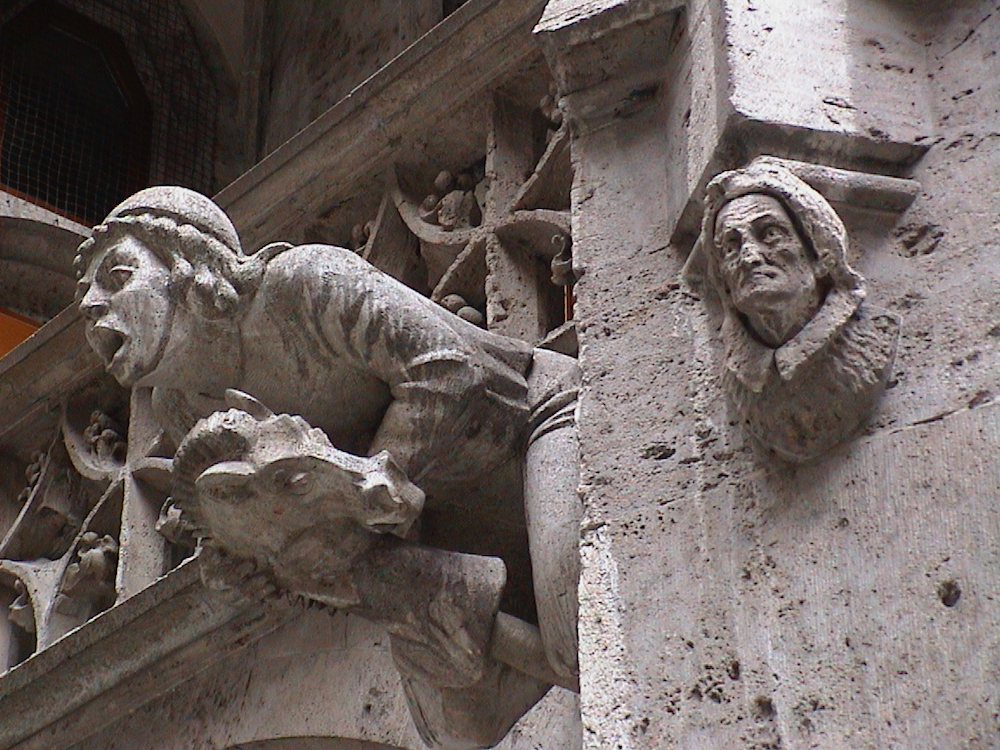
- Sprouting from the walls are representations of life forms.
-
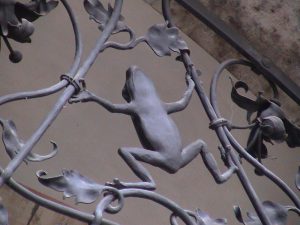
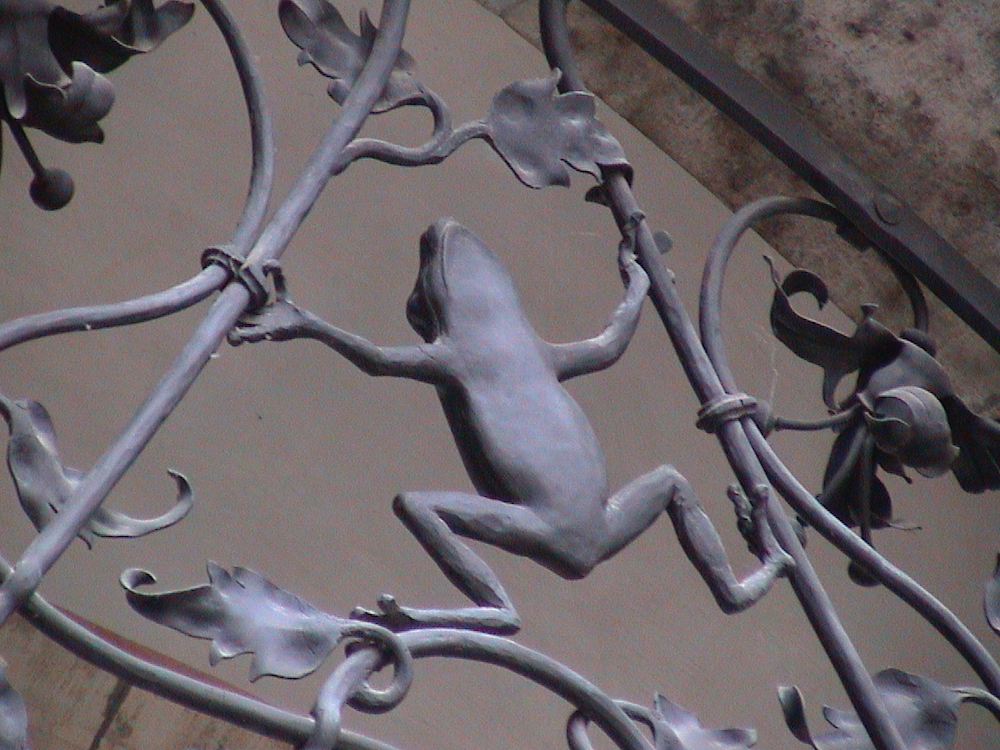
- The Munich Rathaus did not use bars for security. Artwork was supplied where bars and grates would otherwise be.
In the end, our stop in Munich “for a couple of hours” turned out to be most of a couple of days.
After completing our on-line communication duties, we dashed into the Bahnhof to catch the 4:30 train for Salzburg, Austria. We feared we’d missed the train, for on our platform was a train bound for Freilassing. It turns out that Freilassing is on the Austrian border, about a 7-minute ride to Salzburg on another train.
We got on the train and waited for it to move while other passengers gradually found their way on board. It was dark by the time we started moving, even though it wasn’t 5 yet.
As our journey takes us east and north, afternoon darkness has been coming earlier and earlier.
We waited for about 20 minutes in Freilassing for a puny little train to pick us up and shuttle us to Salzburg. The TI was closed when we got there, but they left out a pile of local maps that included a complete listing of local accommodations. We set our sights on a two-star pension across the tracks.
We had a lively debate over how to get to the other side of the tracks from the station, and confidence was not high as we trudged into the darkness across a raggedy steel graffiti-encrusted footbridge. We then made our way along a street with ordinary boxy apartment buildings on one side and billboards on the other.
One billboard advertised a radio station that, apparently, played nothing but Frank Sinatra. It sounds like we didn’t miss anything by not being exposed to Austrian radio.
Ten minutes after we left the station, we found our pension and were greeted by a nice friendly lady who showed the wear of too many years smoking too many cigarettes. She spoke very good English and she had a room for 480 Schillings (about $32) that included breakfast.
The shower in our room is a very interesting appliance. It’s a box about the size of a phone booth tucked into a corner of the room. A narrow pipe supplies the water, and it’s plugged into an electrical outlet (which, like all European outlets, is 220V).
The floor of the shower is about a foot off the floor of the room, to accommodate the shower’s built-in water heater. There’s a switch for the water heater (which we were asked to leave alone), and a switch for the pump (which we turned on and off to use the shower).
Obbie took a shower to rinse off the stink of the sweat from dealing with computer problems in Munich, but the flow was just a trickle … a fairly lame shower by our spoiled American standards.
We’re finding some other differences in the furnishings and plumbing in these parts of Europe. Double beds have been hard to come by, often they’re just twin beds pushed together. Beds usually come with two (one for each of us) thick feather blankets, which are wonderfully warm, though having two separate blankets is a challenge for cuddling.
Central hot water heaters are rare… To maintain the heat on a big tank of hot water is perceived by Europeans as a big waste of energy. What is more common are on-demand water heaters. These are installed close to where the water is used (e.g. kitchen sink, bathroom).
For instance, when you turn on hot water to run a bath, a burner kicks in in the heater mounted on the wall. Water runs through a coil of pipe above the flame and becomes hot instantly. So energy is used to heat only the water that is needed, when it is needed.
Electric versions of the on-demand water heater are common in showers in the British Isles, but they don’t seem to work as well … hot water comes in a trickle, or cold water comes in a gush.