An early start on Tuesday was delayed by a conversation with a couple of our fellow guests. They are a newly married couple on their honeymoon. Tina is a German native now living in America, and Tammy is a musician who attended the same university that Obbie did (UW-Eau Claire) about 5 years later.
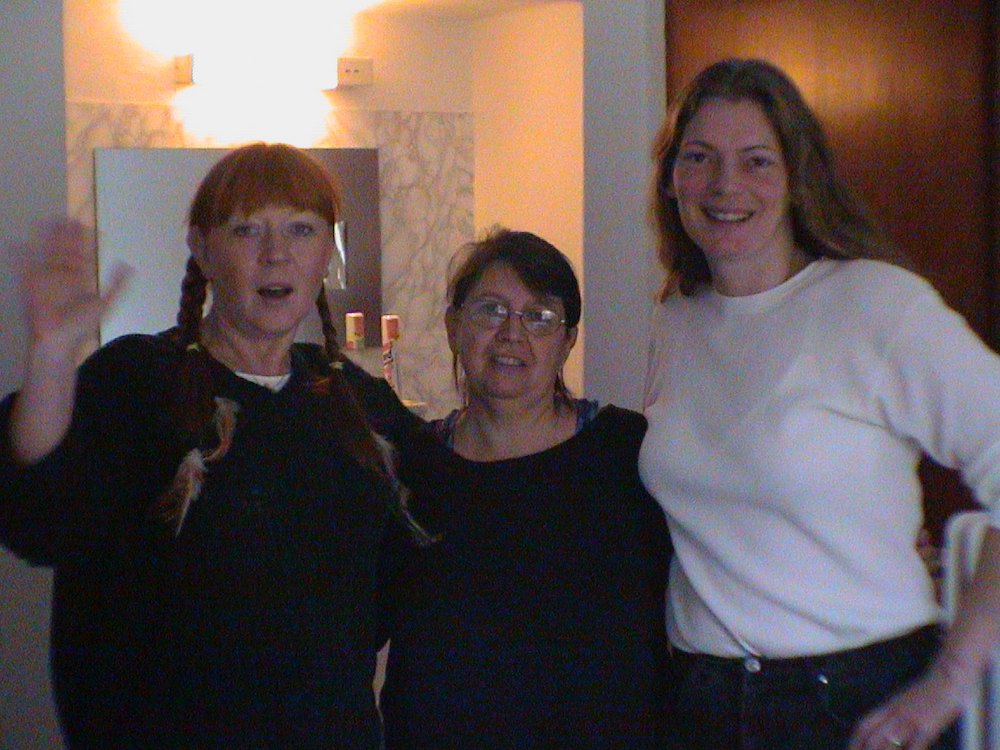
Rozie stands with Tina (l) and Tammy (r) at our guest house in Salzburg.
We packed our bags and left them behind the front desk while we spent a few hours walking around Salzburg.
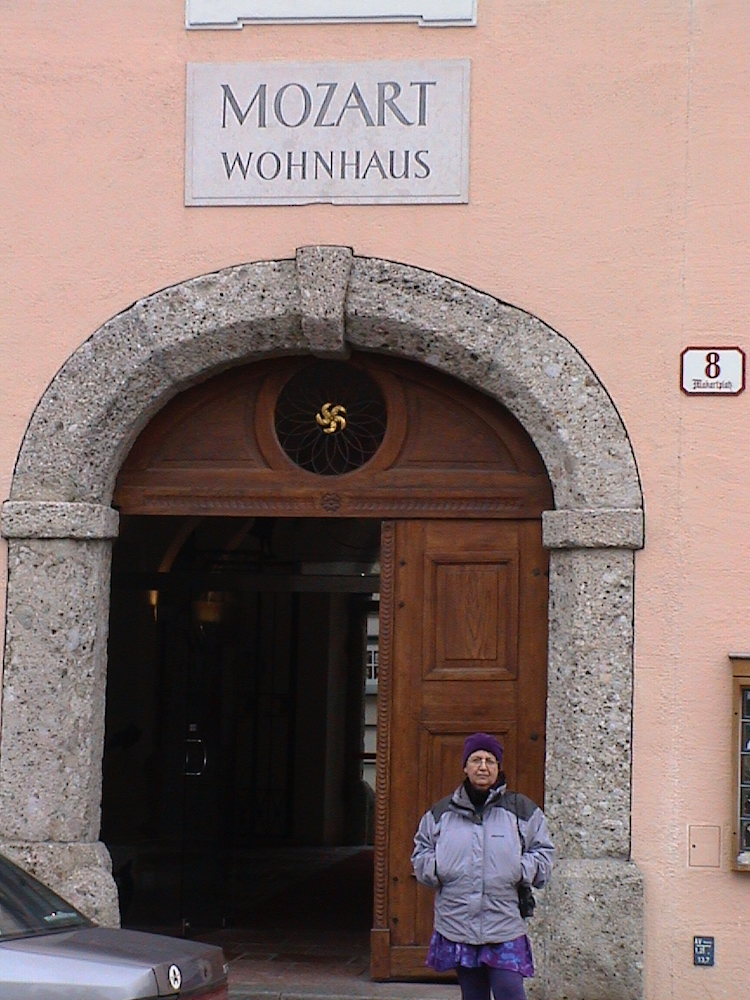
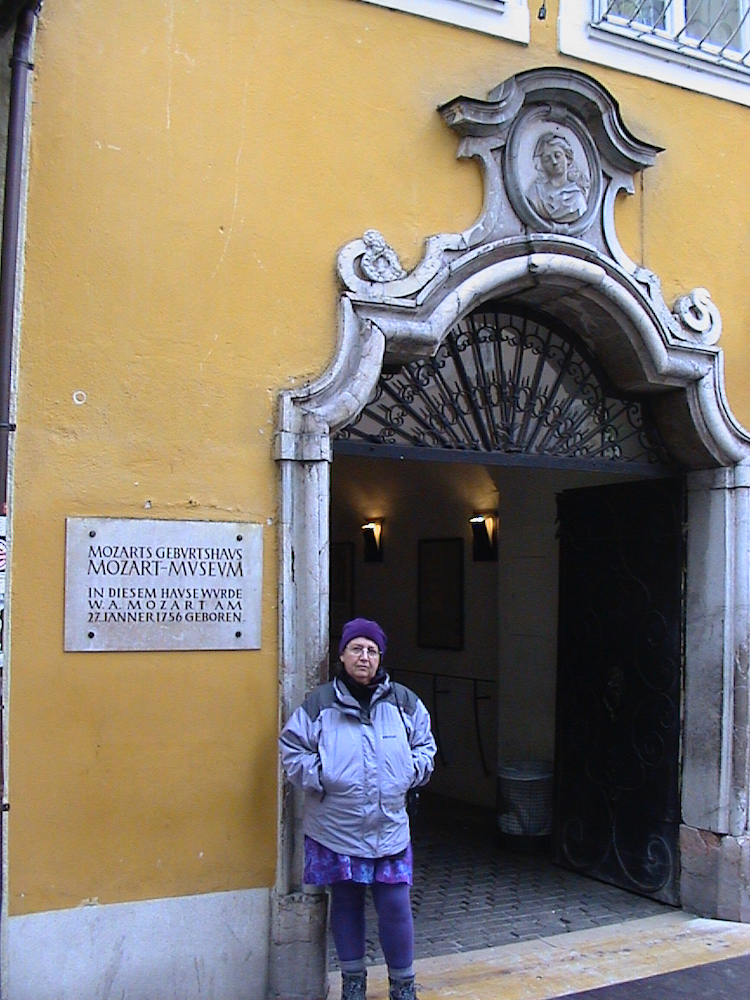
Mozart’s birthplace and his residence attract many pilgrims to Salzburg, and Rozie is among them.
It was a fairly short walk to central Salzburg, and the stark, plain high-rise apartment complexes quickly gave way to elegant works of 18th-century architecture. At noon we found ourselves in a park about the size of a football field that was filled with magnificent sculptures.
We enjoyed the park alongside a group of Japanese tourists and the local suits on their lunch hour. Meanwhile, we listened to the ringing of every church bell in the city.
-
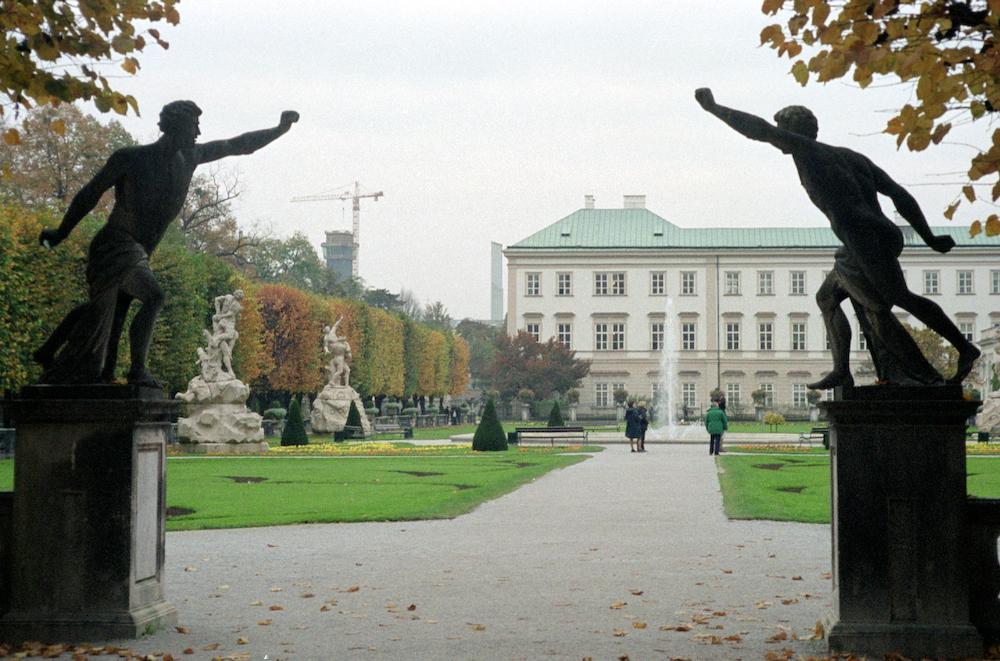
- The entrance to the Mirabellgarten in central Salzburg.
-
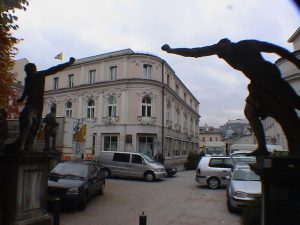
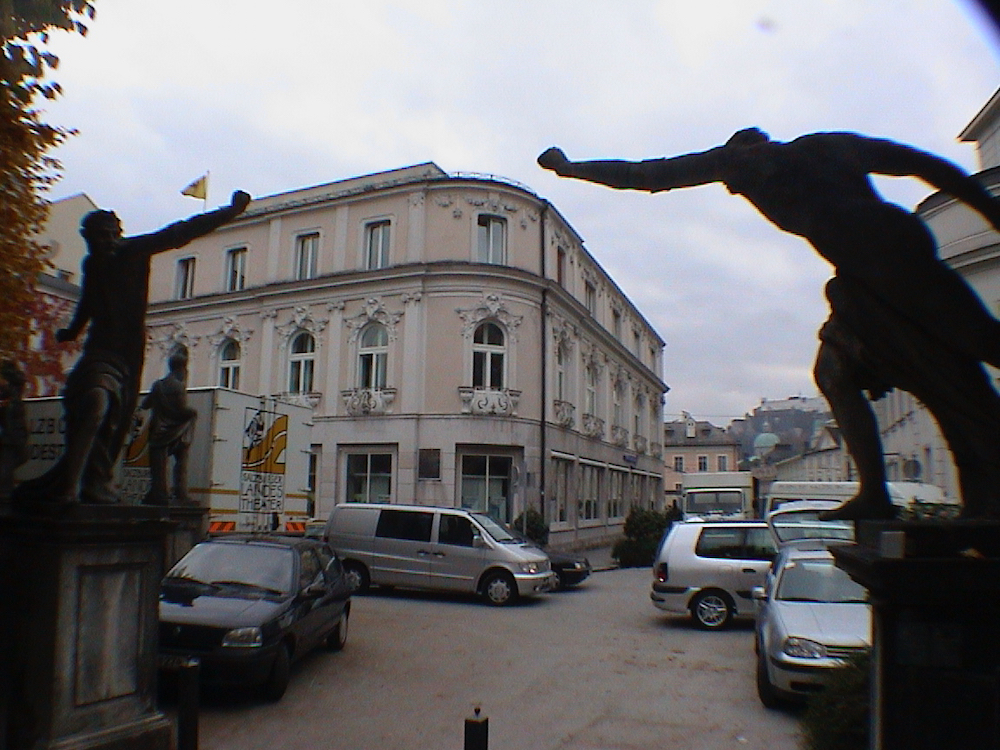
- Looking out thru the entrance from the Mirabellgarten reveals a mass of motor vehicles that don’t fit in this setting whatsoever.
-
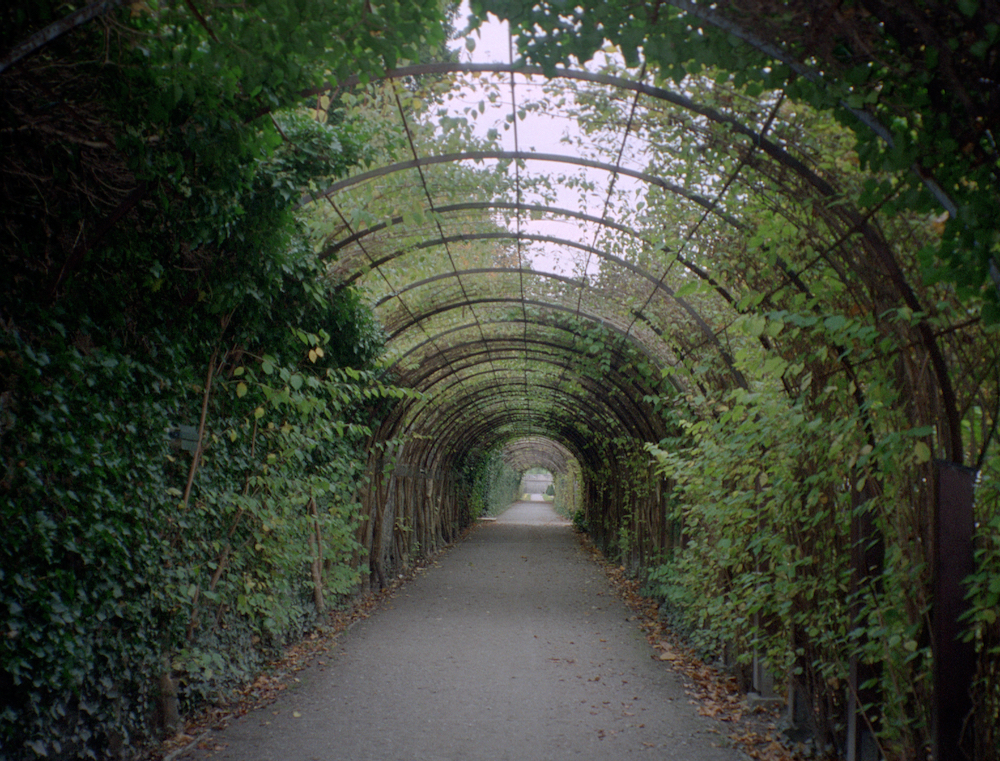
- This walkway surrounded by plant growth was part of Mirabellgarten.
-
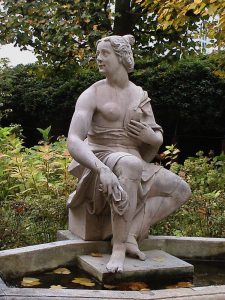
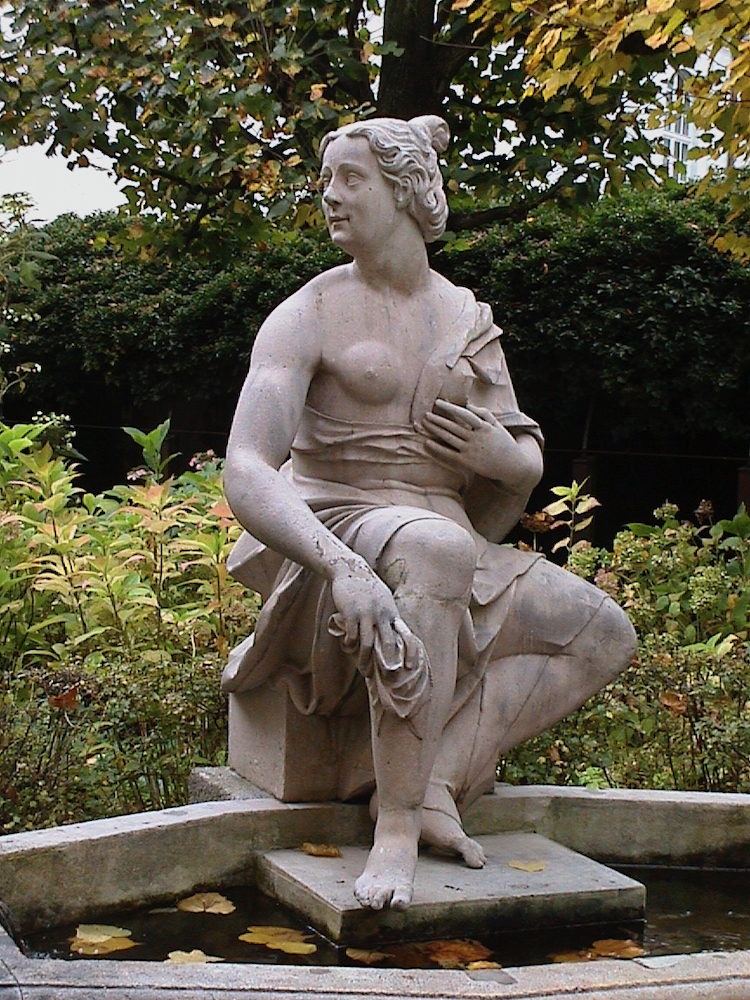
- Susannabrunnen is a sculpture in Mirabellgarten that dates back to about 1700.
-
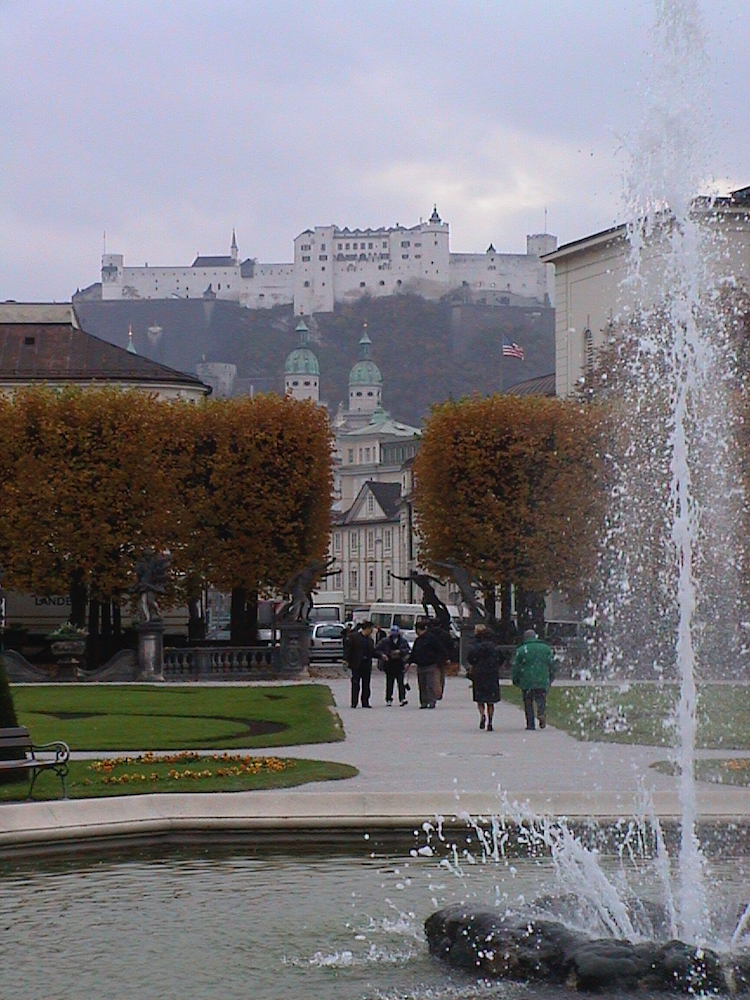
- A view from Mirabellgarten that includes the steeples of the Salzburg Cathedral and the Hohensalzburg Fortress.
-
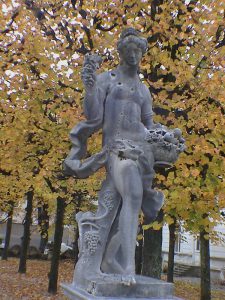
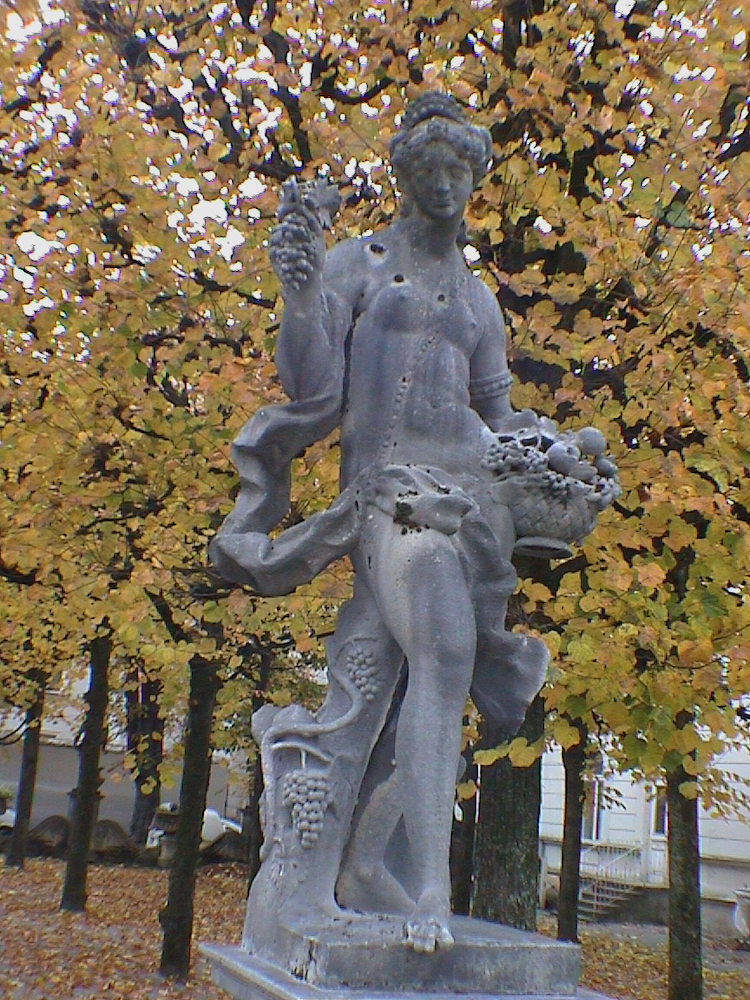
- A statue of Pomona in the Mirabellgarten.
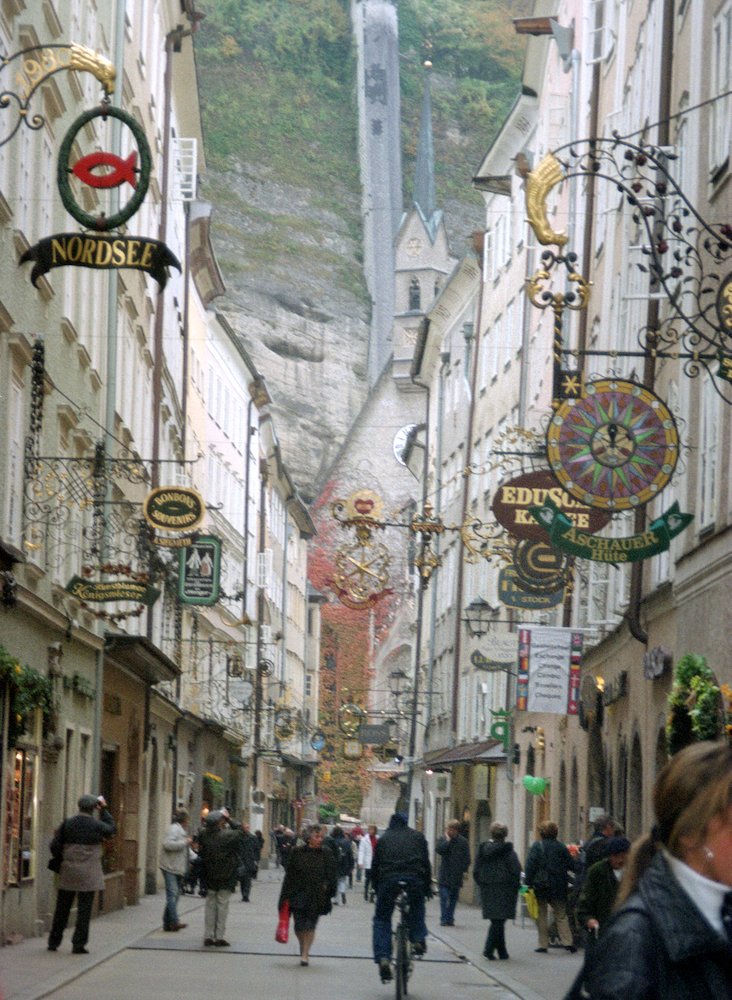
After saying hello to Mozart’s house, we crossed a footbridge to the “old” part of the city (In this part of the world, anything less than 300 years old is “new.”). A wall of stylish old buildings faced the river. Several passages led through this row into a series of courtyards and small plazas that opened up onto a narrow cobblestone street called Getreidegasse.
Getreidegasse was overrun with shoppers, tourists, and other pilgrims seeking out the Mozart birthplace, which we found right where the map said it would be. Along the way we saw lots of architectural eye candy, and the narrow streets were lined with shops selling everything from fine artwork and musical instruments to McScheisse.
According to our map, we saw but a corner of a vast pedestrianized area of old Salzburg; and we’re sure the rest of this area was filled with many wonderful things to see and explore. But we were quickly using up the few hours we had devoted to Salzburg. We went back across the river, and gradually meandered toward our guest house grabbing bread, cheese, and chocolate along the way.
-
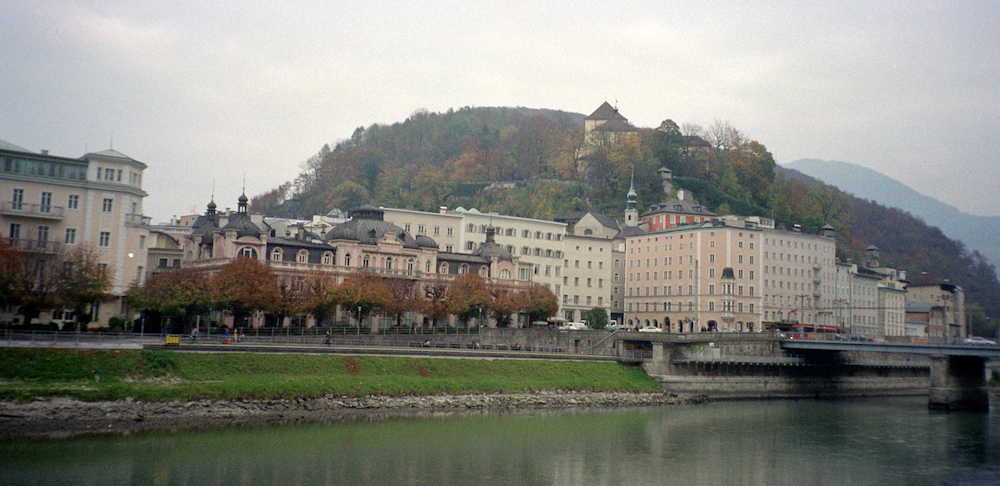
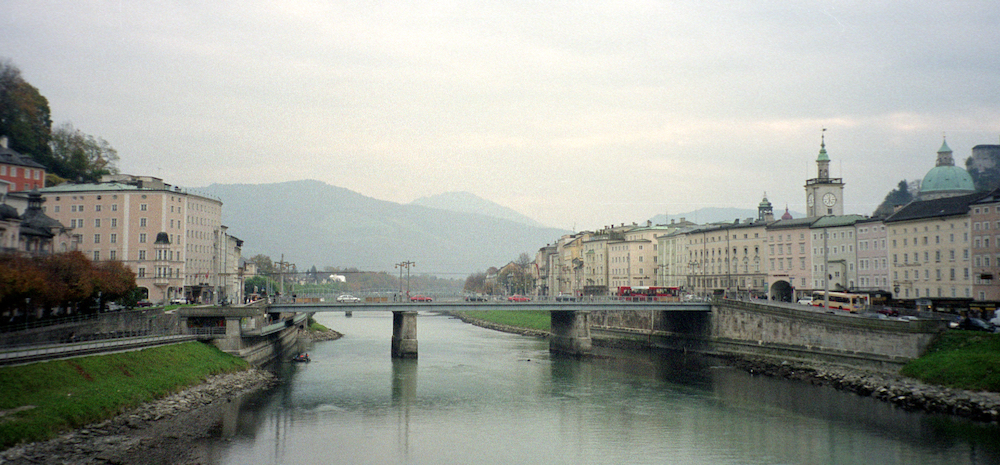
- A look at central Salzburg from the footbridge.
-
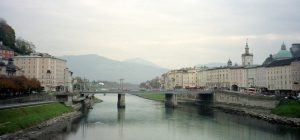
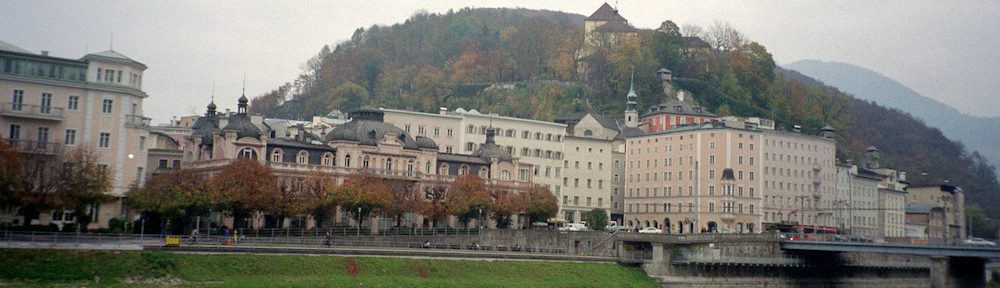
- Salzburg had interesting places on both sides of the river.
-
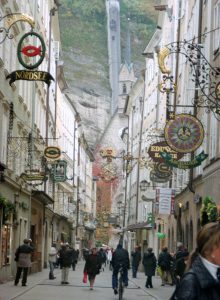
- This narrow pedestrianized shopping area is called Getreidegasse.
-
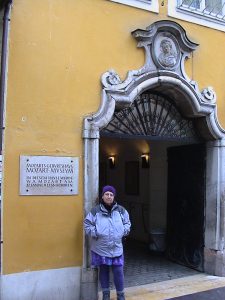
- Rozie stands at the entrance to Mozart’s birthplace.
-
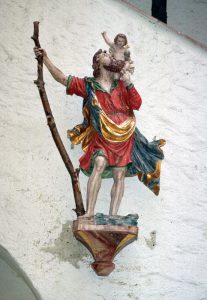
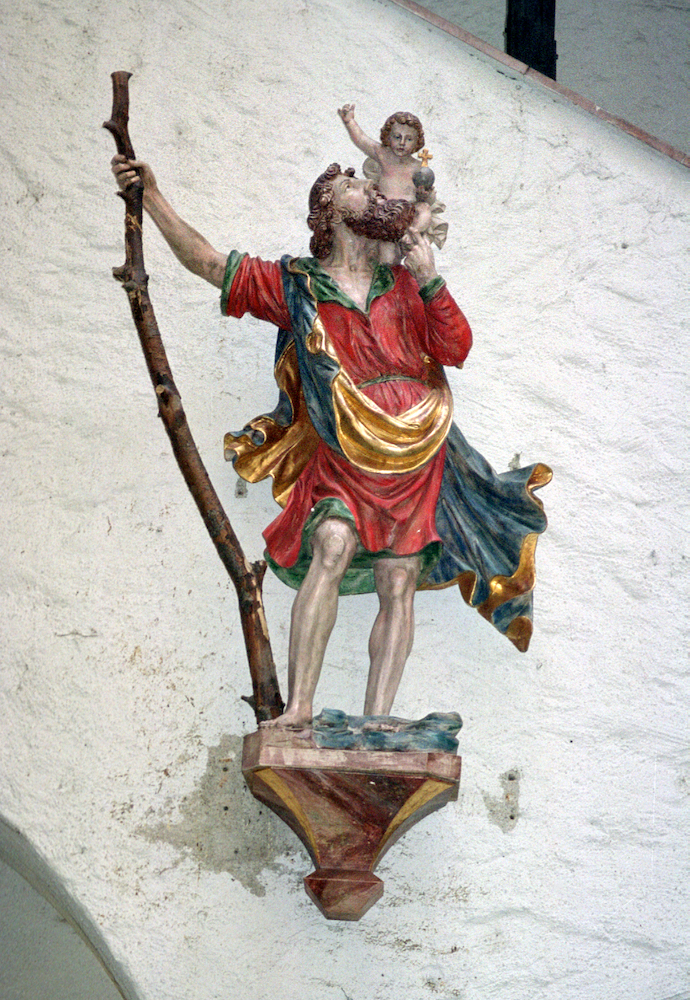
- This representation of St. Christopher stands on a wall in Salzburg.
Mozart was a prima donna, and Salzburg seems to be a city filled with prima donnas. We were disturbed by the condescending treatment we received from many shopkeepers, even as we were handing them our money. We can remember some who were nice (especially our guest house hosts, and the young guy who sold us cheese), but most of the locals seemed to treat us like pond scum.
Central Salzburg seems to be a place for the black-suited art snobs who look down their noses at anyone who does not look like one of them. Come to central Salzburg to take pictures, but stay and spend your money in the more working-class fringes. The people in the central city have plenty of money and don’t seem to deserve it.
We grabbed our packs and got to the Bahnhof just in time for the 2:00 train for Vienna. As we rode across the Austrian countryside, we reconsidered our schedule. We’d be arriving in Vienna well after dark, and our train to Prague would leave early in the morning, so Vienna would be little more than an overnight stop.
Having a rail pass gives us the luxury of changing our itinerary while we’re still on the train. So we got off the train in Linz and connected to a train headed for the town of Summerau on the Czech border.
As soon as we left Linz for Summerau, we saw huge complexes of grey buildings with mazes of pipes and smokestacks; and they lined the shores of a wide river carrying barges and other commercial traffic. We were crossing the Danube, the river we had last seen as a small stream in the Black Forest.
It wasn’t much longer before we were climbing into green rolling hills as darkness set in on the countryside. When we arrived in Summerau it was only about 5:00, but it was dark and quiet enough to make it feel much later. We were in the middle of nowhere, and the station manager spoke only marginal English. It would be hours before the next train left for the Czech Republic, and it would require several connections after that to get anywhere of interest.
There were a couple of 20-something female backpackers at the station who were on their way to Cesky Krumlov.* This is a destination that comes with many high recommendations, and we wish we had had time to go there.
(* Many Czech words and place names use markings over their letters such as accents and haczeks. These markings are important in differentiating words and pronouncing them properly. English-language “plain text” is not compatible with these markings. We hope that no one gets confused by our using words that are, in effect, misspelled.)
A schedule in the station window said that a direct train to Prague would leave early in the morning, so we decided to stay there for the night. A “conversation” with the station manager got us directed toward a guest house 500 meters into the darkness. We wonder what those young women must have been thinking as they saw us disappear into the darkness of this remote countryside on the Austrian-Czech border.
We were pointed up a wind-swept hillside, where we could smell the “dairy air” and passed an occasional house. At the top of the hill we came to a highway, but no obvious sign of our guest house. We saw a well-lit building on the corner and knocked on the door. It was some sort of business, and there was one man inside working late. He didn’t speak English either.
We said, “zimmer?” and he pointed across the road. We finally found the right doorway, and the German-speaking lady there had a very nice room that cost us 440 schillings (less than $30) including breakfast. She summoned her English-speaking daughter to help us discuss the details of breakfast, and where we could go to find dinner.
We had dinner at a bar that we had passed on the way up. Other than a small group of old men playing cards, we had the place to ourselves.
Our server spoke two languages: German and Czech… after all, this was a border town. Obbie was more confident in Czech than in German, having just invested several weeks in studying Czech. So we shifted to his “grandmother tongue”, but ordering was still a struggle that involved constant references to our dictionaries.
Our meal turned out to be a feast that cost us about $20, including two pints of fine local lager.