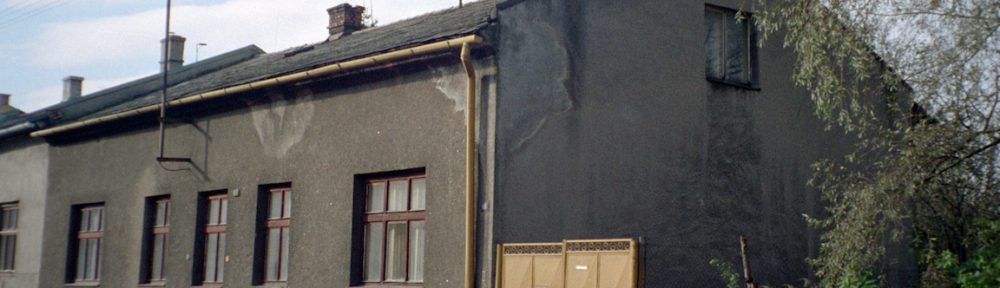
On Obbie’s grandmother’s birth certificate, the address of her birth house is listed as Vitkovice 437. That means it’s the 437th house built in Vitkovice, but it gives us no clue to where the house is. We needed a navigable address: a number on a street.
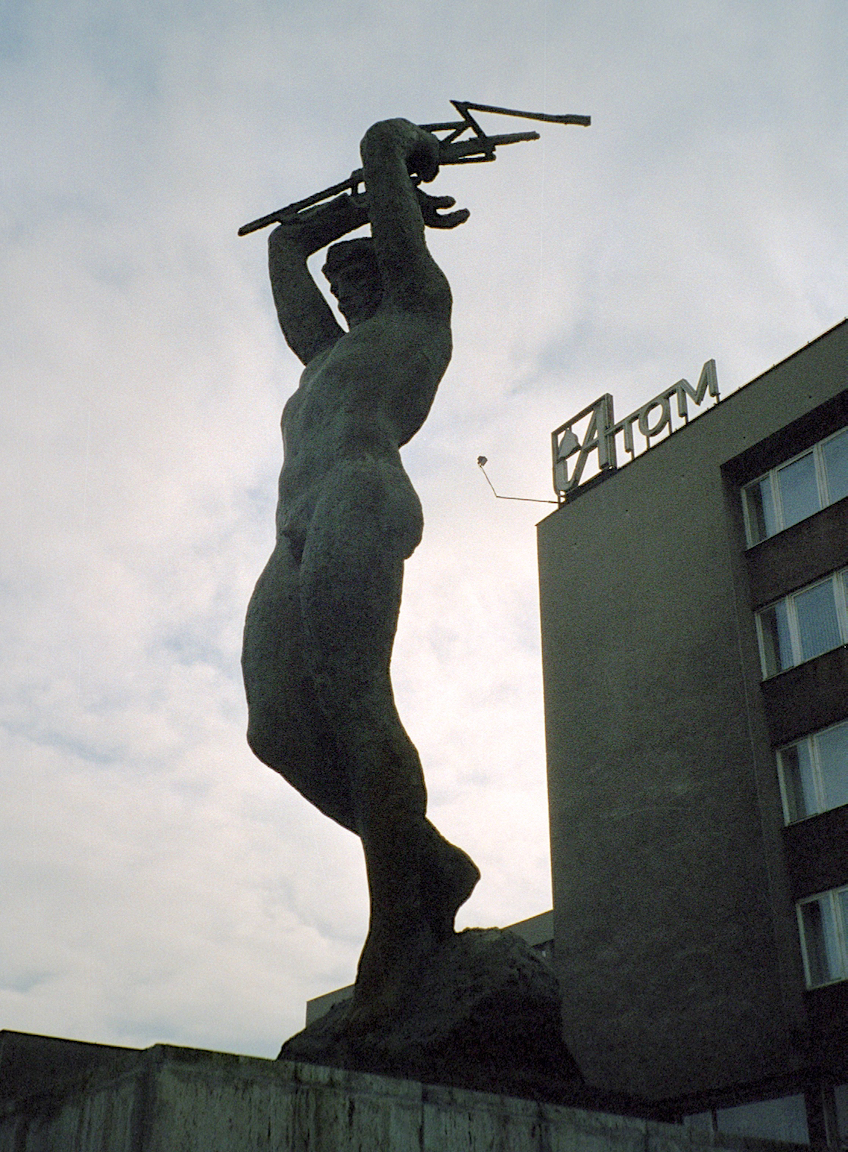
“Why is it called the ‘Hotel Atom’? Isn’t that name.. uh… radioactive?”
“‘Atom’ is modern, and futuristic.”
Obbie explained (as best as he could) to the old guy at the front desk that he was trying to find a “new address” for an “old address.” He said he was trying find the house where his grandmother was born.
The front desk guy was confused, and found a younger woman who spoke a bit of English – about as much as Obbie’s Czech. We were told that we weren’t in the right building, and that we must go to the church office. (We had a copy of a “birth and baptismal certificate” issued by the church.) We were going to the church anyway, so off we went.
We were halfway down the block when the front desk guy ran up behind us and called us back. A large smiling 50-something woman had entered the picture, and she would help us get the information. We were led back through doorways and into a private office where someone had the record up on a computer screen: Vitkovice 437 is now 66 Zengrova … a short walk from the church.
They seemed to be moved by our having come so far on such a quest, and we were equally moved by these people going out of their way to help us in this quest.
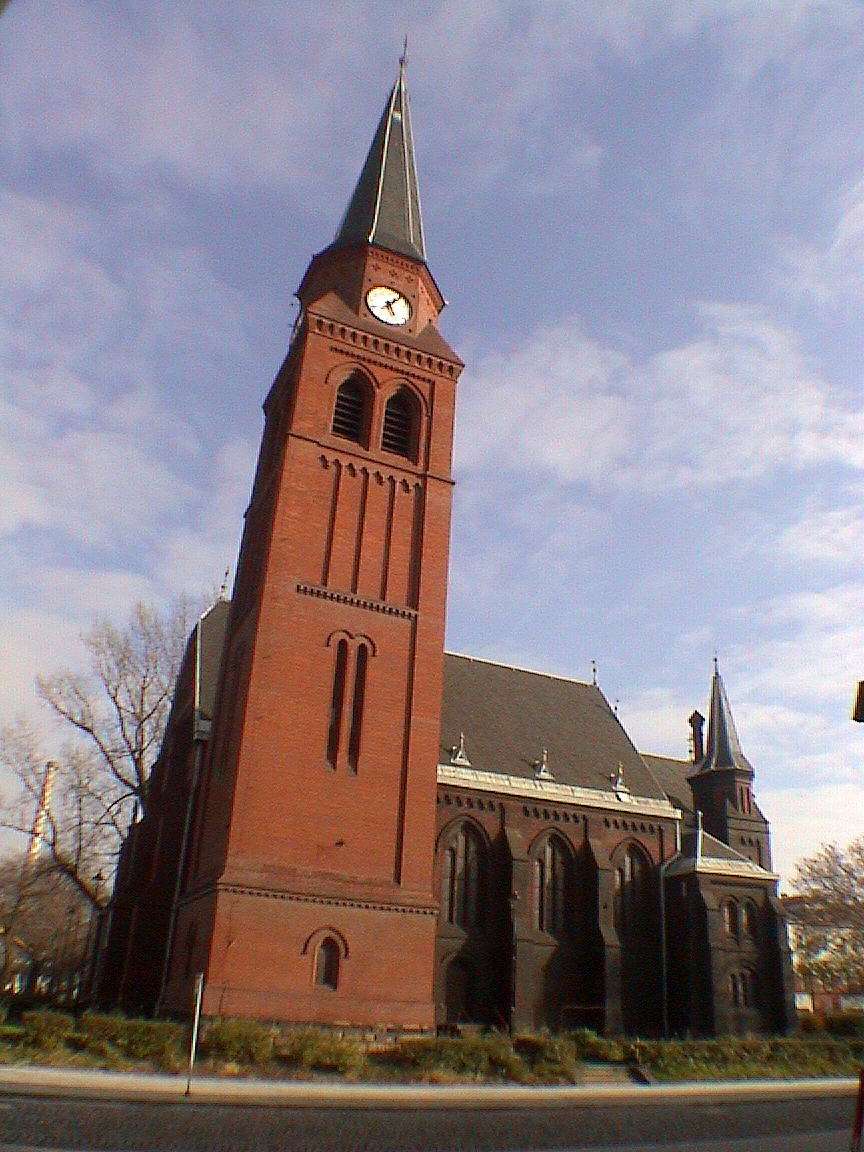
Sv. Pavla – the church where Obbie’s great-grandparents were married and where his grandmother was baptised – was the next stop. It is a modest red-brick affair, similar to many medium-sized midwestern Catholic churches. It was built in the late 19th century, but it lies under a layer of coal soot that says volumes about Vitkovice’s past. The steeple has been recently cleaned to show what the brick is supposed to look like.
-
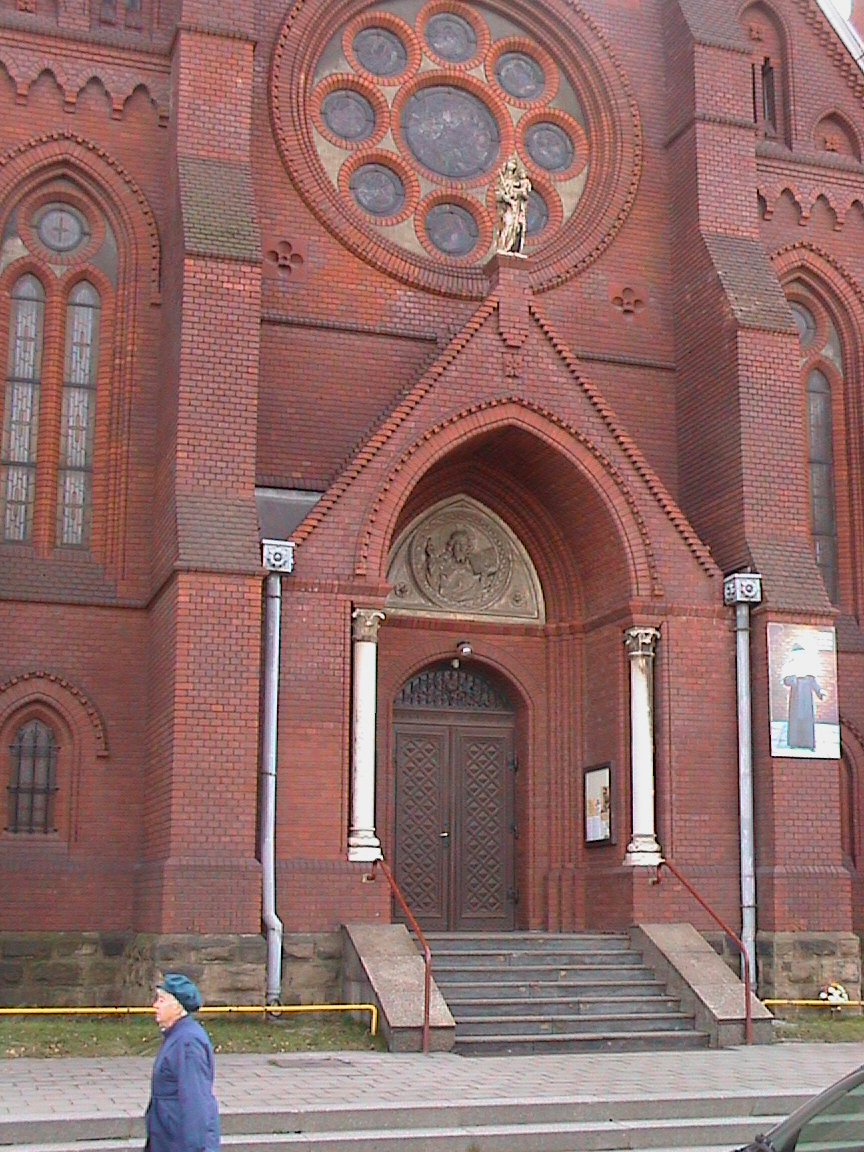
- The entrance to Kostel Sv. Pavla (St. Paul’s Church) in Vitkovice.
-
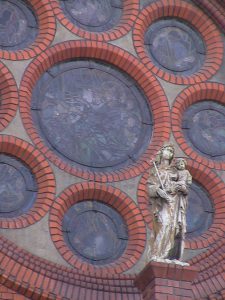
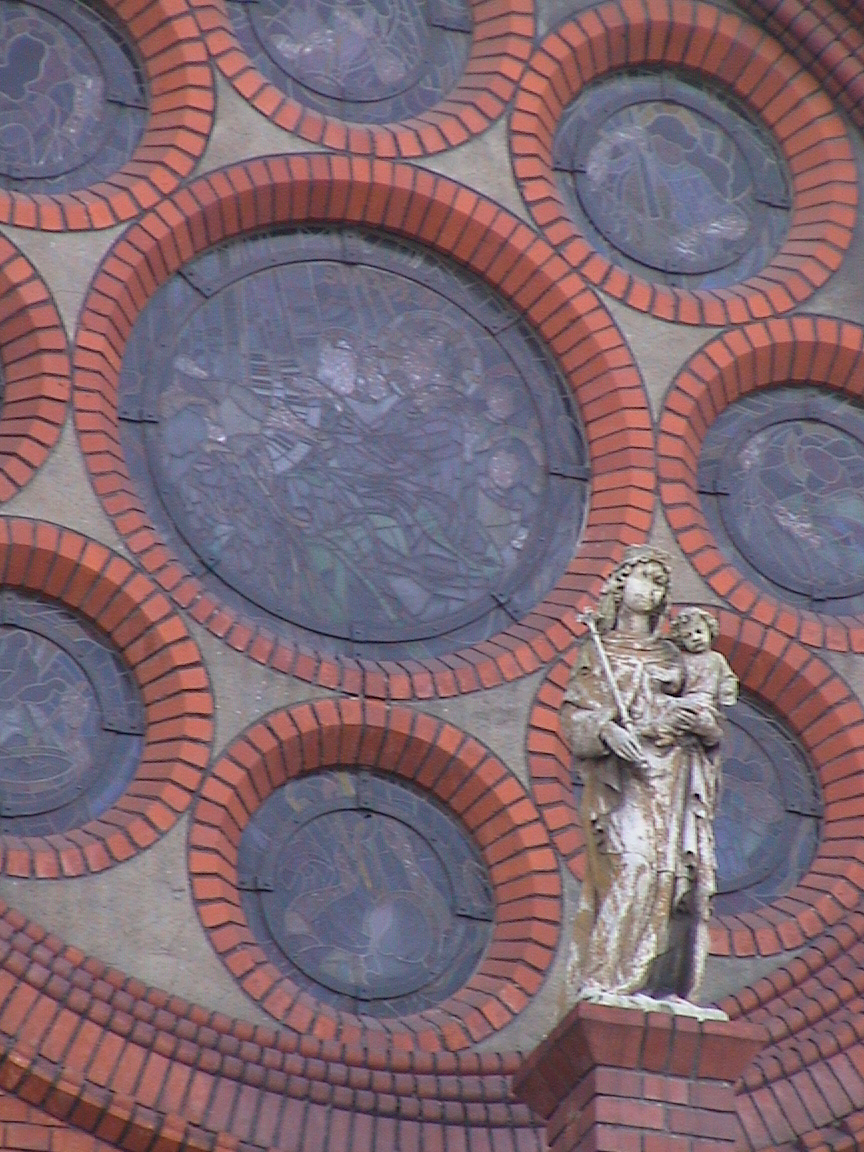
- A closer look at the stained glass above the entrance to Kostel Sv. Pavla.
-
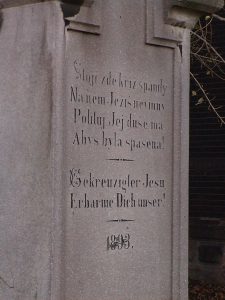
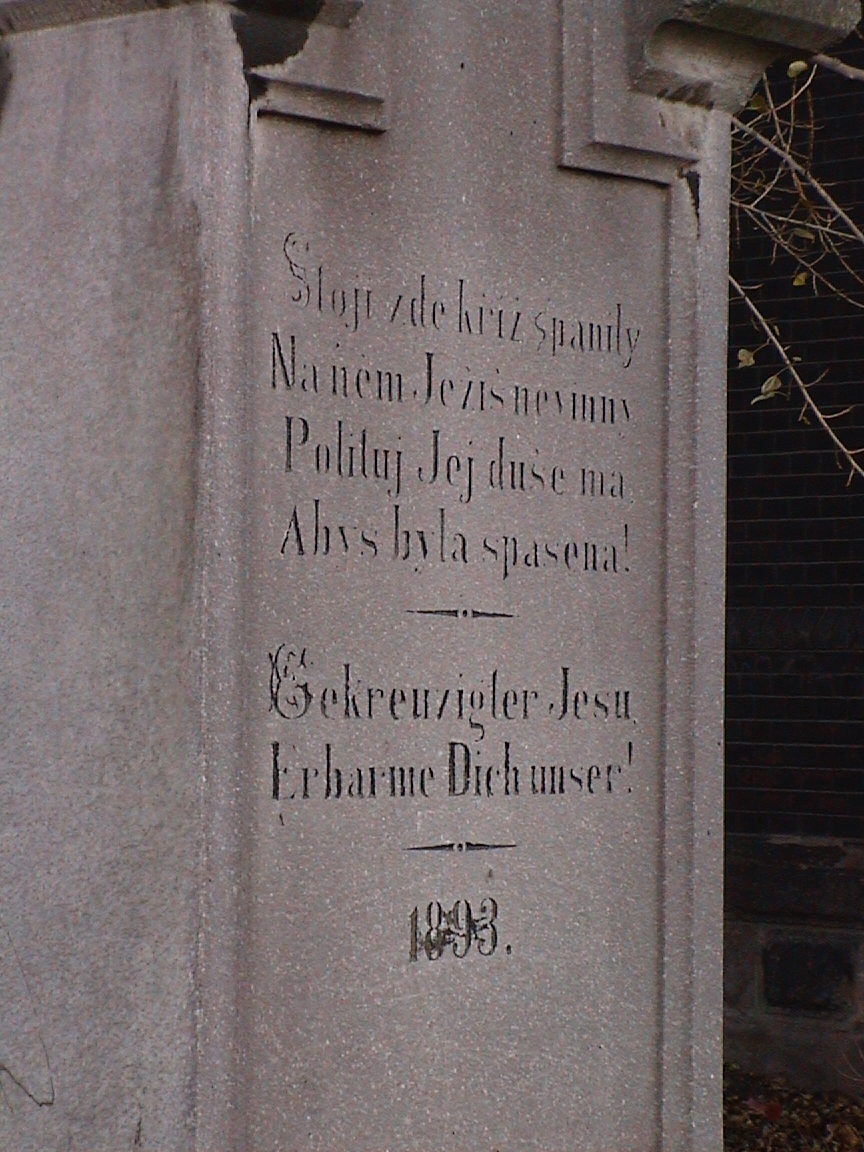
- A marker in front of the church bears inscriptions in Czech and German.
-
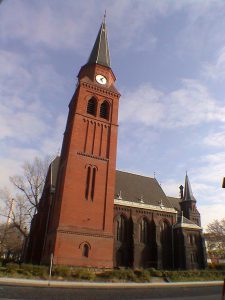
- The brick has been cleaned on the more prominent parts of the church, but the hidden walls on the side still wear a hundred years of coal soot.
-
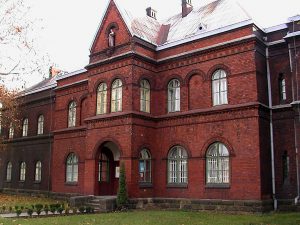
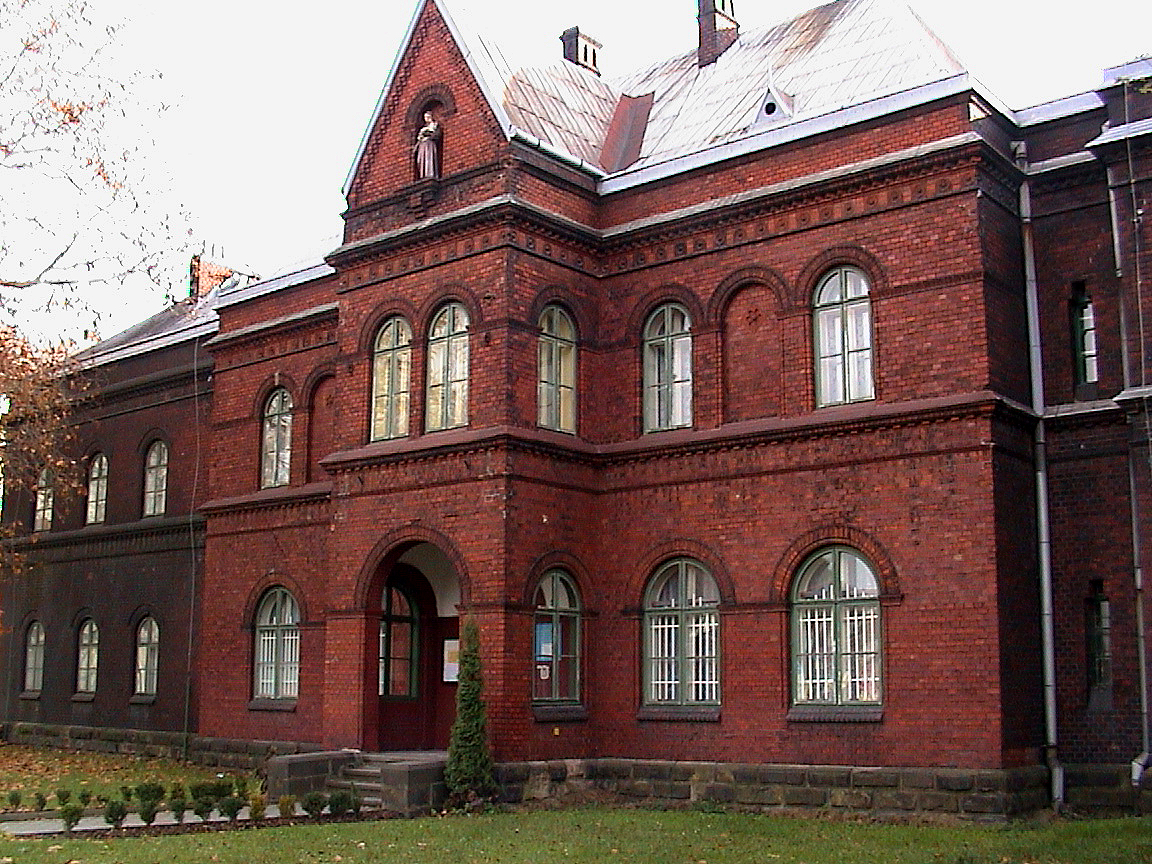
- The Rectory for St. Paul’s Church.
-
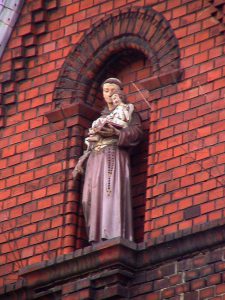
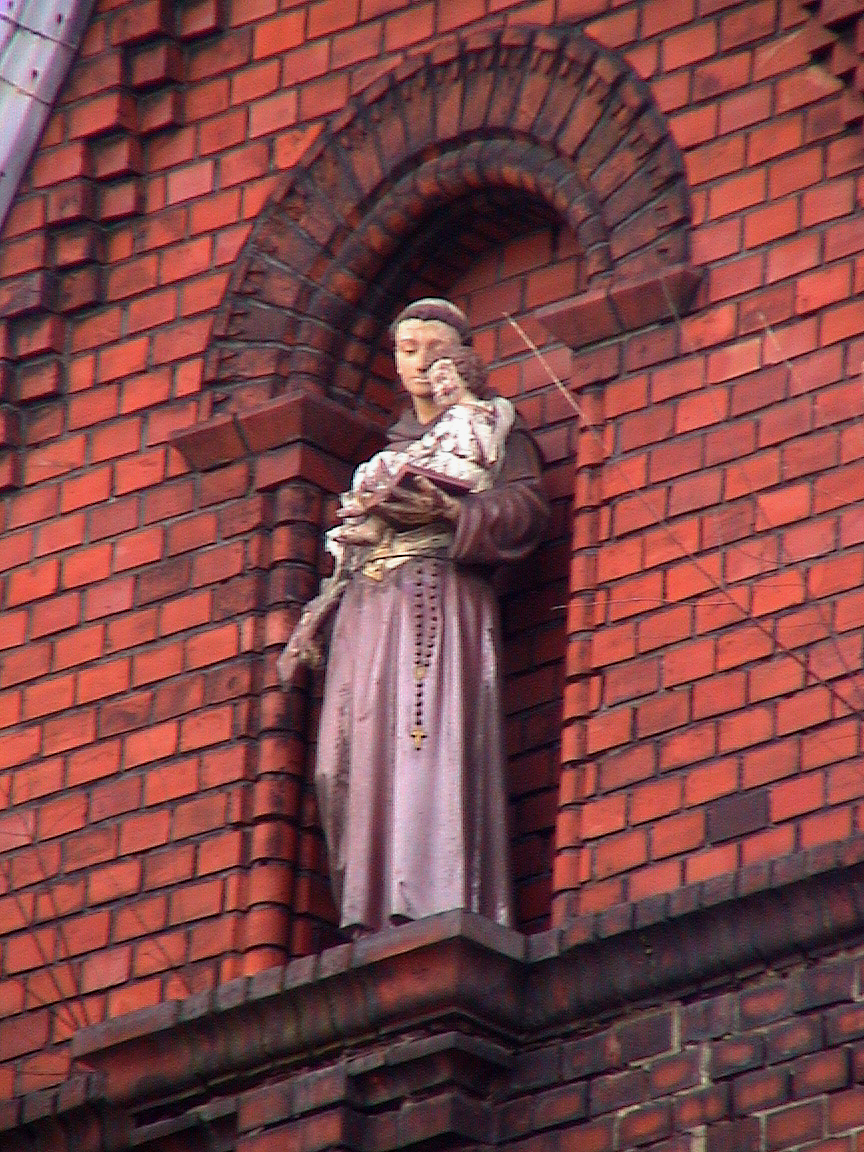
- A closer look at a sculpture high above the entrance to the Sv. Pavla Rectory.
The signs of poverty and decay increased as we moved on toward the birth house. We passed old buildings with lots of potential, but they suffered from everything from coal soot and peeling paint to floors and roofs caving in. A hundred years ago this may have been a thriving working-class neighborhood housing workers for the nearby steel mills. But the same could be said for some of the most impoverished areas of North Philadelphia, which is what we were most reminded of.
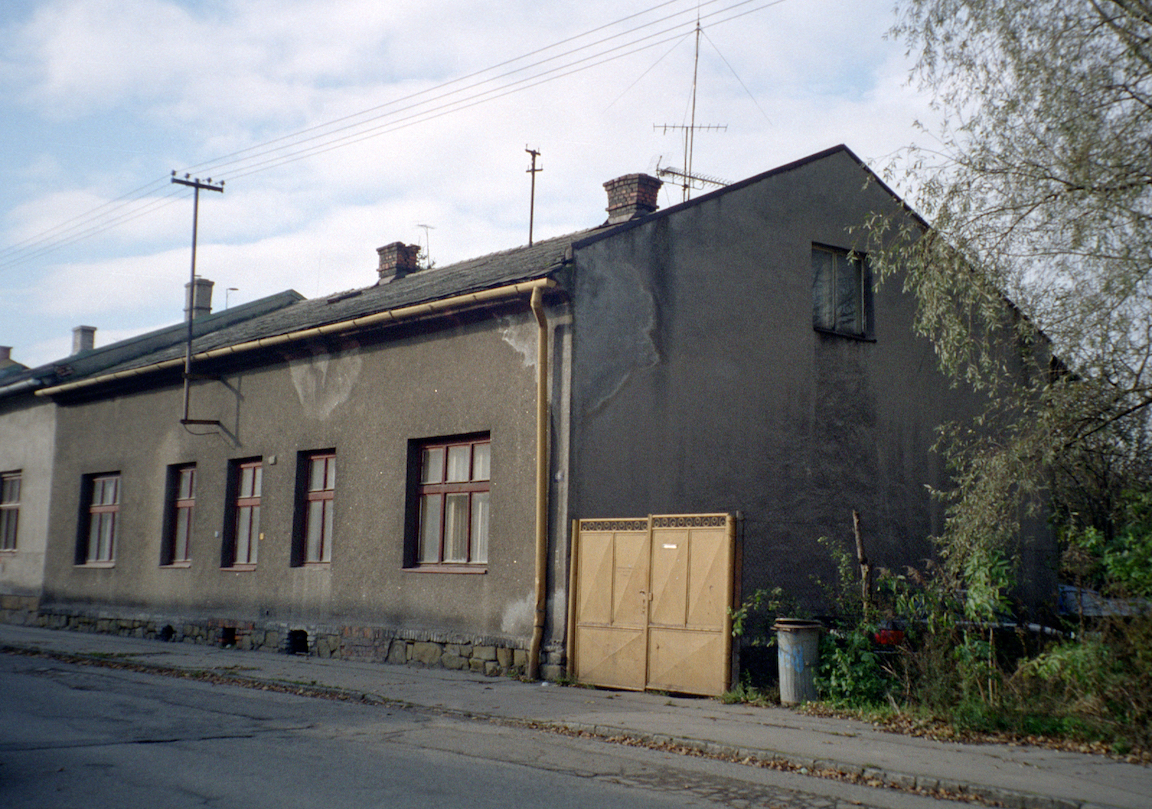
This modest home is the birthplace of Marie Mecova (Mary Metza).
It’s about a 20-minute walk to the Vitkovice Catholic Cemetery, which is both literally and metaphorically on the other side of the tracks. The office was open, but they could find no listing for the other set of great-great-grandparents.
So we’d struck out on finding ancestral resting places, but we had seen two churches that are family-connected, and the last house that the family lived in before coming to America. It feels like a successful pilgrimage.
The cemetery is next door to the train station, and our train for Prague leaves in an hour. That gives us just enough time to retrieve our packs from the Hotel Atom and get back to the station. Sure is nice to have a tram.
We got to Prague in the early evening, and the main station is a much different place than in the early afternoon. We’d read about this scene: different classes of people prowl the station hawking accommodation. One young man spoke very good English and offered free rides to the decent-looking hotel (at least judging by his glossy brochure) he represented. There was an old housewife who showed people tattered pictures of the accommodation she had to offer.
There was a guy in one of the station’s many licensed brokerages who had helped us find a reliable Internet connection earlier in the week. We wanted to thank him with our patronage, so we returned to that location.
Our guy wasn’t working when we got there, but his colleague set us up with a reasonably priced room 5 minutes away by metro. A few days ago, we got around Prague exclusively on the tram, but Prague also has a clean and efficient underground system. Our hotel was one stop away. We unloaded our packs and set out for our favorite cyber cafe to upload travel updates.
We got as much done as we could online before closing time, and on our way back to the hotel we stopped at the station again. Tomorrow morning we go to Berlin, and it’ll be easier to buy tickets tonight than during the hectic rush in the morning.
We had a nice chat with the ticket agent, who talked with amazement about her own train trip through America and how the train she was on only ran three or four times a week. To go from Prague to Berlin, there are easily twice that many trains each day.
Train fares are so inexpensive in the Czech Republic that we opted not to get this country on our train passes. We had to buy tickets to the German border, at which point our passes would be good again. Good thing, too, as tickets for Berlin were Kc1500, while it cost less than Kc200 to get to the German border.
With tomorrow’s train tickets in hand, it was time to get to our hotel for a good night’s sleep.