As our train was approaching Copenhagen yesterday, we observed that we were a bit stressed out because we’d spent so much of the previous week in big cities, and that some time in the quiet countryside would do us well. Today, we realized that Christiania was exactly what we were looking for, an enclave of quiet countryside within the city.
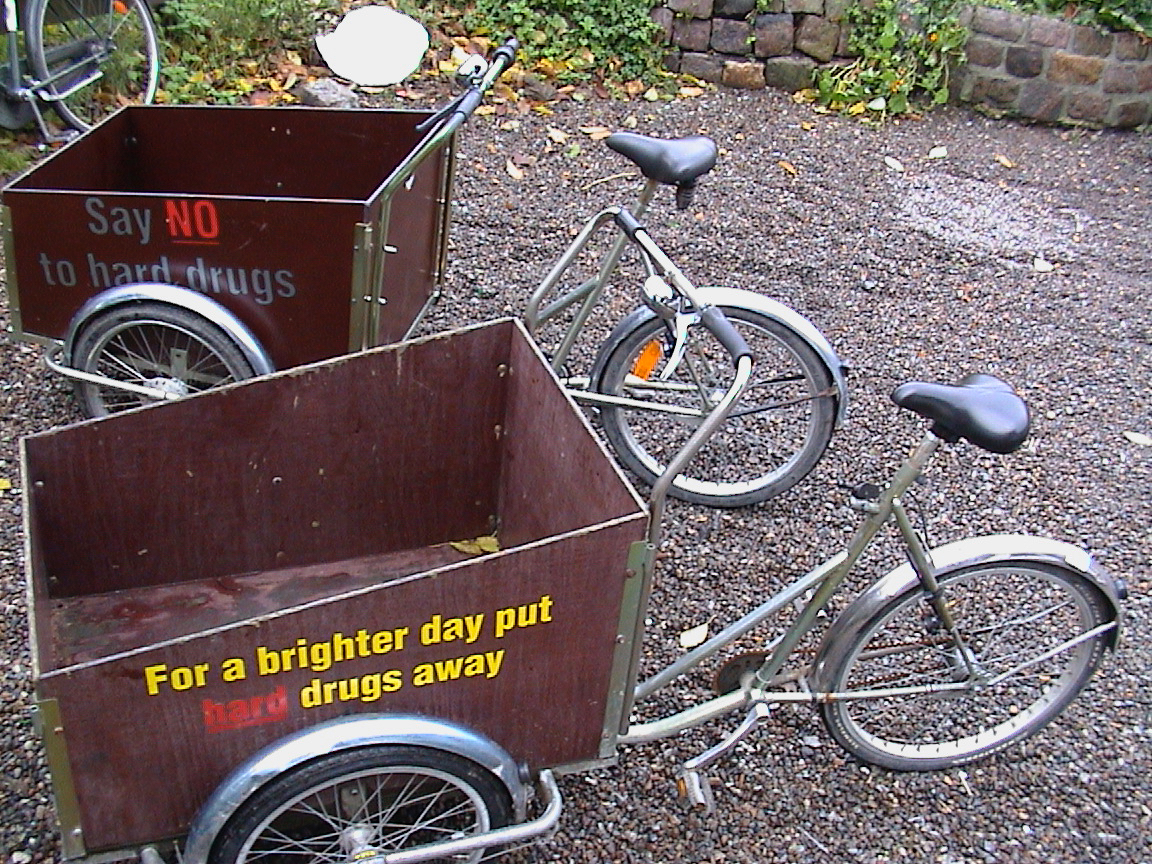
After breakfast on this fine Saturday morning, we took a closer look at some Christiania bikes parked outside. Our interest was noticed by a guy named Klaus, and we had a great conversation where he gave us a “tour” of the bikes. For instance, he showed us how a shock absorber was incorporated into the design to stabilize the steering.
Nearby, we noticed another two-wheeled Christiania invention: the Pedersen bike. This bike is a tall upright where the seat balances on a wide elastic strap where the crossbar would normally be. The seat placement provides a very smooth ride, and the overall design enables the rider to sit high and upright while in an optimum position for power and breathing, much like on an American recumbent bike.
-
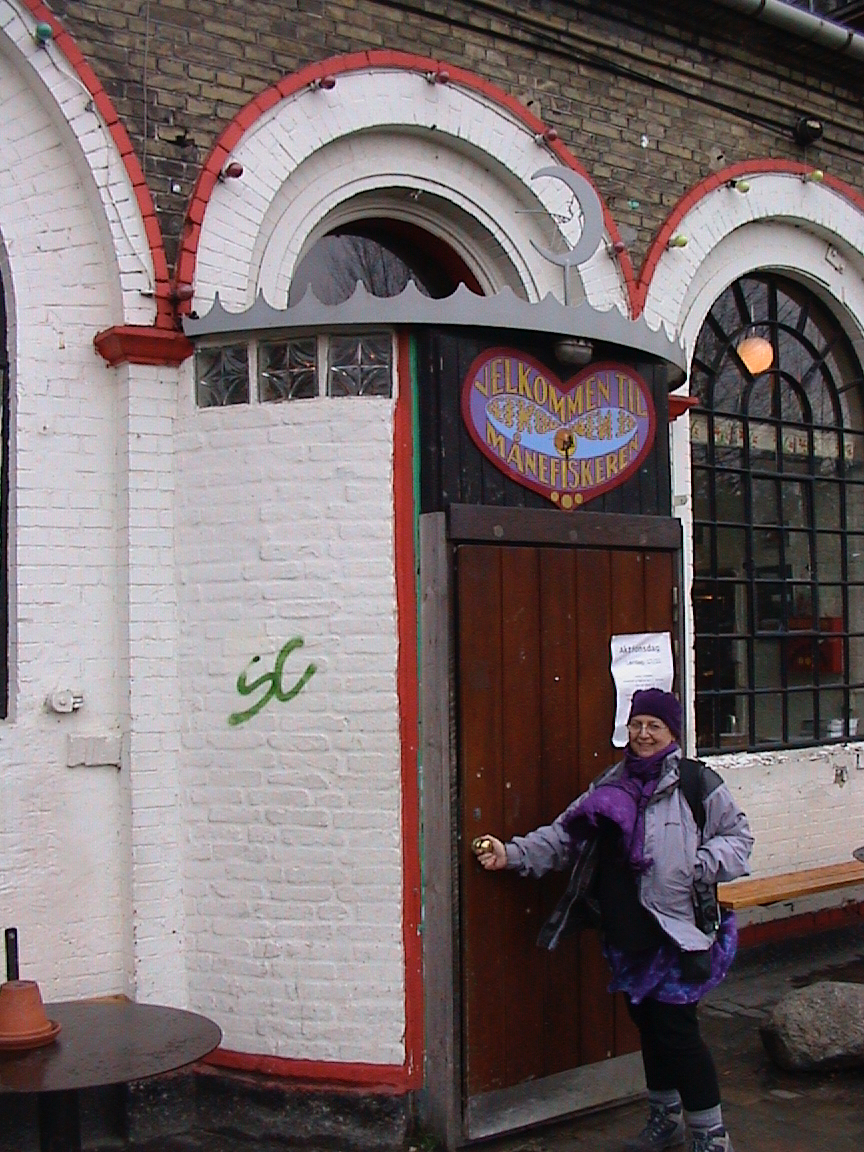
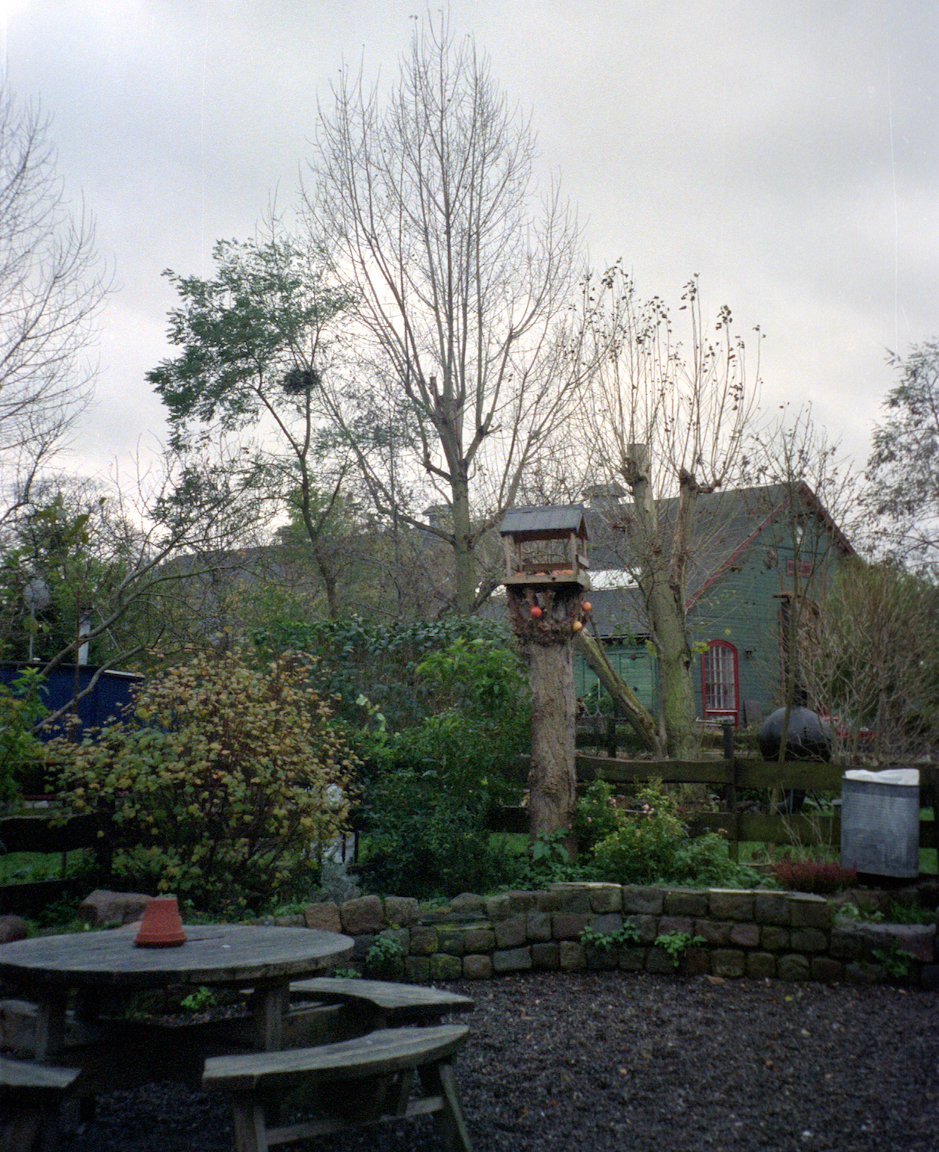
- We had breakfast at the “Moon Fisher” cafe in Christiania
-
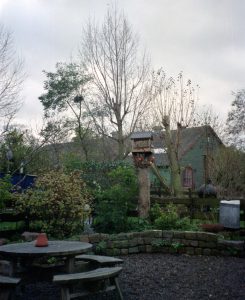
- A picnic area outside the Moon Fisher
-
- A pair of Christriania bikes
-
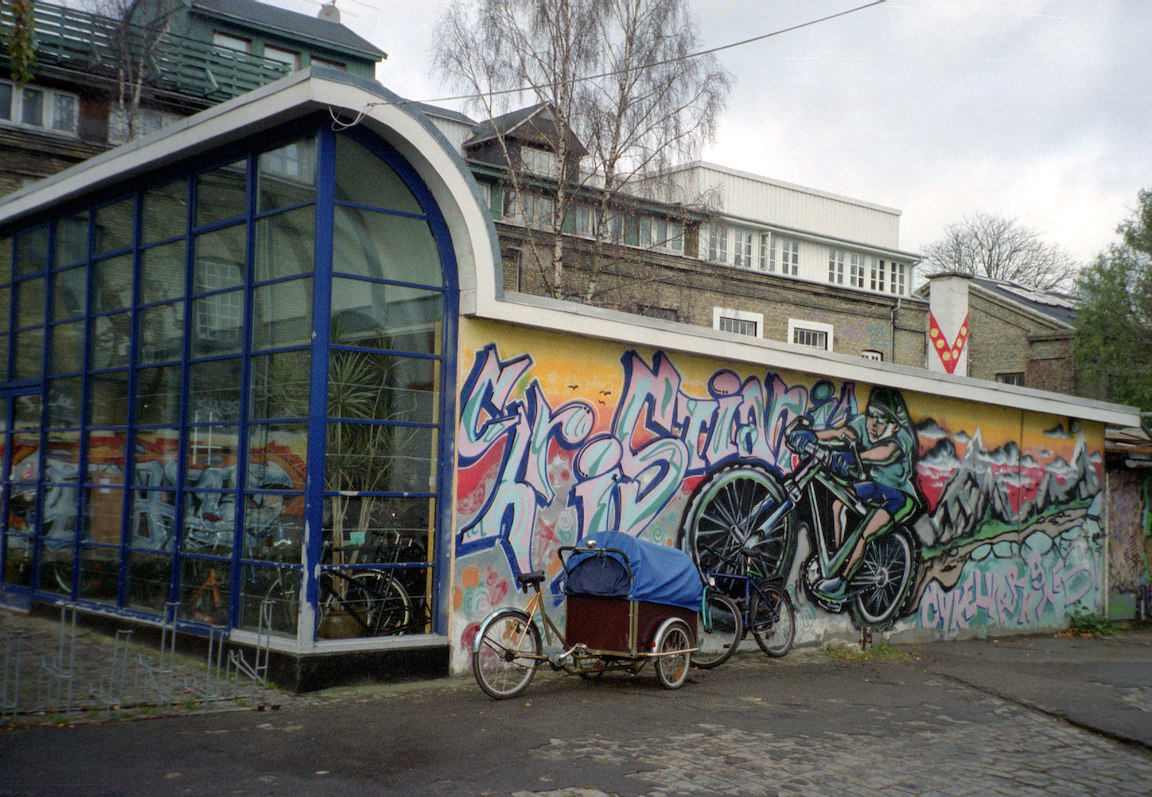
- The Christiania bike shop, with a Christiania cargo bike parked outside, and a painting of a Pedersen bike on the wall.
-
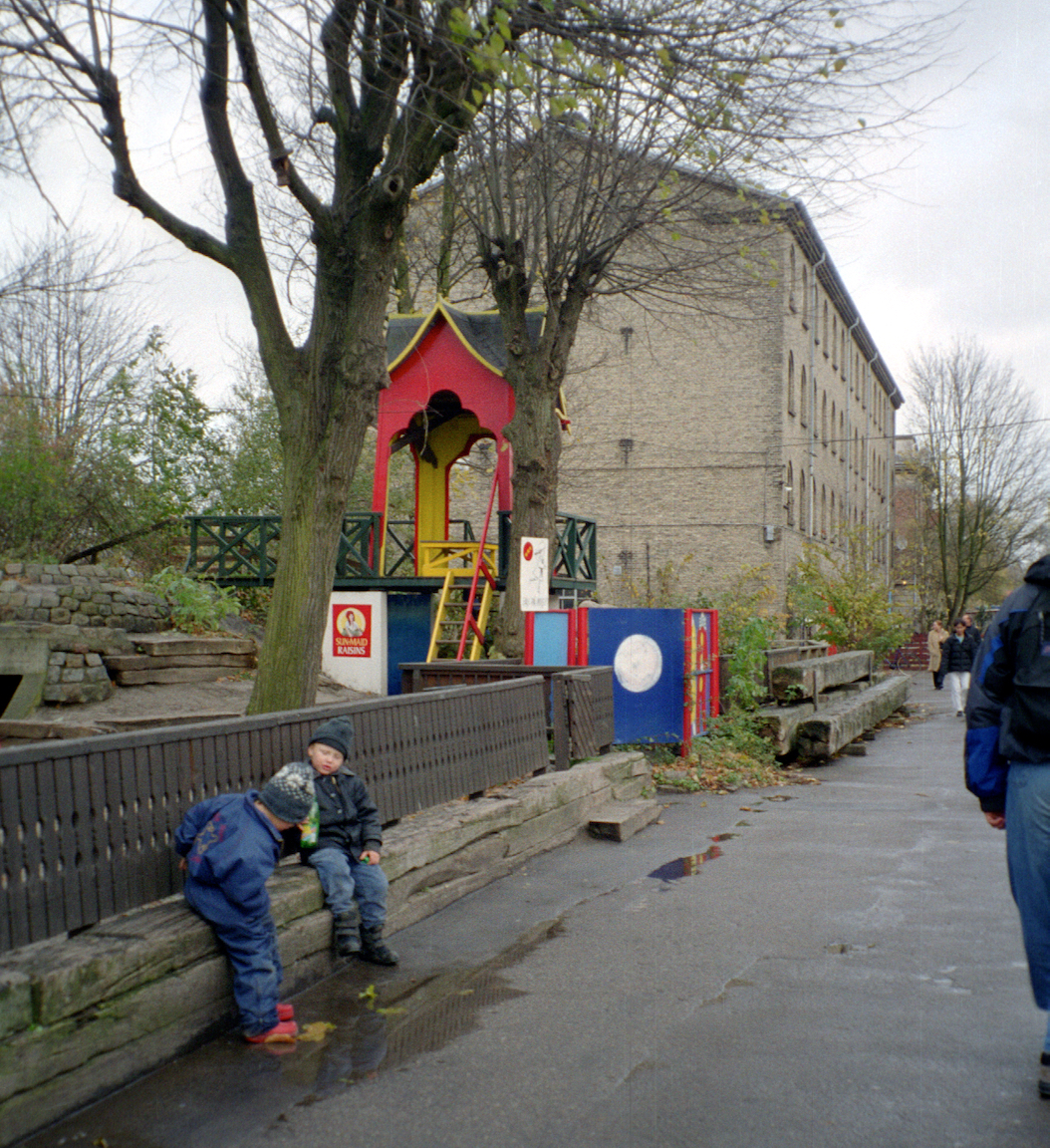
- One of the main “streets” of Christiania.
-
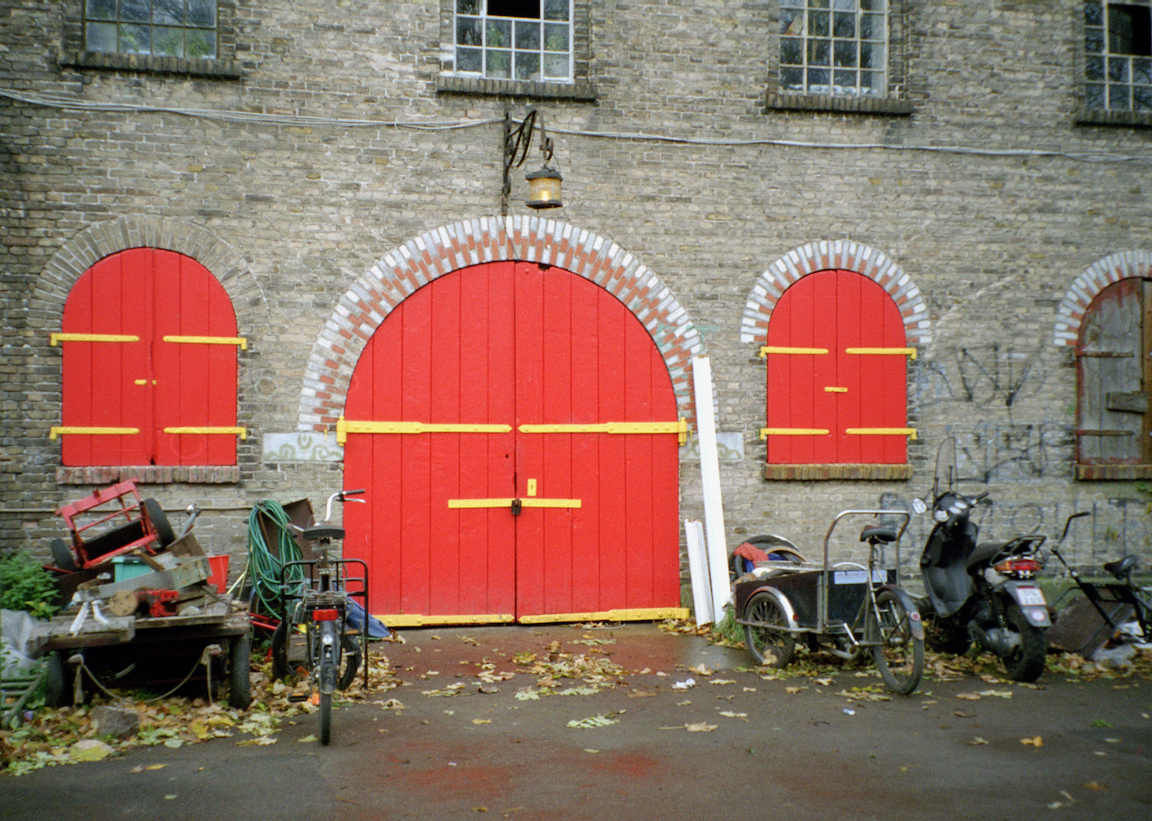
- Some paint highlights the brickwork around some red doors in Christiania.
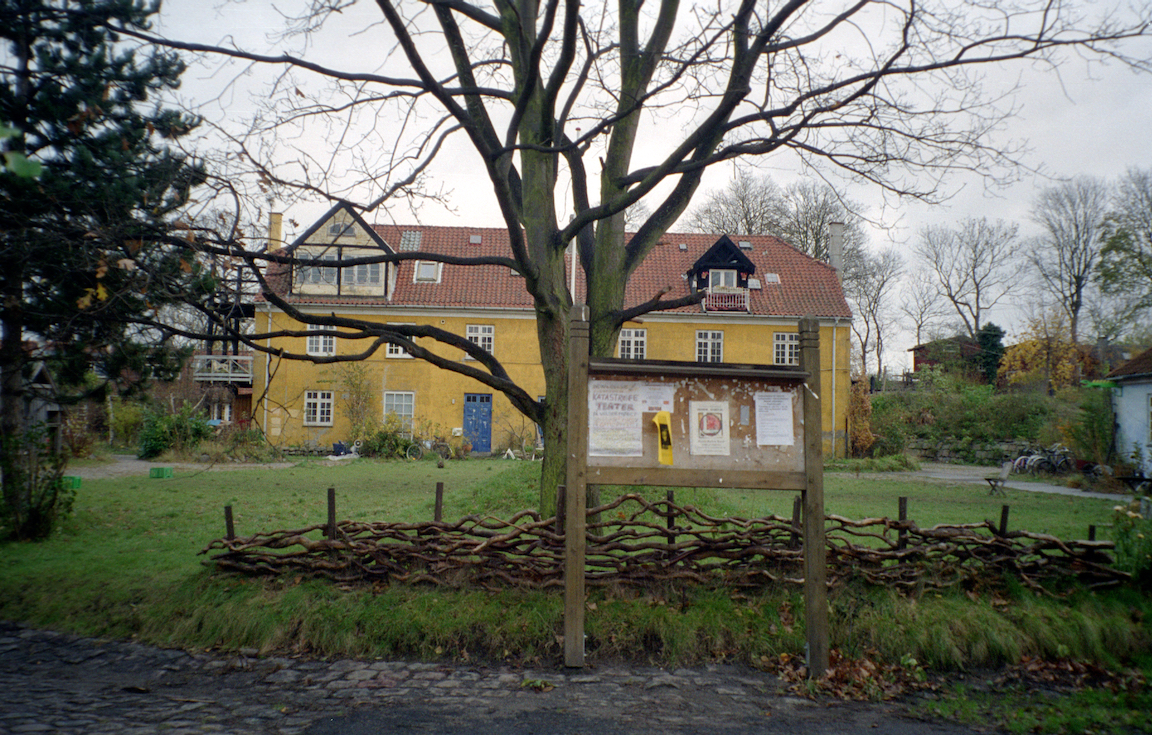
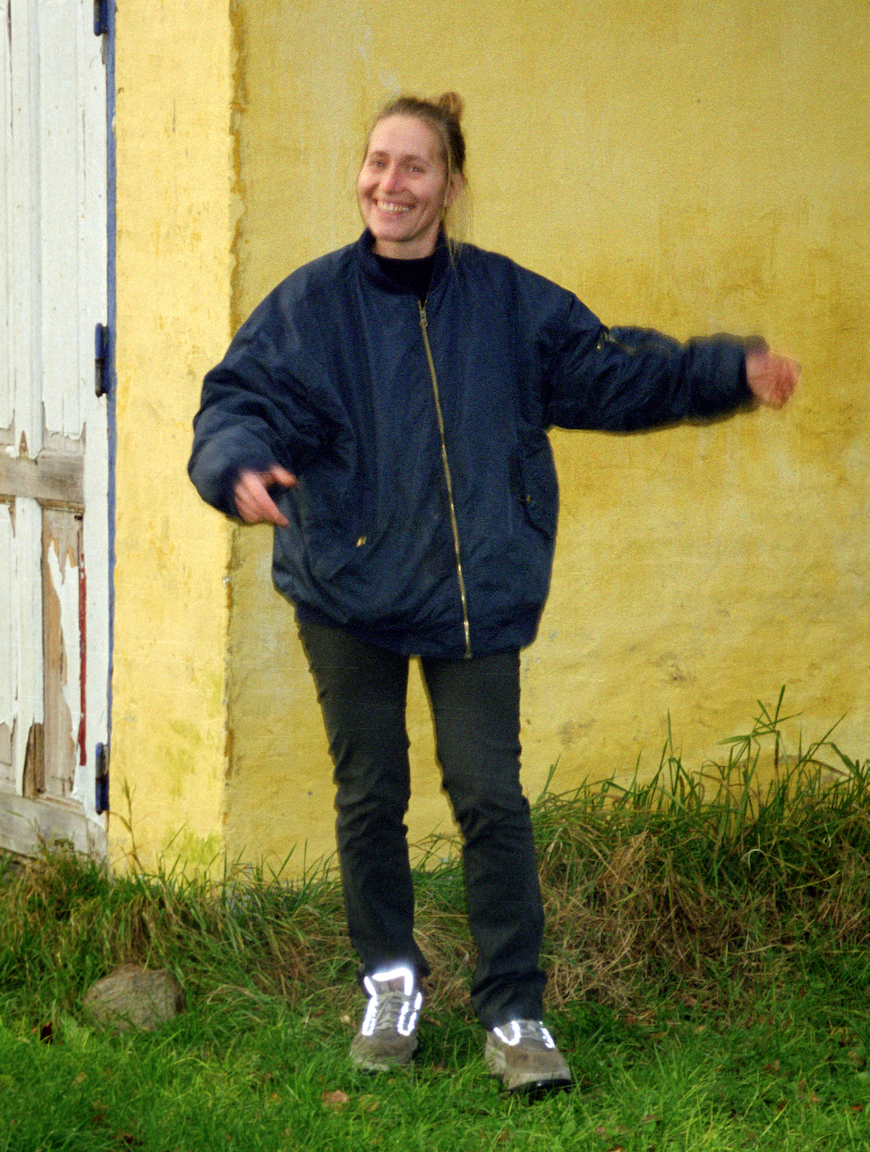
Early in our walk around the neighborhoods of Christiania, we were taking pictures of a very cute house, and out came Tanja (the woman we met last night who let us try her cargo bike). It was her house we were photographing. She didn’t mind. In fact she invited us in for tea.
-
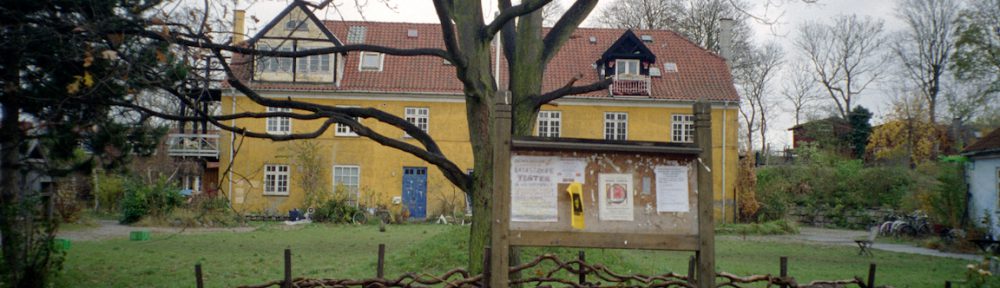
- This large house is part of a semi-enclosed compound within Christiania
-
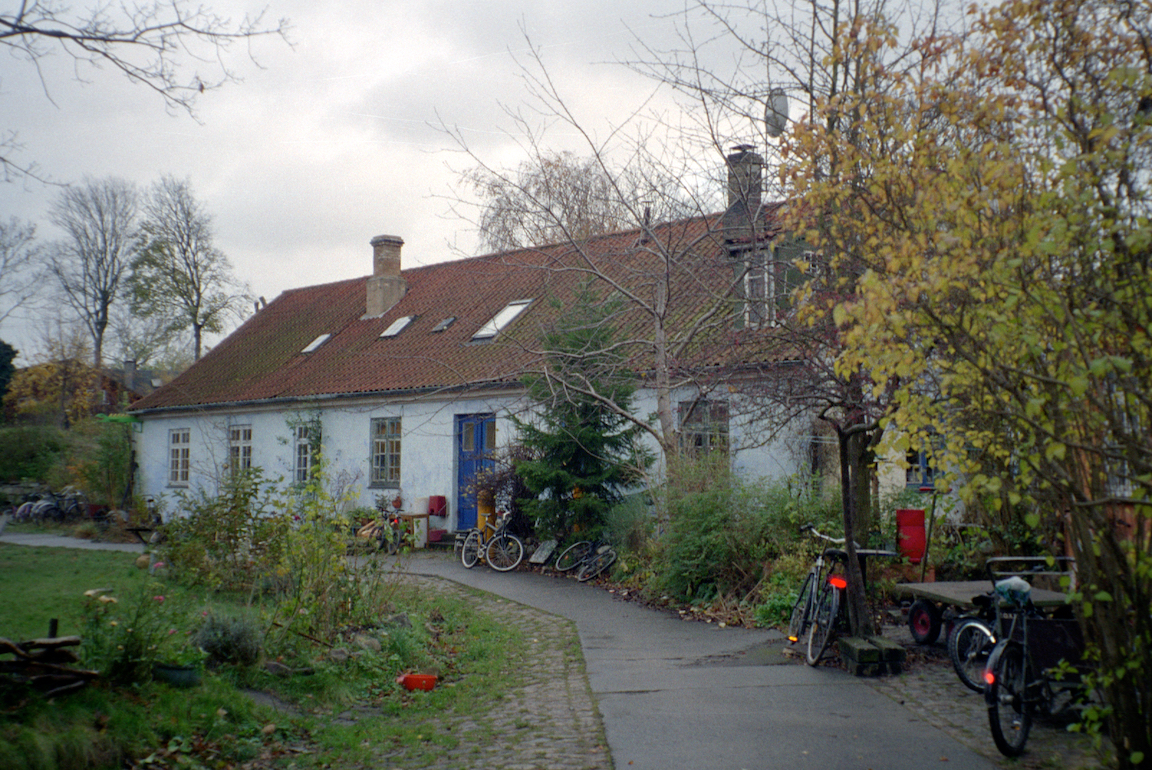
- Another house in the same collection
-
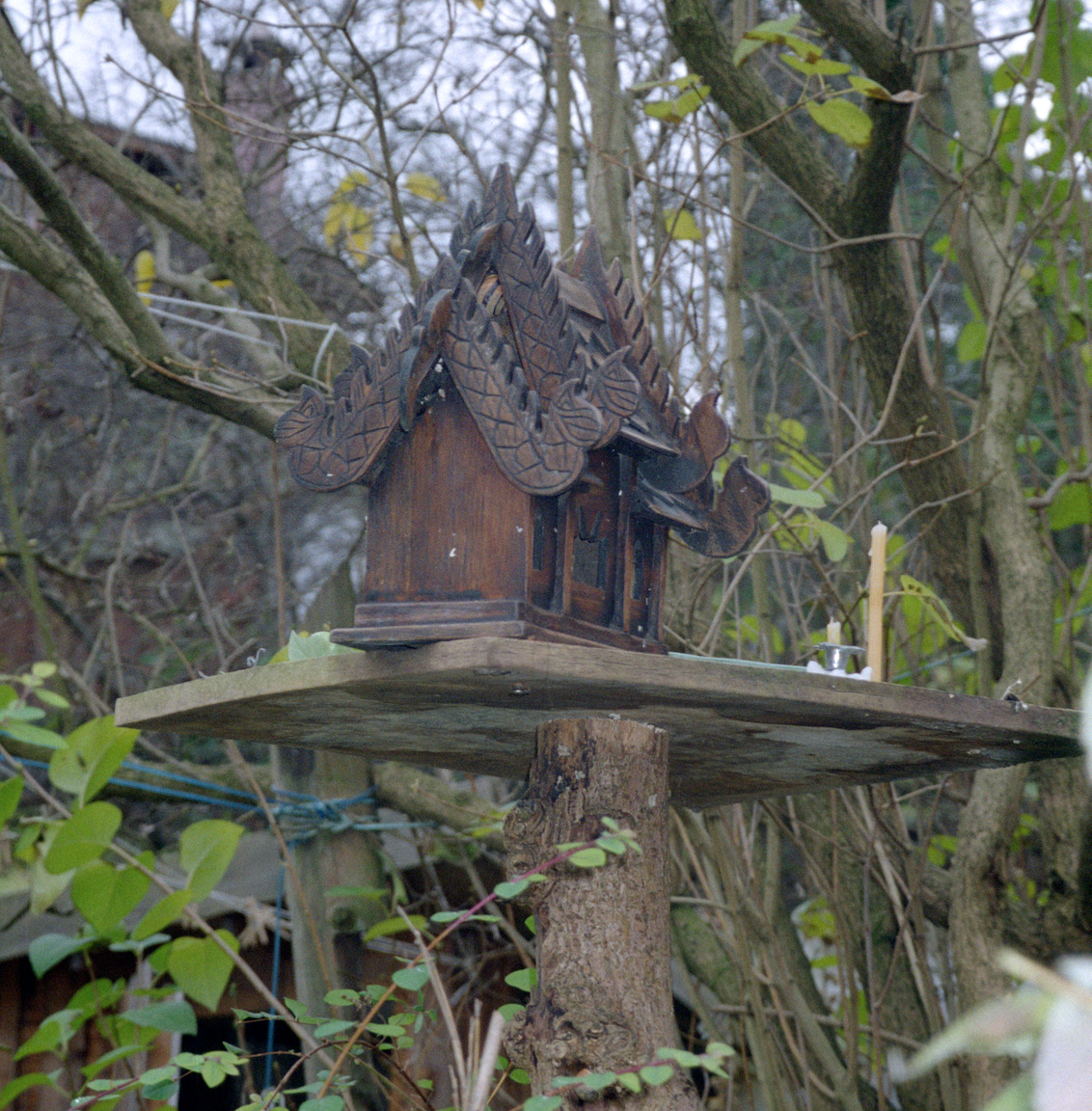
- This is one of the smallest houses in this enclave.
-
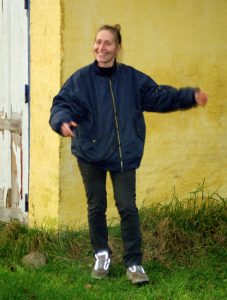
- Tanya noticed that we were taking pictures of her neighborhood and became a new friend.
-
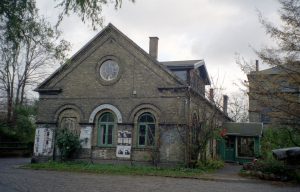
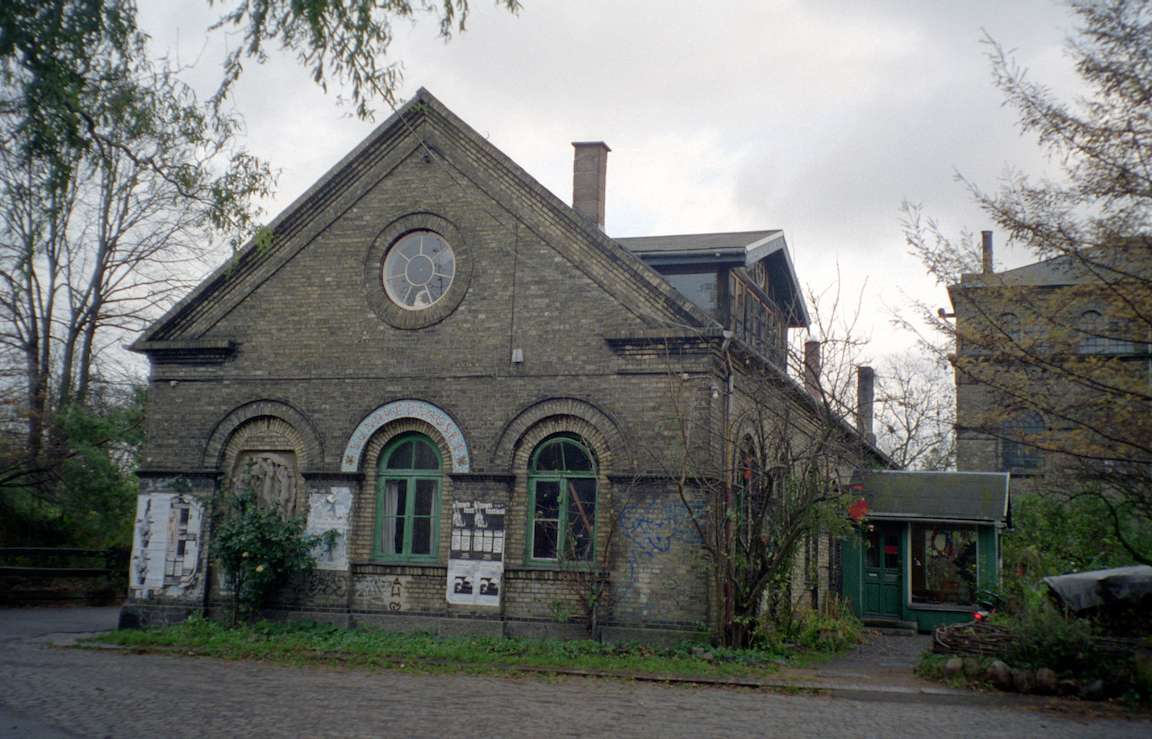
- This building is typical of the many abandoned military buildings getting restored in Christiania.
We spent a couple of hours talking with Tanja about the politics of this wonderful society that is evolving in Christiania. The community’s tolerance of cannabis came up early.
Tanja does not use cannabis, but she has a couple of plants in her yard because she likes how they look. She was horrified to learn of what could happen to an American caught with plants in their yard (Most other Europeans were equally horrified).
She described the discontent developing over Pusher Street. The problem for locals is that the products sold on Pusher Street are “imported,” meaning that the pushers’ suppliers are really seedy characters connected to organized crime. Furthermore, of the piles of money flowing through Pusher Street, little or none comes back to the community. There is no tax on the sales, and there’s not even a fee on booth space.
Other than the pushers themselves (who unfortunately yield a lot of political power in Christiania), most citizens would prefer that the cannabis be produced locally and sold in coffeehouses so that the greater community can gain some benefit from the income generated. We hope the coffeehouse movement in Christiania is successful.
Cannabis and psychedelic mushrooms are the only drugs tolerated in Christiania; cocaine, opiates and other “hard drugs” are not. The harder drugs caused a great deal of problems in the early history of Christiania, so the community drew a very firm line. A citizen who is suspected of using hard drugs has two choices: submit to a urine test or leave Christiania.
If the urine test is positive, there are two choices again: leave Christiania or get treatment. The treatment option is very generous and compassionate. The user can enroll into whatever treatment program they choose at the community’s expense, and the enrollment is done in a way that does not go onto the person’s record.
The person must live outside of Christiania while the treatment is in progress. After six months, if the user has remained clean for the entire time, they are welcomed back into Christiania.
We saw none of the problems associated with hard drugs while we were there, so the rest of the world could learn a few lessons from Christiania’s drug policy.
After hanging out with Tanya for a couple of hours, we spent the rest of the afternoon walking around Christiania admiring and documenting the creativity and innovation of their living spaces.
-
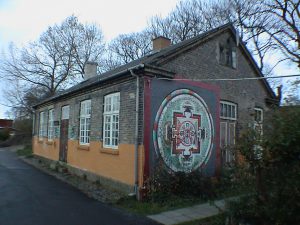
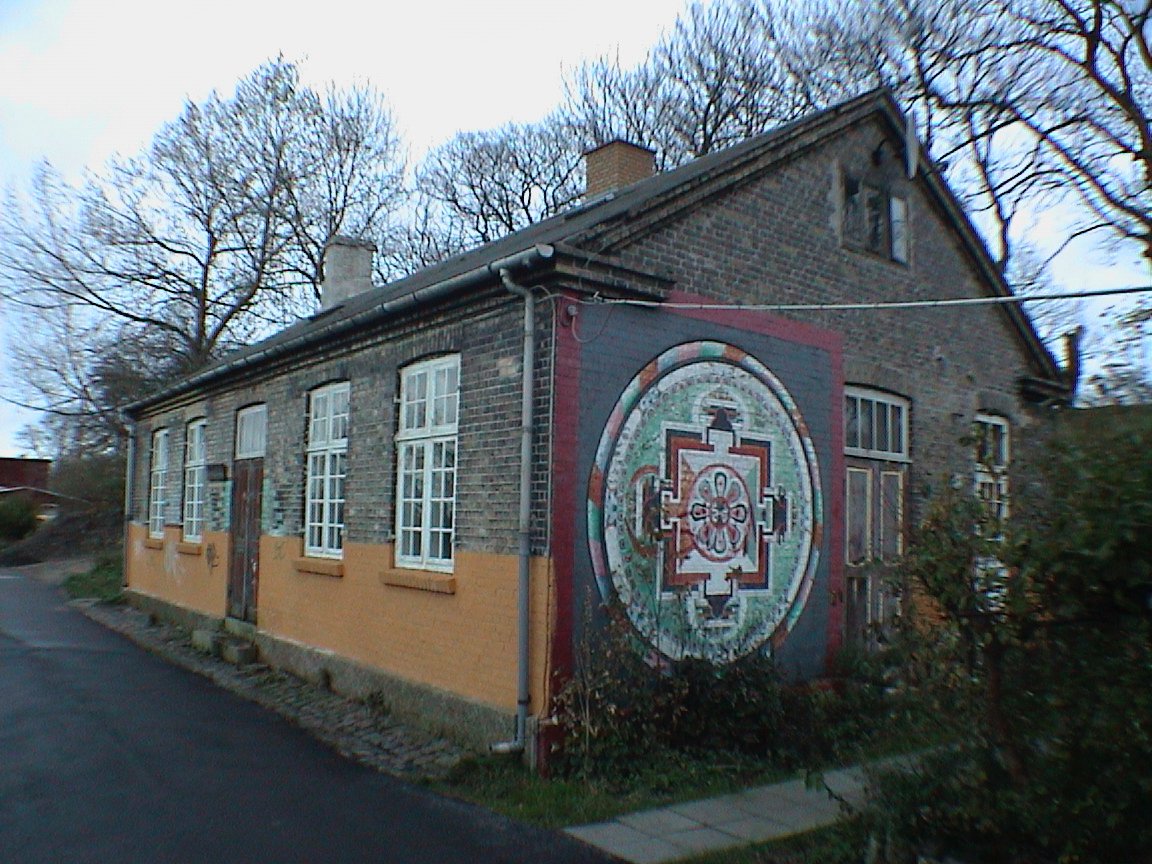
- There are many murals on the buildings of Christiania.
-
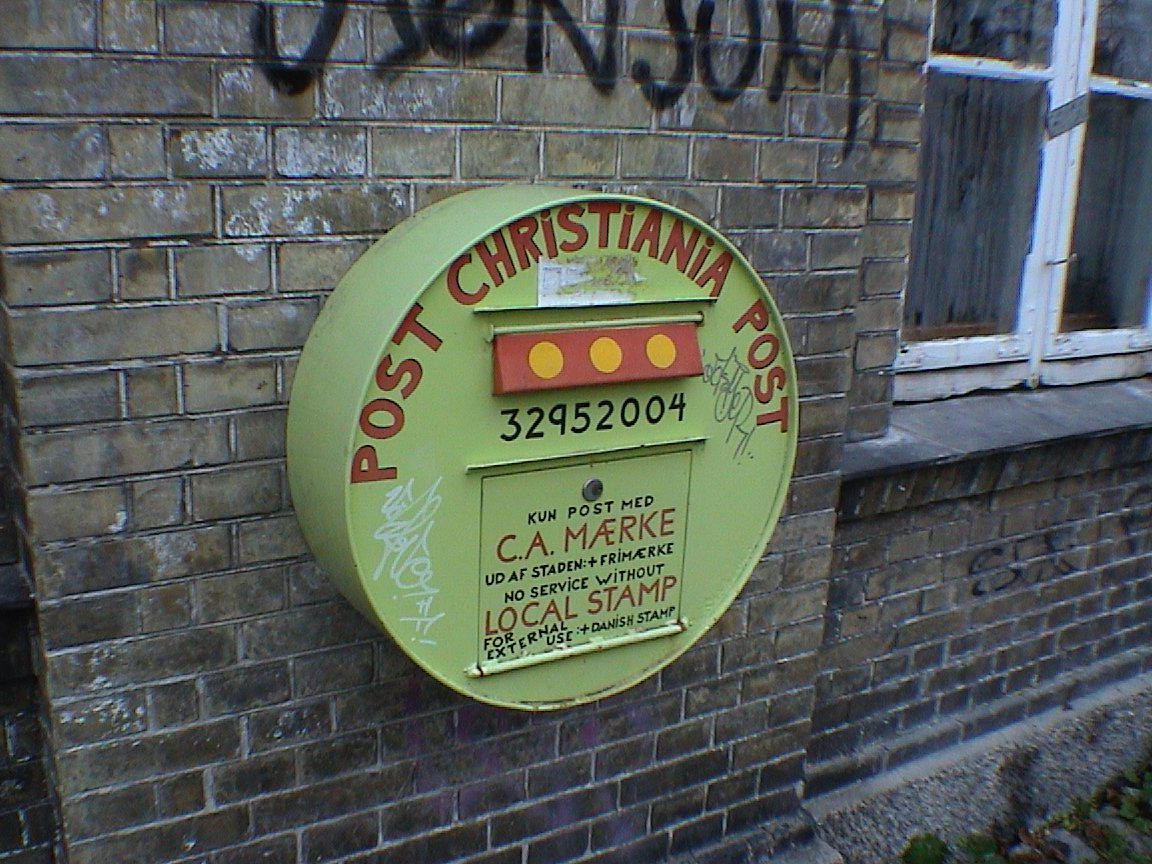
- A Christiania postal box.
-
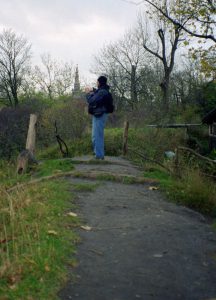
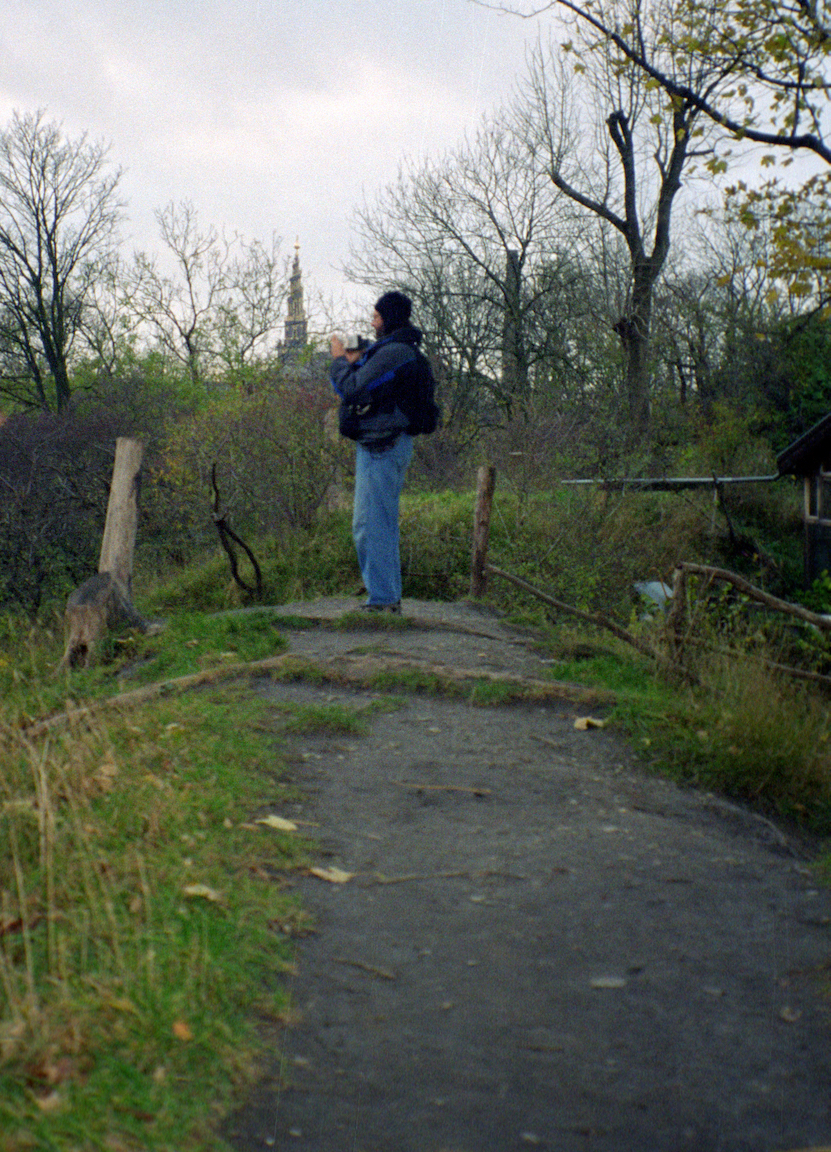
- Christiania is a narrow community bisected by a canal. The north side of the canal is lined by tall levy.
-
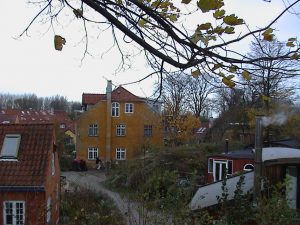
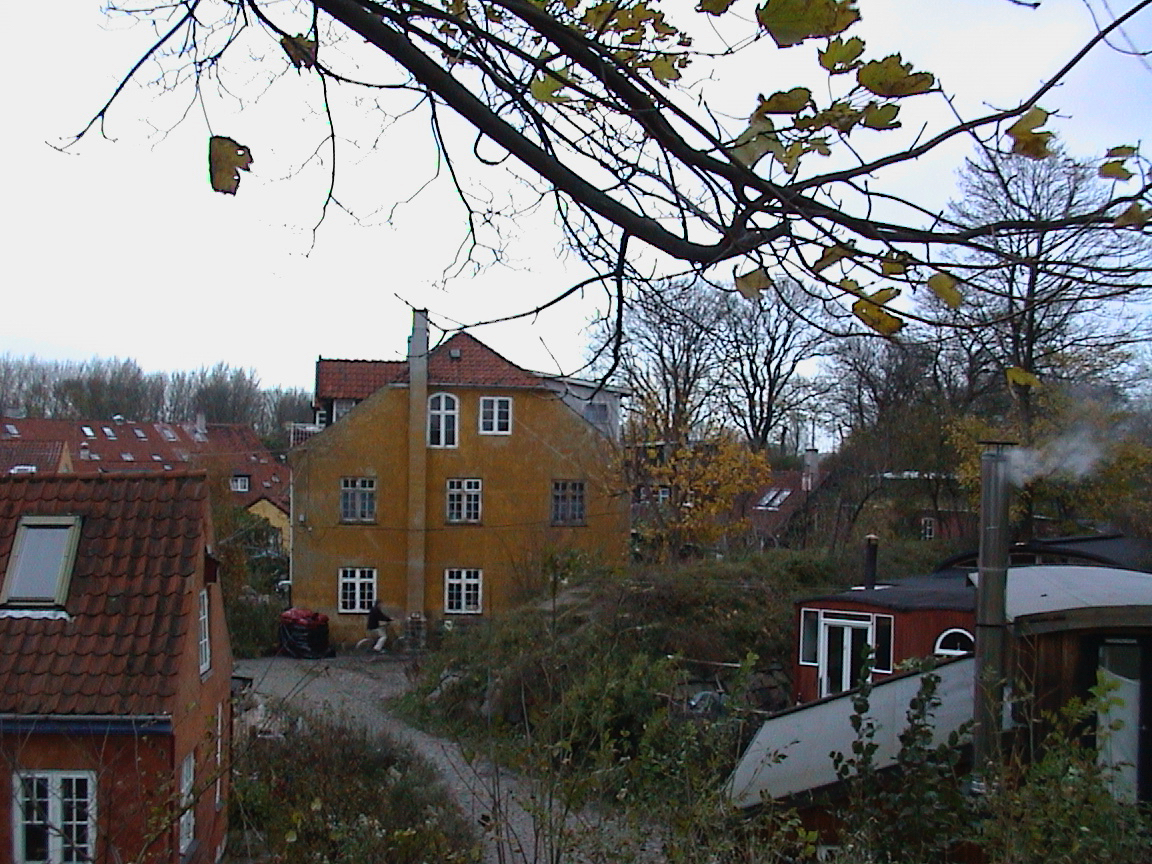
- The dikes provide a vantage point to photograph the neighborhoods.
-
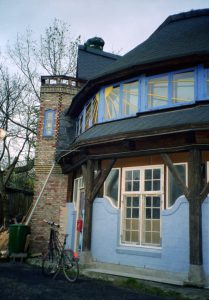
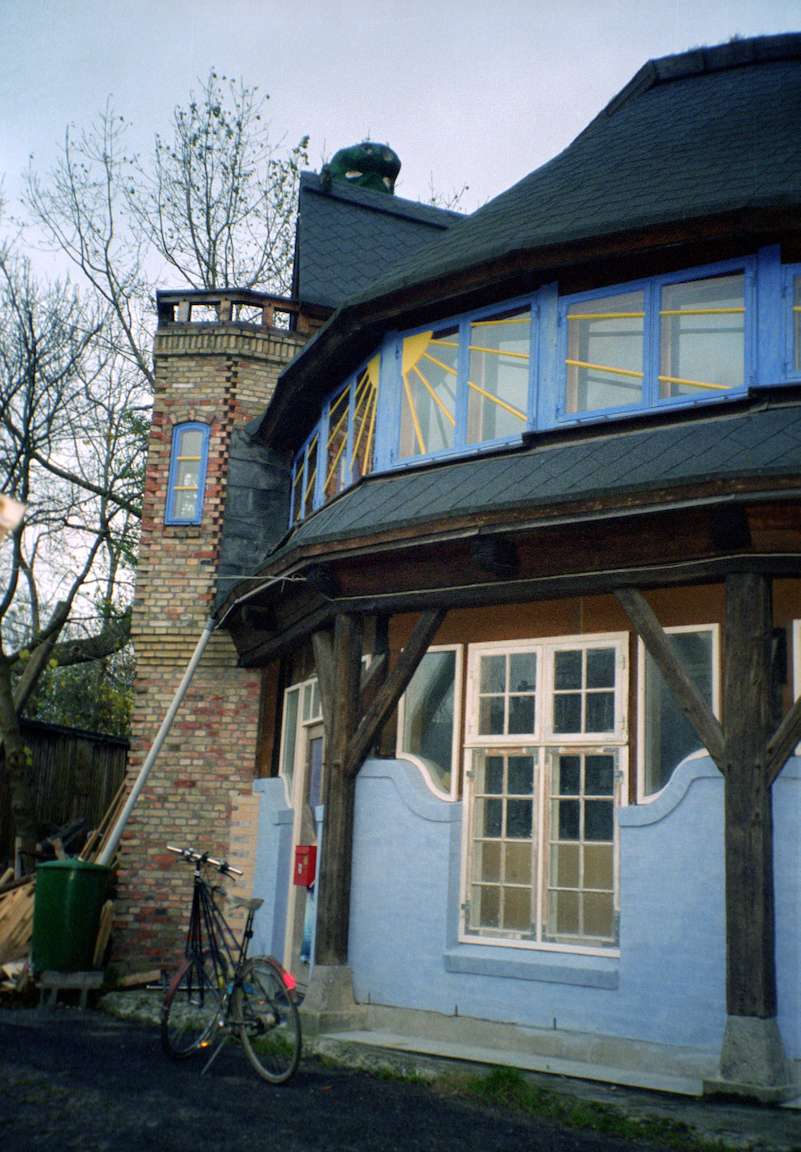
- A Pedersen bike parked in front of a reclaimed home.
-
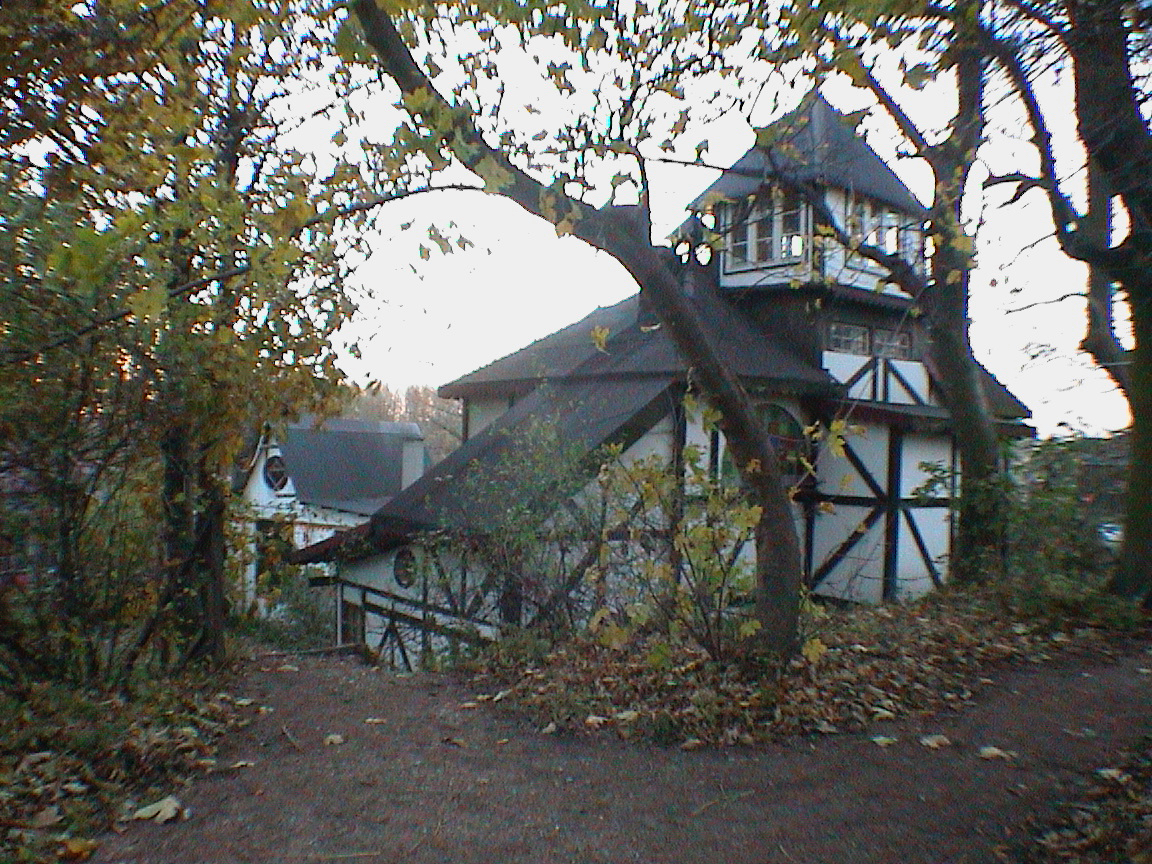
- This large wood house contrasts with the many brick buildings in Christiania.
-
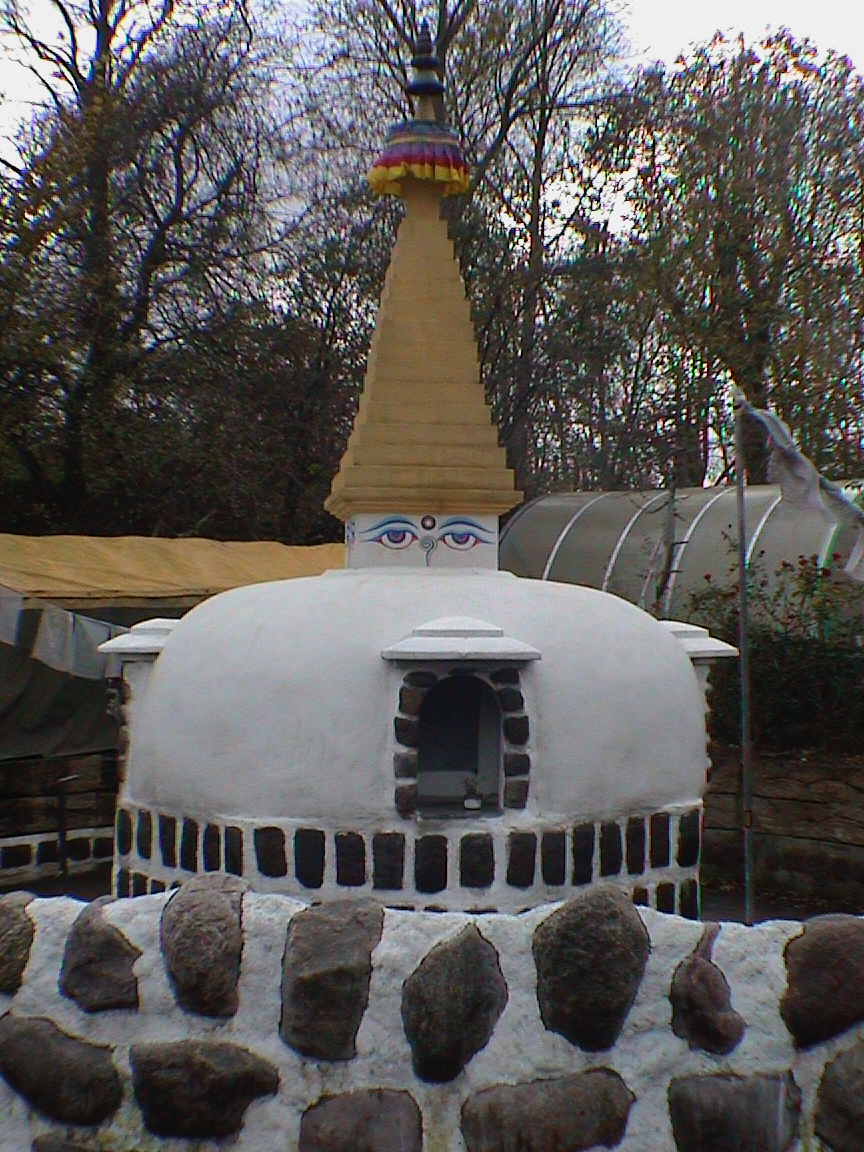
- This landmark is both a stupa and an oven.
-
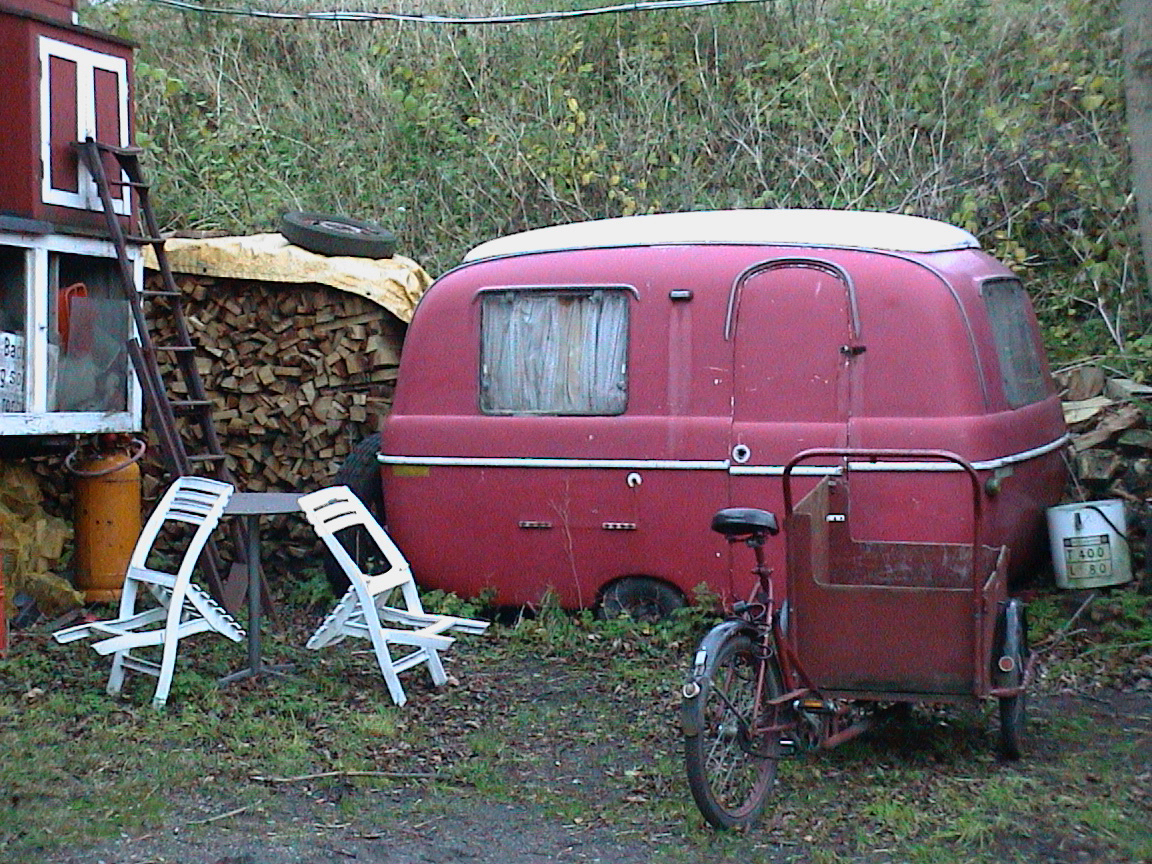
- A very early Christiania bike is parked outside of a travel trailer that’s been here a long time.
-
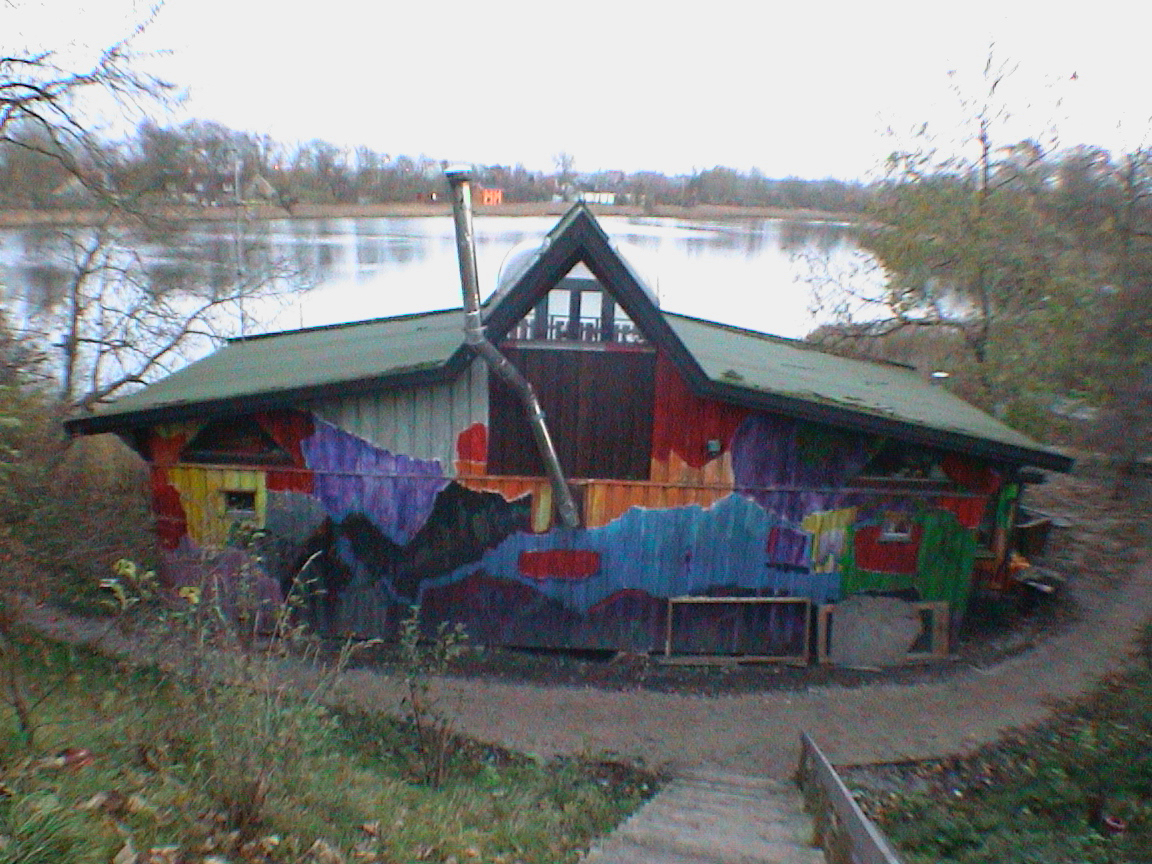
- This house looks out on the canal while its back side presents a mural.
-
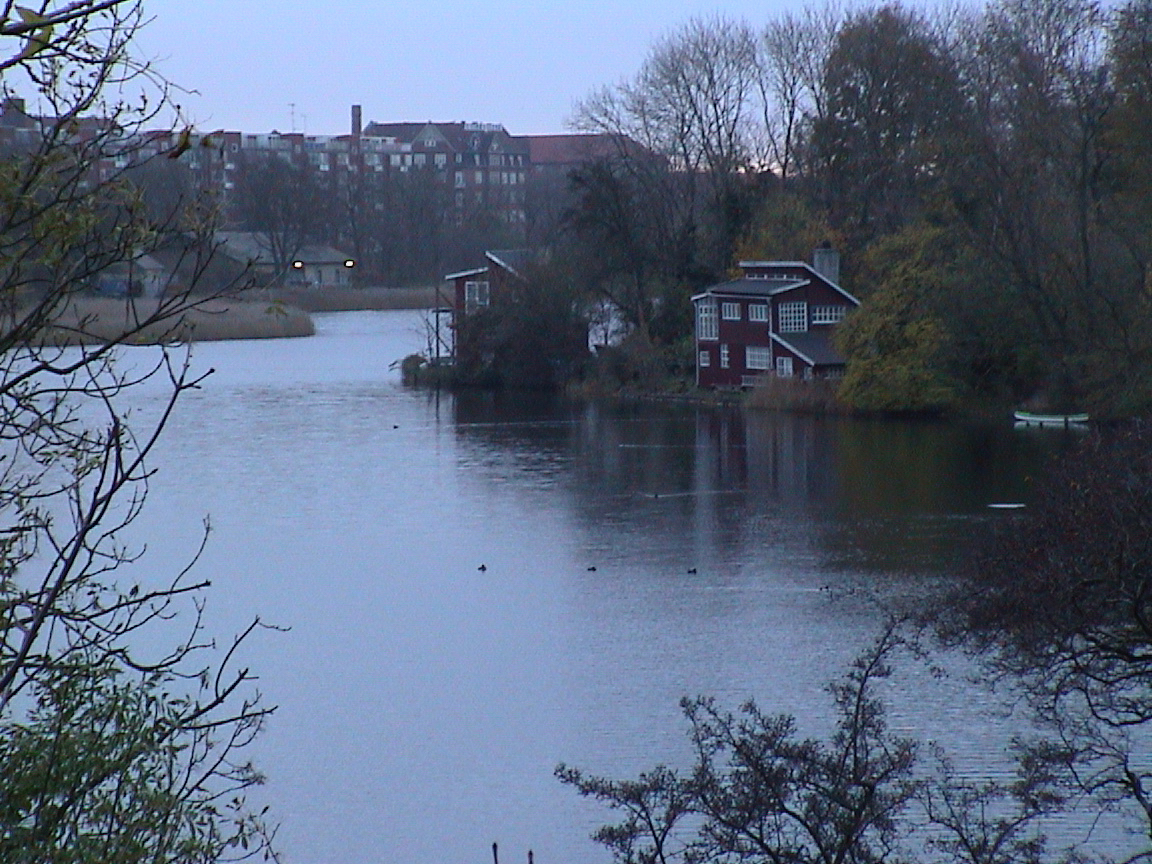
- A view of the canal in Christiania.
-
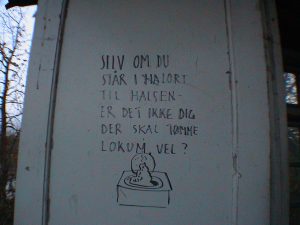
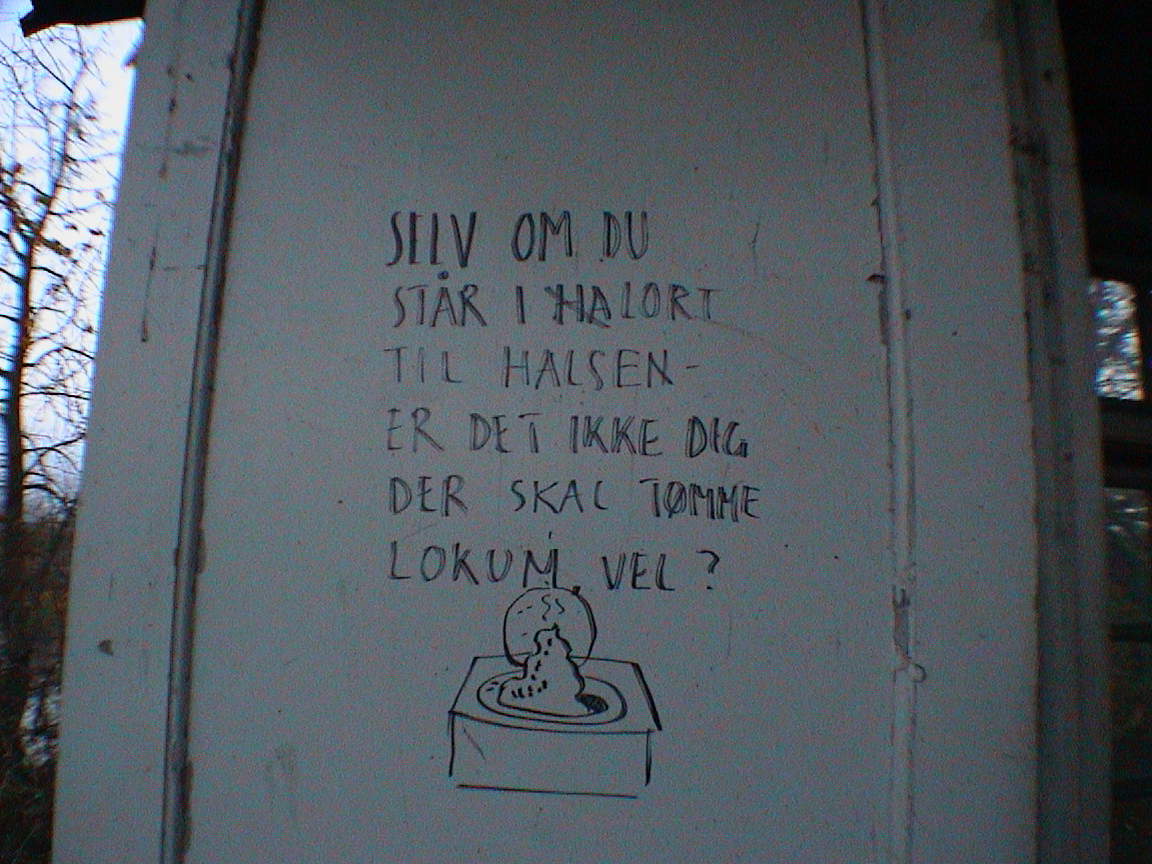
- The outdoor composting toilets come with instructions for proper waste disposal.
-
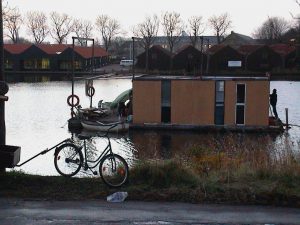
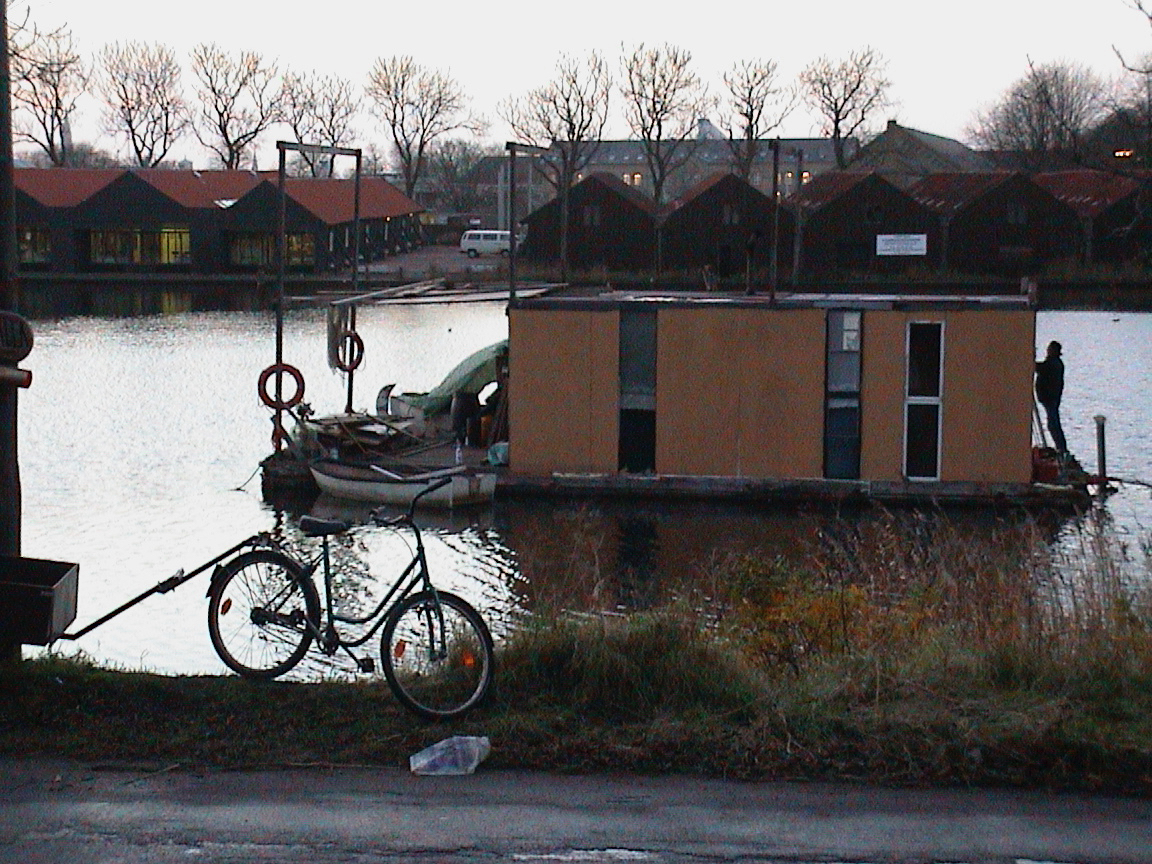
- A houseboat parked off the shore of Christiania.