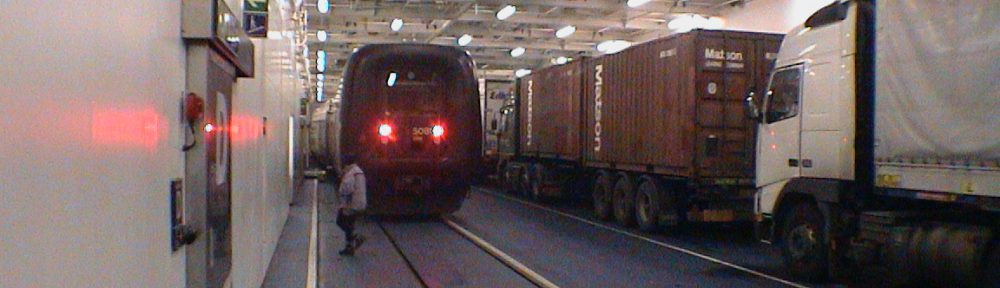
Denmark is not covered by our rail passes, and we need to save a travel day, so we bought one-way tickets for today’s trip to Copenhagen. With the mandatory reservation, it came out to about $60 for the two of us. Before our train arrives, we have enough time to take a quick daytime look at our station.
-
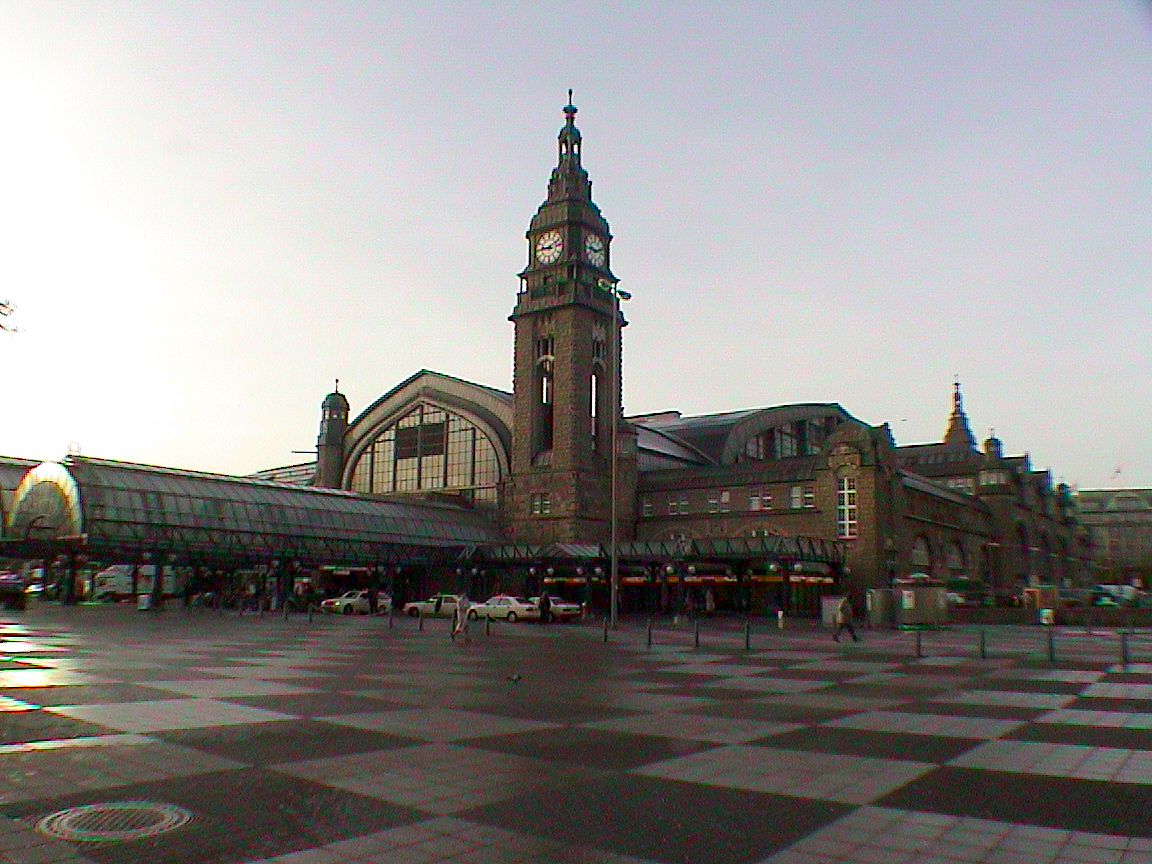
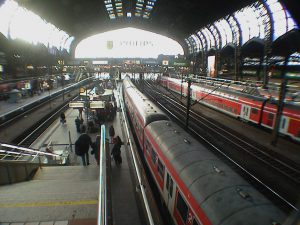
- Hamburg’s main train station.
-
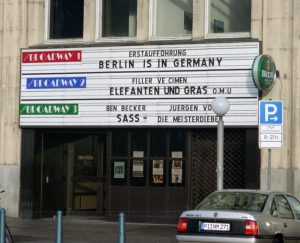
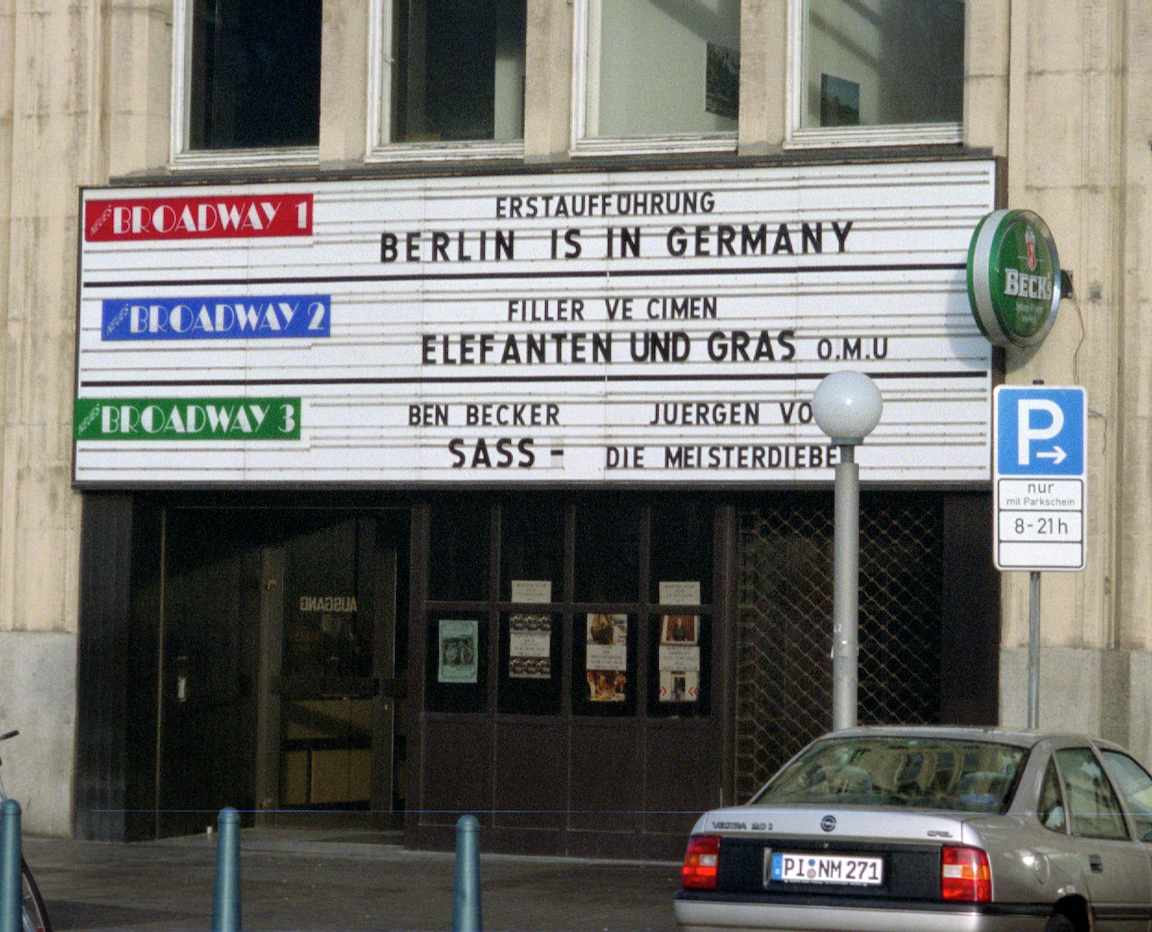
- In a sea of signage in German, a movie marquee lists the film (in English) “Berlin Is In Germany”
-
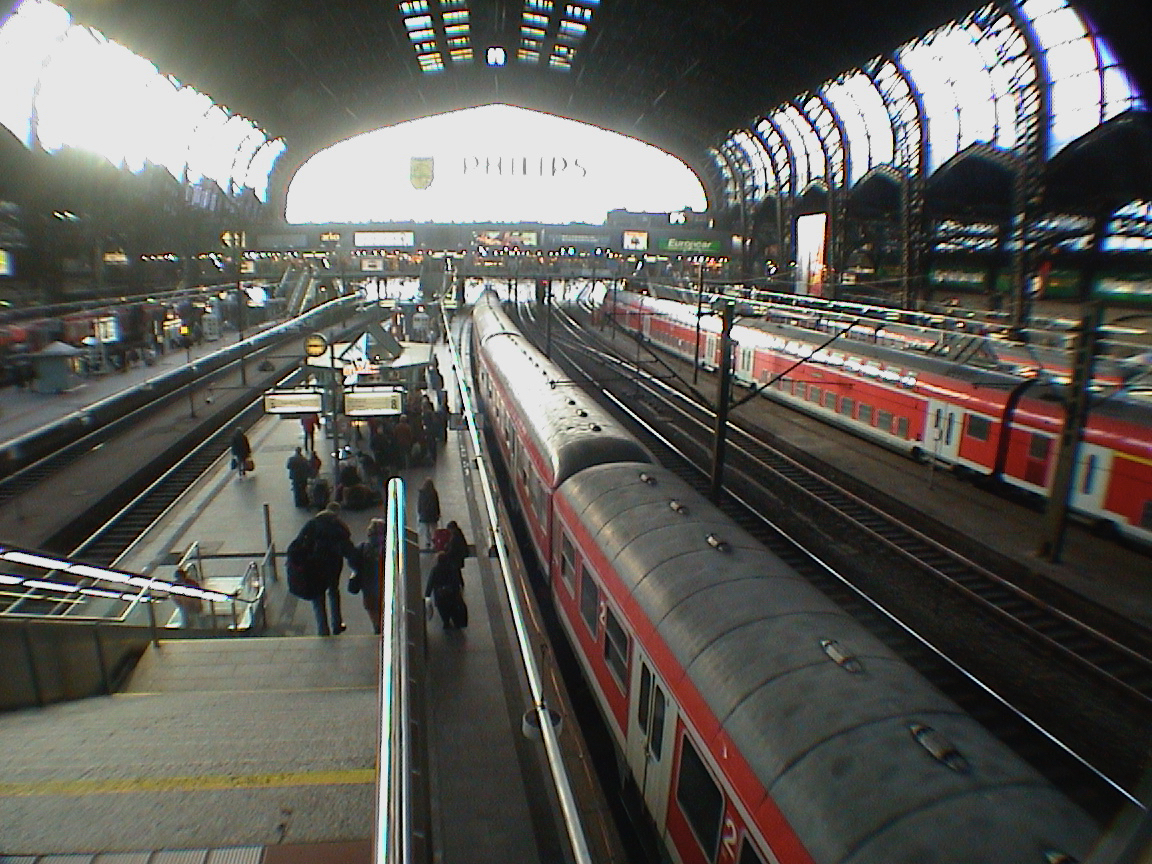
- The platforms of the Hamburg Hauptbahnhof
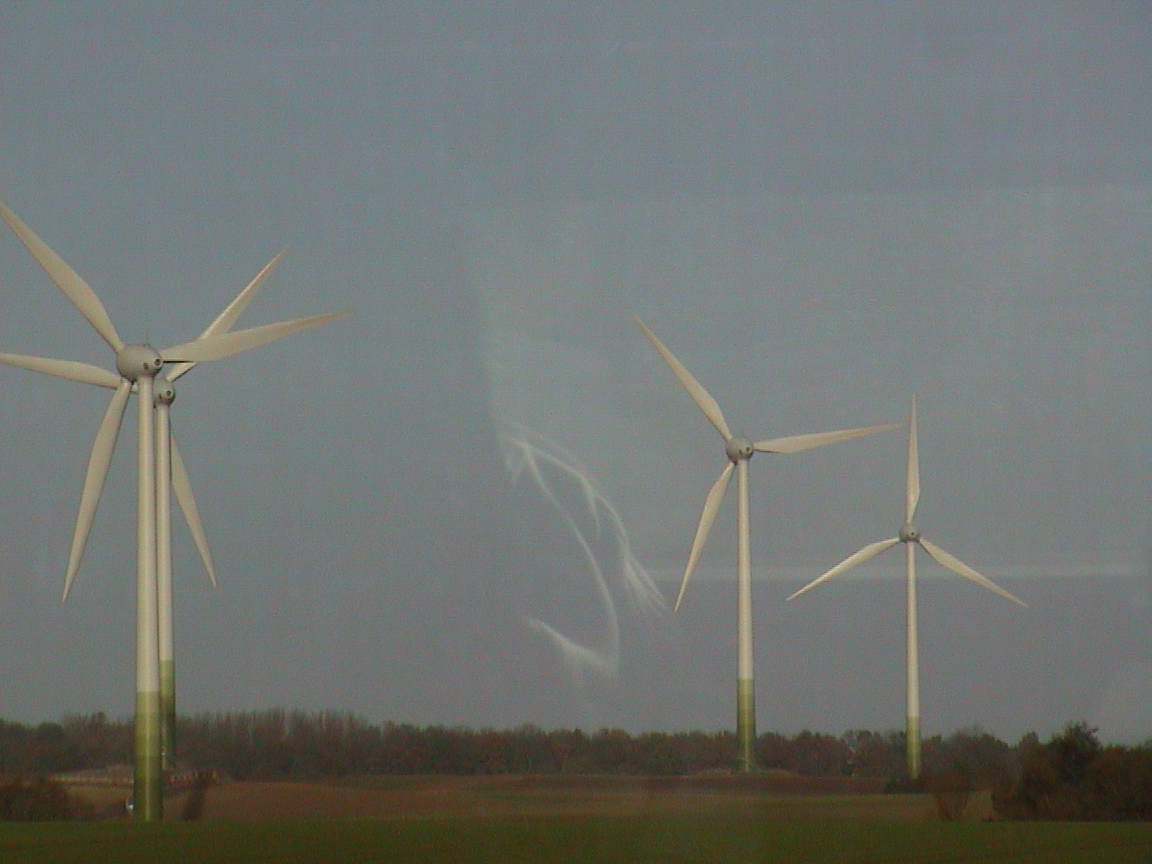
Once we started heading north from Hamburg, we started seeing windmills and kept seeing them. There must have been hundreds of windmills along the way… not the kind you see on Dutch post cards, but the modern kind that generate electricity. There’s plenty of wind on the North Sea coast, and the Germans and Danes are using that wind to reduce and eliminate their need for nuclear, oil, and other forms of toxic power.
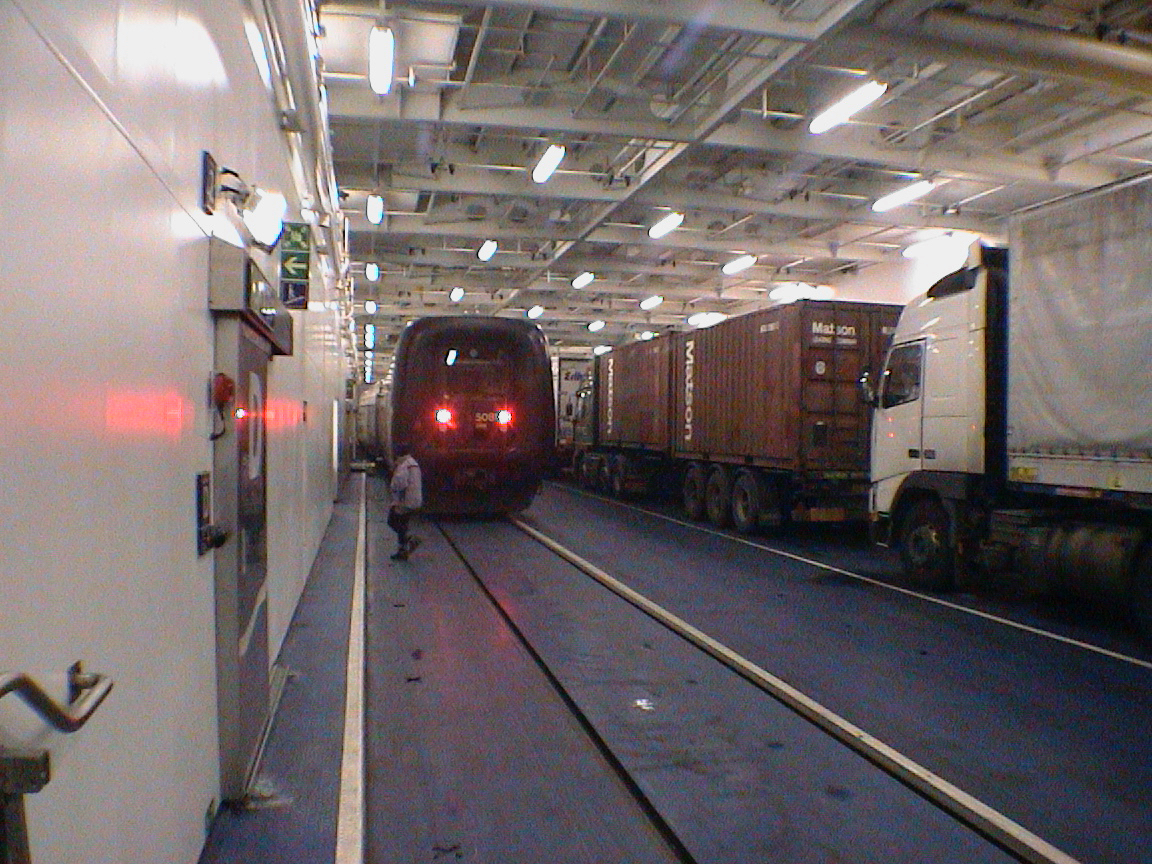
Our rail map shows a short ferry crossing on this trip, which implied we’d have to get off the train and board another one on the other side. Instead, the floor of the ship is outfitted with rails, and the train rolls right onto the boat. During the 45-minute crossing, we could get off the train and wander about the ship, where we could visit the now-familiar fixtures such as cafes and gift shops.
Like the Germans, the Danes smoke too much, but they’re a little better about keeping smoke off the trains. All three cars were non-smoking. The smokers tried to make up for lost time on the ferry, so the only place we could breathe was on the deck outside.
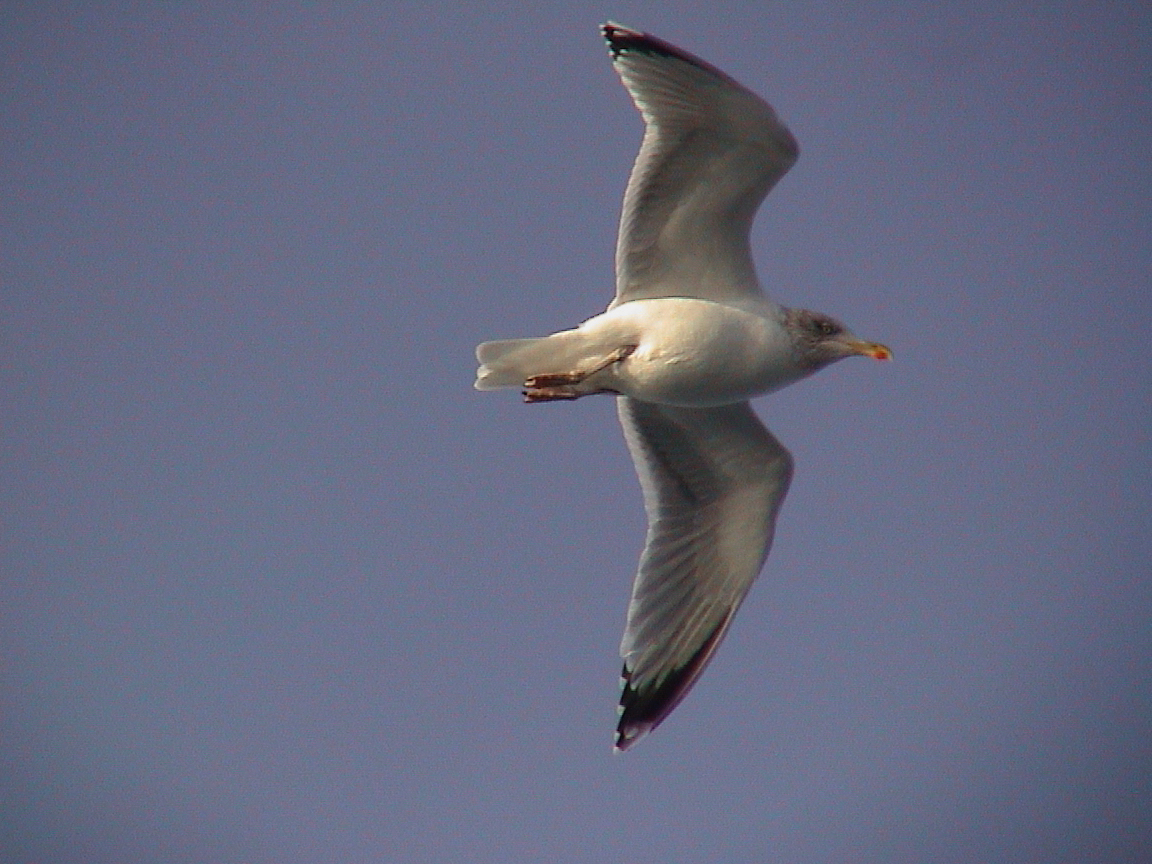
Our ship was being followed out to sea by a sea gull who was sailing in the updrafts from the smokestack. During the entire ten minutes that we watched, this bird did not flap its wings once.
-
- There were a lot of wind farms along our train ride from Hamburg to Copenhagen.
-
- Our train to Copenhagen rolled onto the ferry.
-
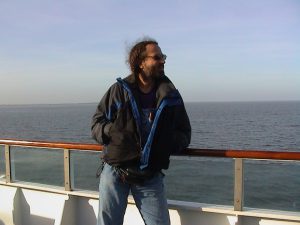
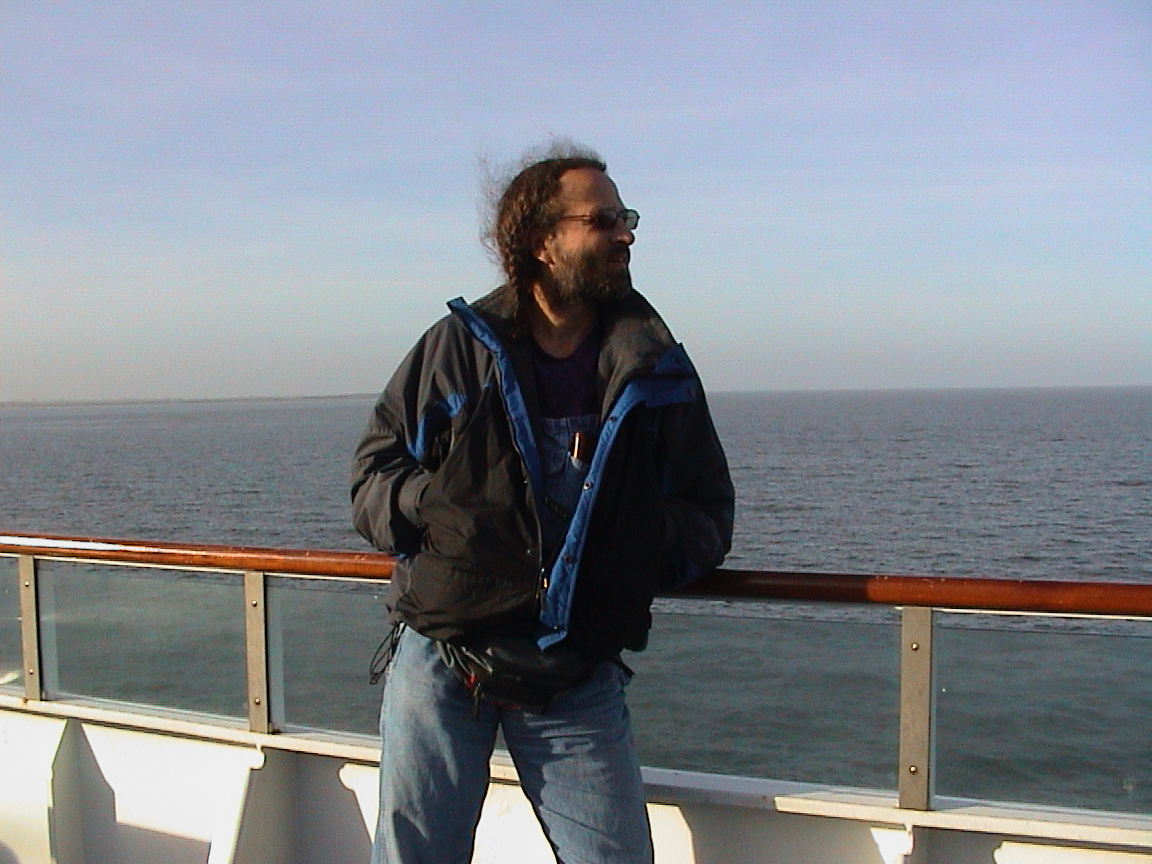
- Obbie enjoys the fresh air as our ferry gets underway.
-
- A gull was following us for several miles across the straight.
-
- People fishing on the breakwater at the end of our ferry ride to Denmark.
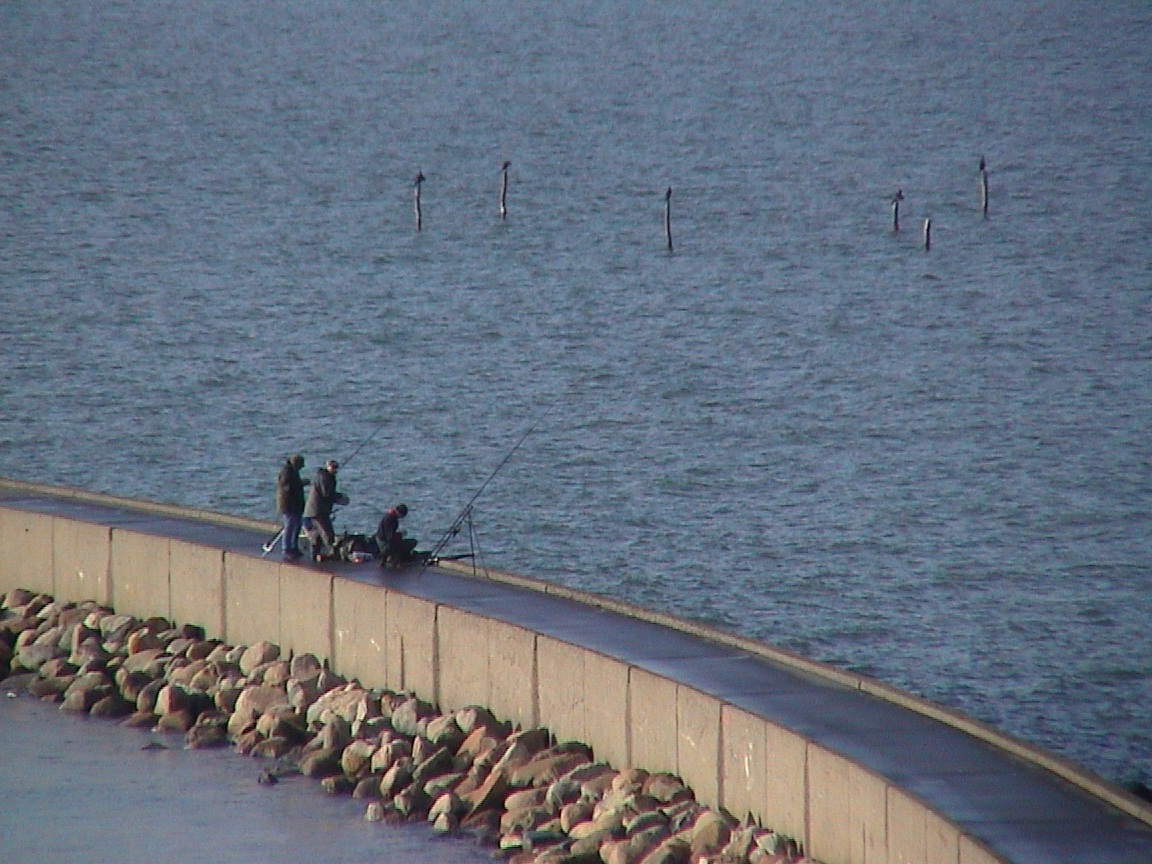
It was early afternoon when we got to Copenhagen. The train station was a little bit crazy, but tame compared to Hamburg. Many people come here to go to Tivoli, a very old and famous amusement park conveniently located across the street from the main station.
The Tourist Information office is next door to Tivoli. It’s kind of like going to the DMV. When we got there we took a number from the dispenser and waited for about 15 minutes.
They arranged a room for us in a private home in the Christianshavn neighborhood for 375 kroner (about $40) per night. That’s a ten-minute bus ride from the station and about two blocks from Christiania – our main destination in Copenhagen.
We arrived at our room, unloaded our backpacks from our backs, checked the view out our window of fishing boats on the canal, and set off in search of good food. We were told that we could find smoke-free eating at a vegetarian place in Christiania bearing a name that translated to “Morning Place.” (In spite of the name, they’re not open in the morning, but we’re not morning people anyway.)
It was about 3 when we got there, and the food was some of the best we’d found in Europe. For about five bucks you get a meal that includes a main dish (there are three choices, which change every night) and two salads (six choices, same deal). We ate like starving people, though having not eaten since breakfast in Hamburg, we feel like we are starving people.
It was getting dark as we finished eating, even though it’s not even 4 o’clock yet. That’s the price we pay for going to a place as far north as southern Alaska in mid-November. During the entire train trip from Hamburg, it felt as though the morning sun was shining through our train window.
The fact is that the sun is always low at this time of year. The noon-day sun doesn’t rise above the tree tops. For sun worshippers, the window of opportunity is very short at this time of year. But in spite of the northern latitude and short days, the climate is very mild. Many flowers are still blooming, and the grass remains green.
As the Friday afternoon darkness set in, we took a leisurely walk around the central part of Christiania.
Christiania was an abandoned mid-19th century military depot that was squatted by hippies in the early 1970’s. Over the years, the old brown brick barracks and stockades have been creatively fixed up and remodeled, and many more innovative structures have been built to provide more space for homes and businesses.
Meanwhile, political battles developed over the fate of this enclave which has millions of sympathizers all over Europe and the rest of the world. Eventually, Christiania attained legal status as an autonomous district of Copenhagen, and this grand social experiment has continued ever since. There remain many Christianians who would like this to be an independent country (kind of like the Vatican?). In fact, they have their own flag and postage stamp.
The first stop on our walk-about is Pusher Street, Christiania’s biggest tourist attraction (for better or for worse… more on that later). This area looks like a little flea market, except that all of the stands sell the same thing: cannabis and cannabis derivatives.
In front of the community greengrocer we met Ivan, an ex-pat from DC who’d been living in Christiania for a number of years. “This was the right place at the right time for something like this to happen.” He rightly pointed out that if someone tried to squat an abandoned American military base they’d be quickly evicted by tear gas, dogs, and unspeakable violence.
A bit further on we met Tanja, a thirty-something single mom who was bringing food home on her Christiania bike. We got to talking about local and world politics while she let us try out her bike.
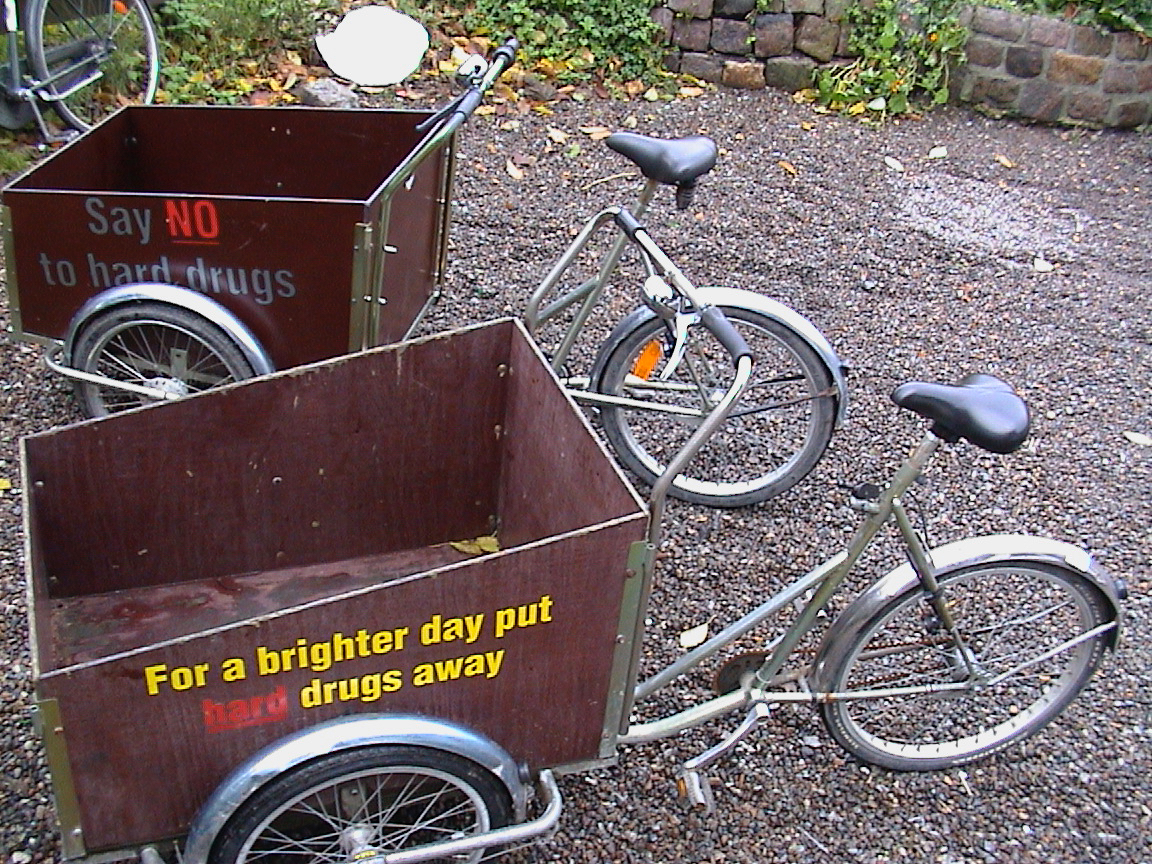
A pair of Christriania bikes
The rider sits on the bike, which is powered by the single back wheel, and steers by turning the cart and its two wheels on the front. The three-wheeled design yields good balance with a carrying capacity of 150 kg (over 300 pounds). Denmark is mostly flat, so hills aren’t much of an issue, but there are models equipped with drum brakes and as many gears as you’d want.