Wednesday’s destination was Galway, a university town in about the middle of the west coast of Ireland. Our plan is to stop in the town of Donegal for a few hours along the way. To see Donegal and still get to Galway before dark, we had to catch a bus at 8:30am. Somehow we slammed down our eggs, bacon, sausages, toast and coffee and made it to the bus station on time.
American and Irish buses have one thing in common: an image of a dog in their logos. Americans have Greyhound, and the Irish have Bus Eireann. Their buses bear the image of an Irish Setter (imagine that). We’re waiting to see if a German Shepherd graces the walls of buses in Germany.
Our first international border crossing (UK – Ireland) was early in the bus trip, but it went by almost unnoticed … we might as well have been crossing an American state line.
It wasn’t until we were wandering around “Donegal town” (as opposed to “county Donegal”) that having moved from the UK to Ireland became an issue … our British money wasn’t any good any more. Changing our folding money into Irish punts was no problem, but our 3.45 pounds worth of coins became souvenirs..
We got off the bus in Donegal at about 10:50am, and the town’s main hotel (the Abbey Hotel) was kind enough to let us store our packs under a staircase near the lobby while we explored the town. We had until 2:40pm to do what we wanted to do.
Our main reason for being here was that part of Rozie’s family came from this region. According to a family history written by one of her ancestors, “the Scotts came from Ulster, County Donegal. The Donegal Scotts came to Ireland after being ‘encouraged’ to leave Scotland by King James in the 1600’s …”
We didn’t learn anymore than that during our brief time in Donegal, but at least we had a chance to visit that region. We took a walk around town, and then along the small harbor (which was mostly mud at the time, as the tide was out). After visiting the ruins of a Franciscan Friary (built in 1474 and destroyed by the English in 1601), and then taking a lap around the old castle, we came back to the central square (actually more of a triangle).
-
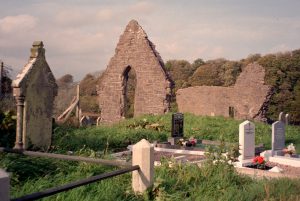
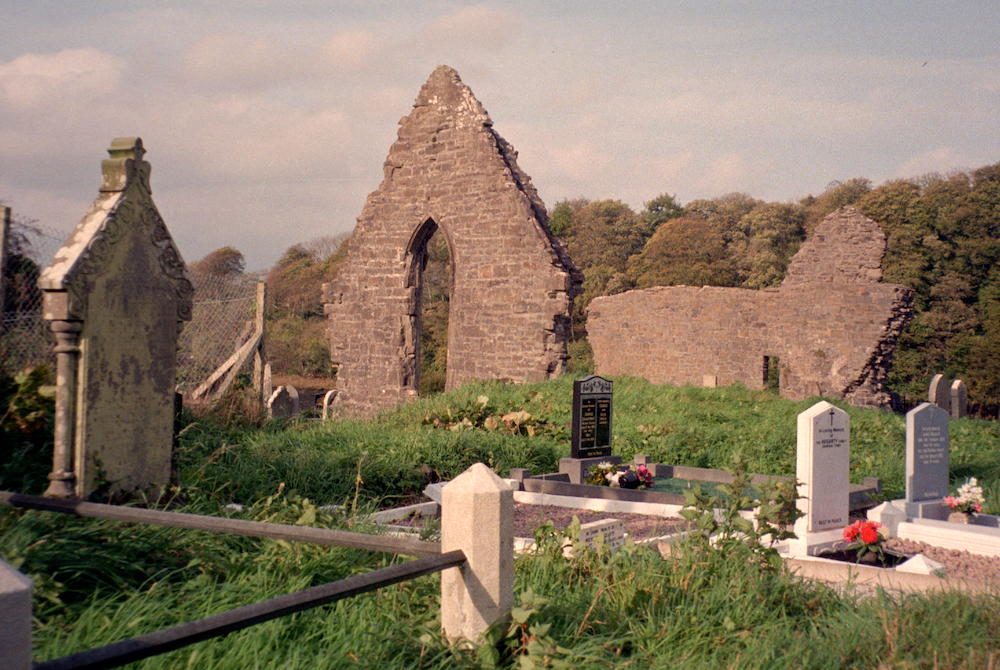
- The ruins of the Donegal Abbey.
-
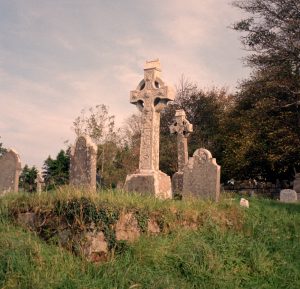
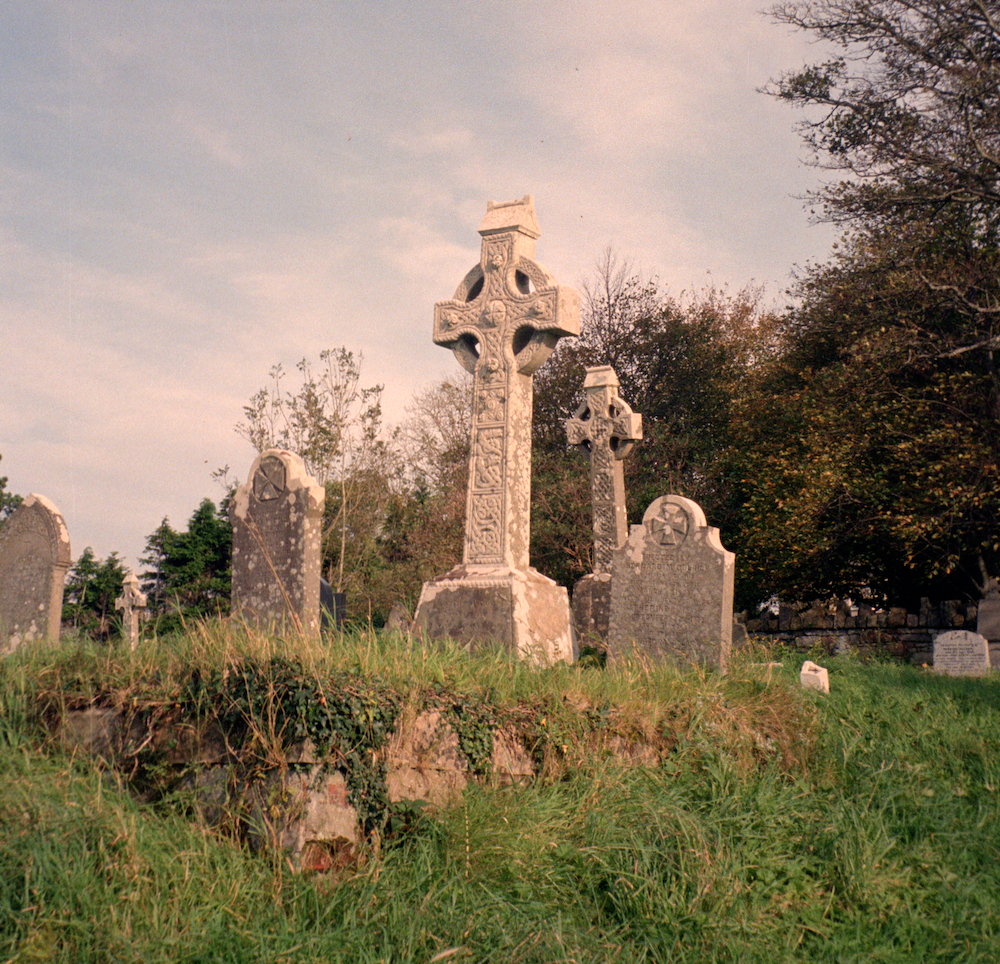
- Some markers in the graveyard near the Donegal Abbey ruins.
-
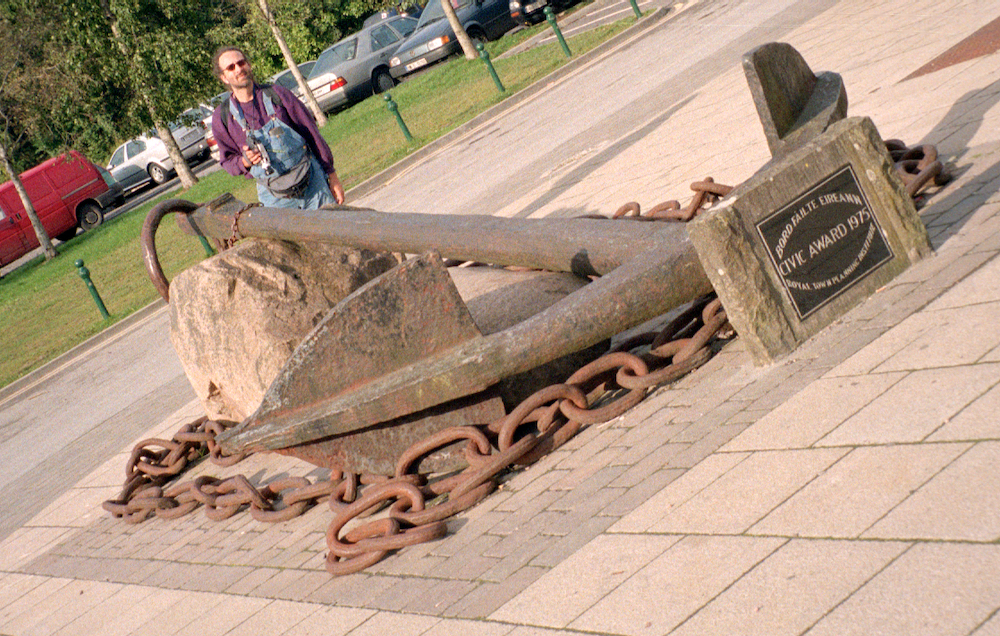
- Obbie stands by a very large boat anchor that is now an ornament near Donegal Harbor.
-
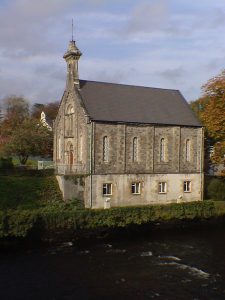
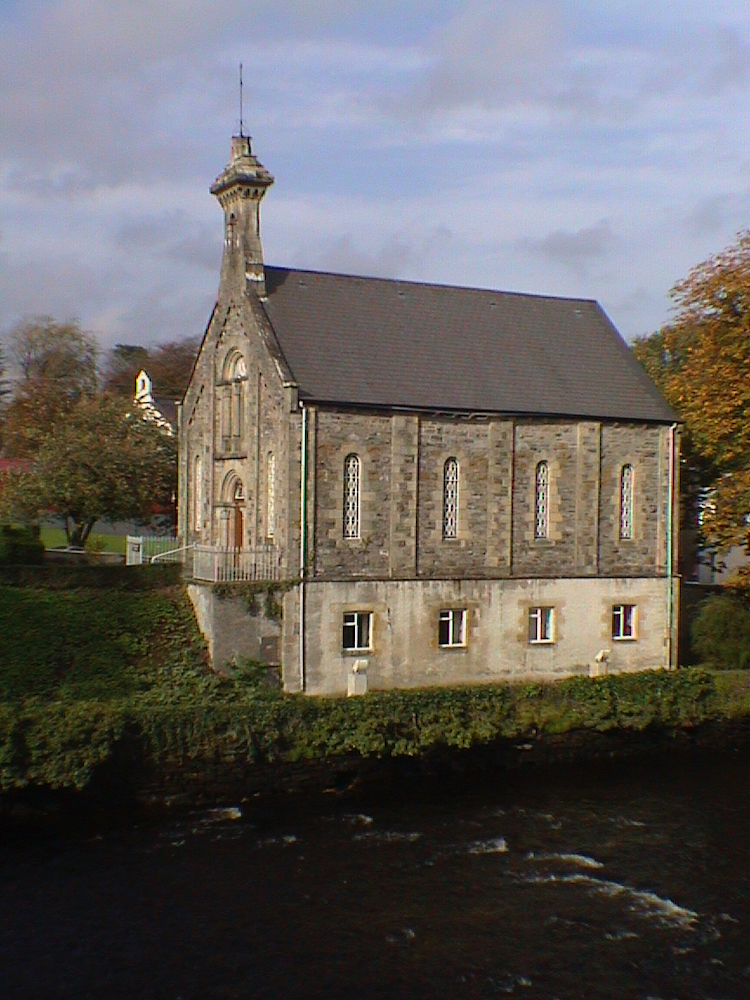
- The Donegal Methodist Church clings to the riverbank.
We got some Irish cash from an ATM, and then popped into a pub to spend some of that cash on our first pint of Guinness in Ireland.
After making some sandwiches for later on, we caught the next bus for Galway. This bus was much more crowded than the one we’d taken in the morning, and we settled into the very back seat.
Most of the other riders got off in Sligo, which had the nearest train station that connected to Dublin. Most of the countryside on our ride to Galway was green but barren. We were told that Ireland was once covered with hardwood forests, but they had all been cut down to provide fuel for the industrial revolution.
Upon arrival in Galway we were greeted by a sweet but hyper woman who asked us if we were looking for accommodation. Our guide books told us to expect these keepers of “underground” guest houses in Prague, but here was an eager lady in Galway.
As she led us through the station, she was warmly greeted by people in uniforms, which made us more comfortable. She set us up in a room in the center of Galway for 30 punts/night (about $35) including breakfast.
The room did not have a sink or TV (so what!), but the location could not have been more ideal. Carmel was a very gracious hostess who tried so hard to keep us happy, she was almost like a doting mother.
This brings up an observation we’ve made on accommodation. Staying in B&B’s, guest houses, pensions, etc. is not only a way to save money, it’s also a way to enrich your cultural experience, because it’s as close as you can get to staying in the homes of the locals.
Wednesday night was rather rainy, but we took a walk around anyway, just to get our bearings. We found a bustling High Street (that’s what they call “Main Street” in this part of the world) where traditional Irish music emanated from the pubs. We popped into one to nurse a pint through a few songs. Outside, some hardy buskers played on in spite of the rain.
One of our favorite things about Galway is that most of the center of the city is pedestrianized … shoppers, buskers, workers, and loiterers can mingle on the streets without having to dodge traffic. Extended pedestrianized areas are common in the best cities we’ve visited so far.