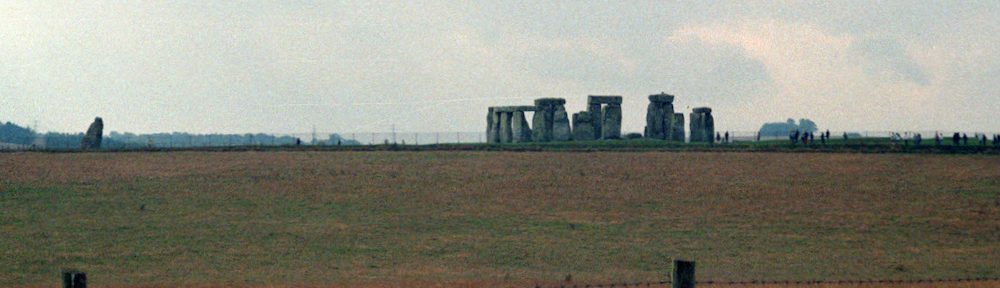
After walking around Bath on Thursday, we checked out of our B&B on Friday morning. We were able to store our packs at the Backpacker’s Hostel downtown while we took a little bus tour on Friday. We got onto a small bus with 14 other people and a guide to go to Stonehenge, Avebury, and a couple of small ancient villages.
Stonehenge
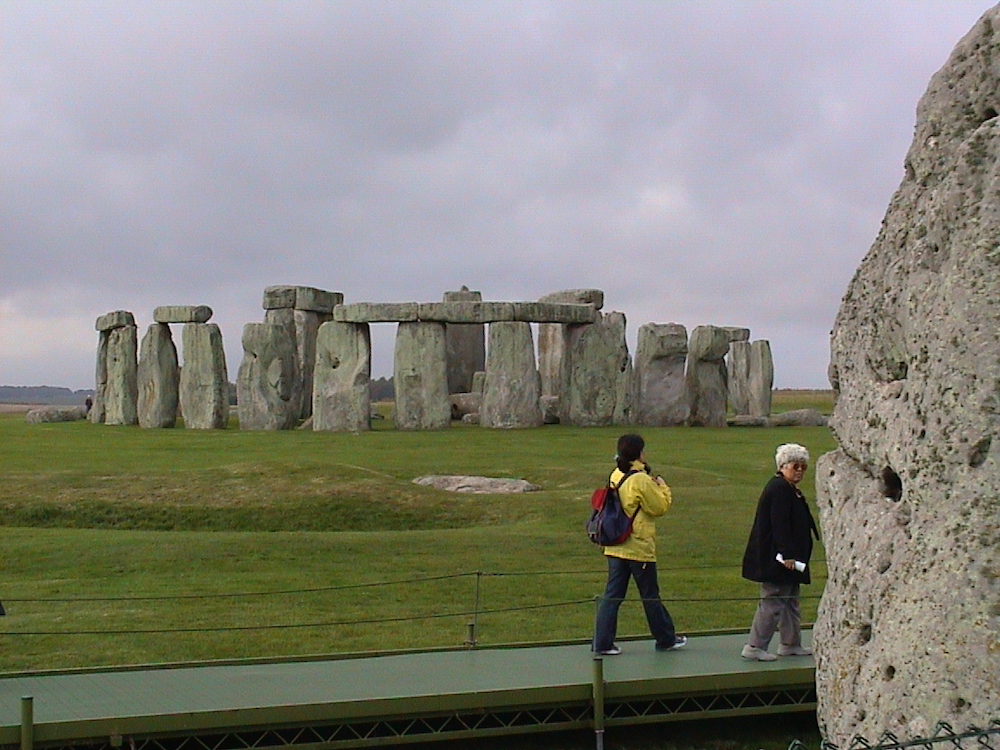
At Stonehenge you are not allowed to get within 100 yards of the stones, even if you pay the 4-pound price of admission. We saved our money and took pictures over the chain link fence.
-
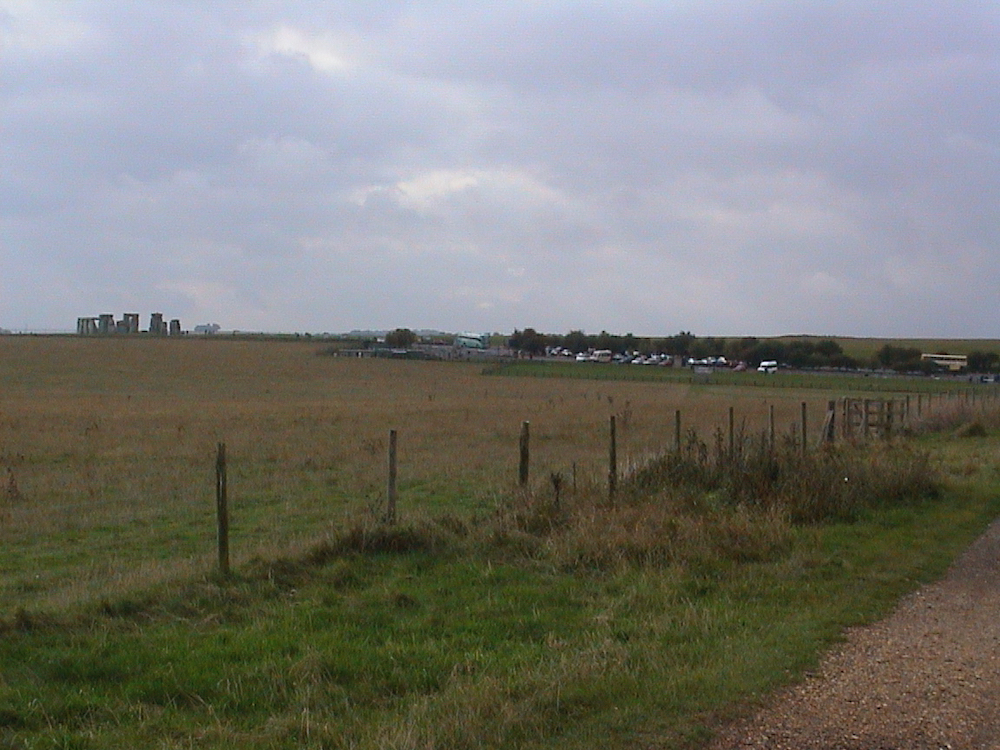
- At Stonehenge, we took a walk into the nearby countryside..
-
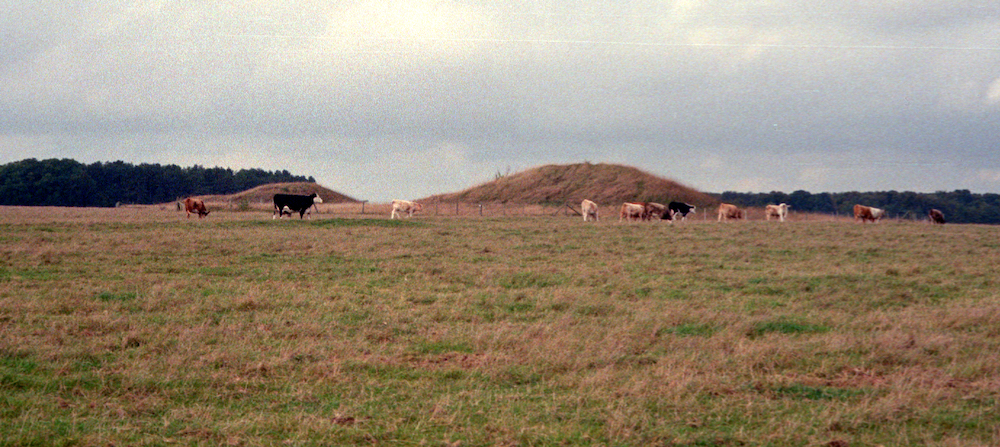
- ..where cattle grazed among some ancient burial mounds,…
-
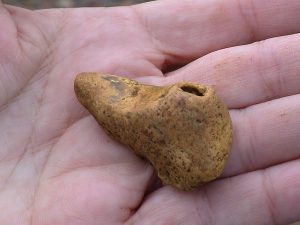
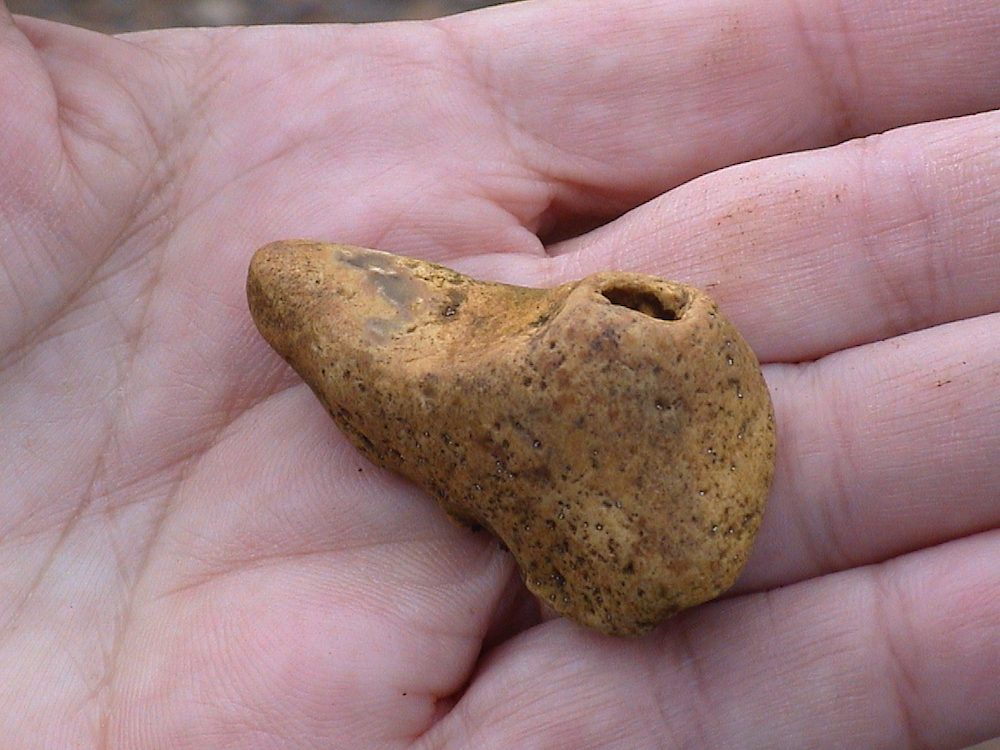
- ..and we found this unusual stone that we called the “boot stone.”
-
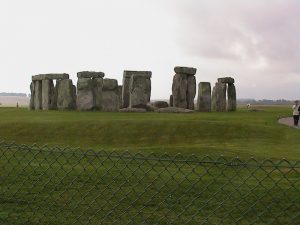
- This is as close as we could get without paying.
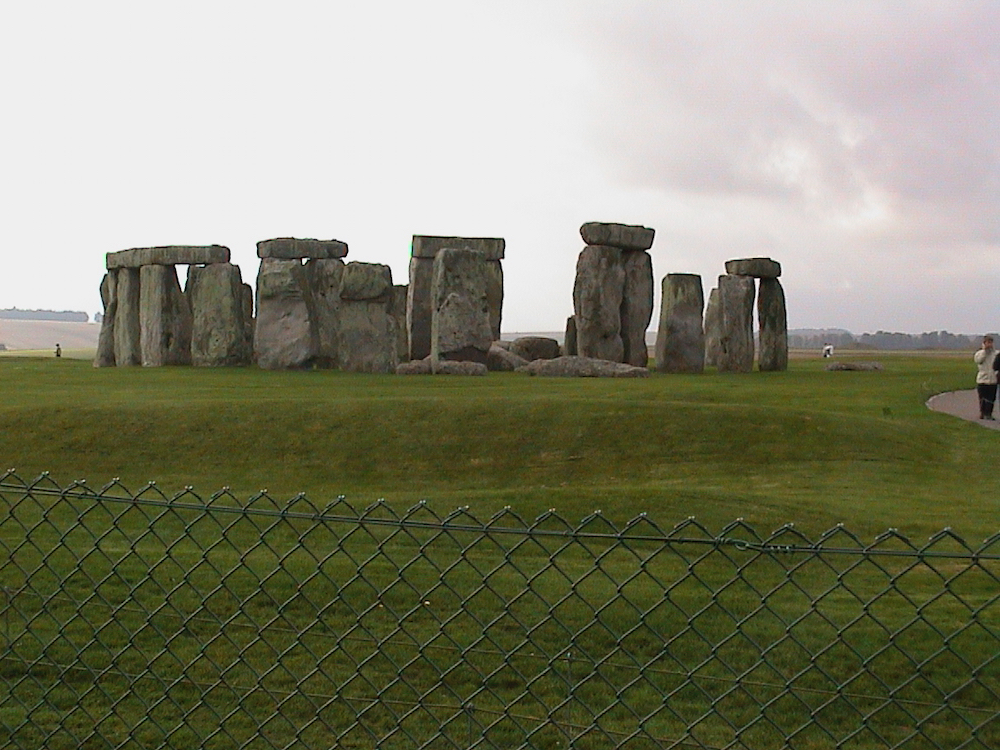
-
- Rozie observes the stones from the outside of the fence, while paying customers were restricted to the walkway in the background…
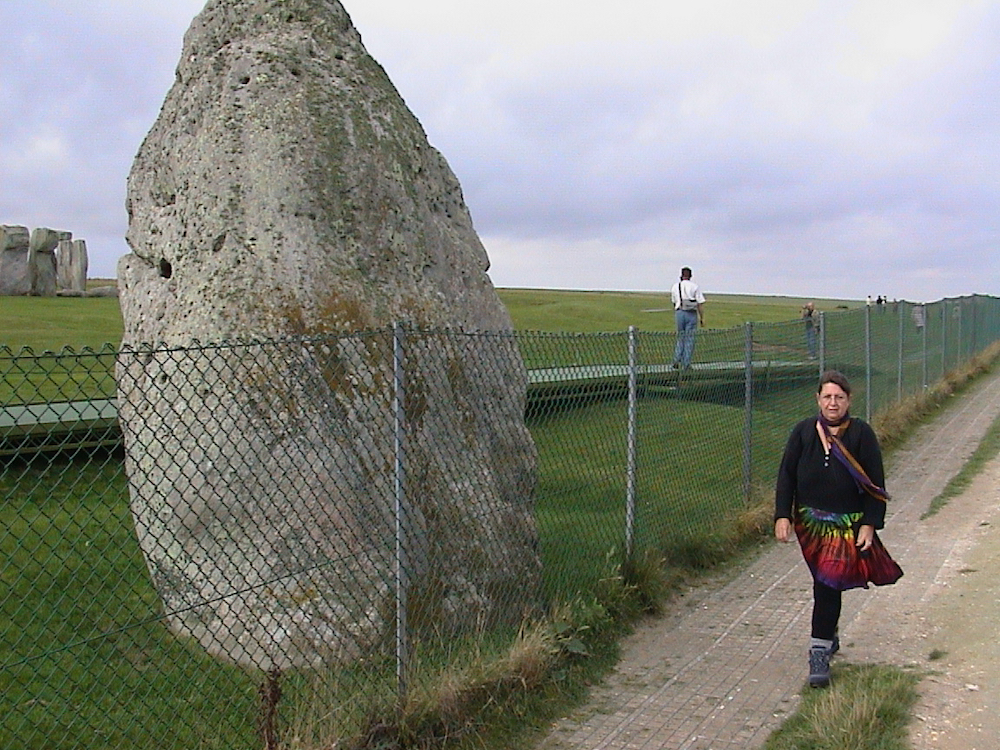
-
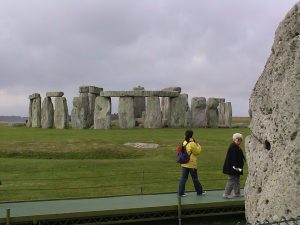
- …which isn’t that much closer.
Avebury
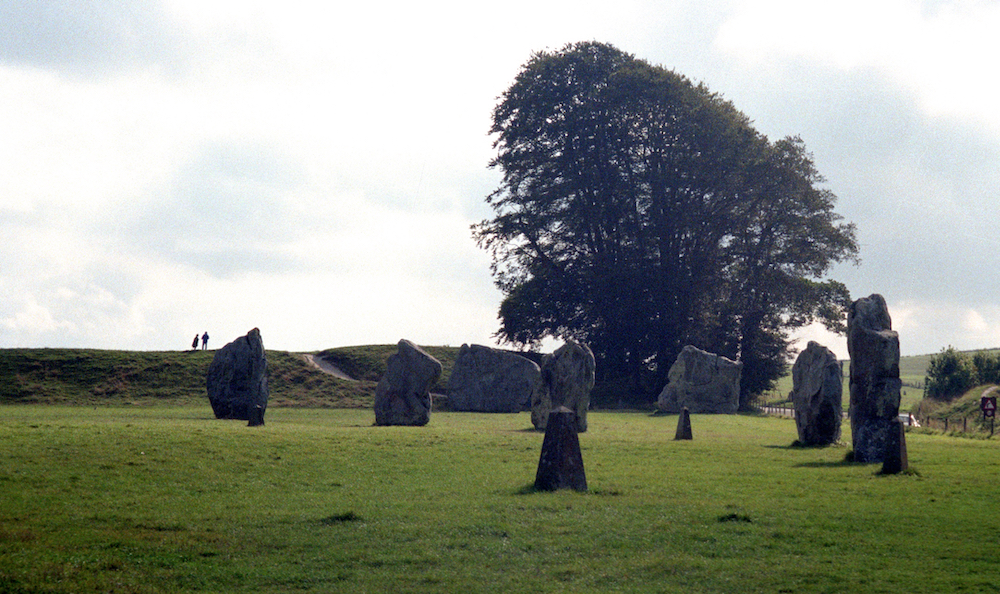
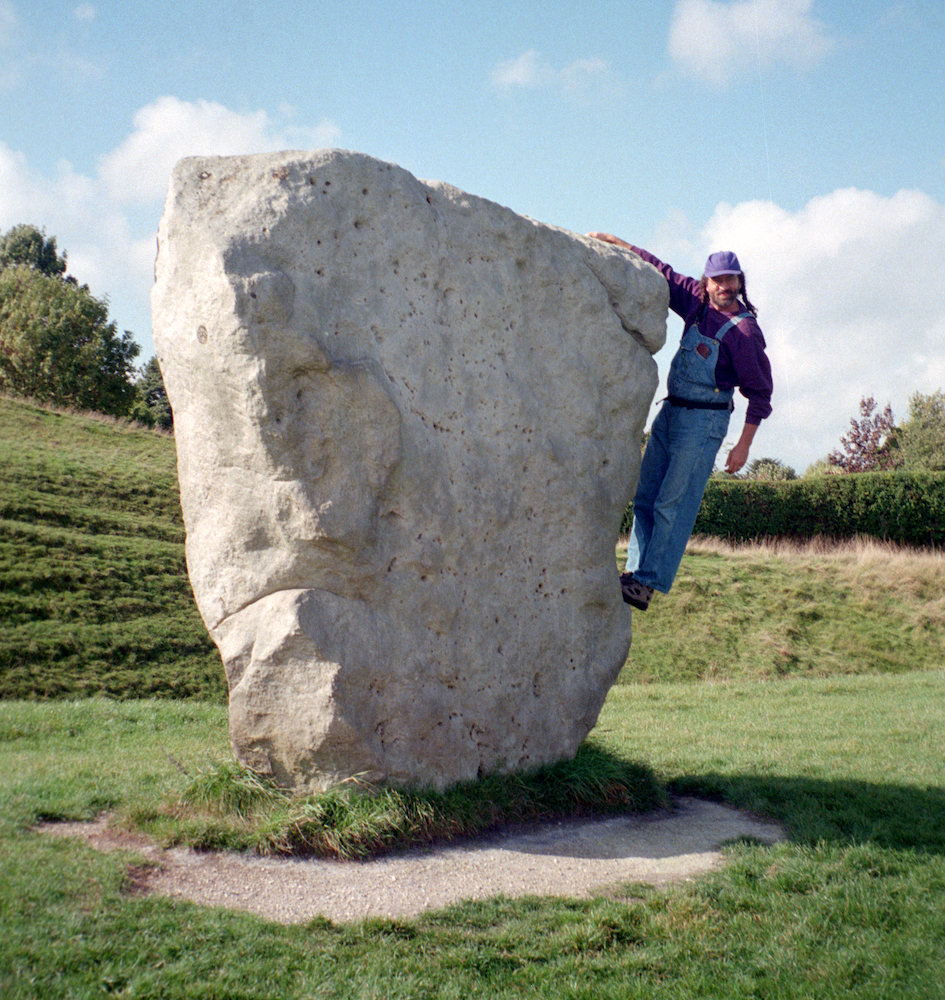
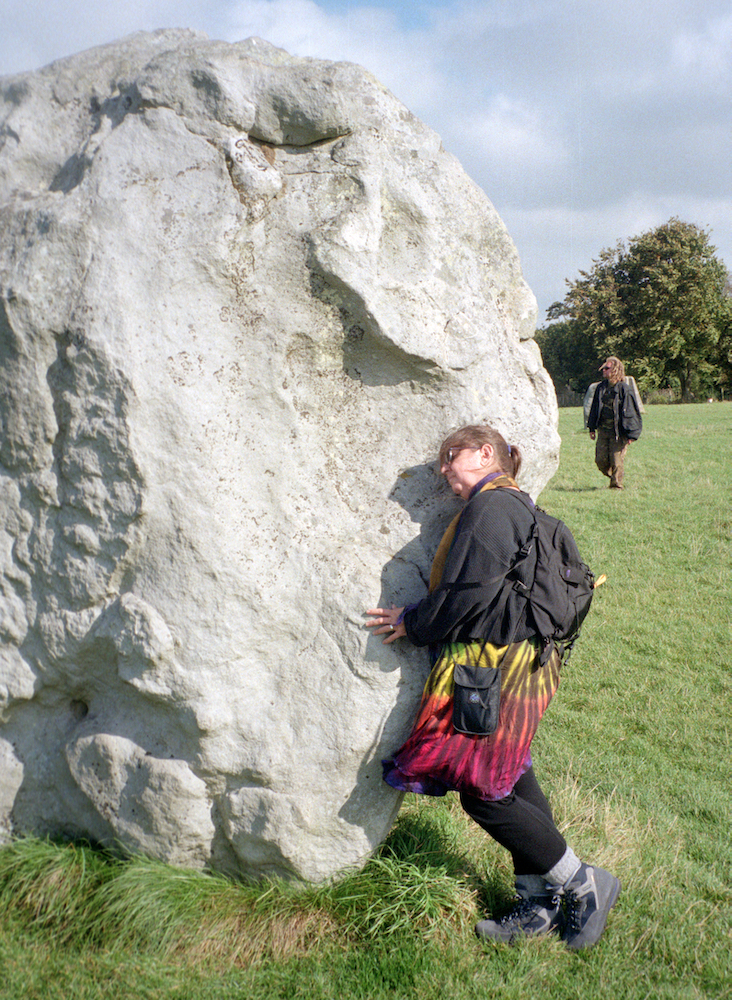
At Avebury there are stone cirles that you can touch. After Obbie climbed to the top of one, we were greeted by a guy in army fatigues and blond dreadlocks who claimed to be the guardian of local Pagan antiquities, and who pointed out that there are lichens on the rocks that can be damaged by such climbing (oops!). We suggested that he talk to our tour guide, who had told us it was ok to climb on the stones. Eventually, what began as an uncomfortable encounter developed into a more pleasant exchange that became a highlight of our day.
-
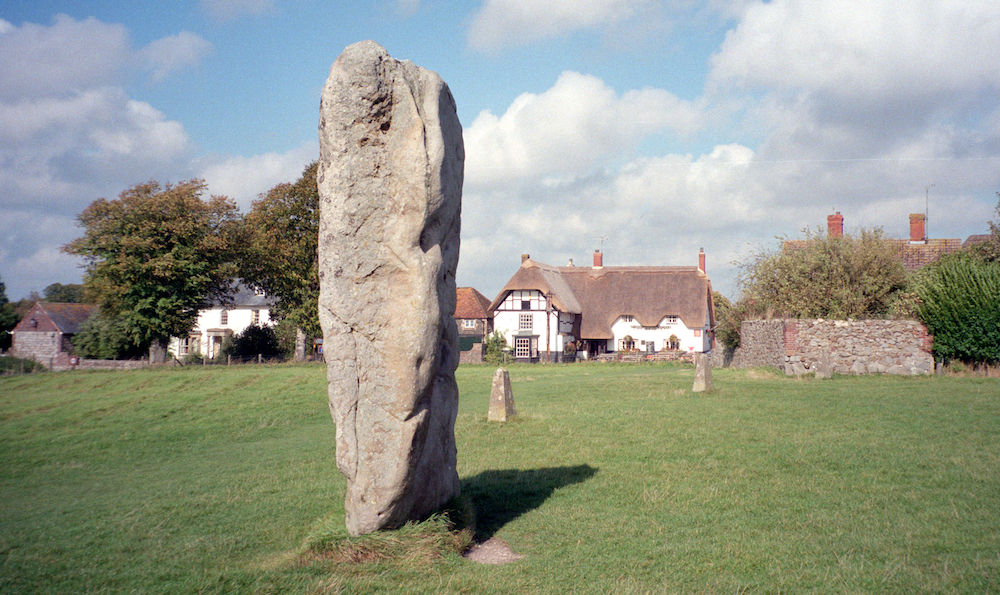
- The town of Avebury, where the stones are much more accessible.
-
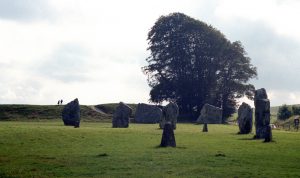
- Part of the ancient stone circles of Avebury.
-
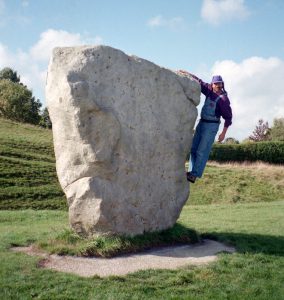
- Obbie hangs from the stone.
-
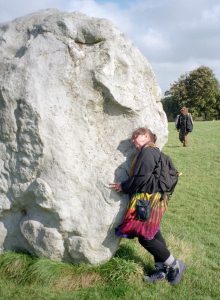
- Rozie hugs a stone while a “guardian of Pagan antiquities” approaches to reprimand Obbie for climbing.
Lacock and Castle Combe
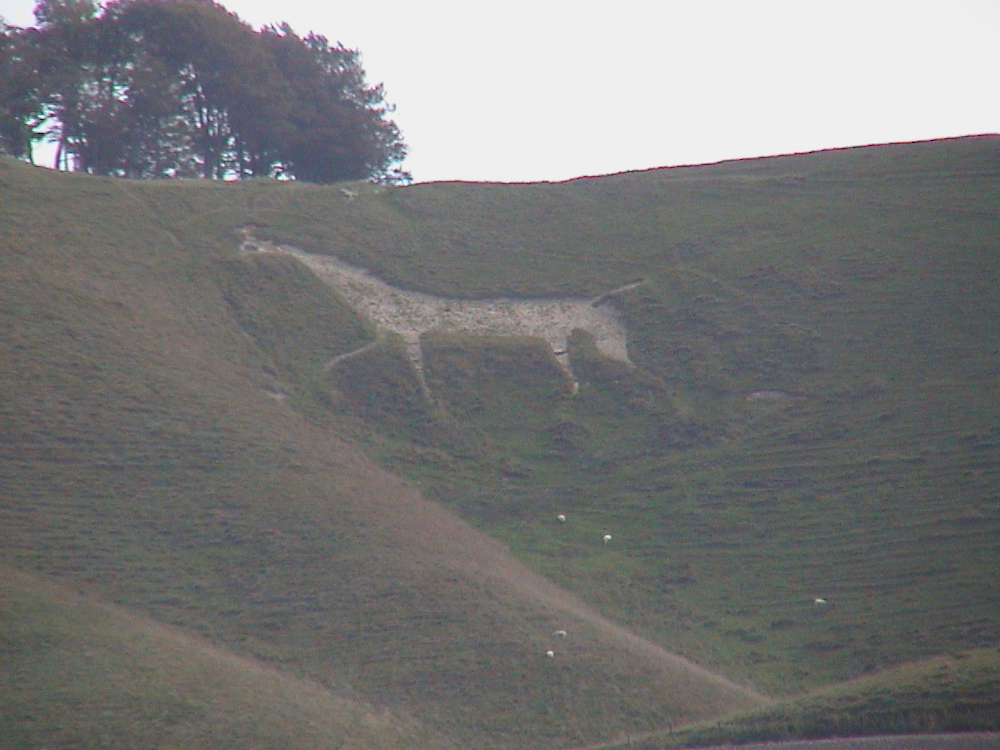
After visiting the stone circles, we pulled over to check out a “White Horse.” In the 18th Century, there was a fad where farmers would strip topsoil on hillsides down to the chalky subsoil to leave a large impression of a white horse.
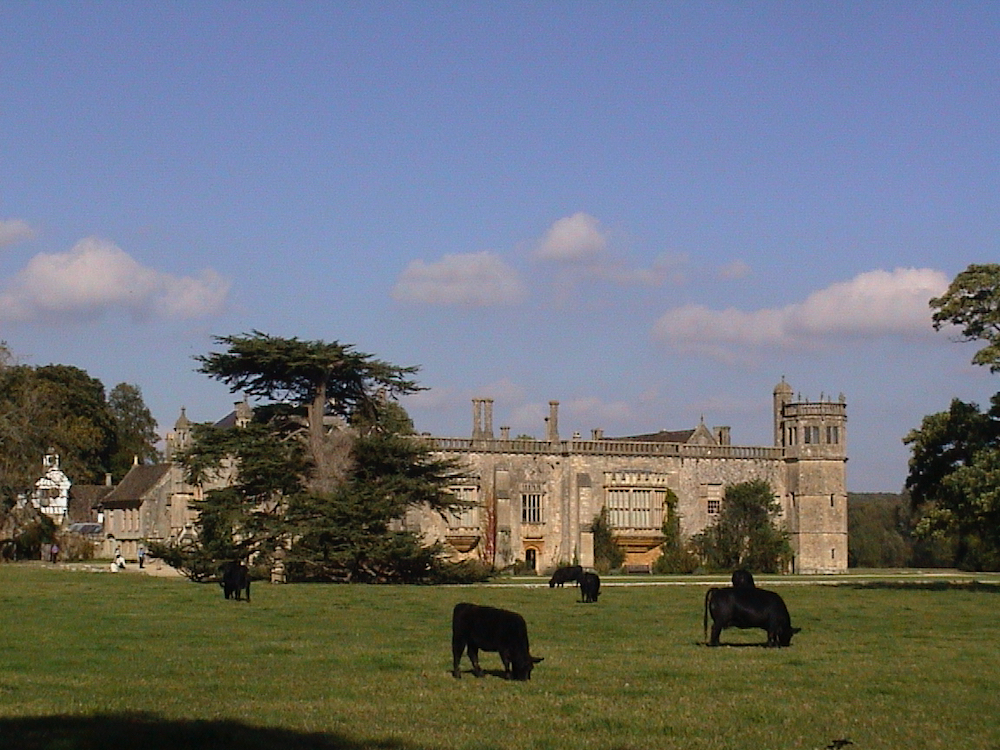
From there, we went to Lacock and on to Castle Combe. Each of these towns is over 500 years old, and remains much as it was in those days. Lacock Manor is a house that looks much like a castle, and it was the subject of the first photograph ever taken. Lacock also had some interesting gardens in its nooks and crannies.
-
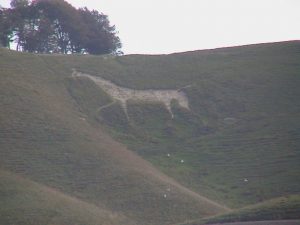
- A hillside White Horse. For scale, the little white dots on the hillside are sheep.
-
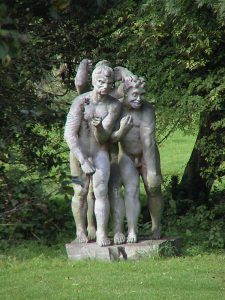
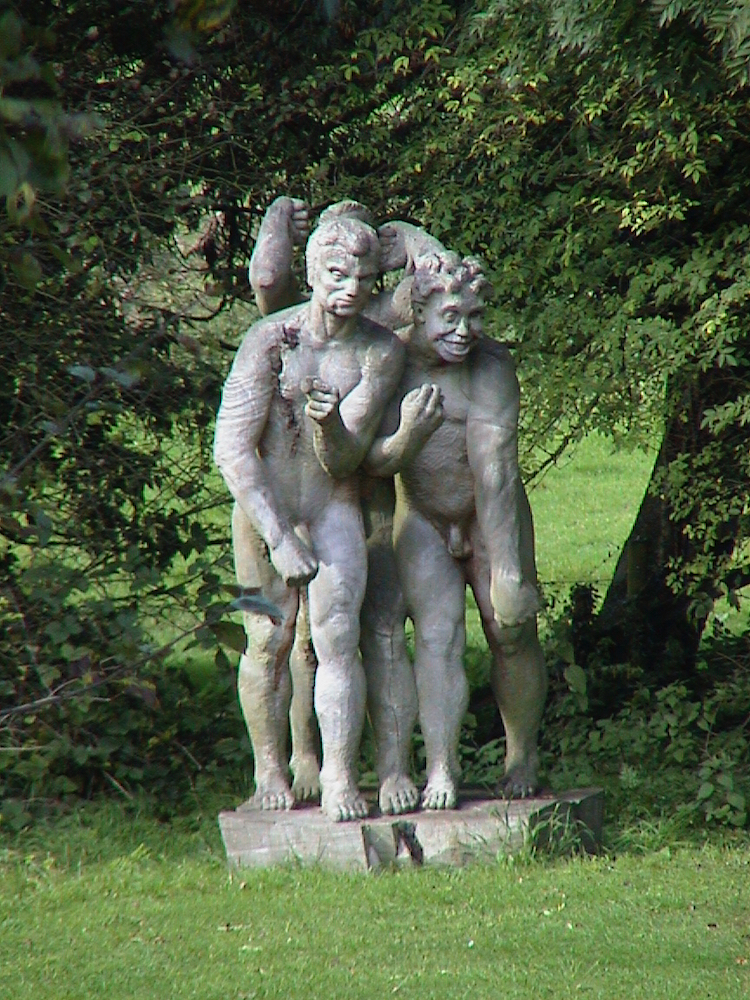
- A sculpture found in a garden in Lacock.
-
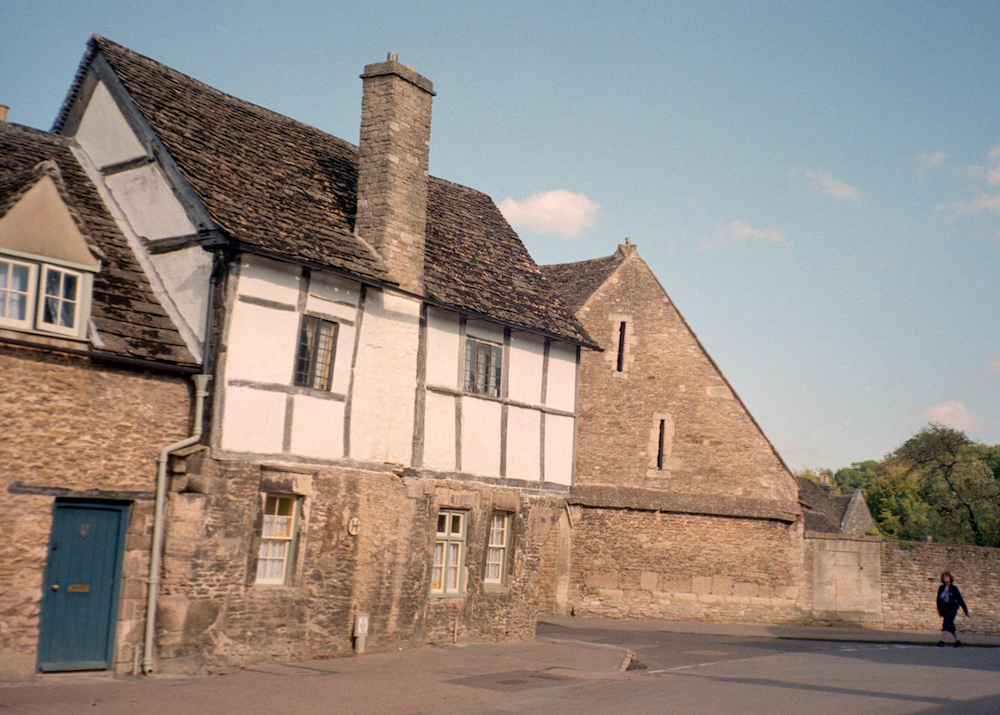
- A house and a barn in Lacock village.
-
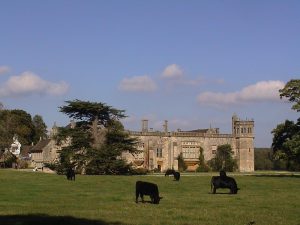
- Lacock Manor, where one of the windows was the subject of the first photograph ever taken.
-
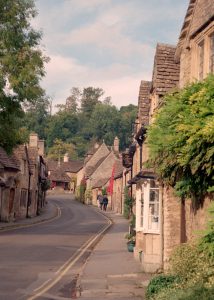
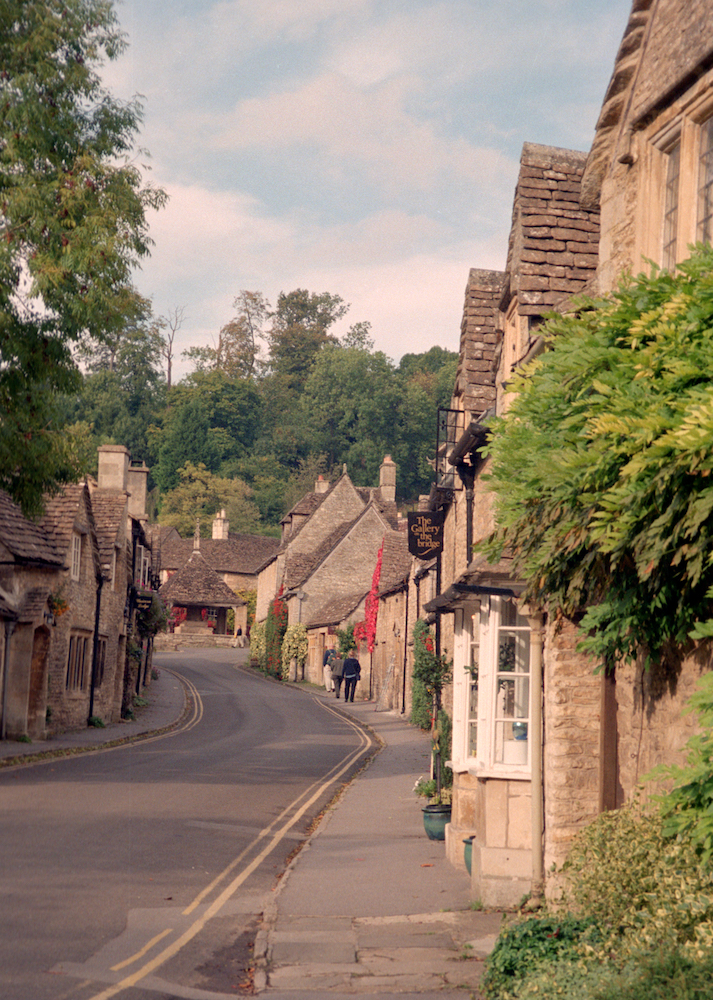
- The main street of Castle Combe.
-
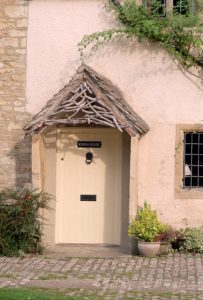
- A creatively-covered doorway in Castle Combe.
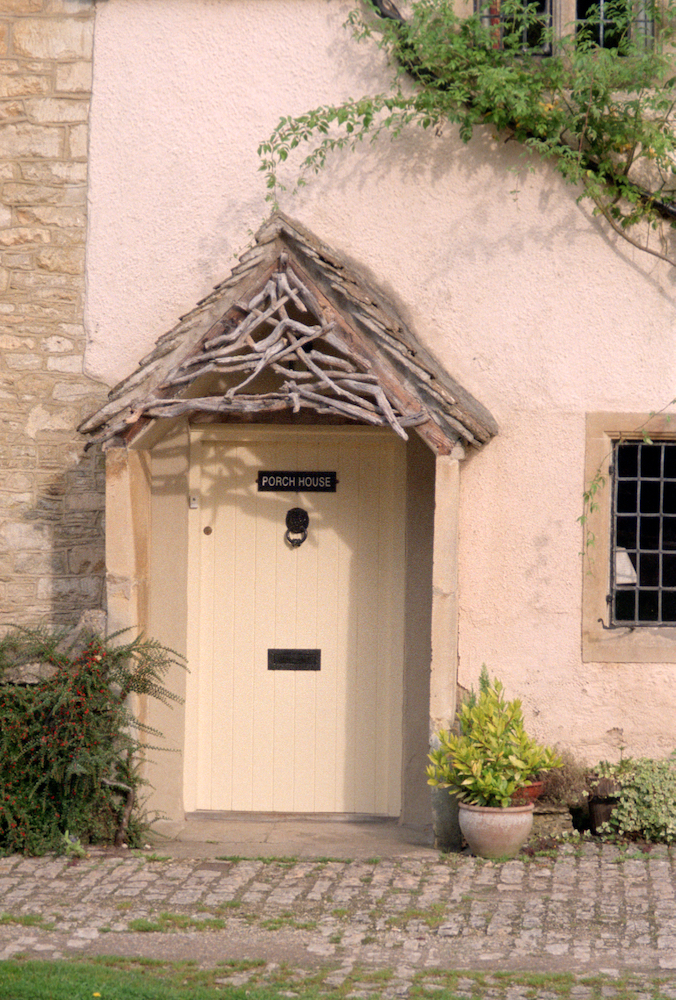
-
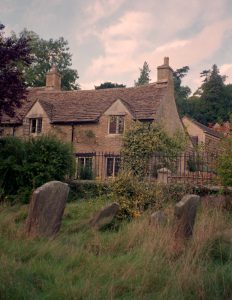
- An old house is seen from the graveyard behind the Abbey at Castle Combe.
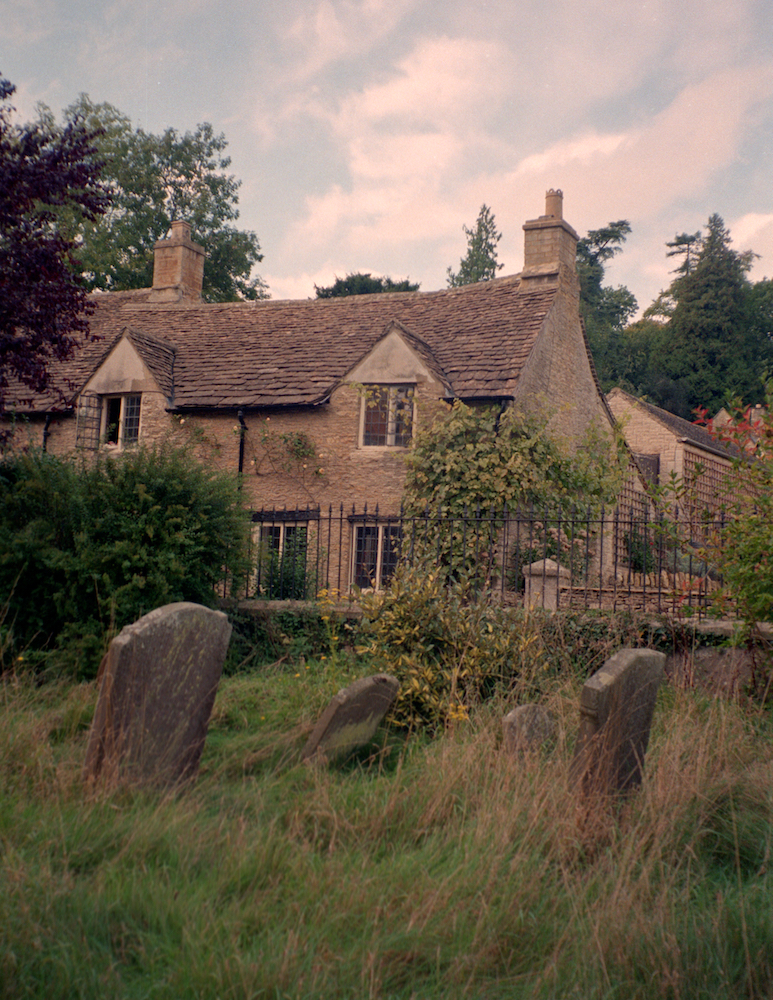
-
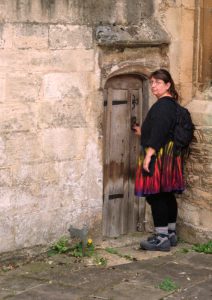
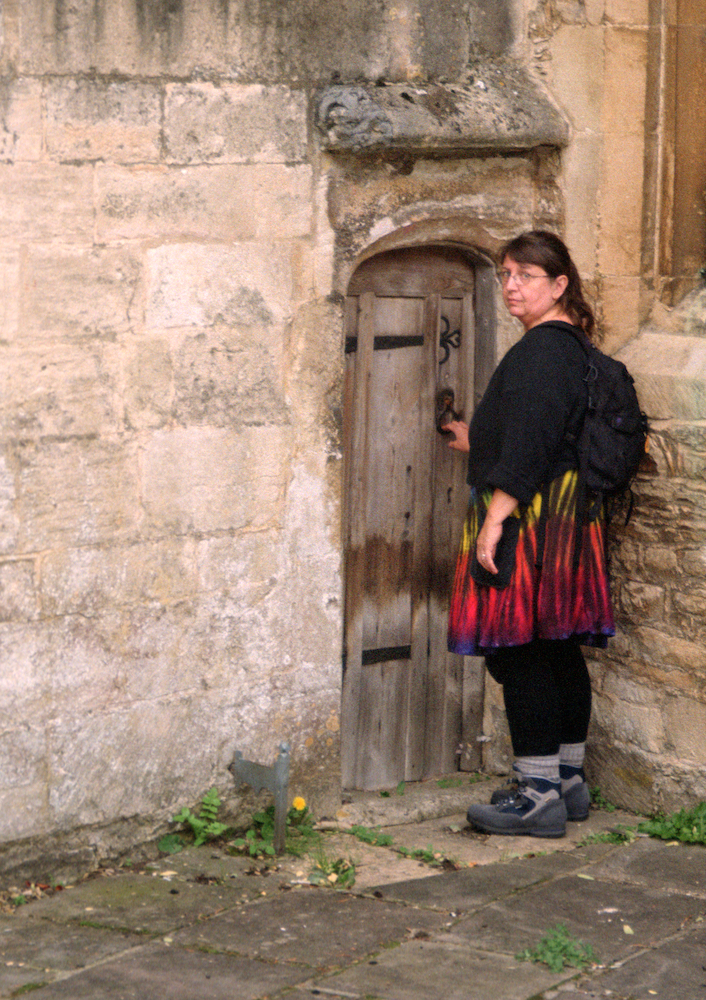
- Rozie stands next to a very short doorway in Castle Combe.
We would not have seen these towns, or much of the countryside in between, if we hadn’t been on the Mad Max tour. Our only quibble is that we would have liked to have had more time to spend at some of the stops, especially Avebury (where we stayed for 45 minutes).
Once our tour got back to Bath, we retrieved our packs and got onto a local transit bus that took us to Wells, where we connected to another bus for Glastonbury. We settled into a room at the Backpacker’s Hostel overlooking the main plaza and High Street to plan our walkabout for Saturday.