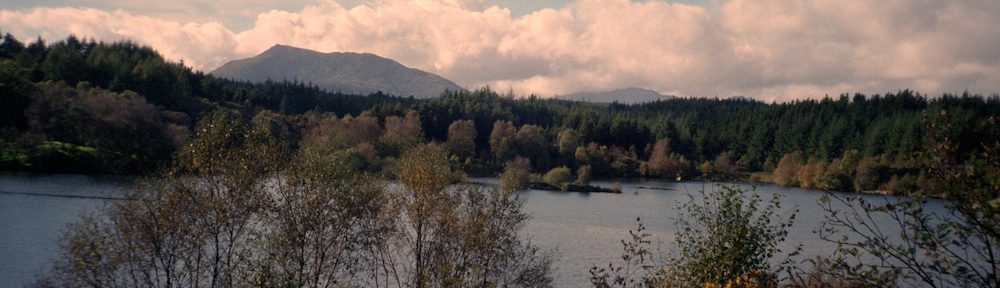
We took a day trip to Wales on Monday. We took care of two errands before we left. First, we dropped off a roll of film at a processor near our guest house. When we pick it up tomorrow, we’ll find out for sure whether or not the film was damaged in the airport scanning machines.
At the station, we made a phone call to the TI (Tourist Information) in Liverpool. We’ll be going there tomorrow, so we booked reservations on a Beatles tour.
Today’s destination was Betws-y-Coed (pronounced Betsy Coed), a kinda touristy little burg in Snowdonia National Park.
We had to change trains at Llandudno Junction (people we asked said “I can’t pronounce it either”), which is on the north coast of Wales between Chester and Holyhead.
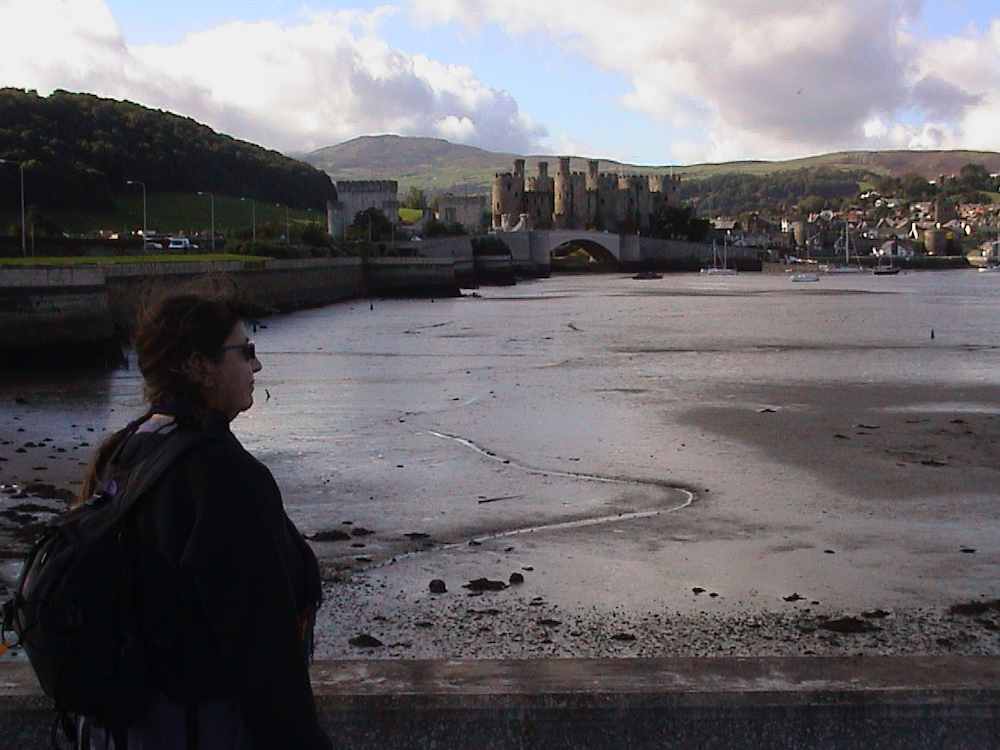
With two hours to kill between trains and a castle in sight, we walked toward the castle and found ourselves in Conwy. The castle stands where the river meets the harbor, and ancient walls extend from the castle to embrace the rest of the city. Our walk included a portion of the top of the city walls, which date back to the 1200’s.
-
- Rozie looks across the River Conwy toward the castle from Llandudno Junction.
-
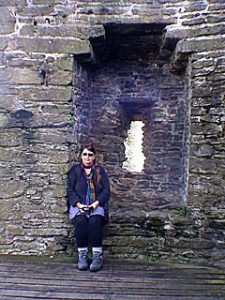
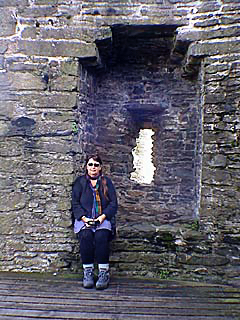
- Rozie takes a break at an archer’s station in the wall of Conwy Castle.
On the train (actually, a single coach car), we followed this river inland for about half an hour. Betws-y-Coed is in a region as rugged as Appalachia. Sheep graze on green fields ringed by stone walls, and they’re tended by farmers living in picturesque homes built from the same stone.
We made our way onto a walking path straight up the mountain into a forest of moss, ferns, and suspiciously young timber. At the top of the mountain is Lake Elsi, the source of water for the town below.
Occasionally, our peaceful setting was disrupted by the passage of a low-flying fighter jet (!). We found out later that this is normal training territory, and it had nothing to do with the war that had just begun the previous day.
As our trail went back down the mountain it got trickier, as we were directed onto what was essentially a steep, narrow, rocky stream.
-
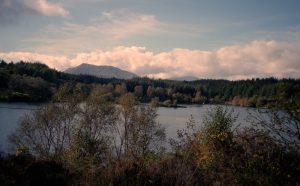
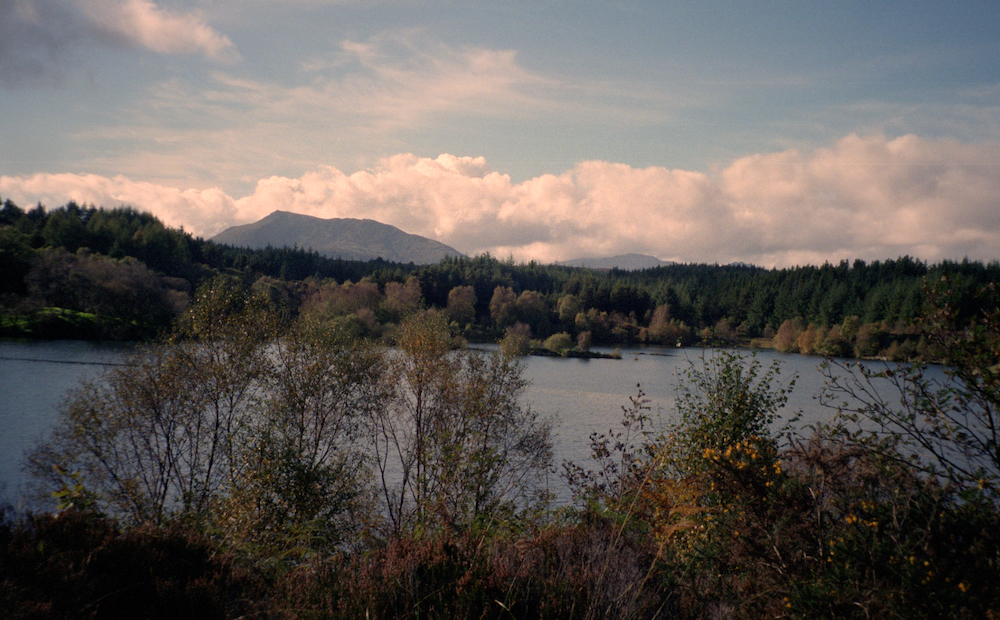
- A late afternoon view of Lake Elsi.
-
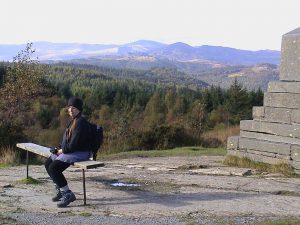
- Rozie rests on a bench overlooking Lake Elsi.
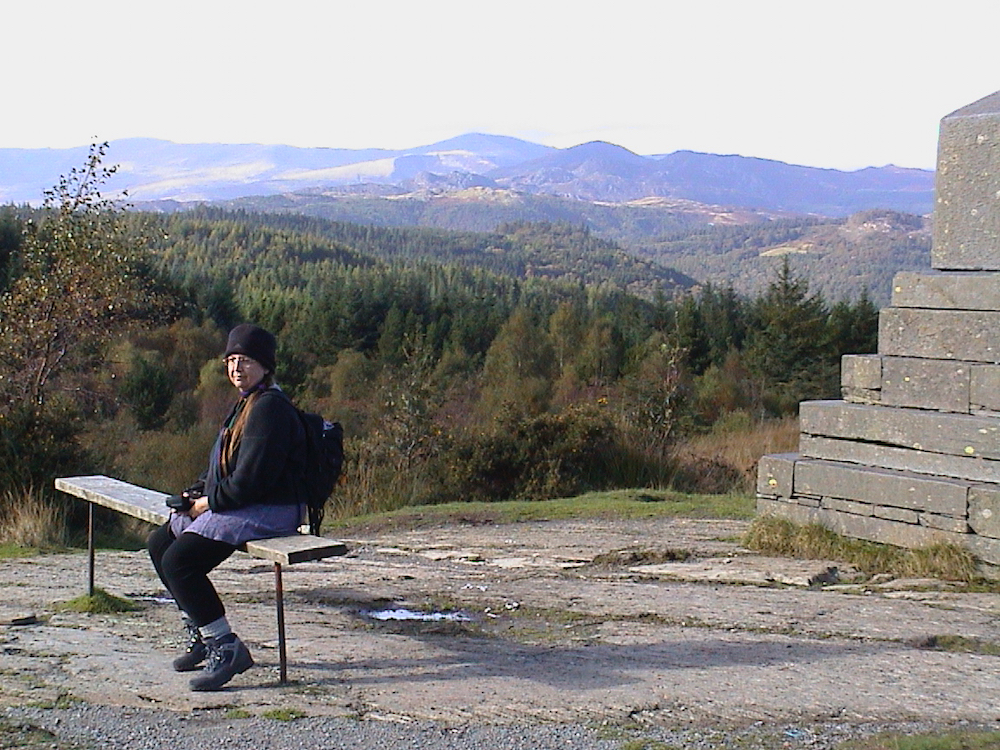
-
- The hillsides of Wales are covered by forests and sheep.
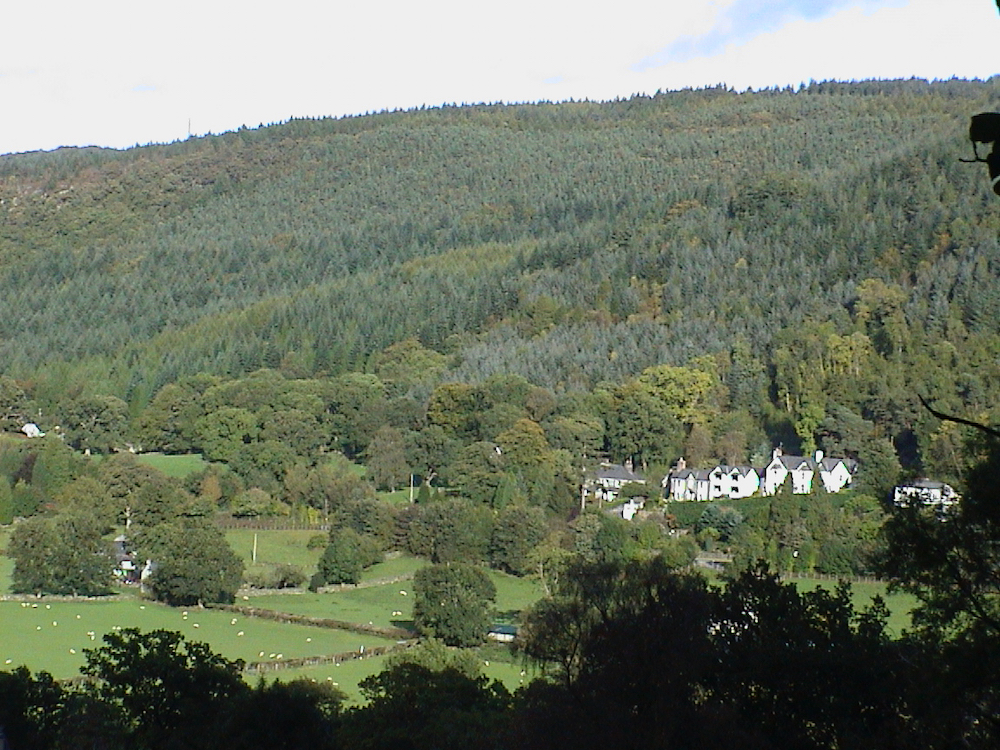
-
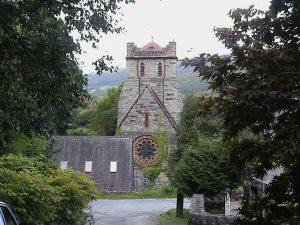
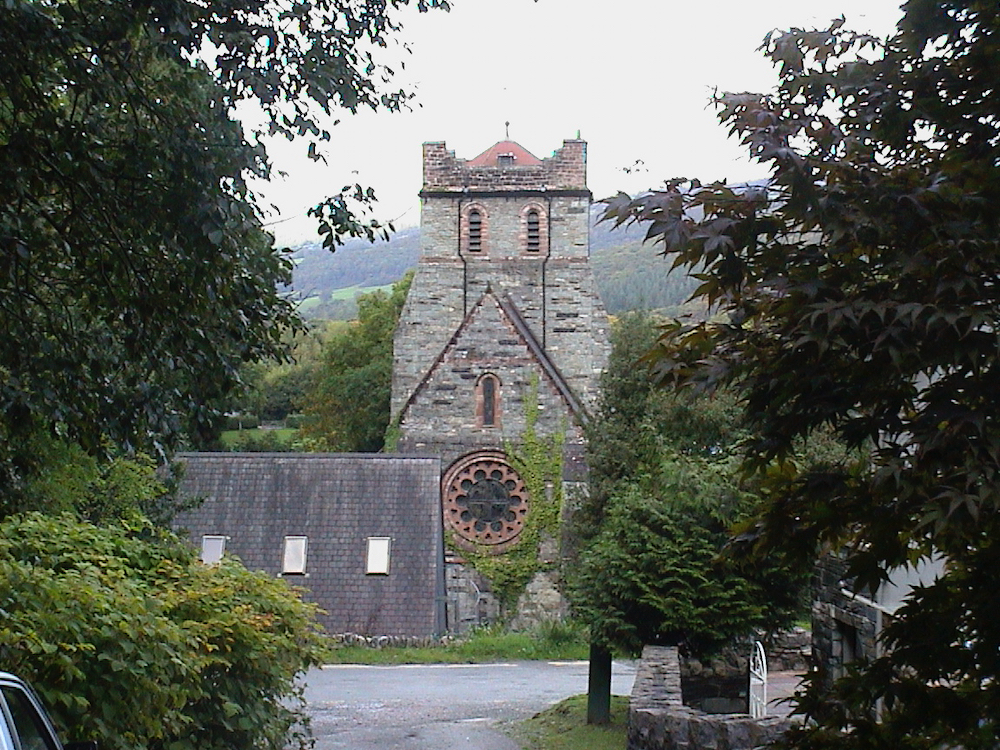
- Returning from our hike, we were greeted by the back of St. Mary’s Church in Betws-y-Coed.
-
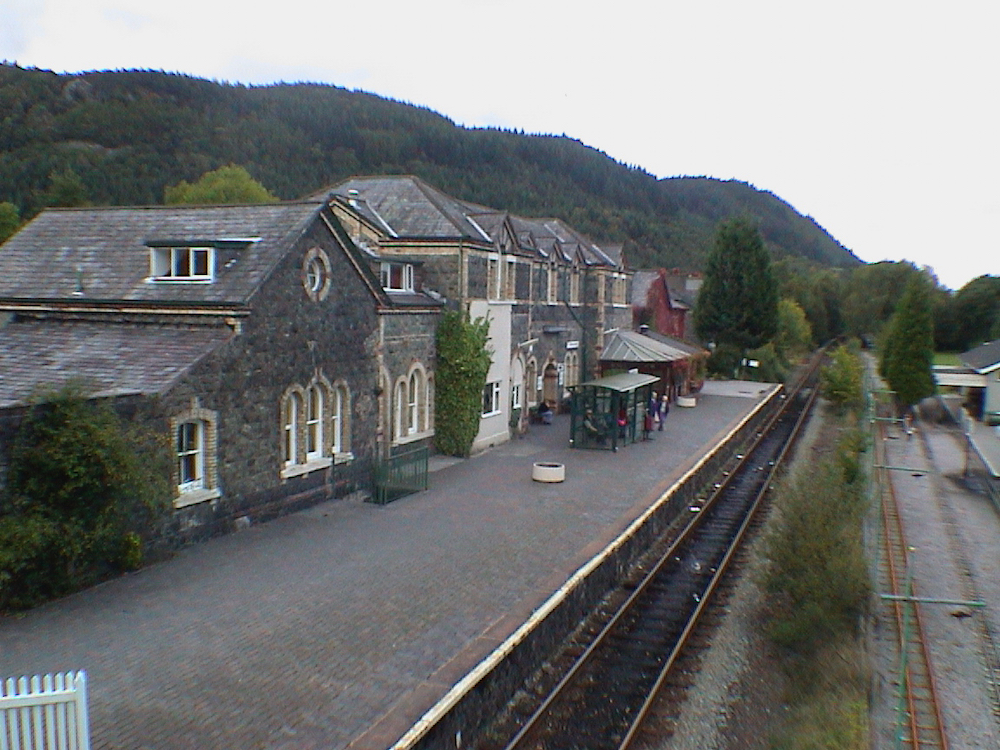
- The Betws-y-Coed train station.
One other thing about Wales: the Welsh language is alive and well, as most of the signage was in Welsh and English (Welsh was always listed first).