Since the “off season” is well under way, our hostel is in the midst of being repainted and refurbished. That’s why we were awakened by a vacuum cleaner nozzle dancing about on the floor above us. The painter apologized profusely, and over the next couple of days we had some nice chats with him as we went in and out.
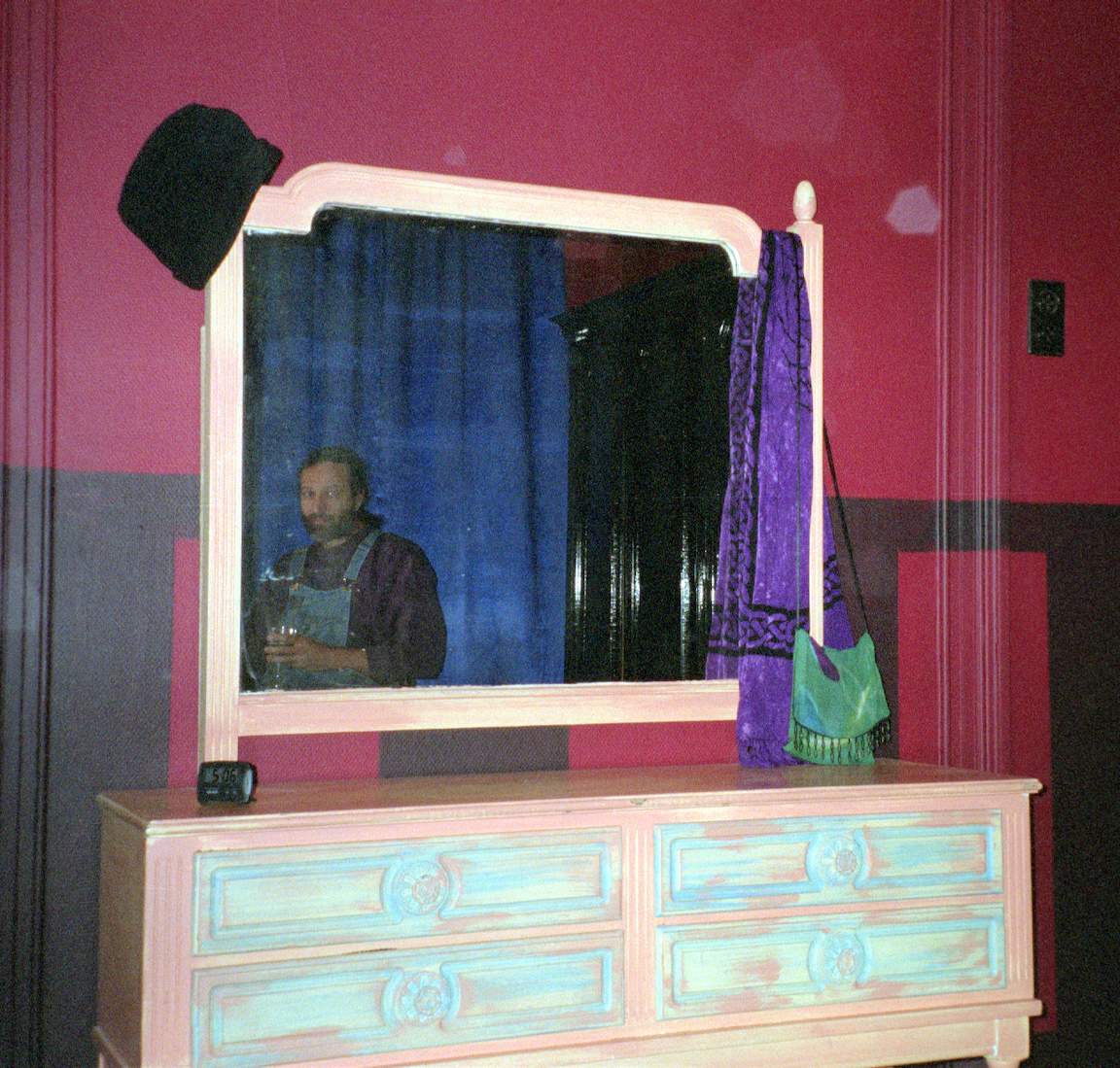
Our “new” room in Bruges was unusual to look at and good for relaxing.
Over breakfast, we arranged to move to a room down the hall with a private bathroom, a nicer mattress, reliable heat, and a nice space to sit and lounge. Our room rate went up to 1200 francs/night ($30), but we’ll be happy with this room for our last two days and nights on the continent.
Tuesday and Wednesday are days to walk around and explore this relatively small town. Bruges was founded and built when years had three-digit numbers, and it prospered as a port serving the fabric trade (which in those days was mainly wool).
-
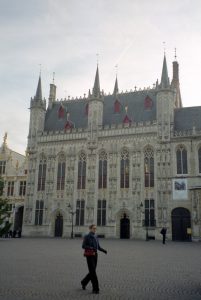
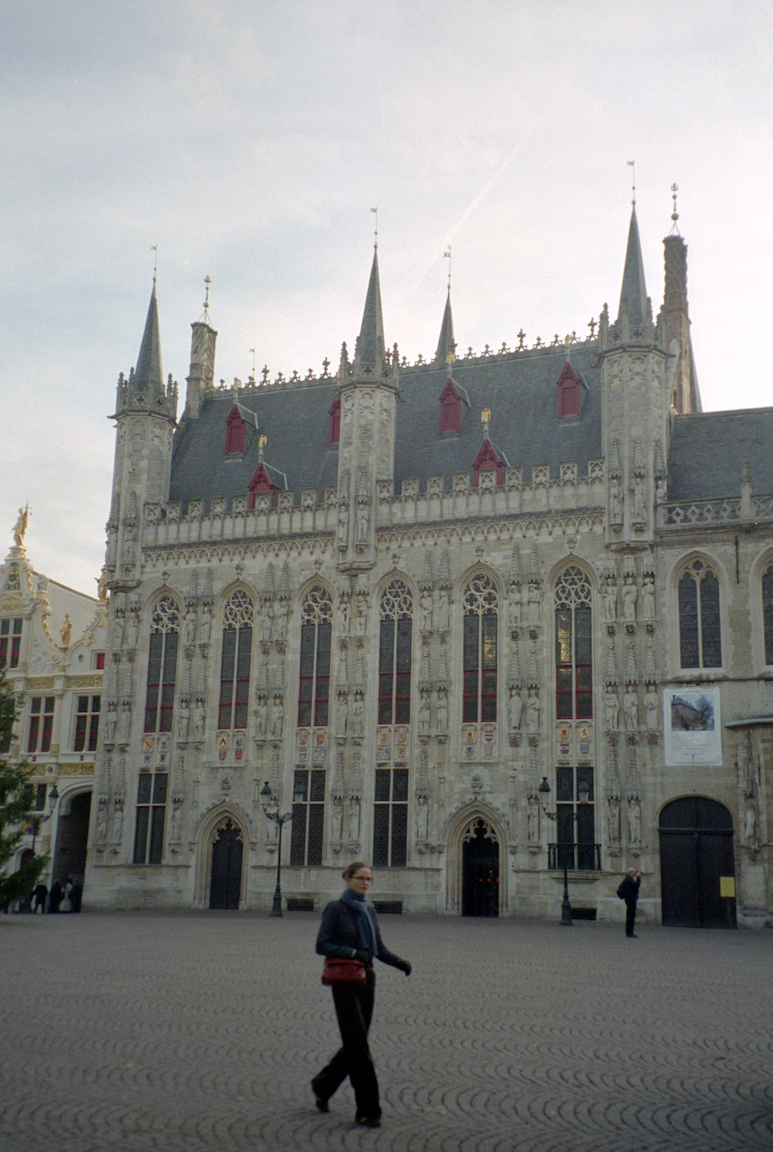
- Brugse Vrije is an ornate courthouse from the 1700s.
-
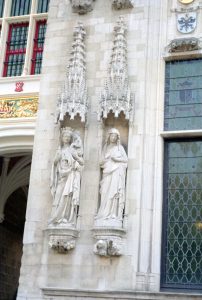
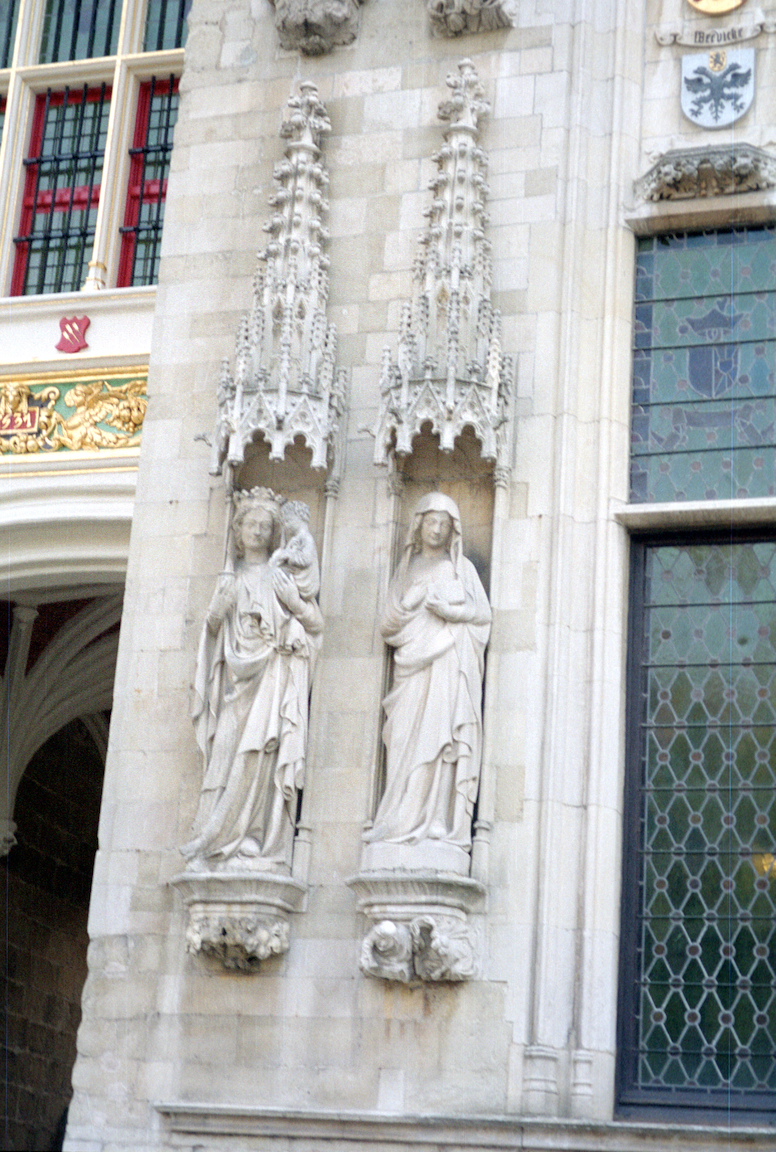
- Two of the many statues looking our from the wall of Brugse Vrije.
-
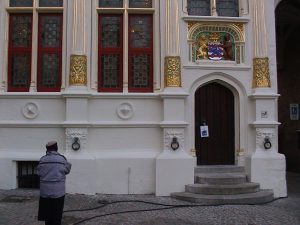
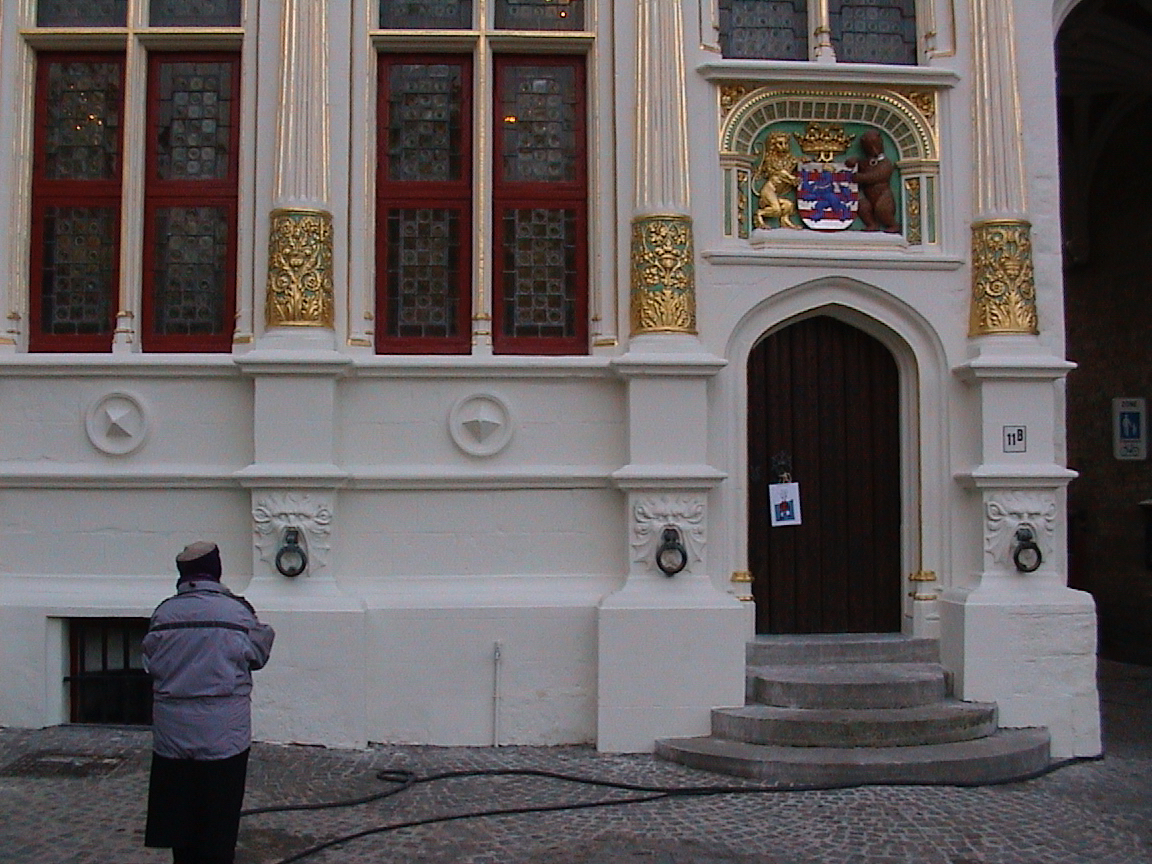
- Rozie admires the artwork on the walls of Brugse Vrije.
-
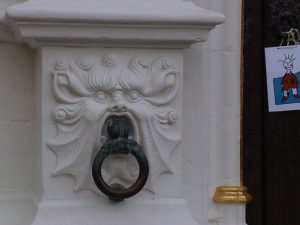
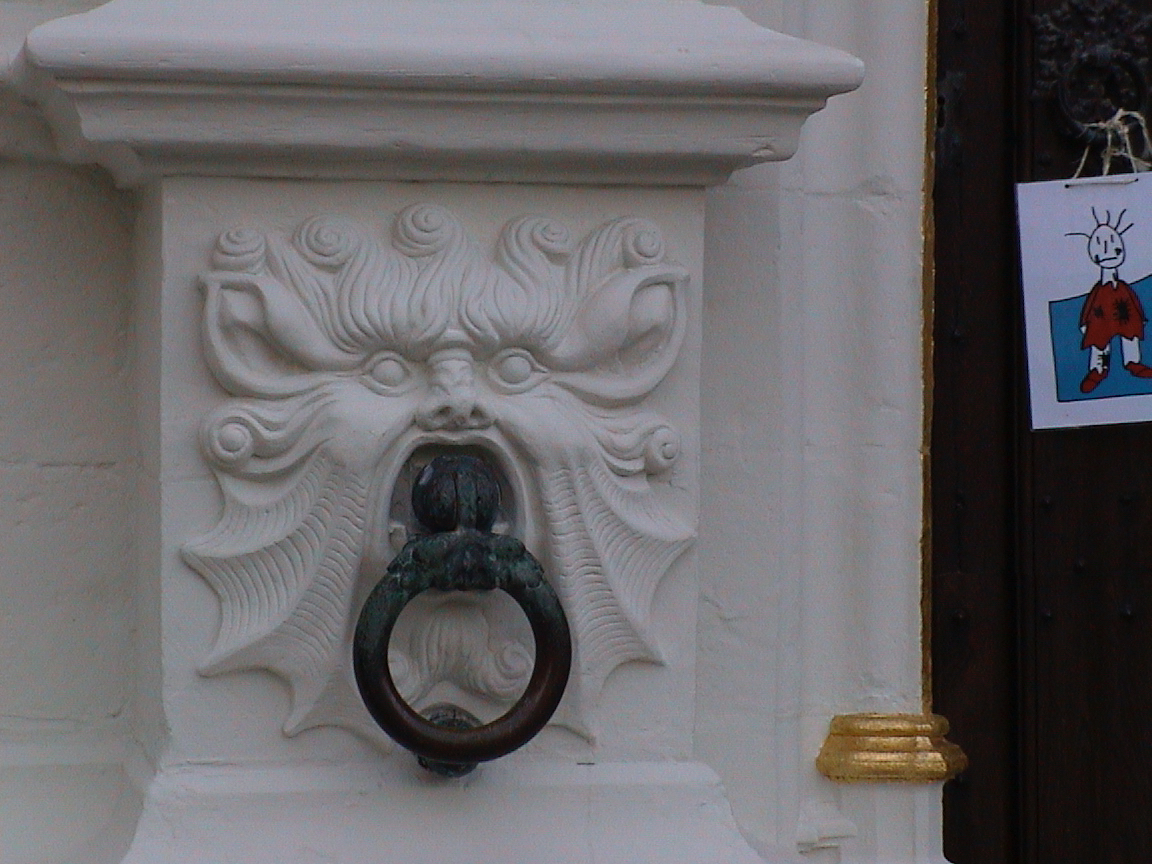
- These rings were installed for visitors to hitch their horses near the entrance to Brugse Vrije.
-
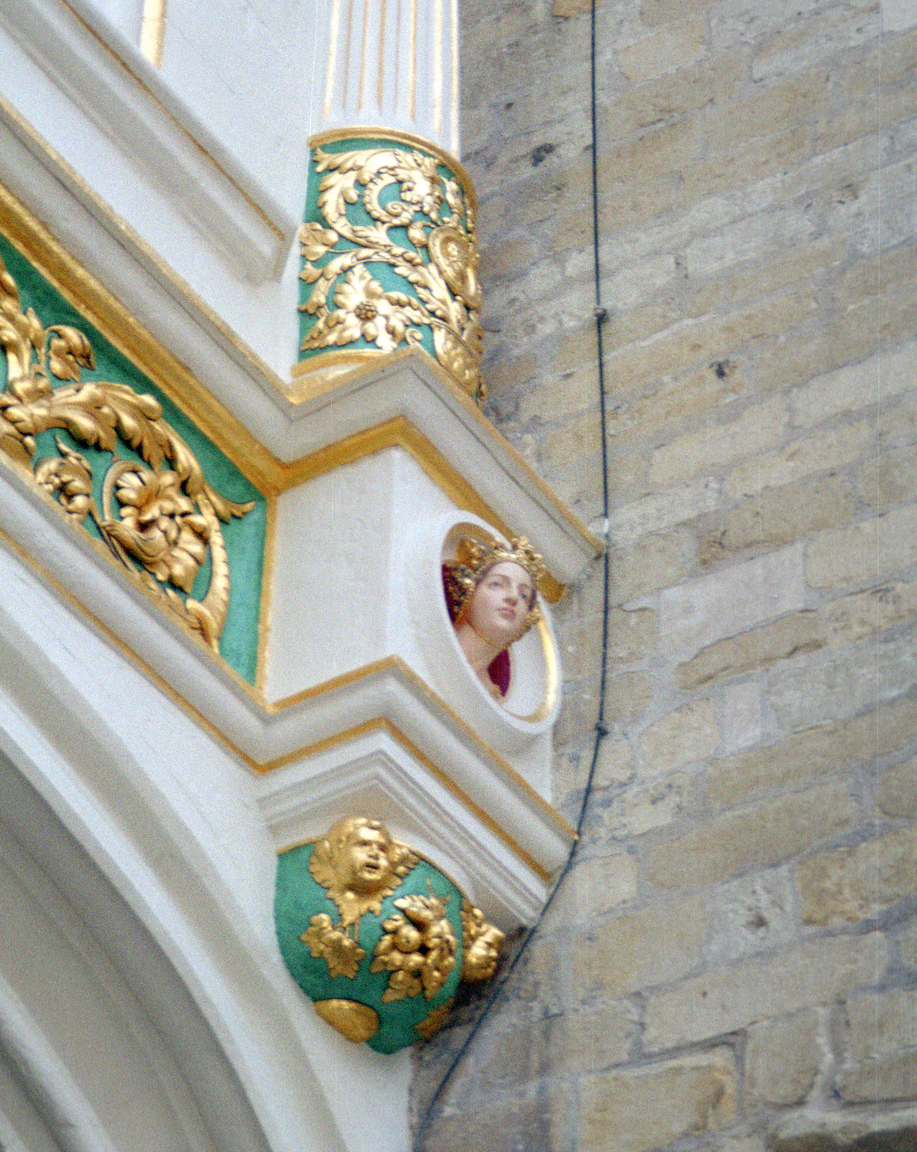
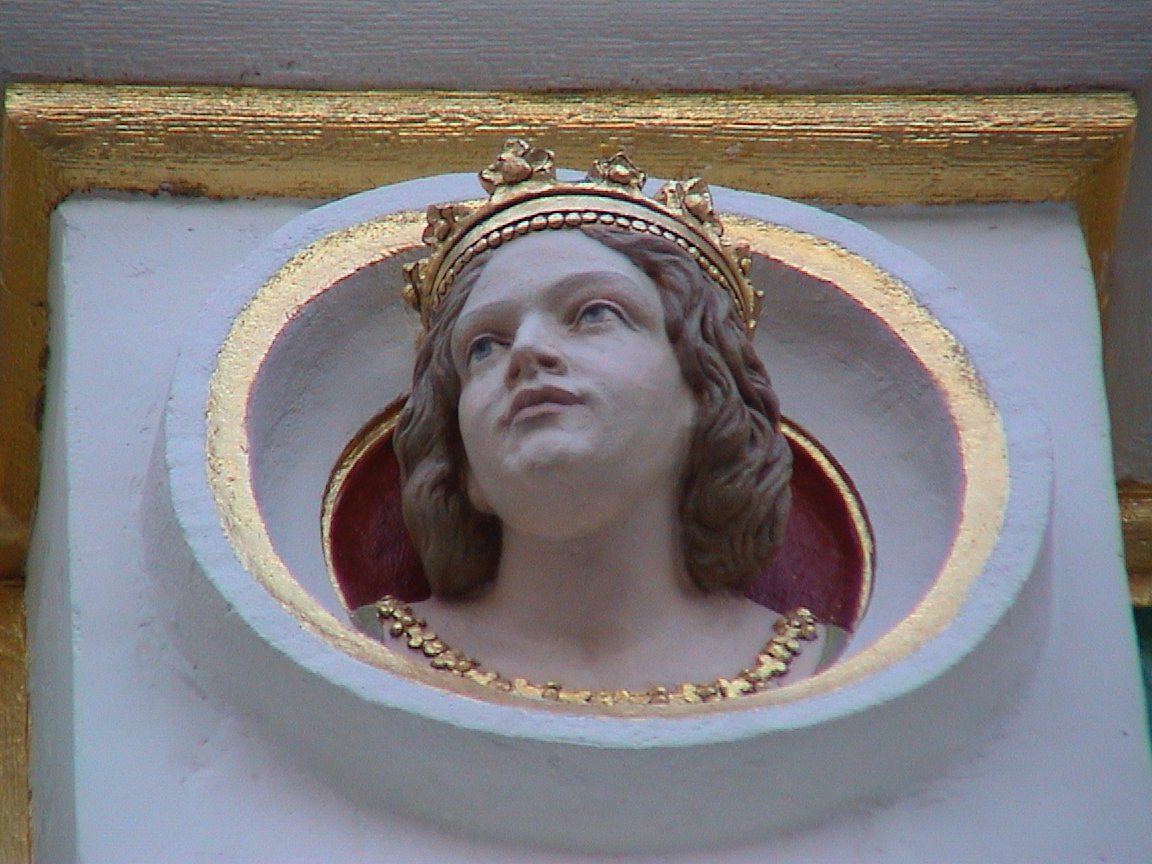
- The head of a princess looks our from the wall of Brugse Vrije.
-
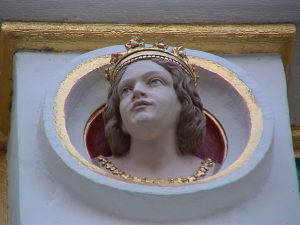
- Their are several maidens looking out from these walls.
-
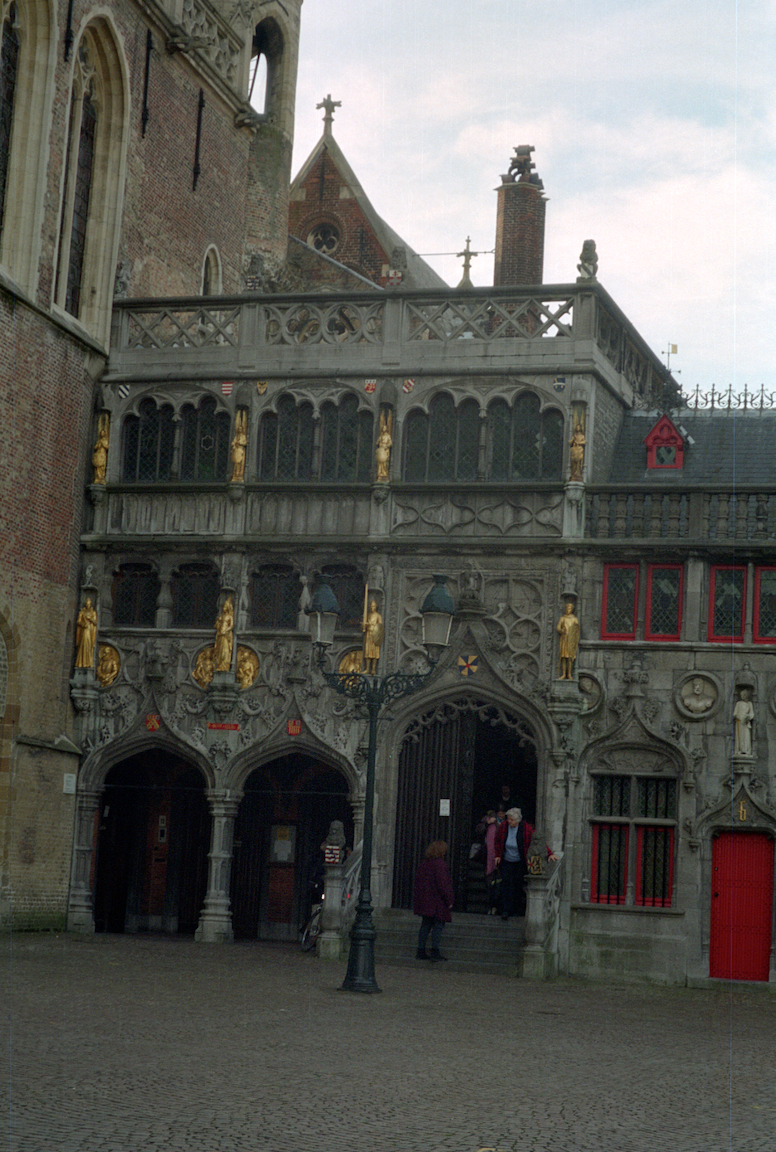
- The Basilica of the Holy Blood is on the same plaza, and was built in 1157.
-
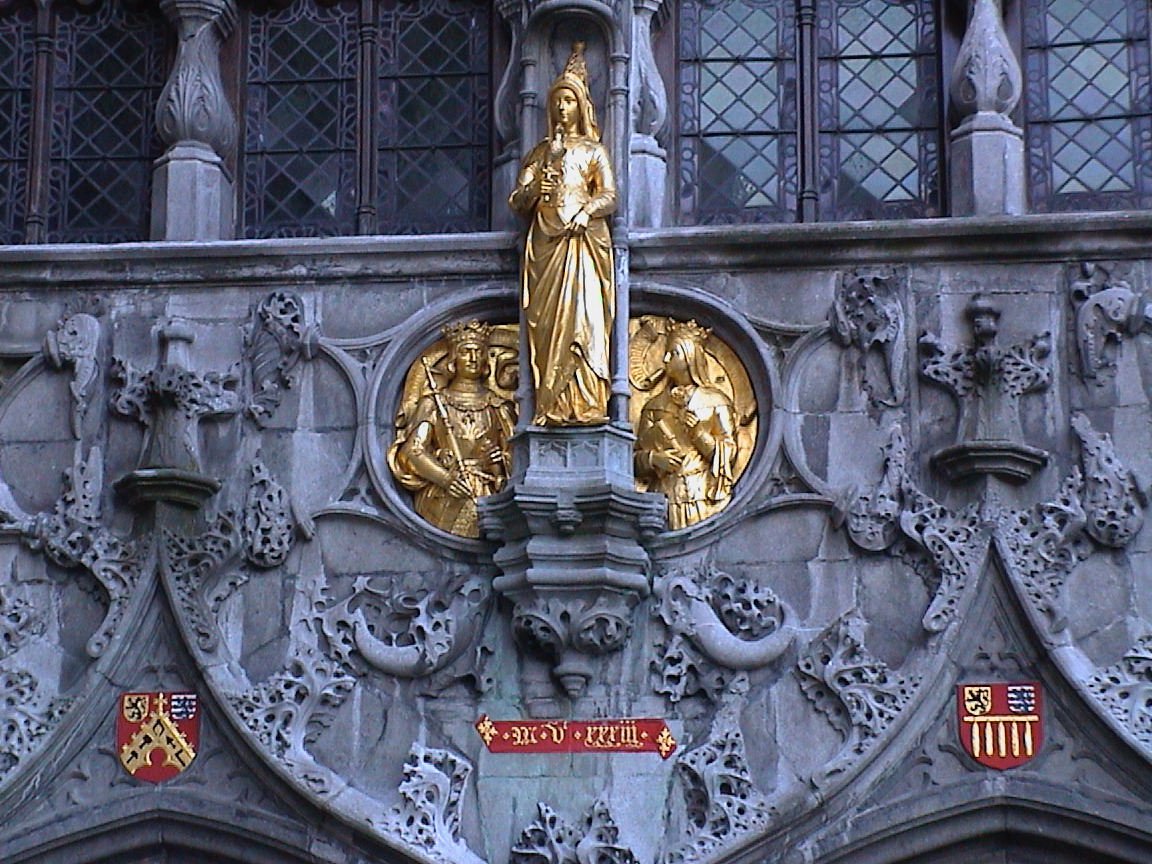
- A sample of the artwork filling the outside wall of the Basilica of the Holy Blood.
By the 15th century, the entrance to the city’s network of canals silted up and Bruges became a ghost town for a few hundred years. One account said that Bruges “became so poor that no one bothered to tear it down.” Bruges was discovered by tourists in the 19th century, and it is now one of the most well-preserved medieval towns in Europe.
Our hosts gave us directions to a nearby office where we can buy a local street map. Armed with these directions transcribed onto a napkin, we found our way without incident. Once we had our map we could explore the nooks and crannies of this town without getting lost.
-
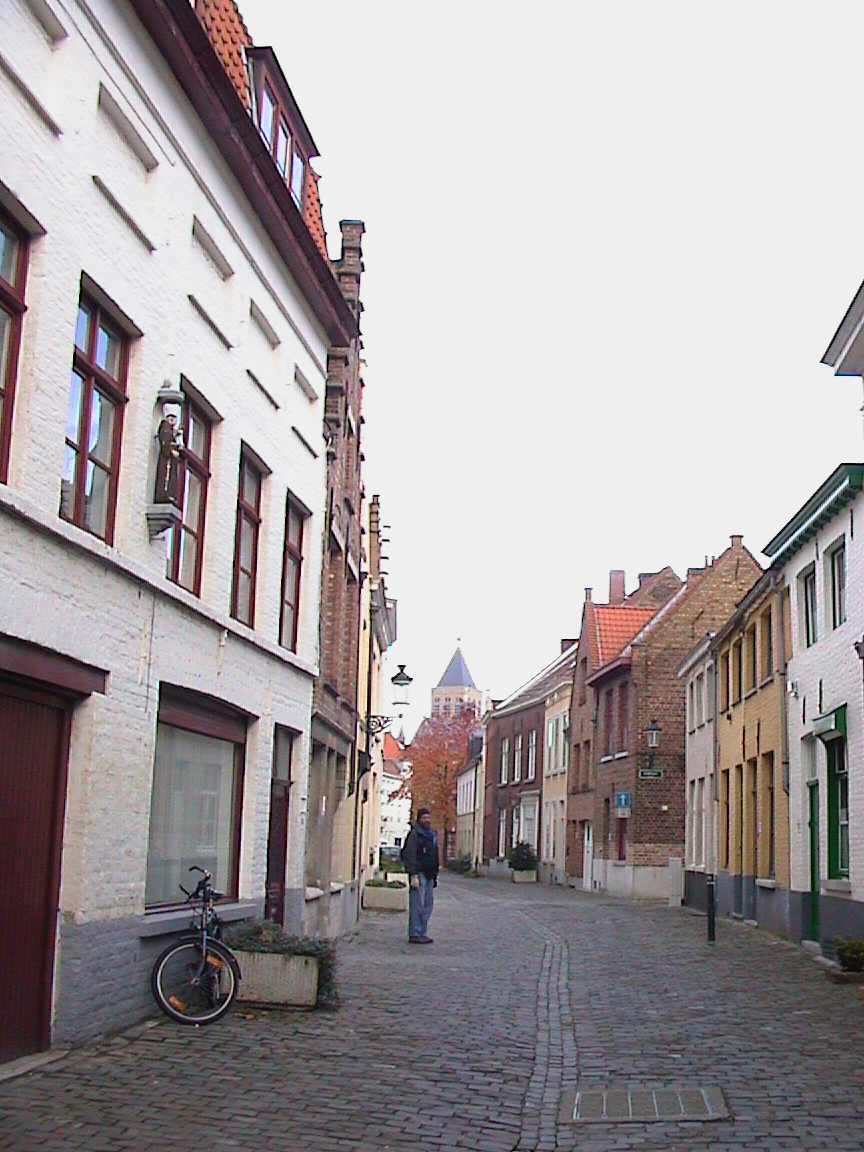
- Obbie walks on Moerstraat in Bruges
-
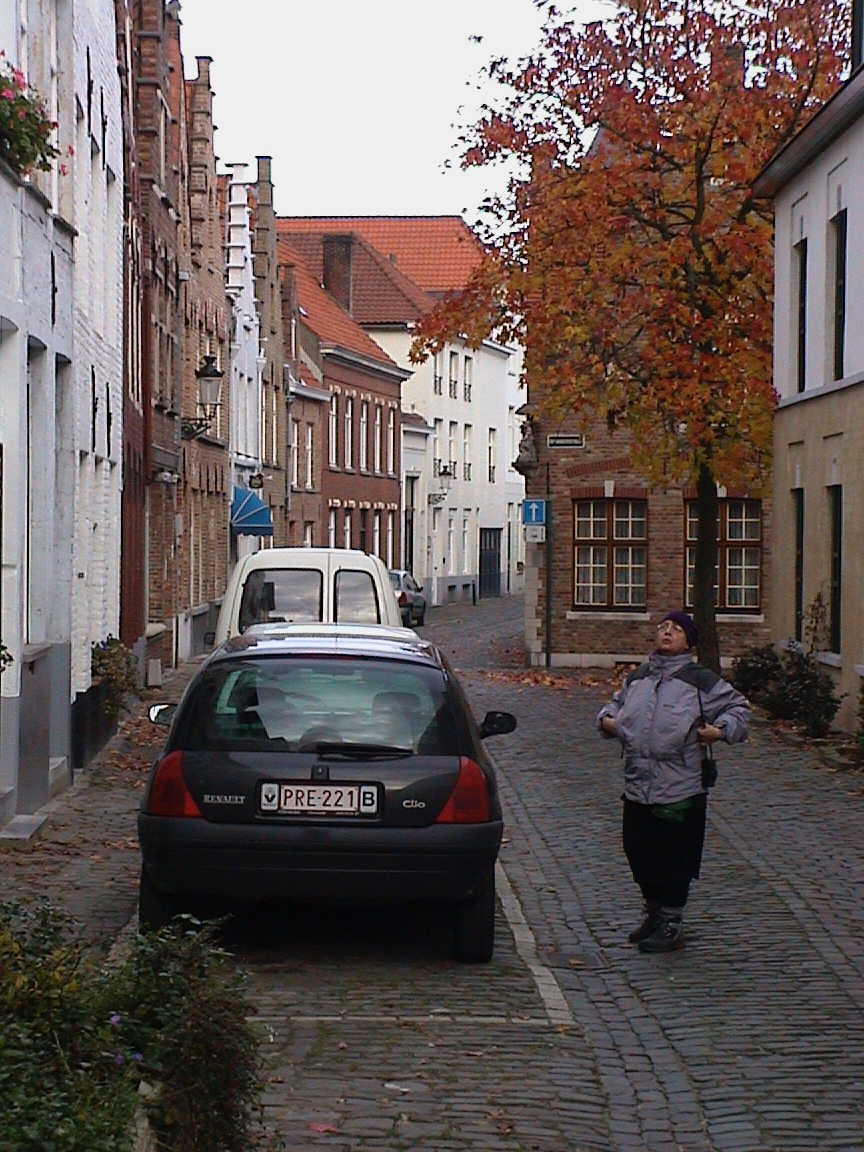
- Rozie admires the buildings on Moerstraat in Bruges.
-
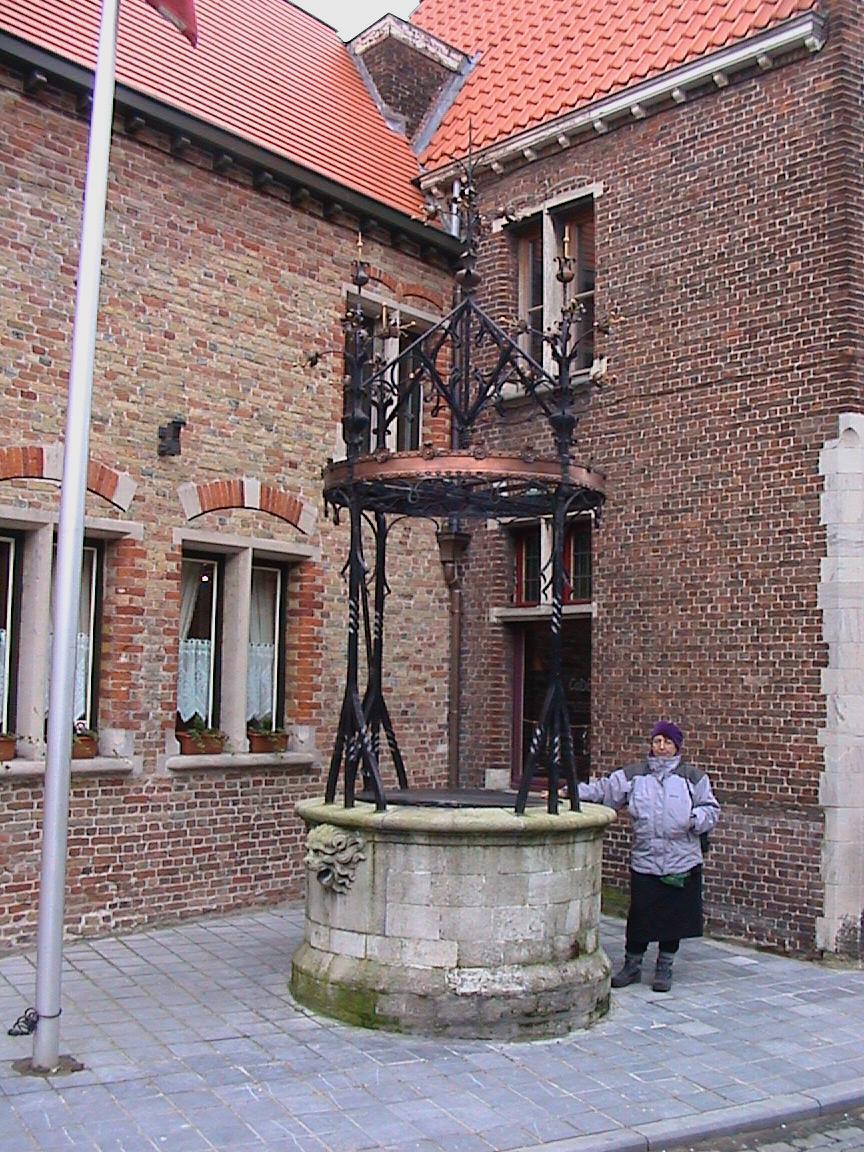
- Rozie stands next to a well in Bruges.
-
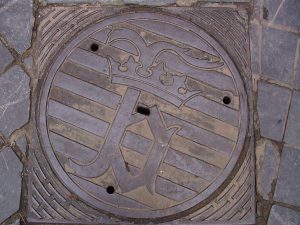
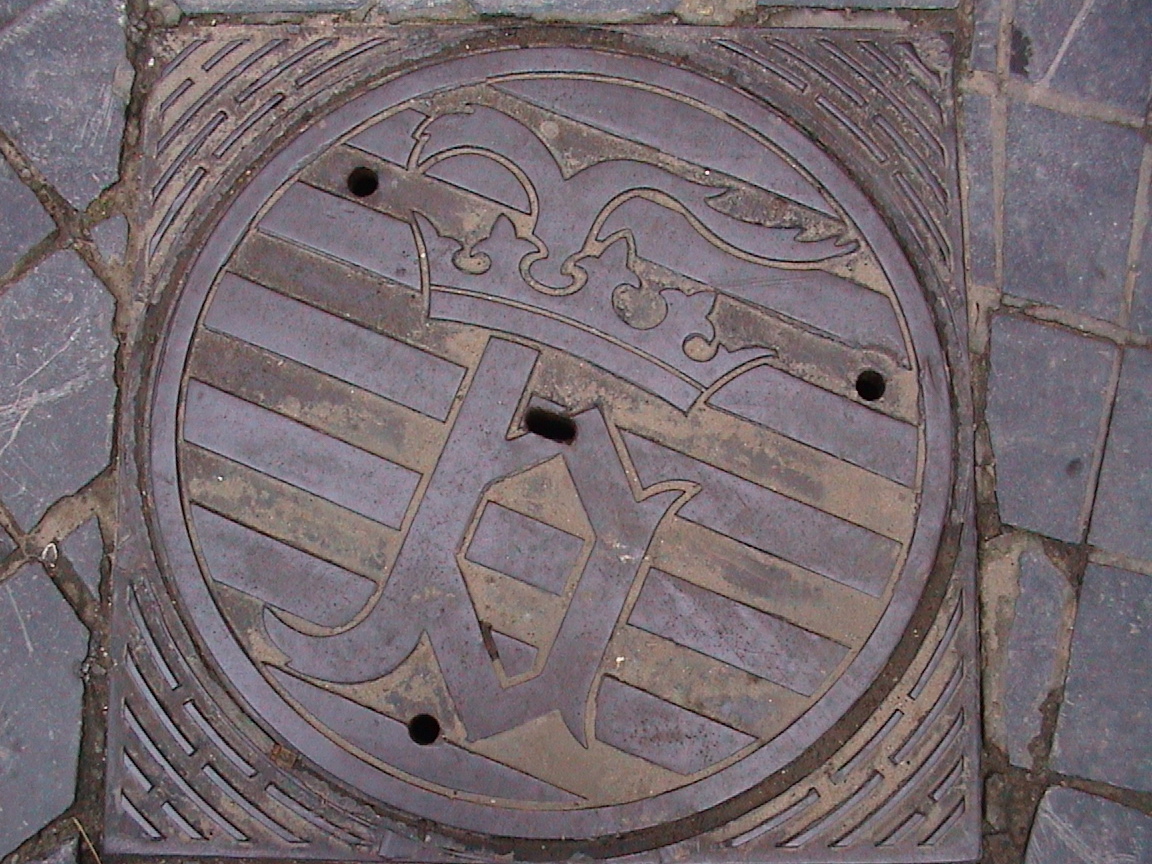
- A manhole cover in Bruges.
-
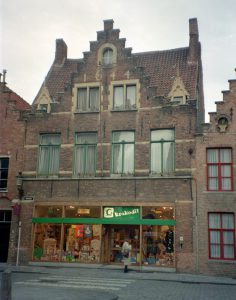
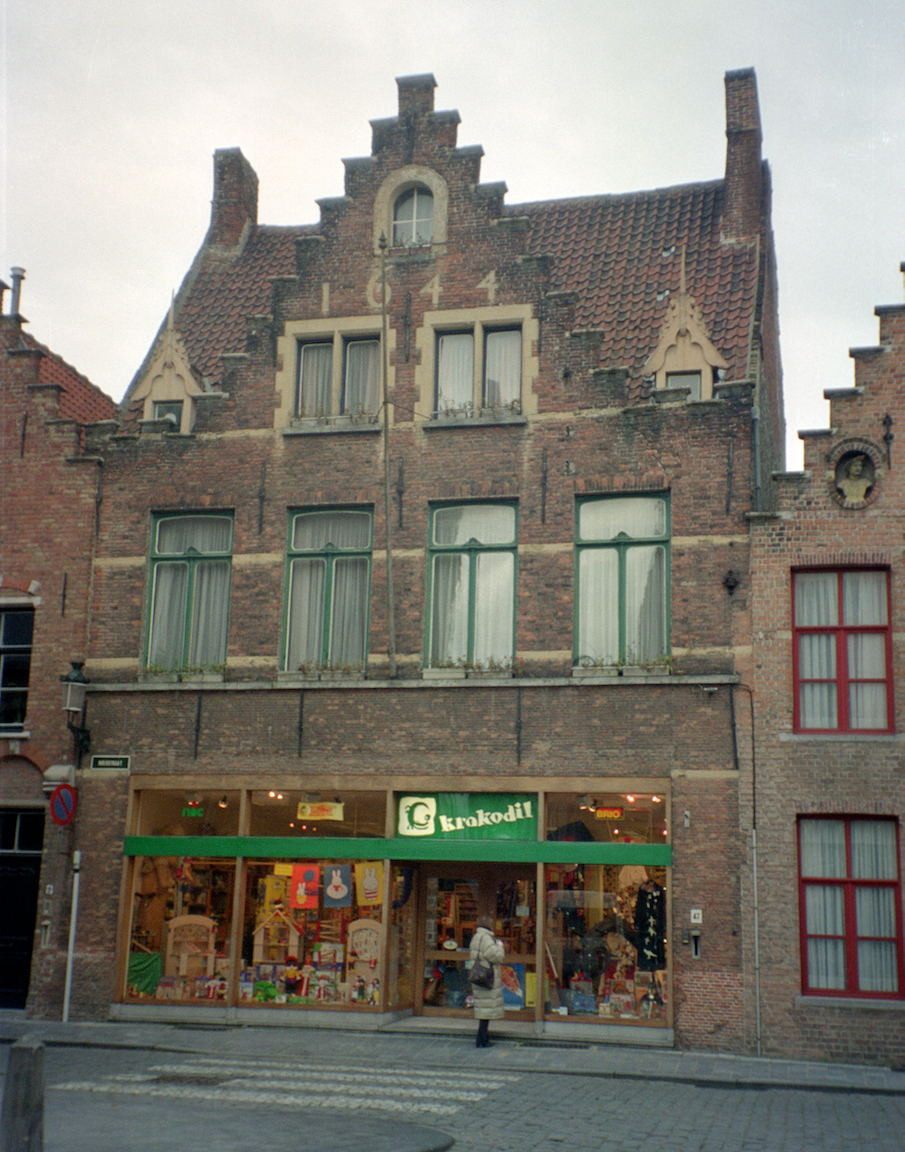
- This storefront has the date 1644 embedded in its brickwork.
-
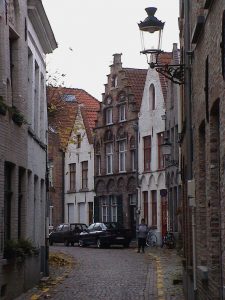
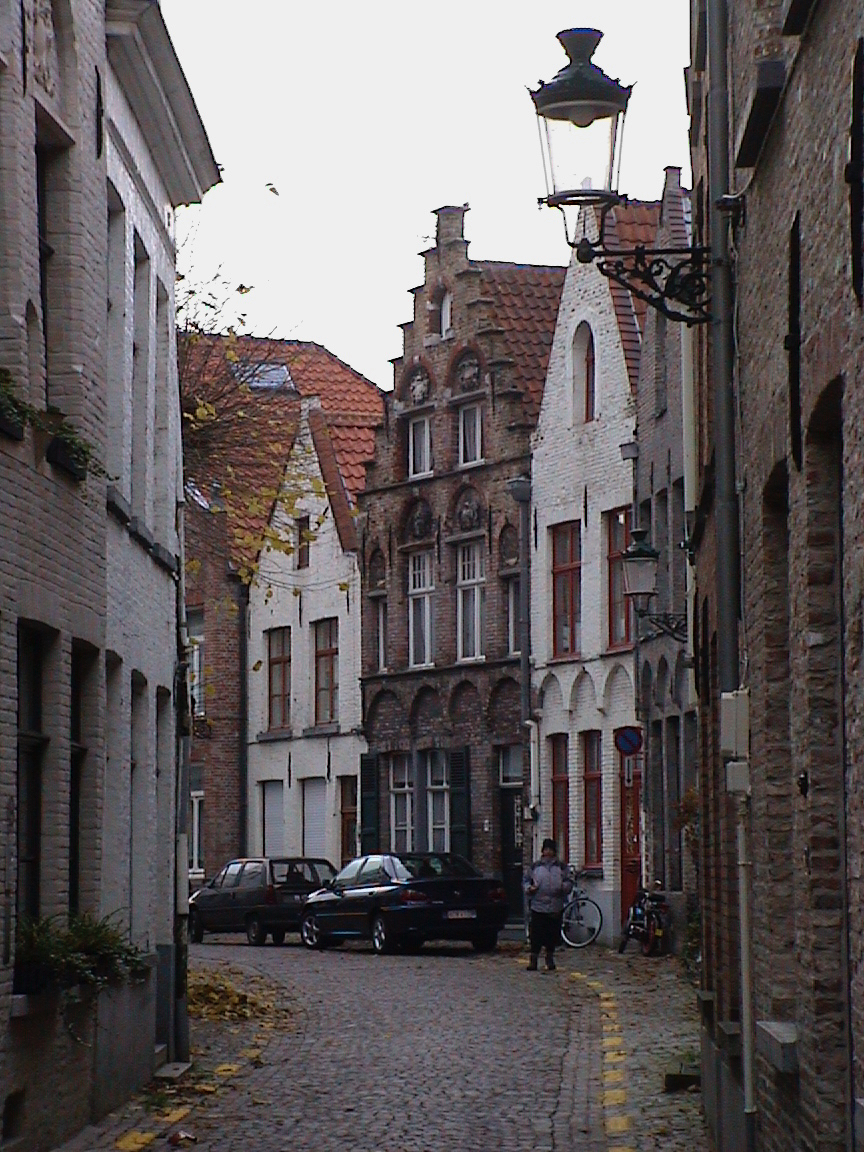
- Rozie walks along Pottenmakersstraat in Bruges
-
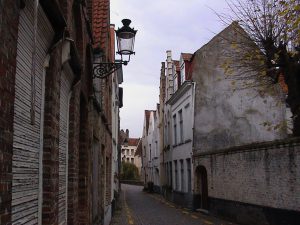
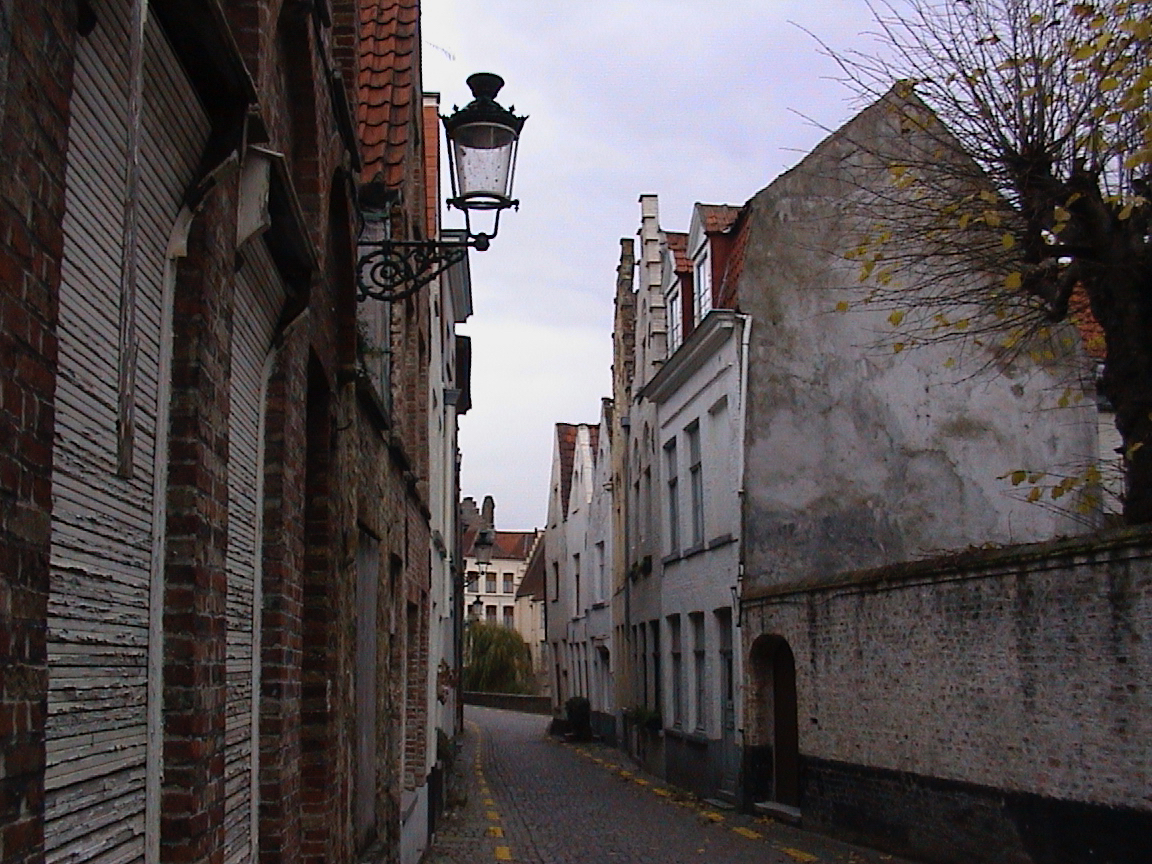
- Looking the other way on the same street.
-
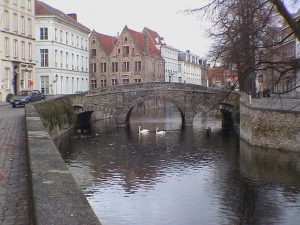
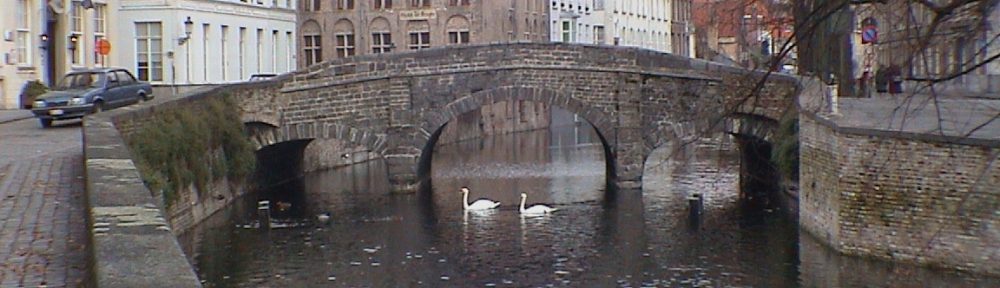
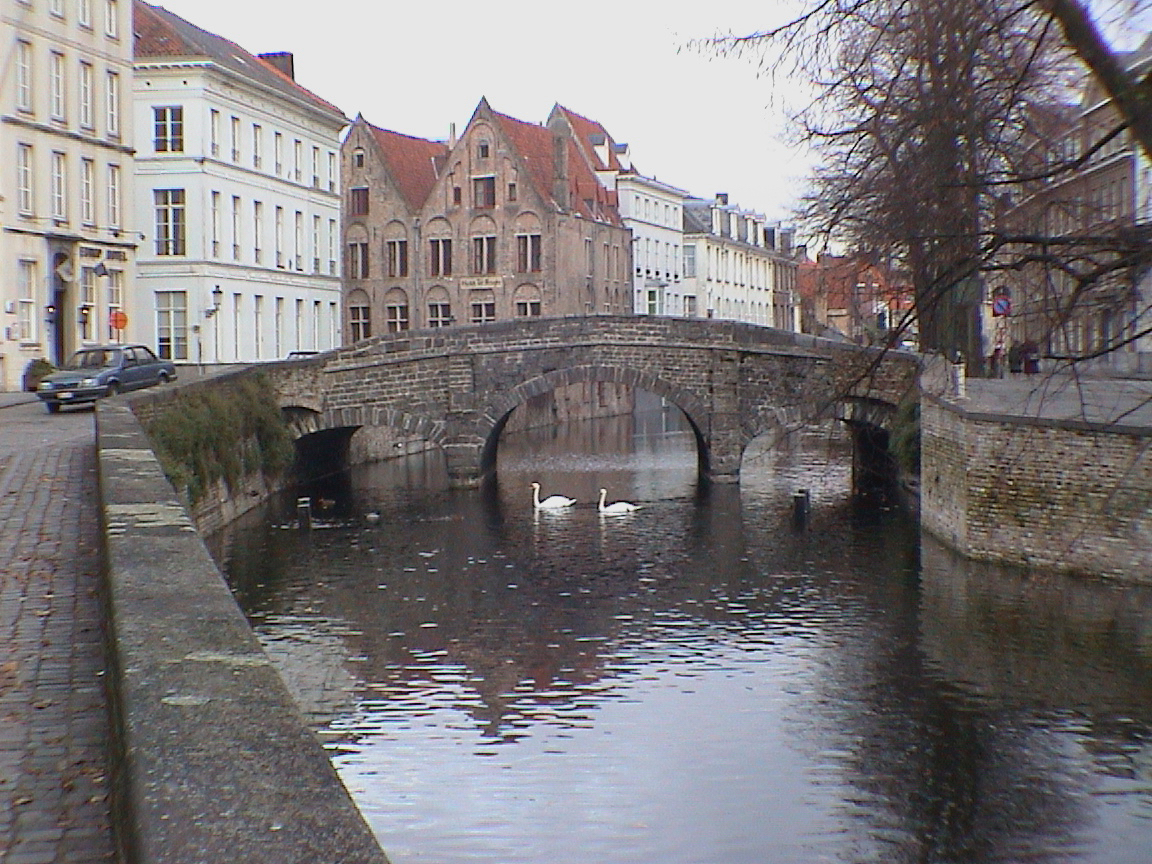
- The Augustine Bridge crosses a canal in Bruges.
-
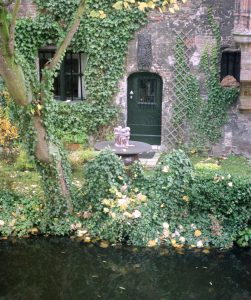
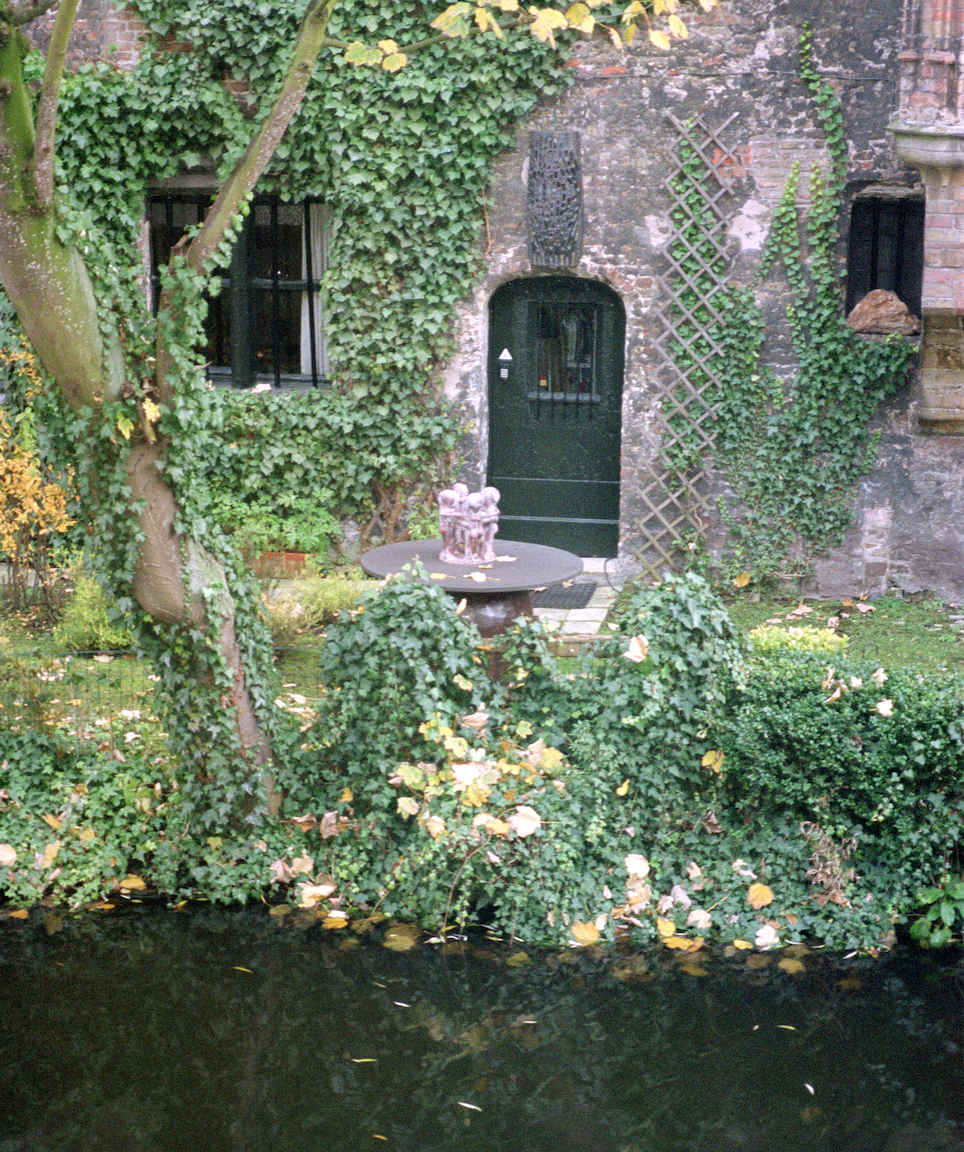
- A back yard along the canal near the Augustine Bridge in Bruges.
-
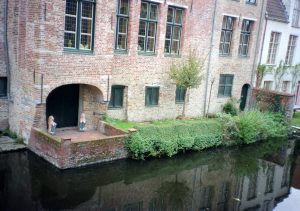
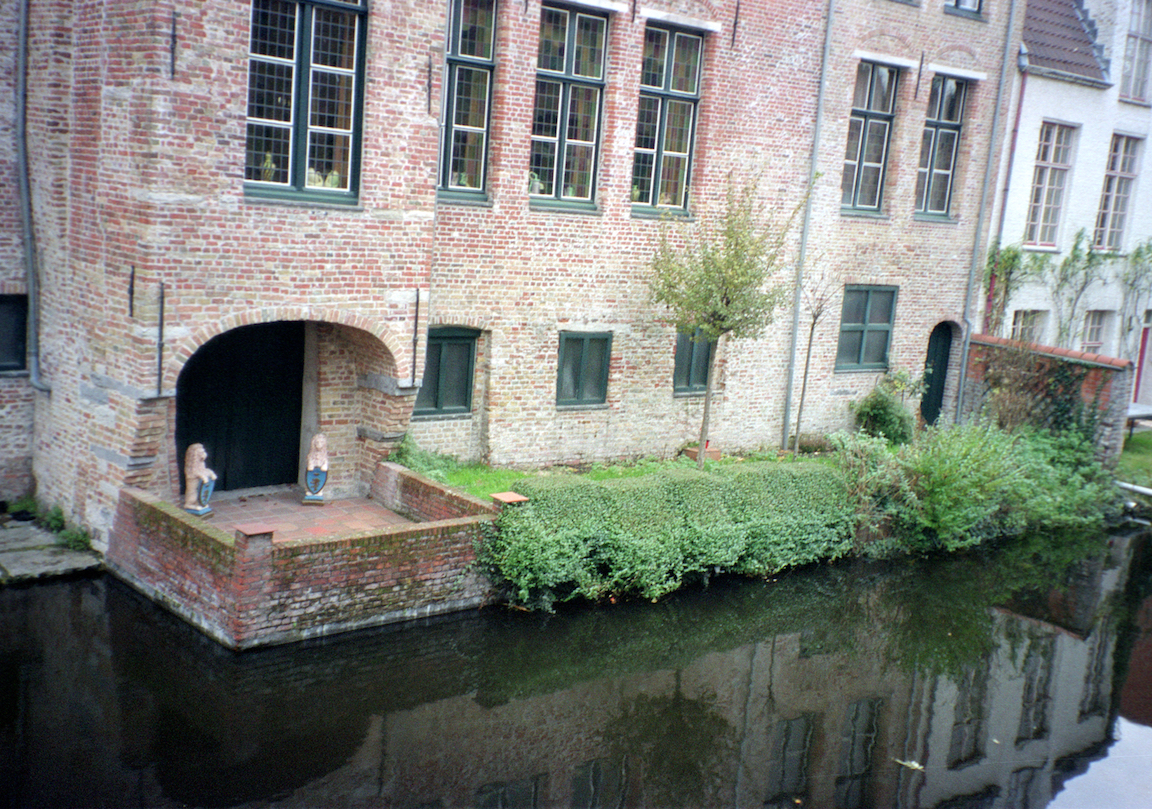
- A patio extends into a canal in Bruges
We want to avoid the main drags as much as possible, as they’re overrun by mutant shopper zombies. Good maps are a necessity for our kind of travel. European cities are not laid out in neat grids as American cities are, and the narrow European streets twist and meander between high walls of tightly-packed buildings.
Without a map, it’s easy to feel like a lab rat. A map will not only help find your way, but if you do get lost and you have to ask for directions from someone who doesn’t speak English… a map is a point of reference that transcends languages.
-
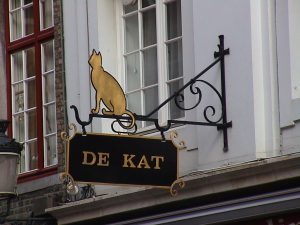
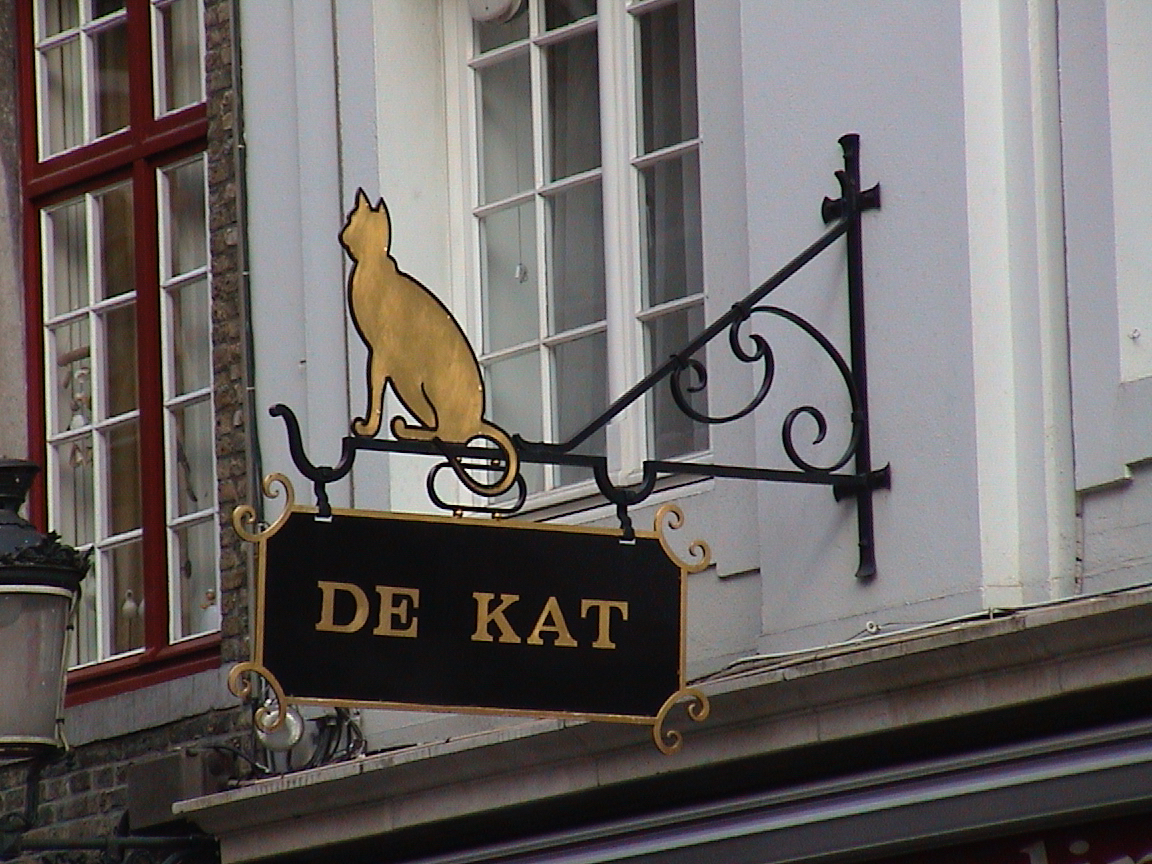
- A sign for a shop called “De Kat”
-
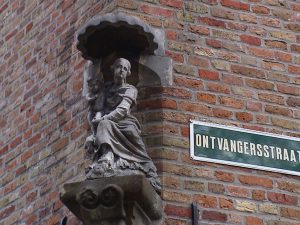
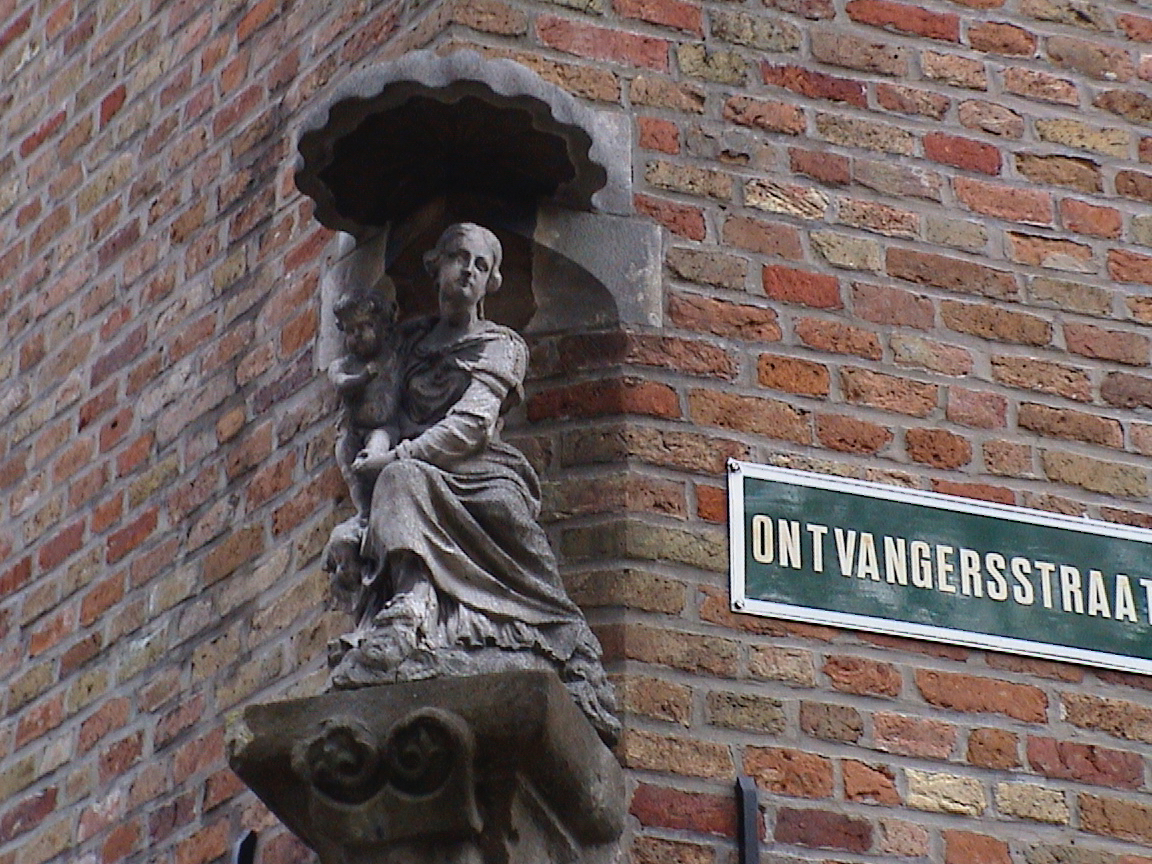
- Little sculptures marking corners are common in Brugges.
-
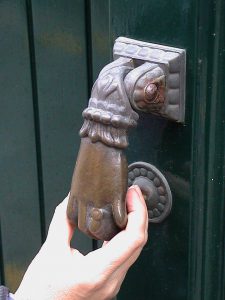
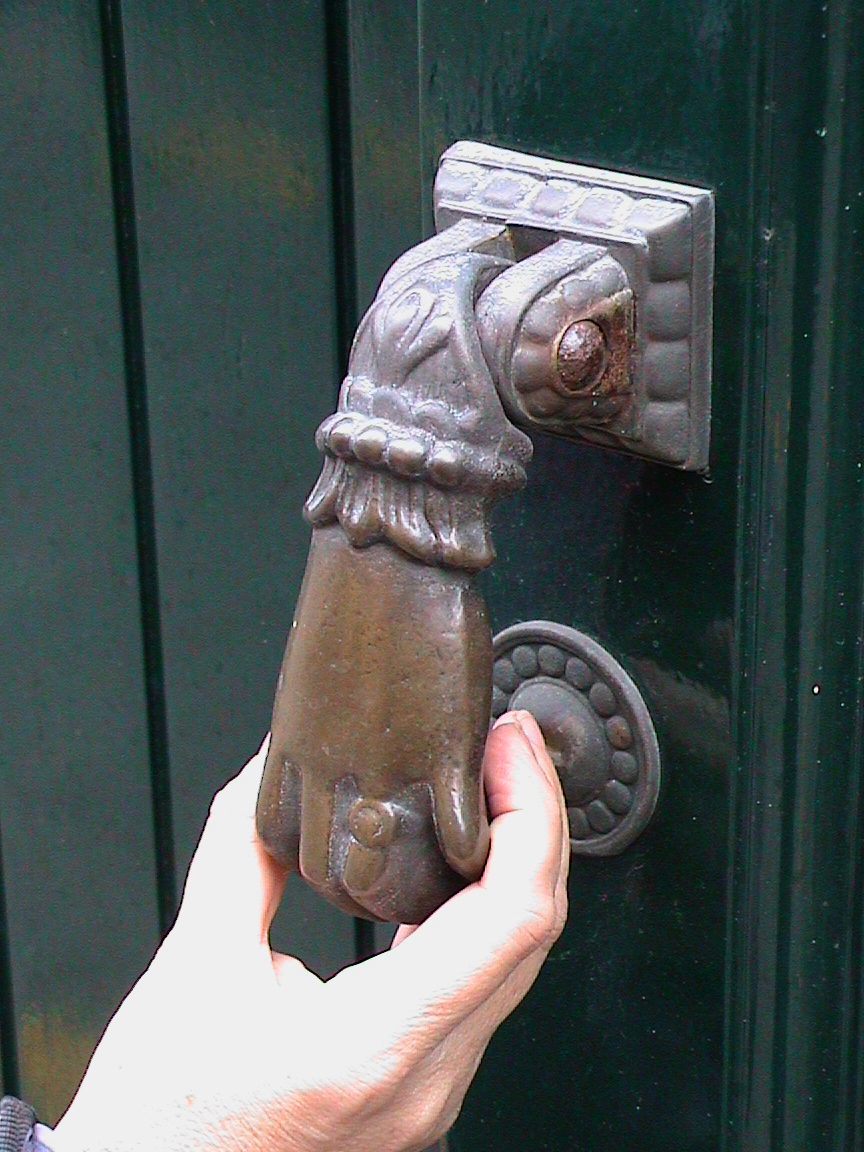
- A decorative door knocker
-
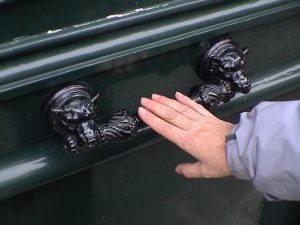
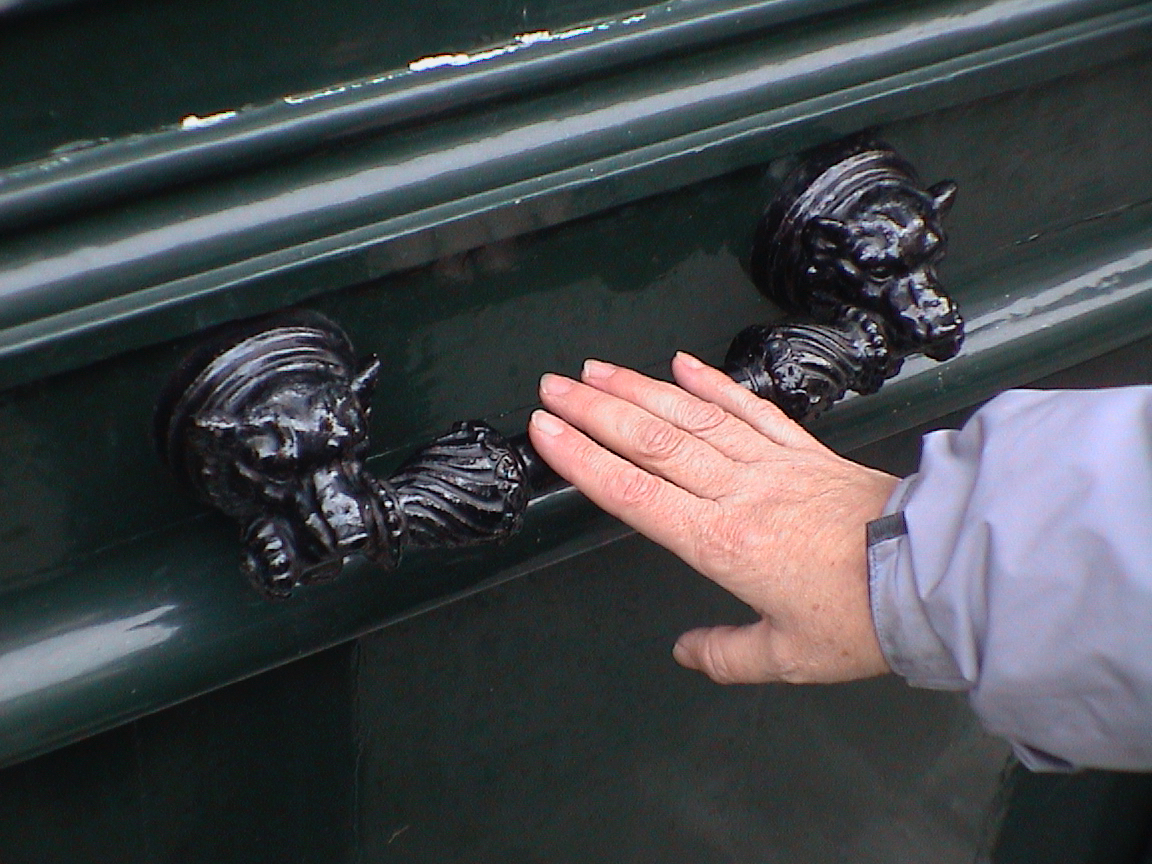
- On another door, this handle is held by a pair of dogs.
-
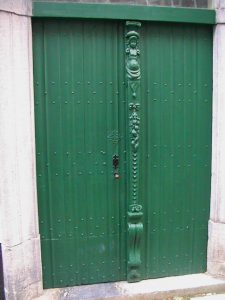
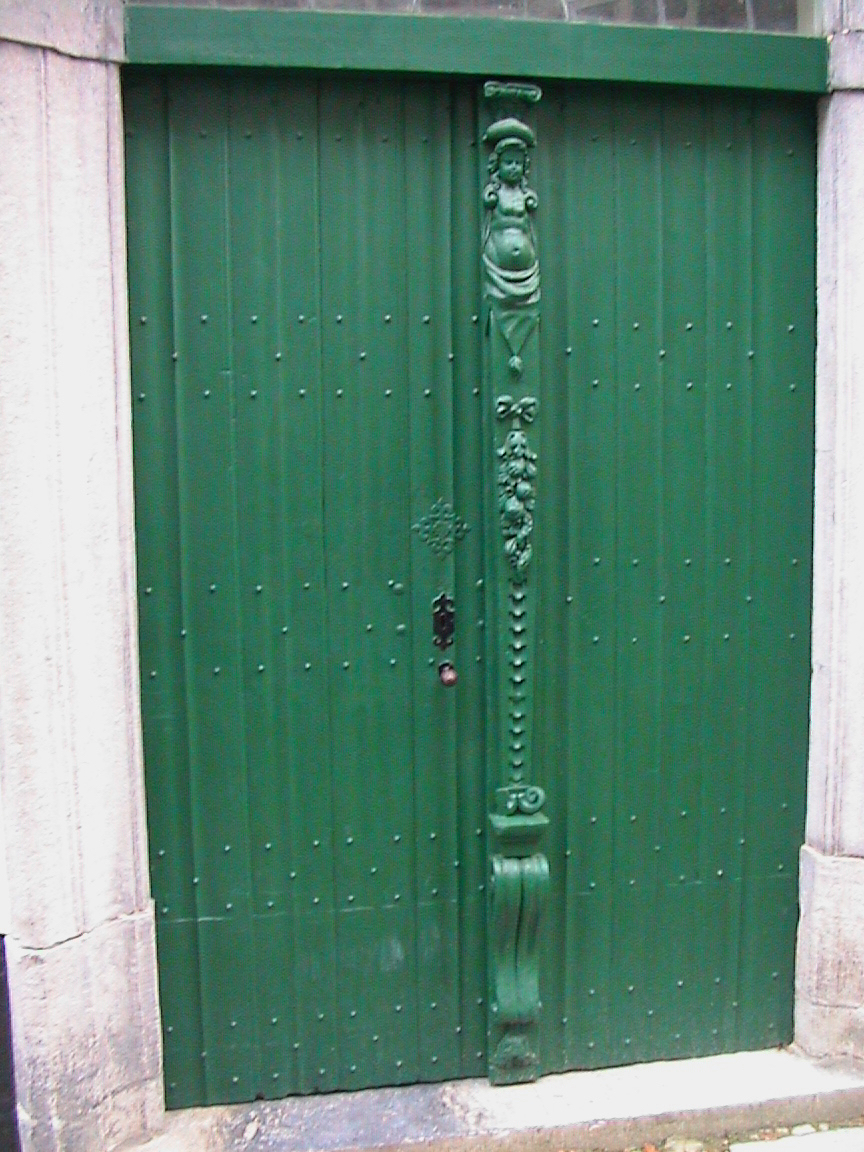
- Carvings in this door celebrate motherhood.
-
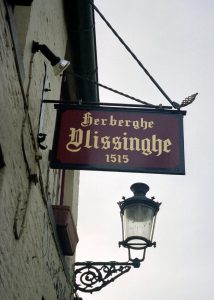
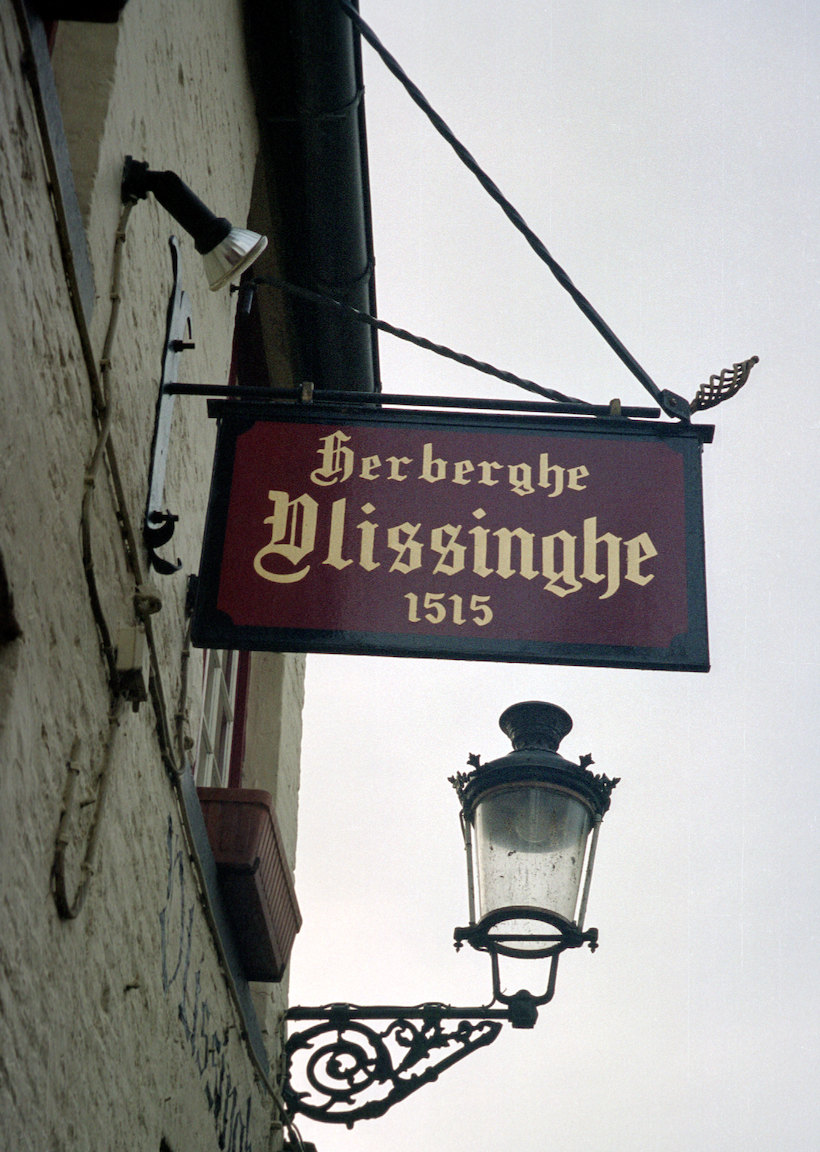
- The sign for Cafe Vlissinghe, dating back to 1515.
-
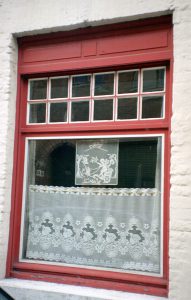
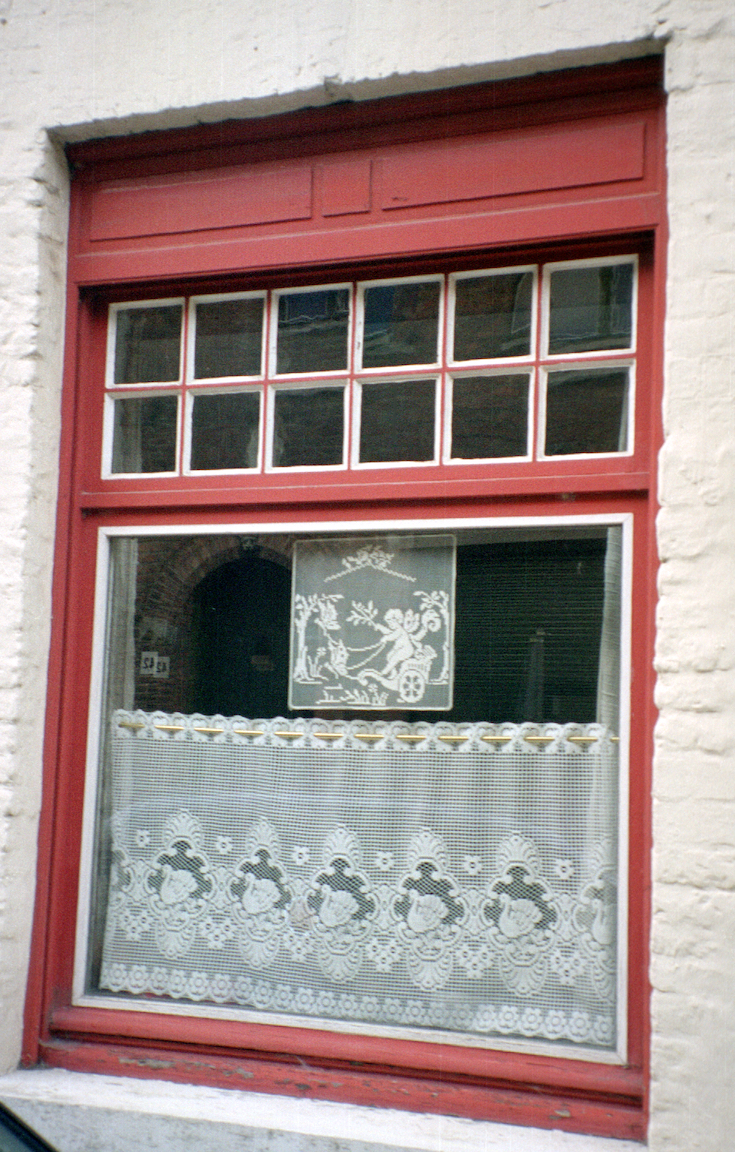
- Many windows in Bruges were decorated with intricate weavings
-
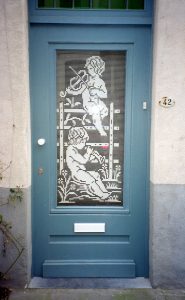
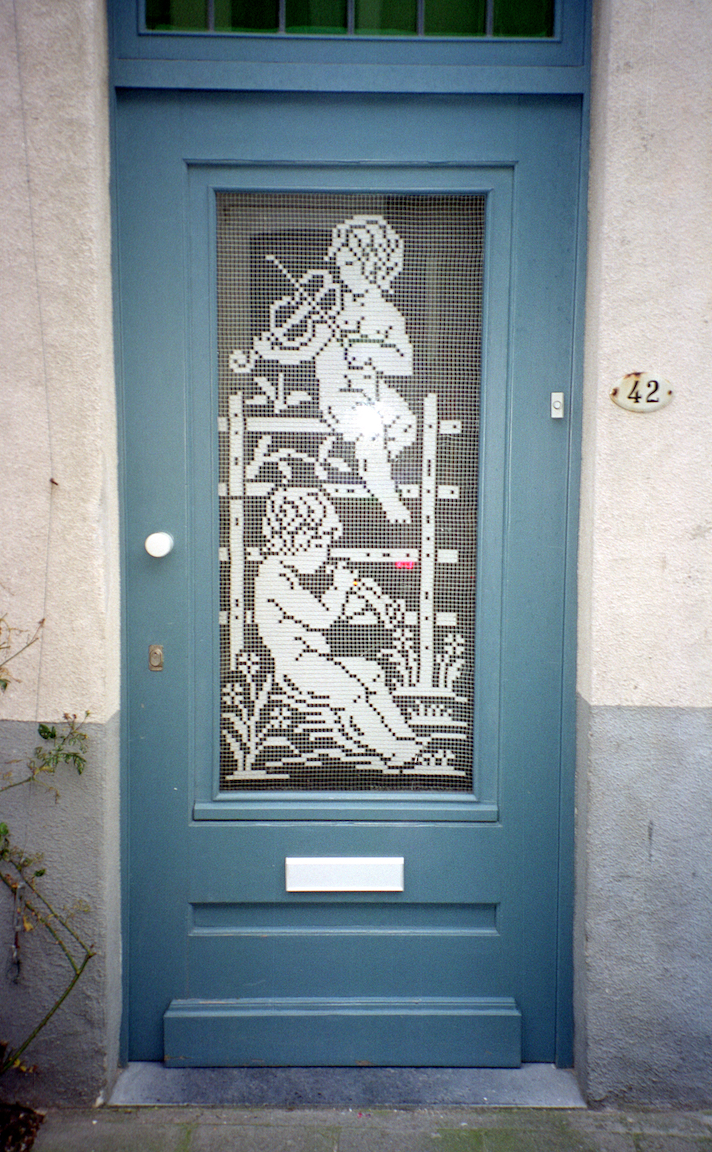
- Many doors also had such weavings.
-
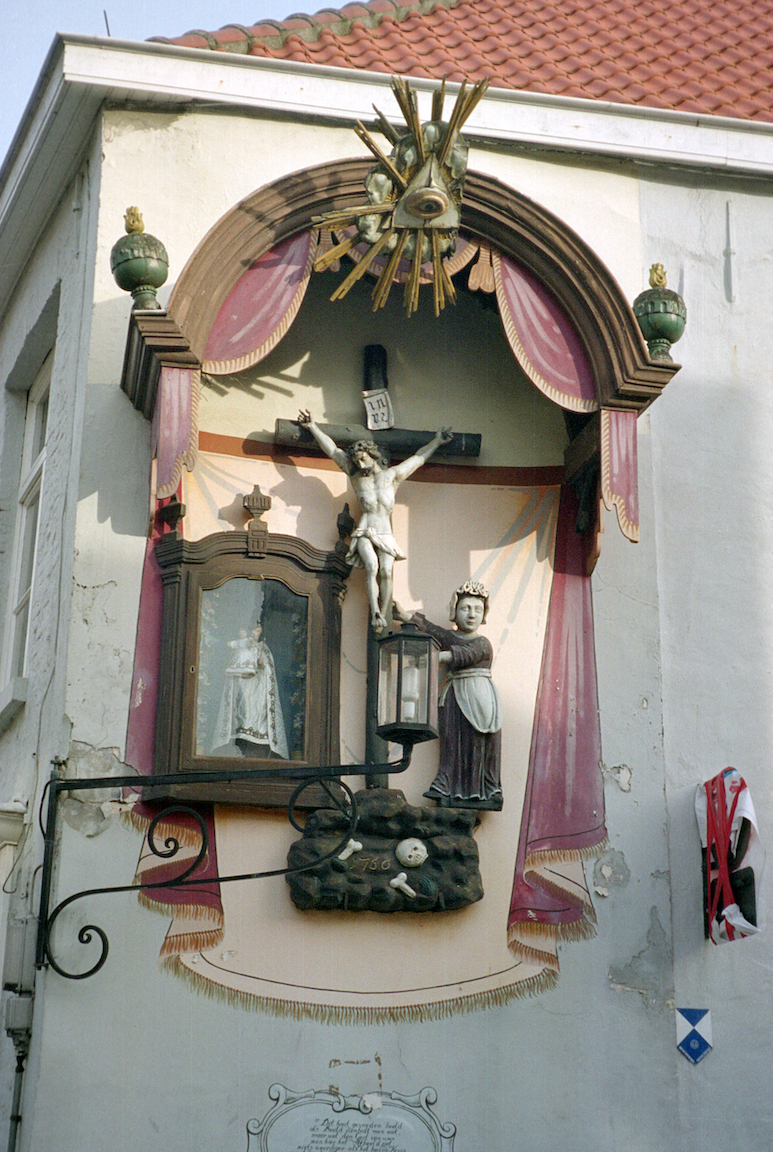
- Annaatje van ‘t pitje is a Wayside Shrine with a story behind it.
-
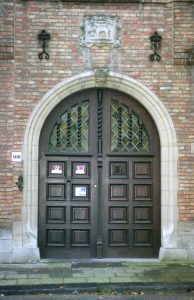
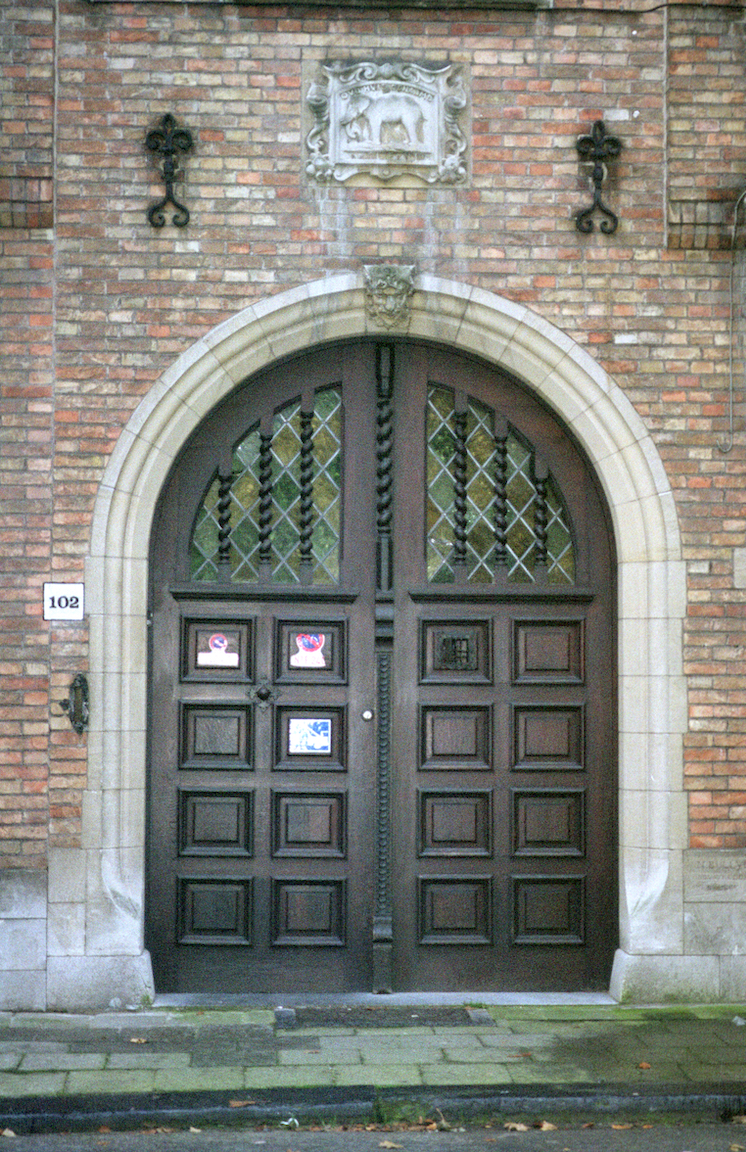
- A large ornate double door.
-
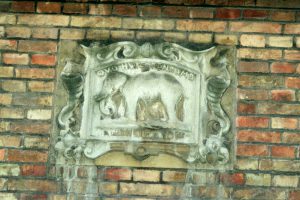
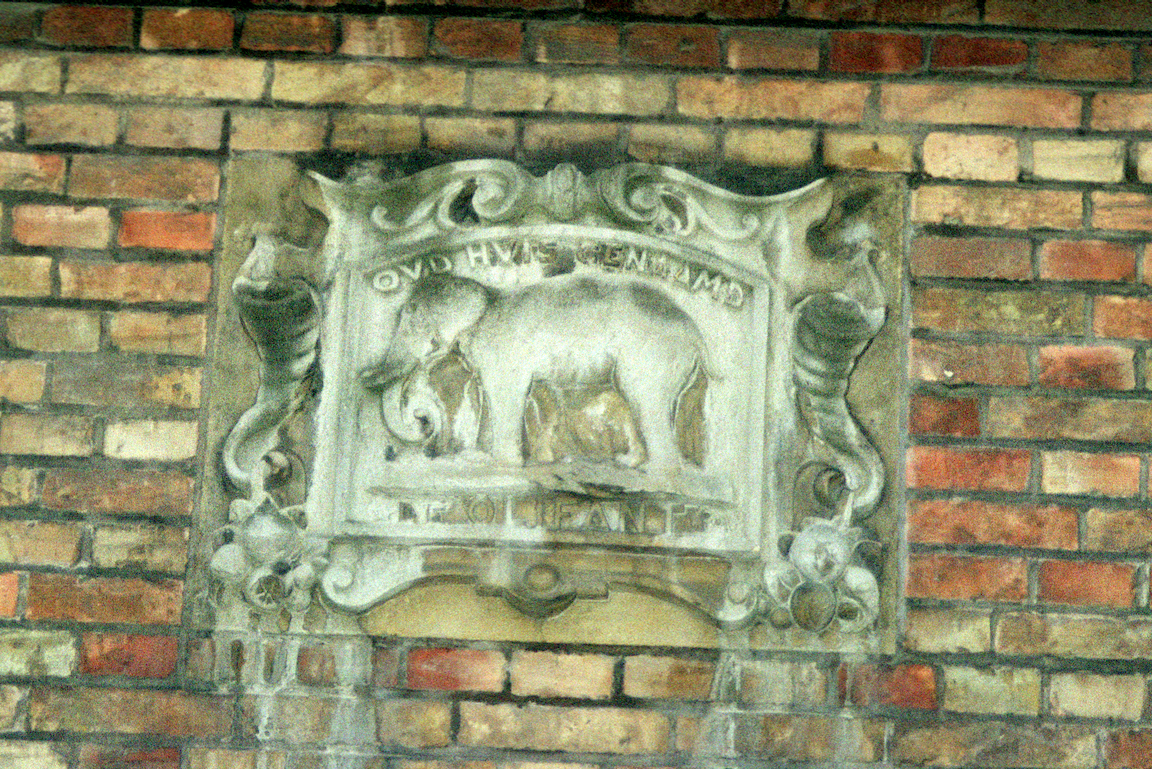
- A closer look at the crest above the door
-
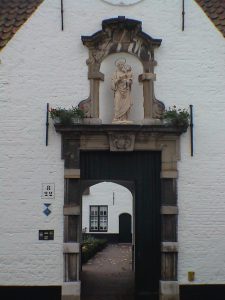
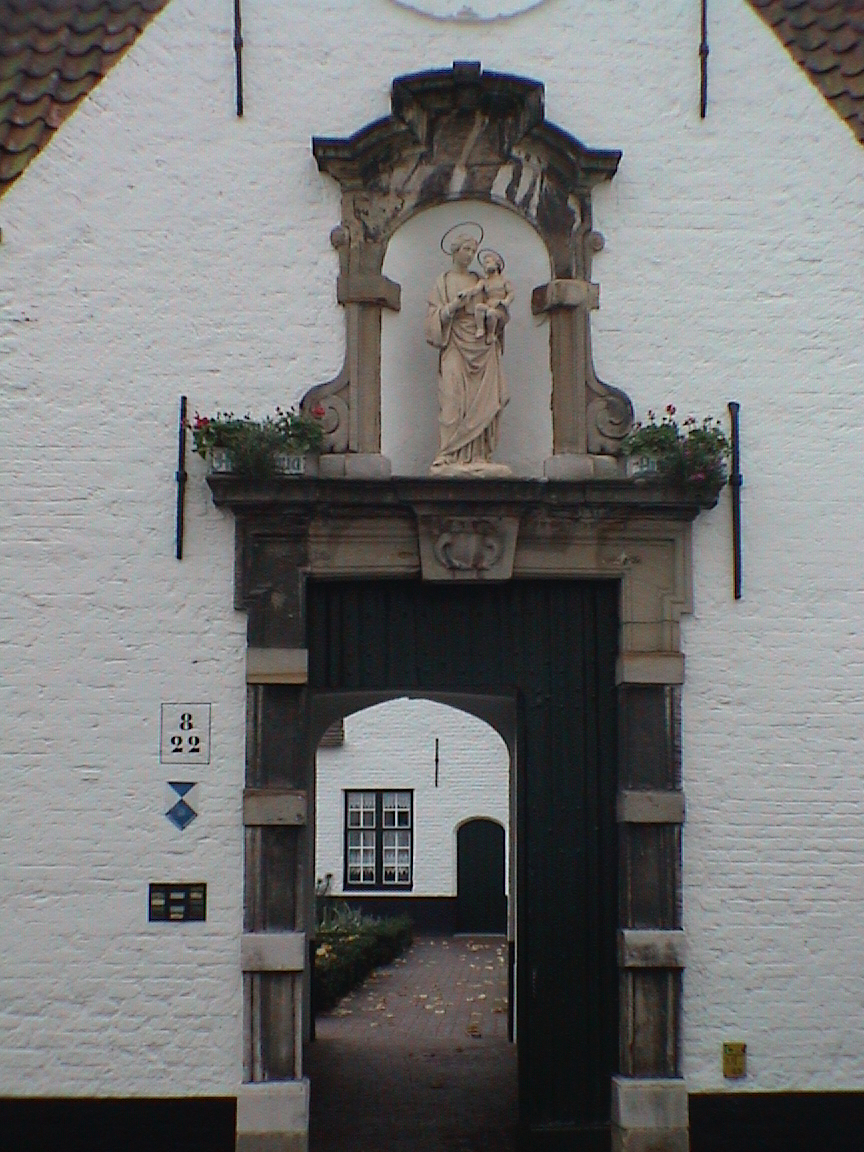
- Entrance door to the almshouses of Muelenaere
-
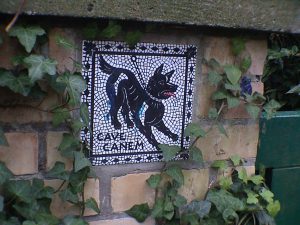
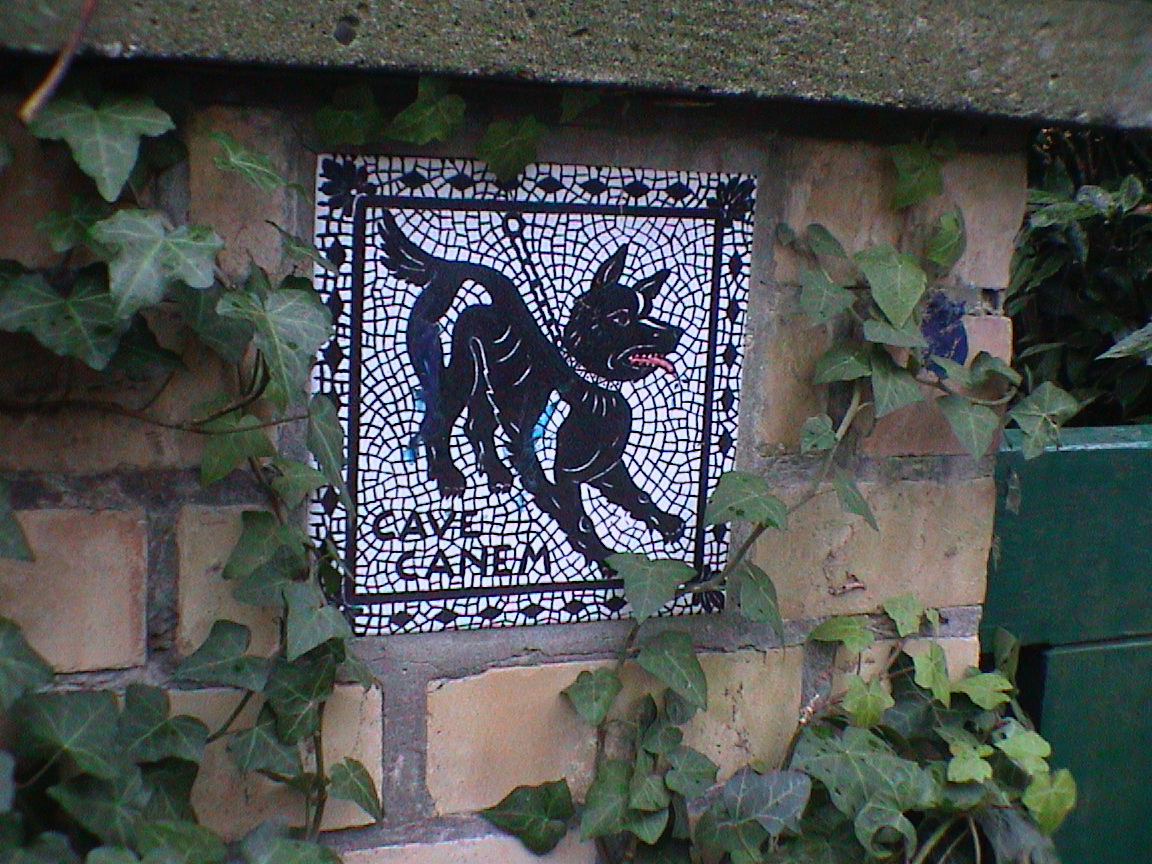
- Cave Canem…. dog cellars?
-
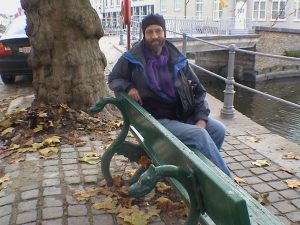
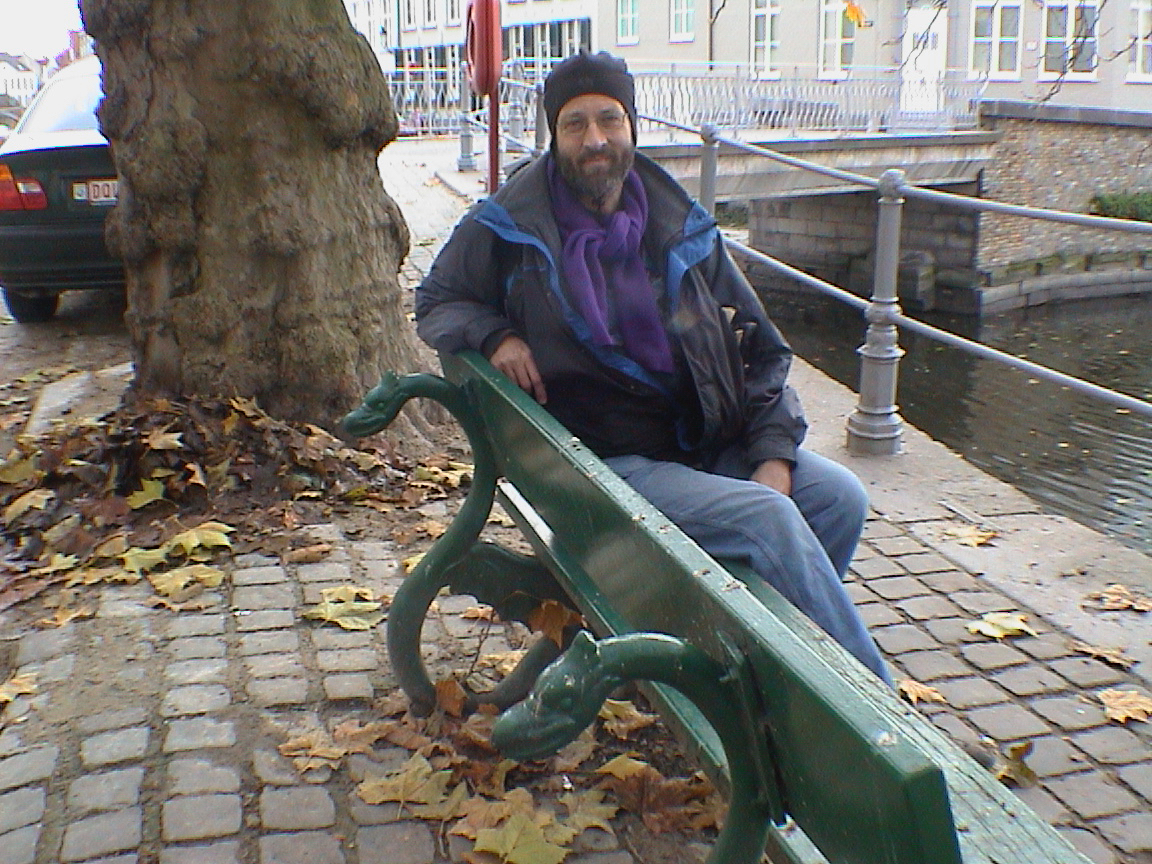
- Obbie rests on a bench held by dragons
-
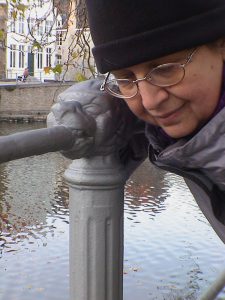
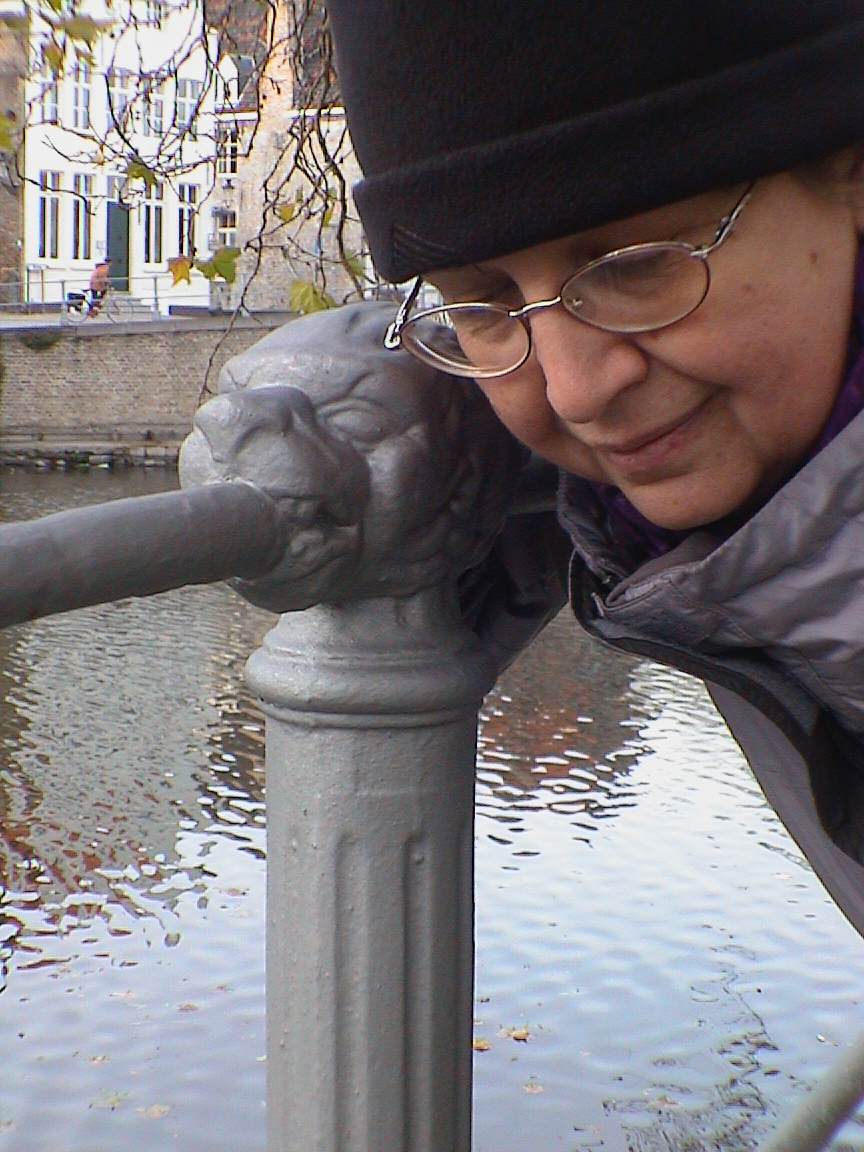
- Rozie nuzzles with a dog’s head holding a rail.
-
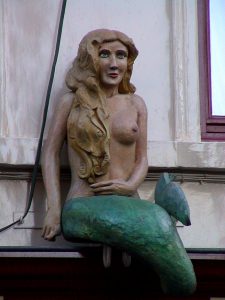
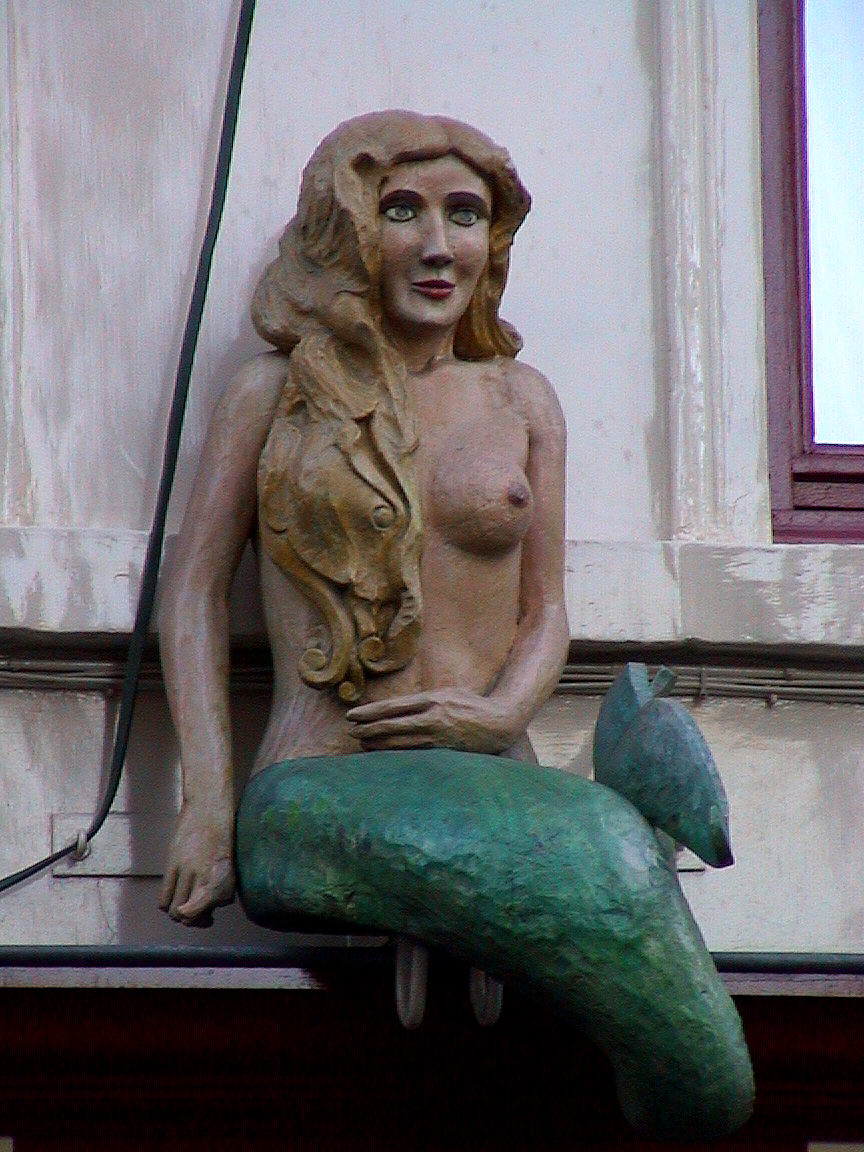
- A mermaid watches over the shoppers on a street in Bruges.
Historic Bruges is home to about 15,000 people and isn’t much bigger than a large university campus. With our map in hand, we plotted a looping course through the backstreets and neighborhoods of this old city. Visually, it’s everything that the guide books promised. From the canals to the cobblestones to the artistic detail of the old houses, it’s easy to believe that this city looks much as it did 500 years ago.
-
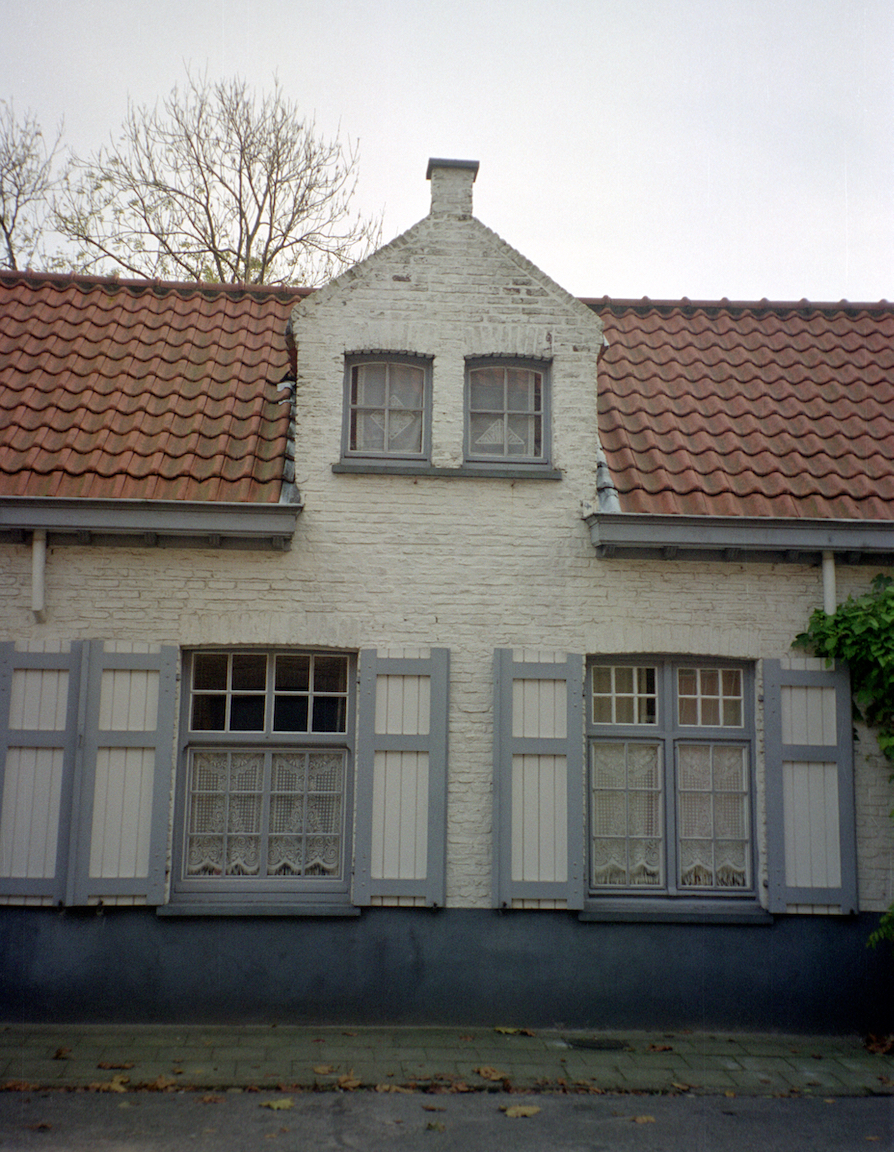
- A house on Carmersstraat in Bruges
-
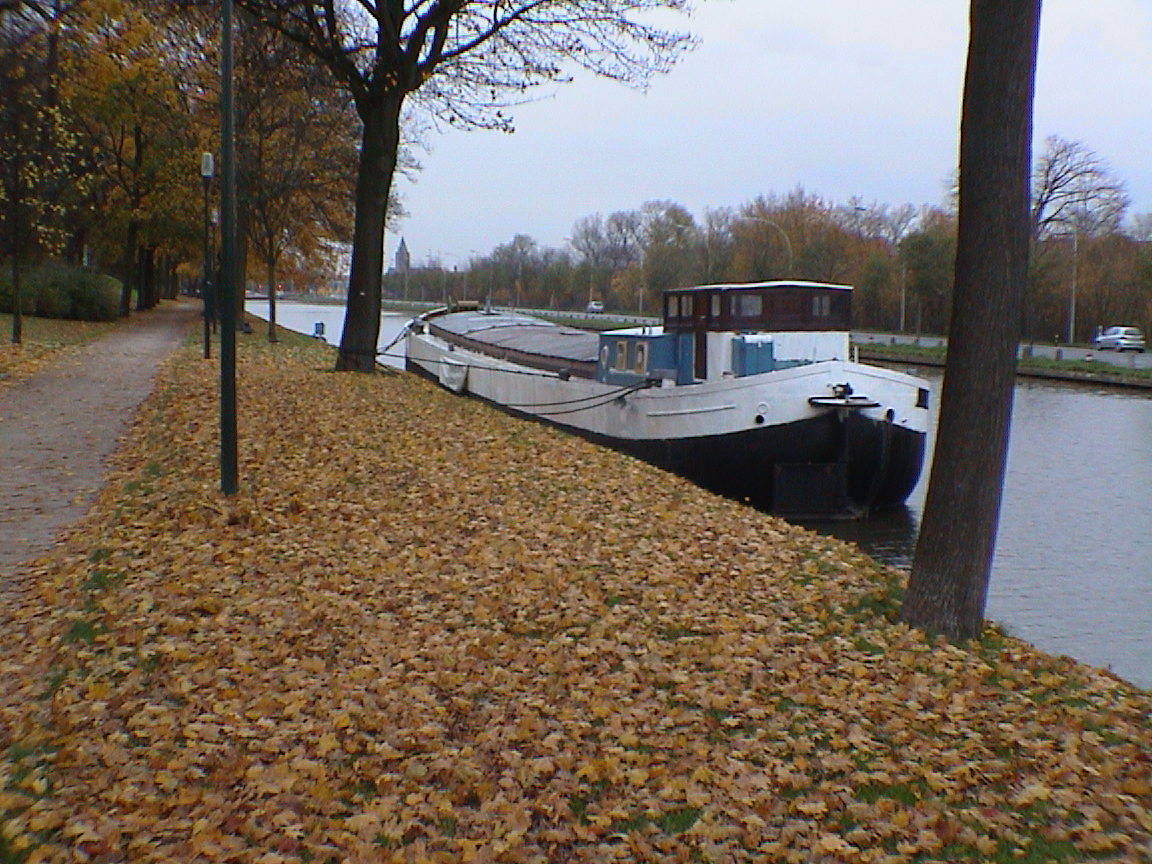
- A small barge tied up on a canal in Bruges.
-
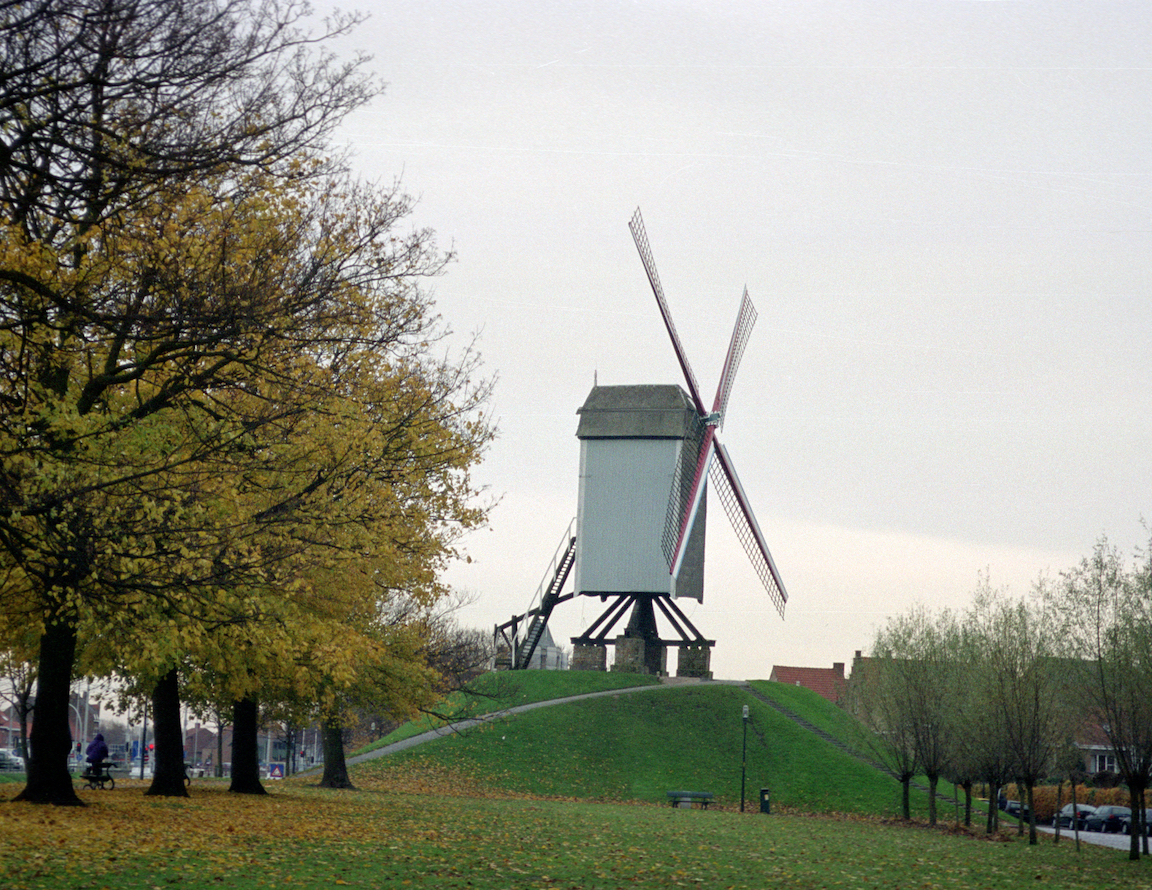
- An old-style windmill near a main canal in Bruges
-
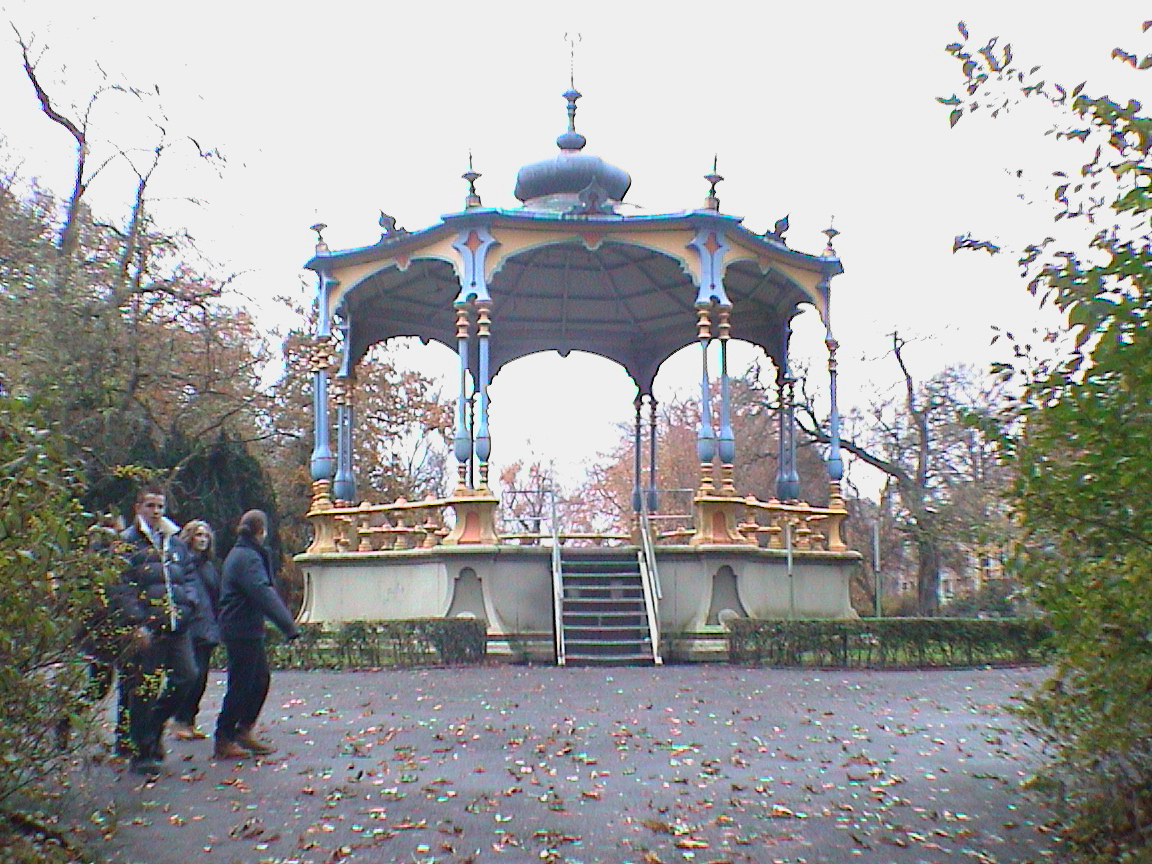
- A kiosk in Bruges’ Koningin Astridpark
-
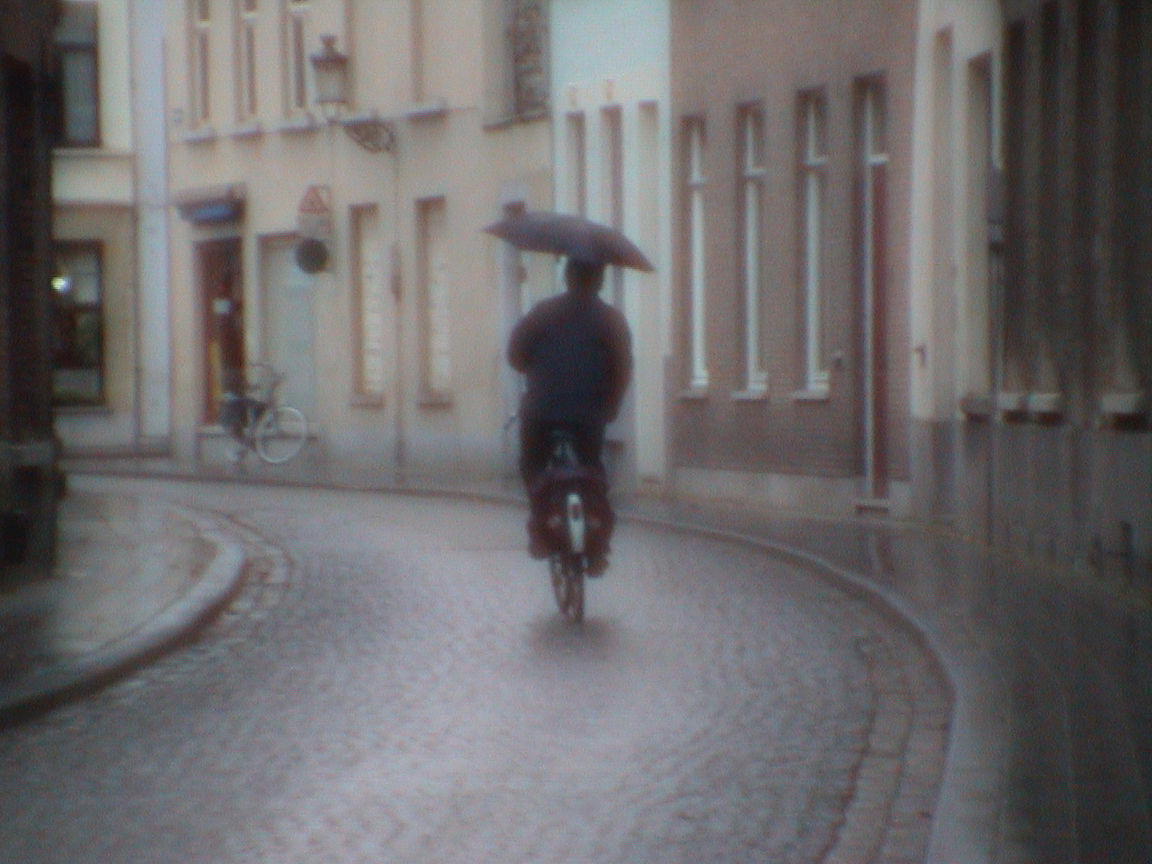
- A commuter rides down a Bruges street on a damp fall day
-
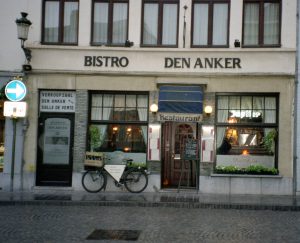
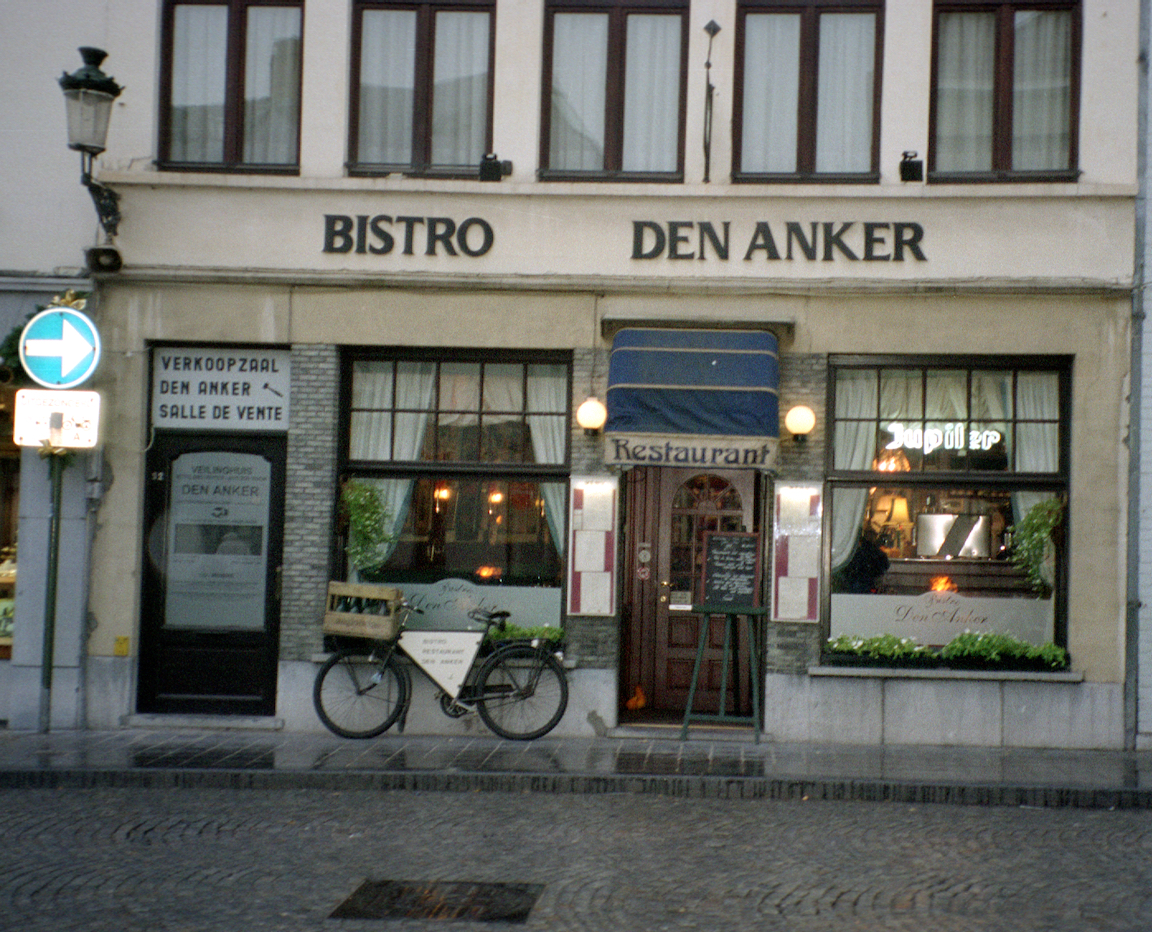
- A bistro at a prominent corner in Bruges.
-
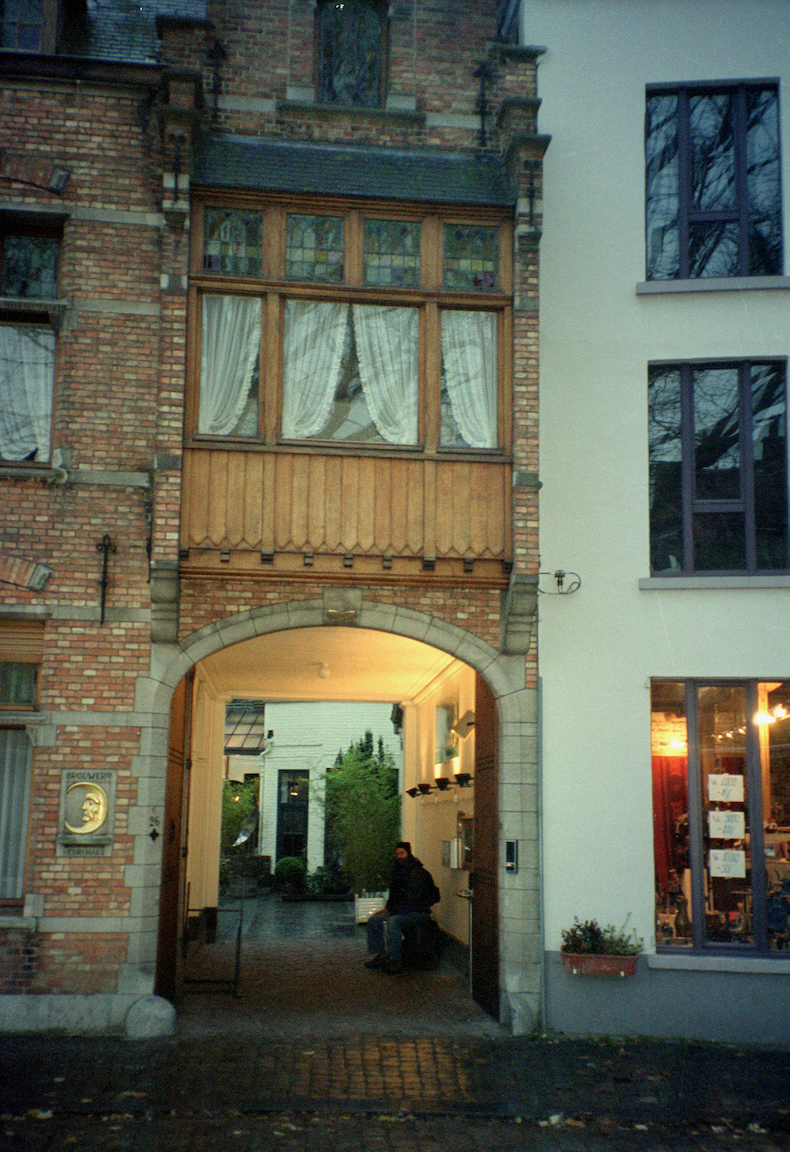
- Obbie rests in the walkway leading to the Henri Maes Brewery
-
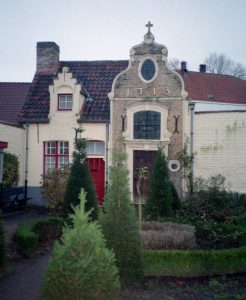
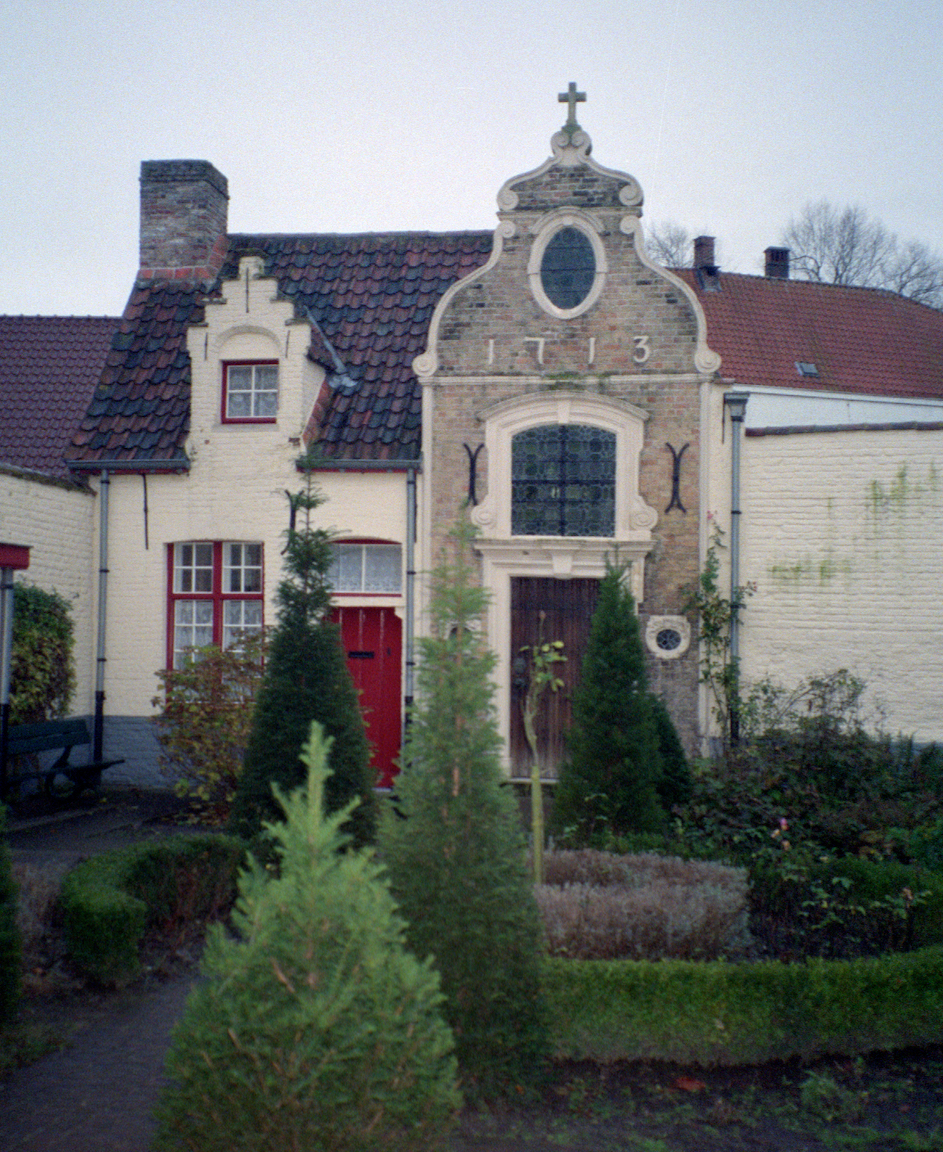
- Godshuis de Vos is an almshouse established in 1713
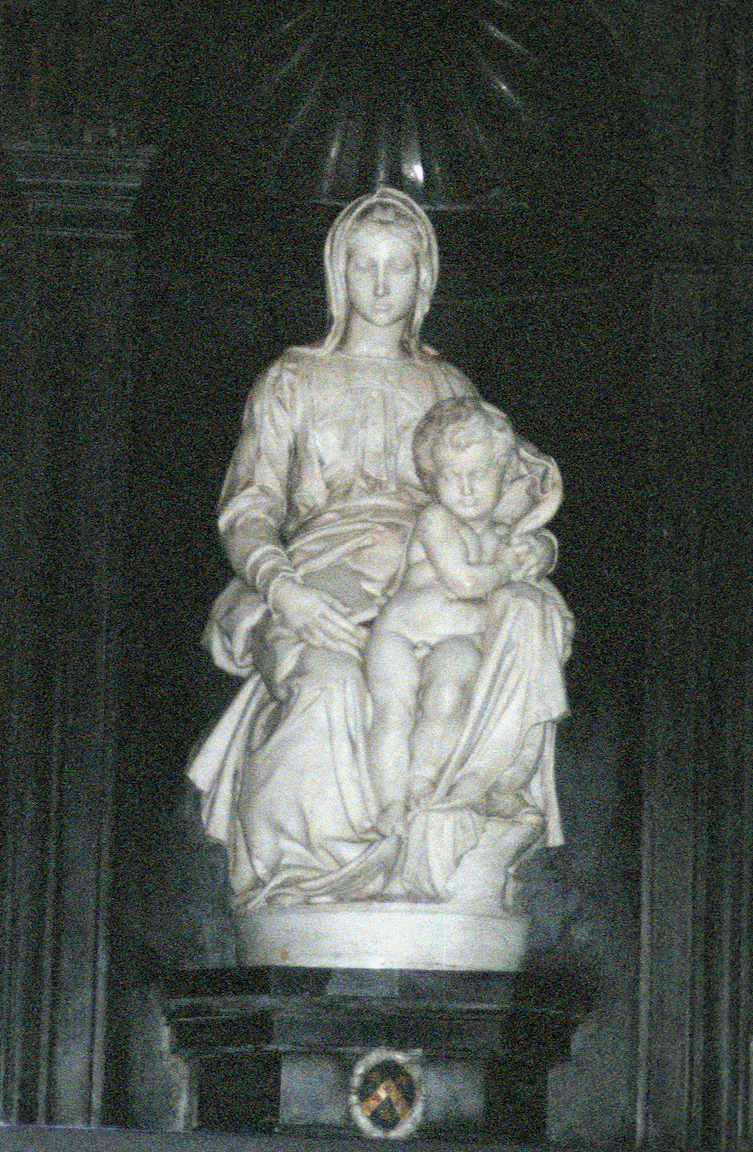
On Tuesday we had lunch next to a park on the northeastern edge of town where there was a line of four windmills – the kind you find on Dutch postcards. On Wednesday we saw an amazing art collection in a local cathedral, including a sculpture by Michelangelo.
-
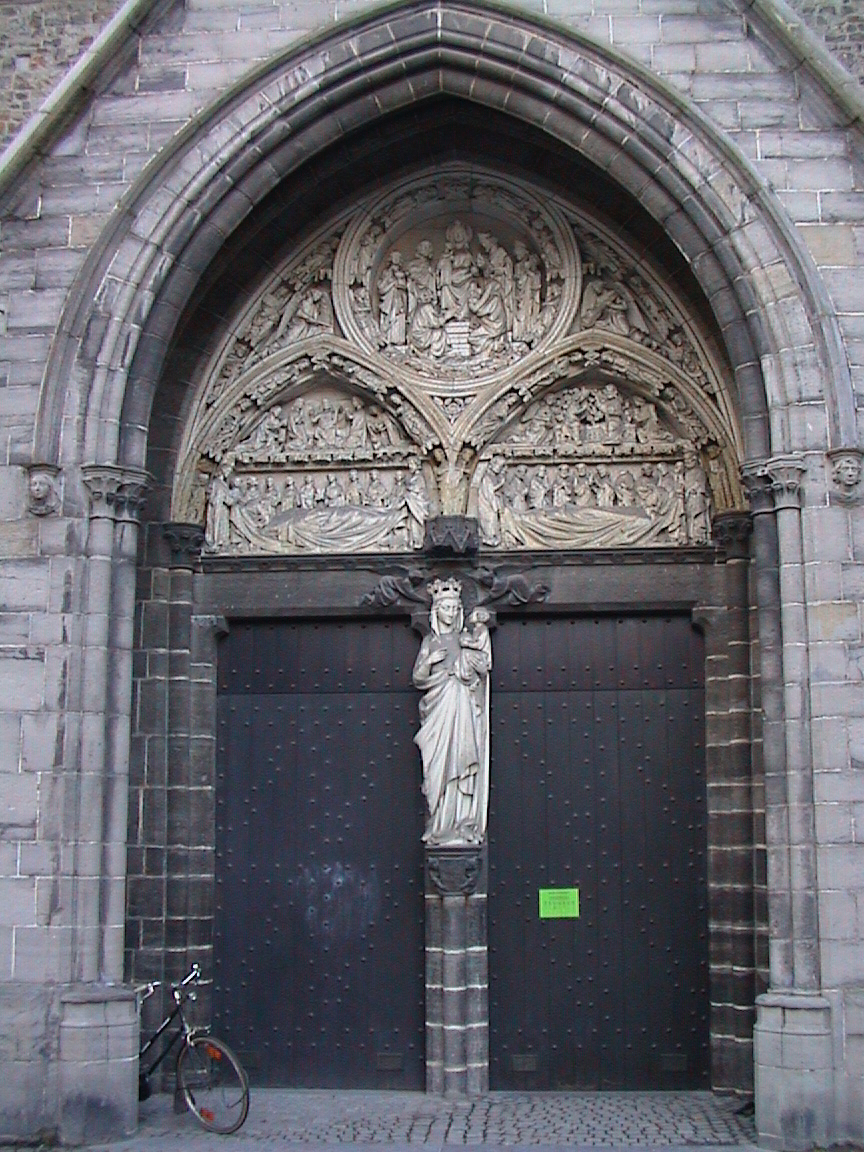
- The entrance to Saint John’s Hospital, which is now a museum.
-
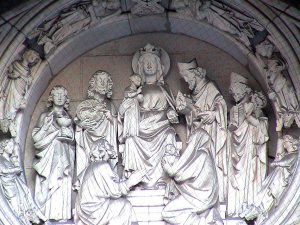
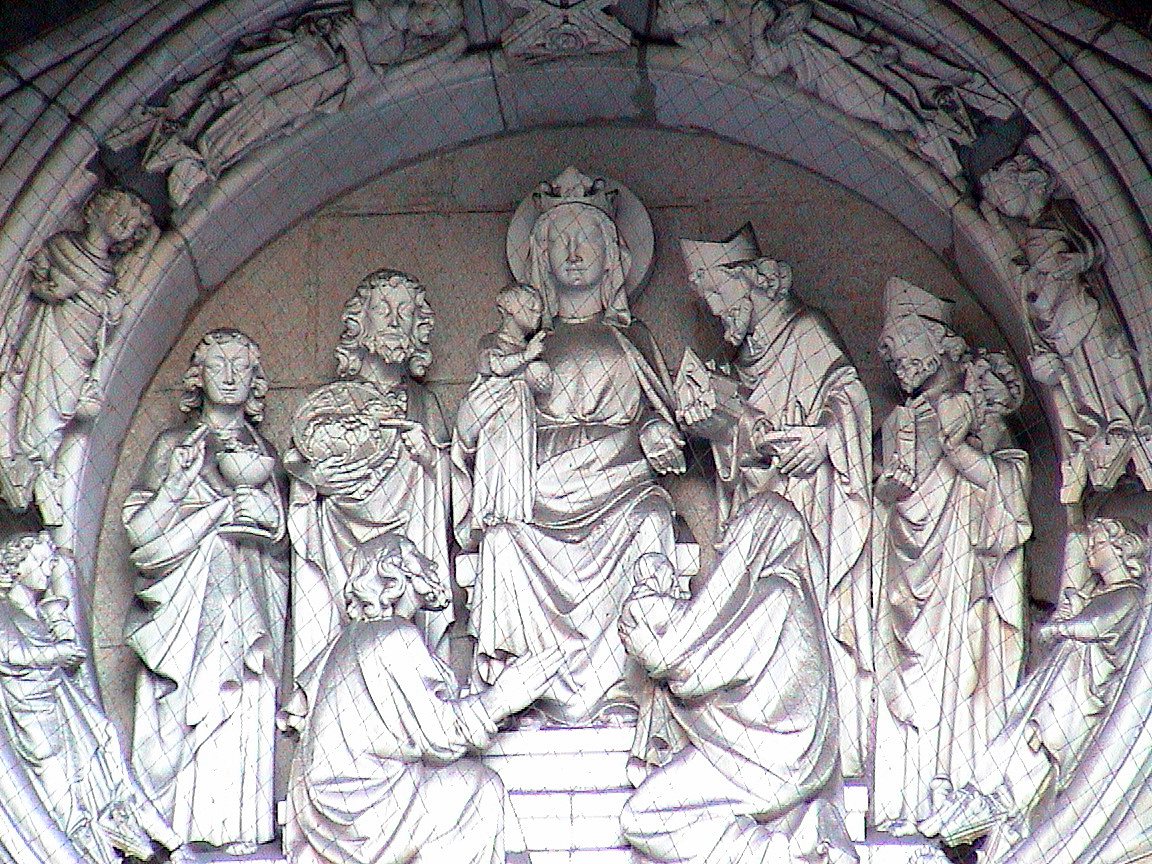
- A closer look at the reliefs above the entrance to Saint John’s Hospital.
-
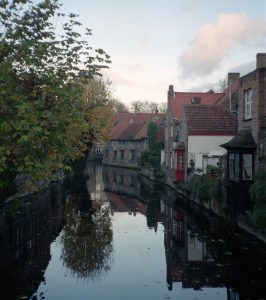
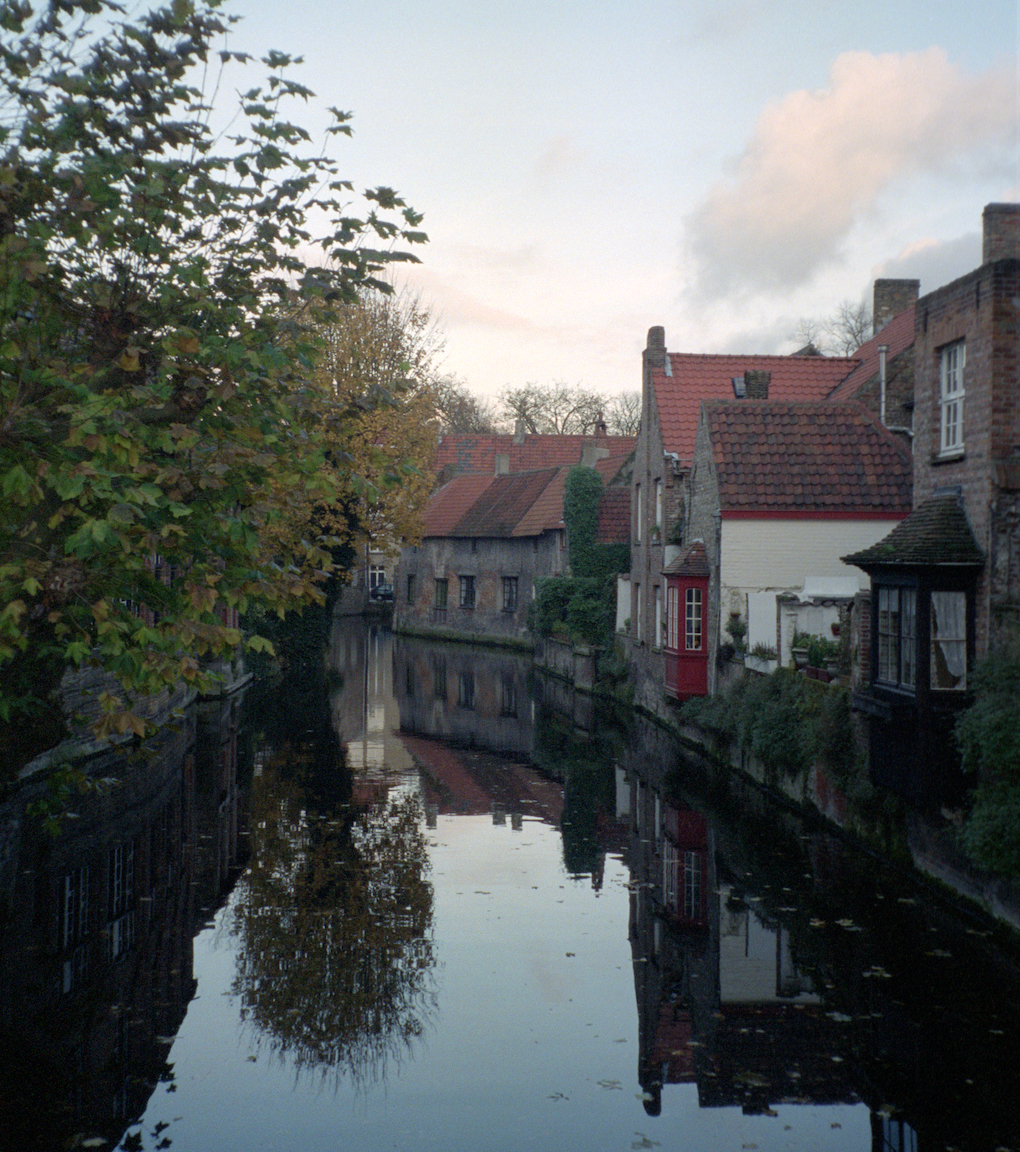
- A view of the canal from near the Bruges main museums.
-
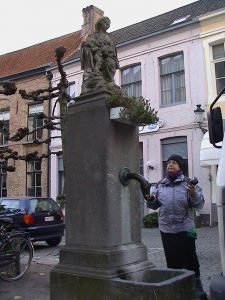
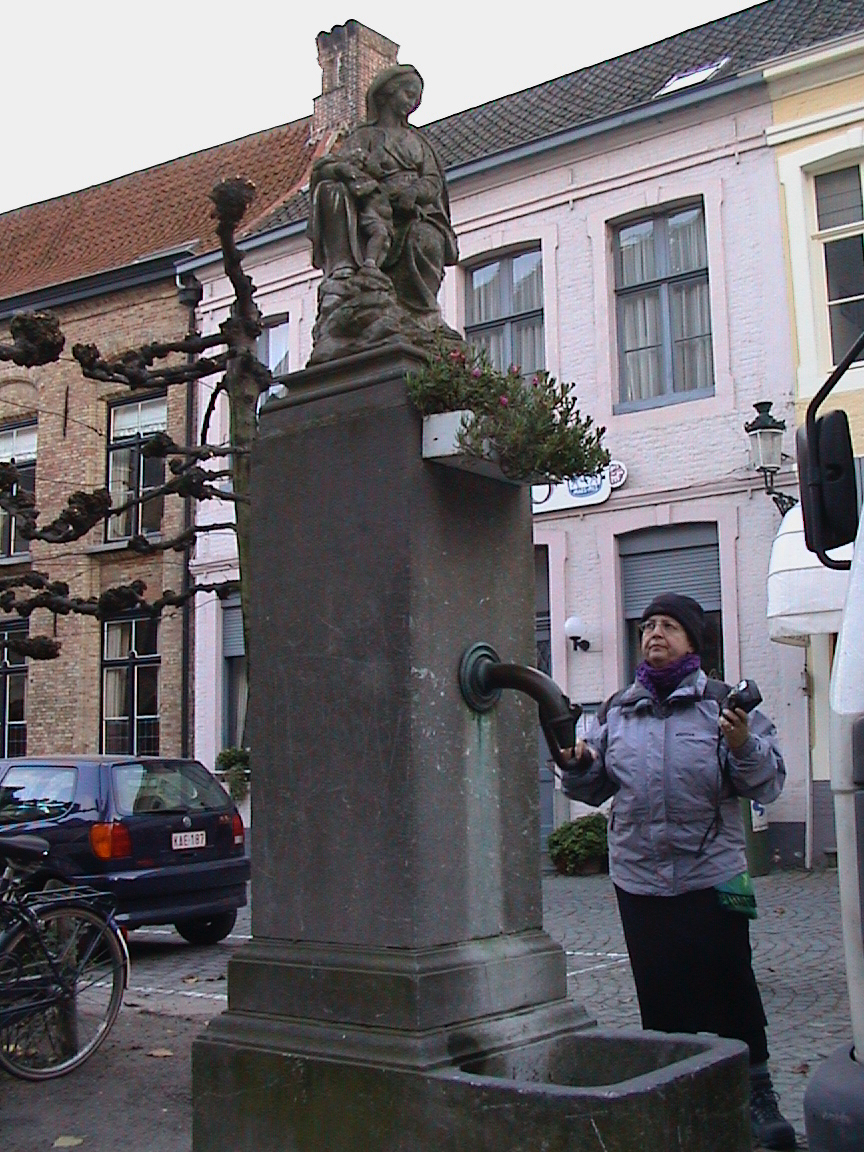
- Rozie inspects the Madonna and Child water tap, which dates back to the 15th Century.
-
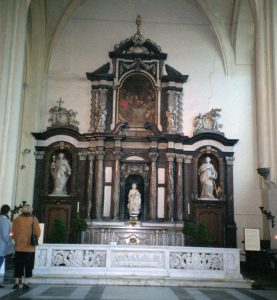
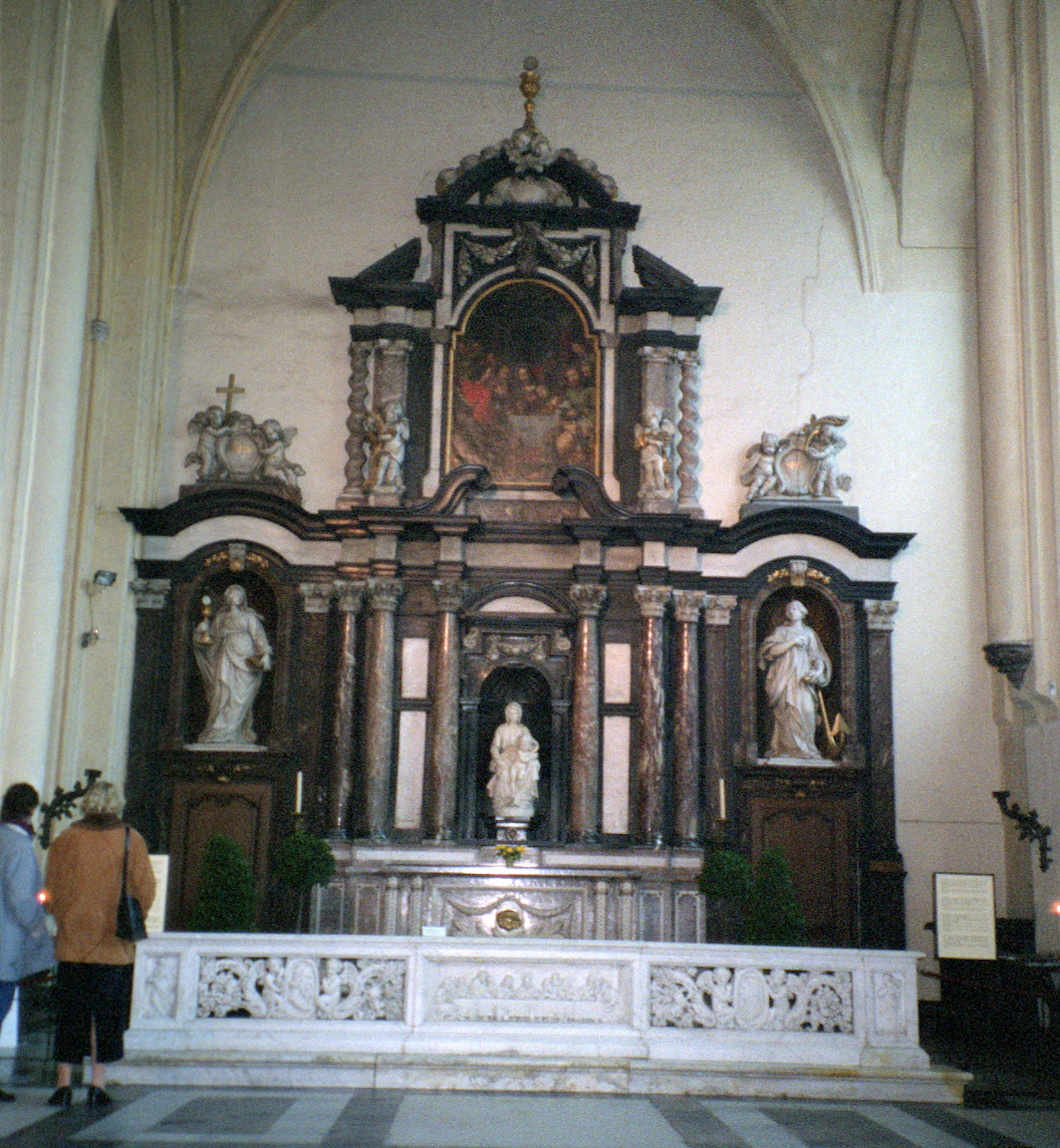
- There are many artistic masterpieces at the Museum of the Church of Our Lady
-
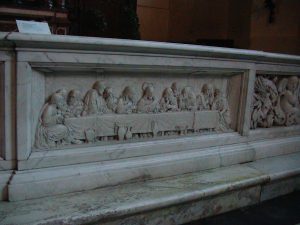
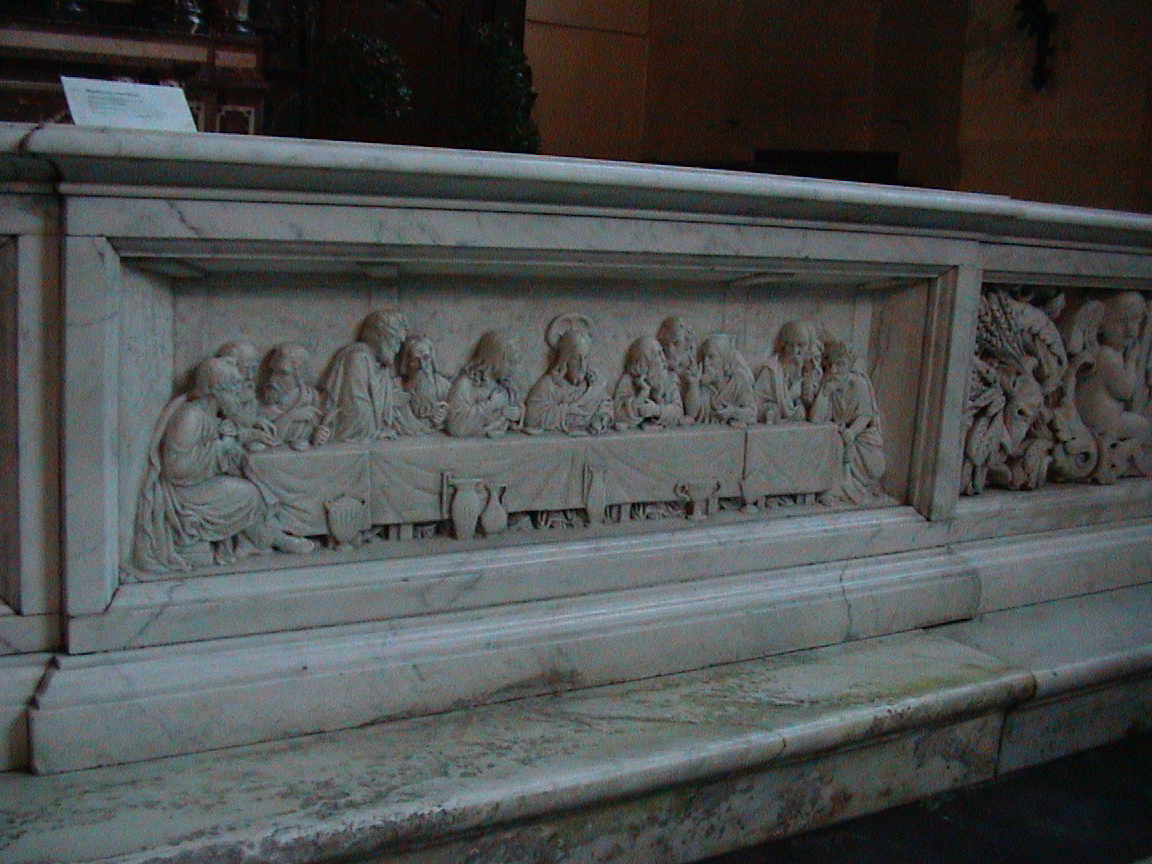
- A closer look at the relief on the kneeler.
-
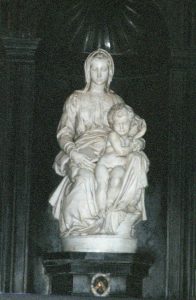
- The Museum of the Church of Our Lady has a Madonna and Child by Michelangelo.
We were advised not to eat in the restaurants on the main squares, since they are overpriced tourist traps. The best food is on the side streets, which was where we ate. The meals we had were great, and they were a good value. We also got to sample a small assortment of fine Belgian beers, though we missed the local brewery tour.
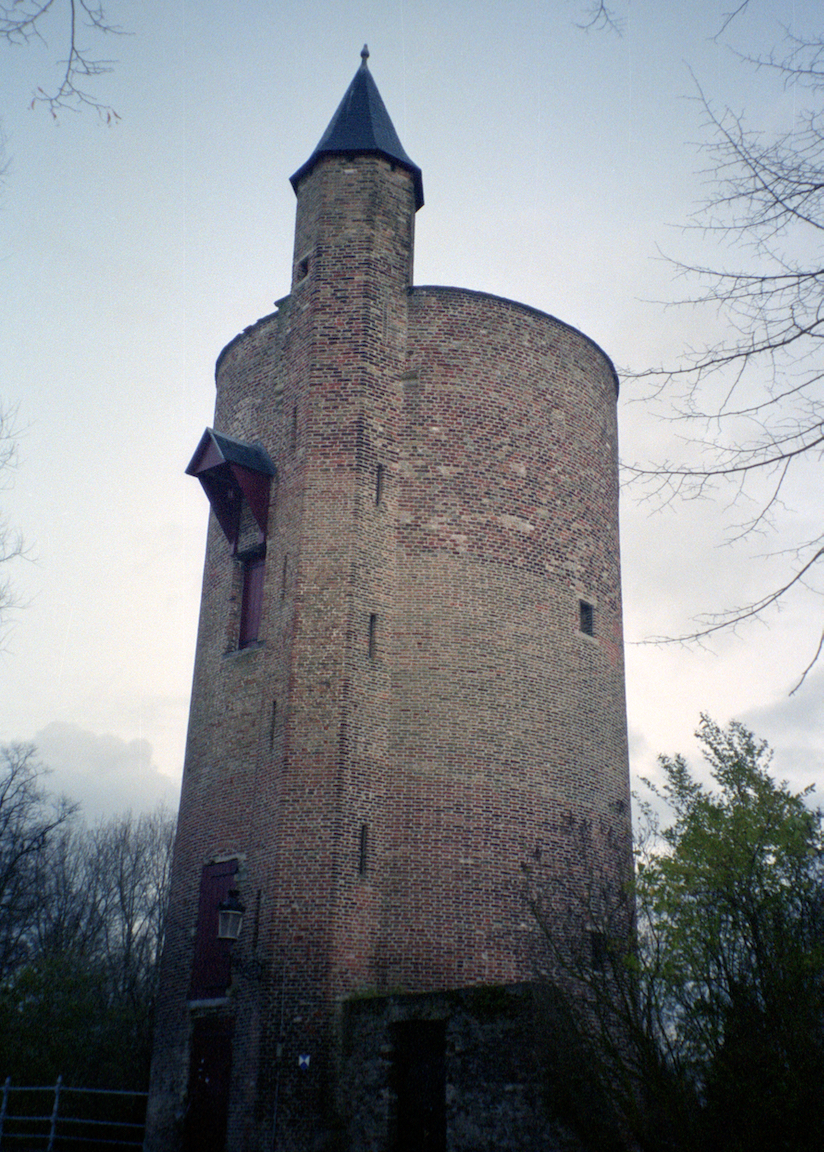
Gunpowder Tower is a prominent landmark at the entrance to Bruges.
As darkness set in on Wednesday, we found a computer store that sold Internet access. This gave us a chance to do another batch of web updates. On the way back to our room we stopped at a charcuterie to buy food for Thursday’s train trip to London.
While there we noticed two or three Santa characters prowling the neighborhood. It was part of a promotion for a nearby restaurant. They handed each of us a little bag of goodies including an apple, a few cookies, and a coupon for the cafe that sent them. They took special care to make sure we saw the coupon.
One odd thing is that instead of white beards they wore blackface make-up. Maybe that’s the local Santa “look”? We recently learned that Santa originally wore a blue suit, and that it only became red when a certain American soft drink company started putting Santa images in its advertising. That’s when the blue suit became red to fit in with the corporate branding.
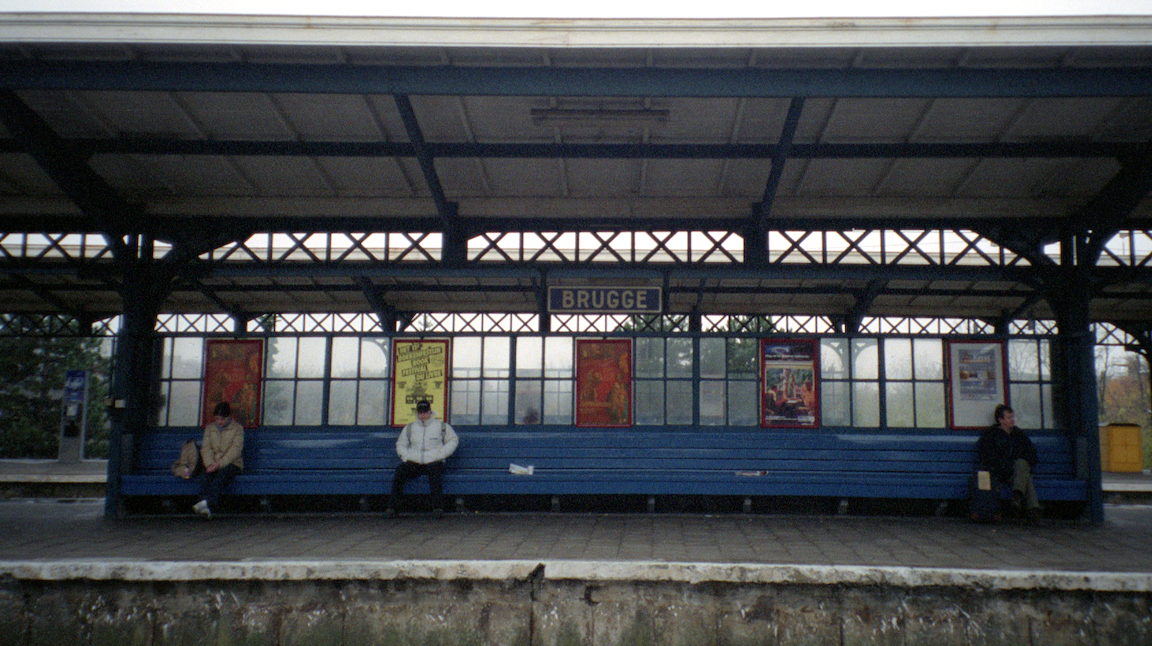
The platform of the station in Bruges.